Substack–What is it?

I remember back in 2007 (only sixteen years ago) when some people logged on to FaceBook and some went to MySpace. My memory says that MySpace was difficult to navigate and FaceBook looked nothing like it does today. No one had any idea that our privacy was being stolen away from us without permission. I think I ended up using FaceBook, not because I liked it better, but because all my buddies preferred it. If the Oakland Athletics were having an Away Game, many of us sat in front of our TVs watching the game, computers on our laps, “talking” to each other on FB. It felt exciting, and fun, and we were all together—a baseball family—chatting away and enjoying the game while sitting separately in our homes.
A similar thing seems to be happening with blogging/newsletter platforms. When I started my blog in 2016, I chose the platform WordPress. I didn’t do much research. I wasn’t sure how long I might be writing it. I just wanted something that would be fairly easy and not frustrate me. I had moved to Paris three years earlier and I wanted a way to let my friends and family know what I was up to without writing separate e-mails to everyone. A few years later, Medium appeared which attracted many different kinds of writers: health gurus, Apple computer geniuses, the best apps to download and how to use them. Periodically, there was some serious writing.
A year and a half ago, my sister, knowing I admire the writing of George Saunders, sent me a link to Story Club with George Saunders. He was writing on the brand new (new to me) platform Substack. I could choose to be a free or paid subscriber. Since George was essentially teaching a course on how to read and appreciate short stories, I immediately signed up as a paid subscriber. Generous human that he is, I’ve gotten my money’s worth many times over.

Something interesting was happening at Story Club that I hadn’t experienced at WordPress or Medium. The readers were interesting, articulate, and also very generous. The give and take amongst the highly motivated subscribers was, for me, like attending one of George’s graduate courses at Syracuse. As I read the comments, I’d check the photo or avatar of the writer and learn what other substacks that person read. I discovered Heather Cox Richardson, whom I wrote about earlier this year. Her substack is now required reading with my breakfast. As of today, I’m signed up for twenty substacks and I’m a paying subscriber to four of them.
Substack attracts writers. It was founded in 2017 by Chris Best, Jairai Sethri, and Hamish McKenzie. I believe initially it was to give journalists a place to write as printed media was dying out of our world. The majority of the substacks, however, offer personal writing, opinion pieces, and research. Moderation of what is written is done by the founders. For authors, Substack is a way to make money writing. Which is VERY hard to do. A Substack is not expensive. Ten percent of the earnings goes to the founders. Initially, the founders reached out to well-known authors and provided “scholarships” to start writing on this platform. A writing community has been founded. I can read writings by some of my favorite authors: Rebecca Makkai, Jami Attenberg, Roxanne Gay, Katherine May, Joyce Carol Oates, and Matt Bell among others.
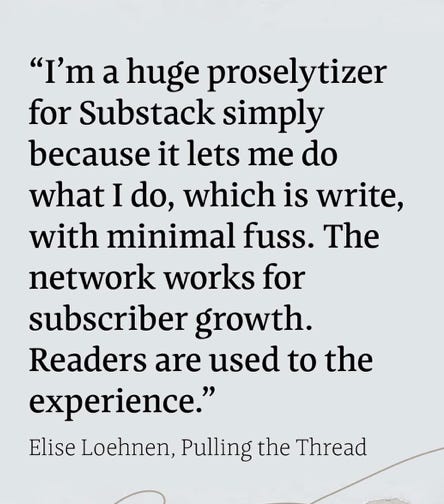
I wanted in and eighteen months ago, I started writing my own Substack: Out My Window. I also post it on my WordPress site also called Out My Window. I wasn’t sure if I was ready to get all my WordPress followers to migrate over to Substack but I was sure I wanted to be a part of this literary community. Writing about Substack this week is partly to prepare my WordPress followers to contemplate the move!
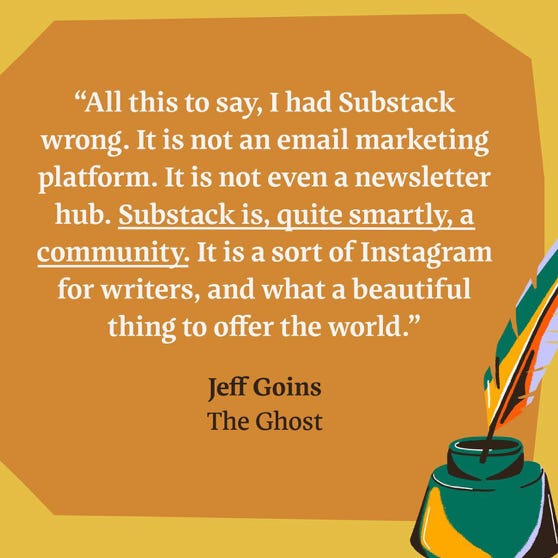
I’ve met and made friends through Substack. As I wrote last week, a new ‘friend’ I’ve not yet met, Judy MacMahon, created #FranceStack. She has collected together many of us who write about France and Paris, and created “a list” now known as a Stack! Rather than competing with each other, we can repost something that our readers would probably find interesting, AND bring attention to other writers who love and write about France.
For now, Substack is a wonderful idea that has brought well-known authors into our living rooms and made it possible for writers whose names are not Steven King or John Grisham to make a living doing what they love to do.

I did see this morning that someone has started #SobrietyStack and is charging for it which goes against all the traditions of Twelve Step programs. Recovery is free if you’re willing to do the work. 
So nothing is perfect—big surprise! For now, we have a booming literary society available to everyone. And it’s a wonderful way to support the authors you enjoy—especially if you are a library patron as I am and don’t buy that many books. If you are a WordPress follower of mine, go to SaraSomers.substack.com (click this link) and subscribe for free. Then look around Substack and find other publications that might interest you. Now is a great time to do it. Like FaceBook, like so many things in our technological world, most everything gets too big and the underbelly shows. The Internet is still the Wild, Wild, West.

A bientôt,

Sara

Thanks for reading Out My Window! Subscribe for free to receive new posts and support my work.

The Wallace Fountains

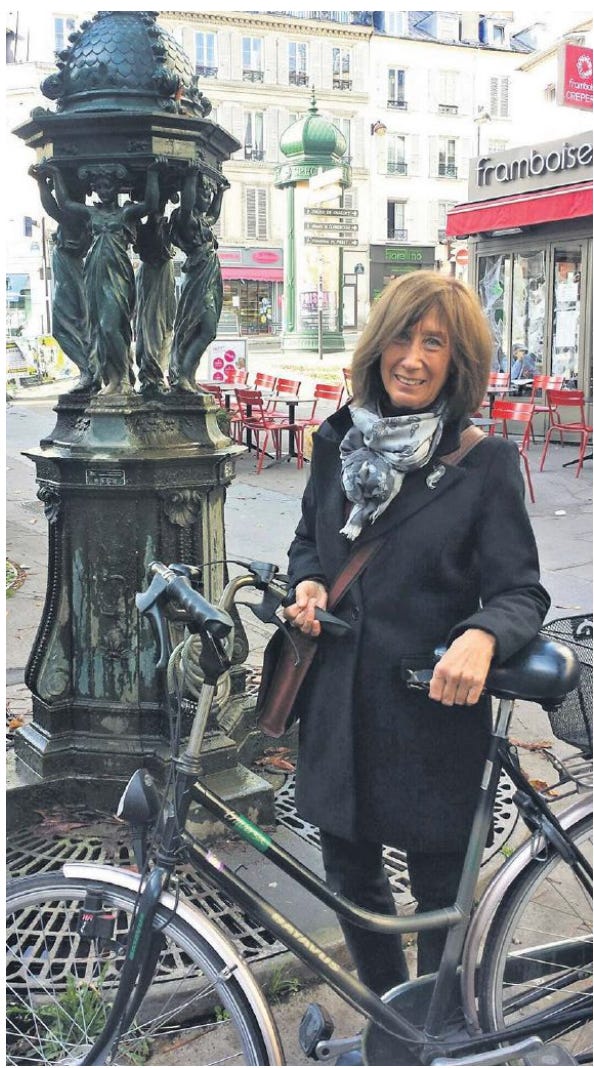
I had a thought of writing about the beautiful Wallace Fountains that are scattered all over Paris and parts of France. It would make a wonderful post. Then I woke up to another blogger who had already written up something and posted it over the weekend. This isn’t just any blogger. Her name is Judy MacMahon. She is Australian and is a Francophile. She authors MyFrenchLife.org and ‘le Bulletin’-another Substack. This summer she had the brilliant idea of pulling together all of us who write about Paris and France (whether we live here or not) and calling it #FrenchStack! I have been looking for an opportunity to share with you Judy’s #FrenchStack.

First I’m going to repost Judy’s write-up about the Wallace Fountains. Then give you #FrenchStack. Some of these you may already know quite well. Others you may never have heard of. Just because they are listed does not mean that Judy or I endorse them. Just that they are available and everyone’s taste is not the same. In the future, I will repost some of these wonderful stories that are included in #FrenchStack.

“1. How much do you know about these forest green icons in Paris? The Wallace Fountains

One year ago, this September, the Wallace Fountains were part of a month-long celebration commemorating the 150th anniversary of the Wallace Fountains—Sir Richard Wallace—an English philanthropist—and his project to bring clean drinking water to 19th-century Paris and beyond.

What are Wallace Fountains?

We’ve all seen them… these ornate cast-iron green fountains scattered throughout Paris, but I’ve never known their history. Ornate structures that are named after an Englishman. Why? My curiosity got the better of me, once again, and I was off on a mission to find out more.

  • Wallace Fountains are public drinking water sources primarily located throughout Paris, although replicas exist at various locations worldwide.
  • The grand model fountain stands almost nine feet tall and weighs more than 1,300 pounds!
  • There are now more than 100 fountains from an original 50 in 1872.
  • No, they are not all green… You will perhaps spot some in more avant-garde colors in bold red, pink, blue, and yellow, located in the 13th district in the southwest of Paris.
  • How much water do the French really drink?

In 1872, British philanthropist Sir Richard Wallace set off to provide safe drinking water for all in  Paris. 

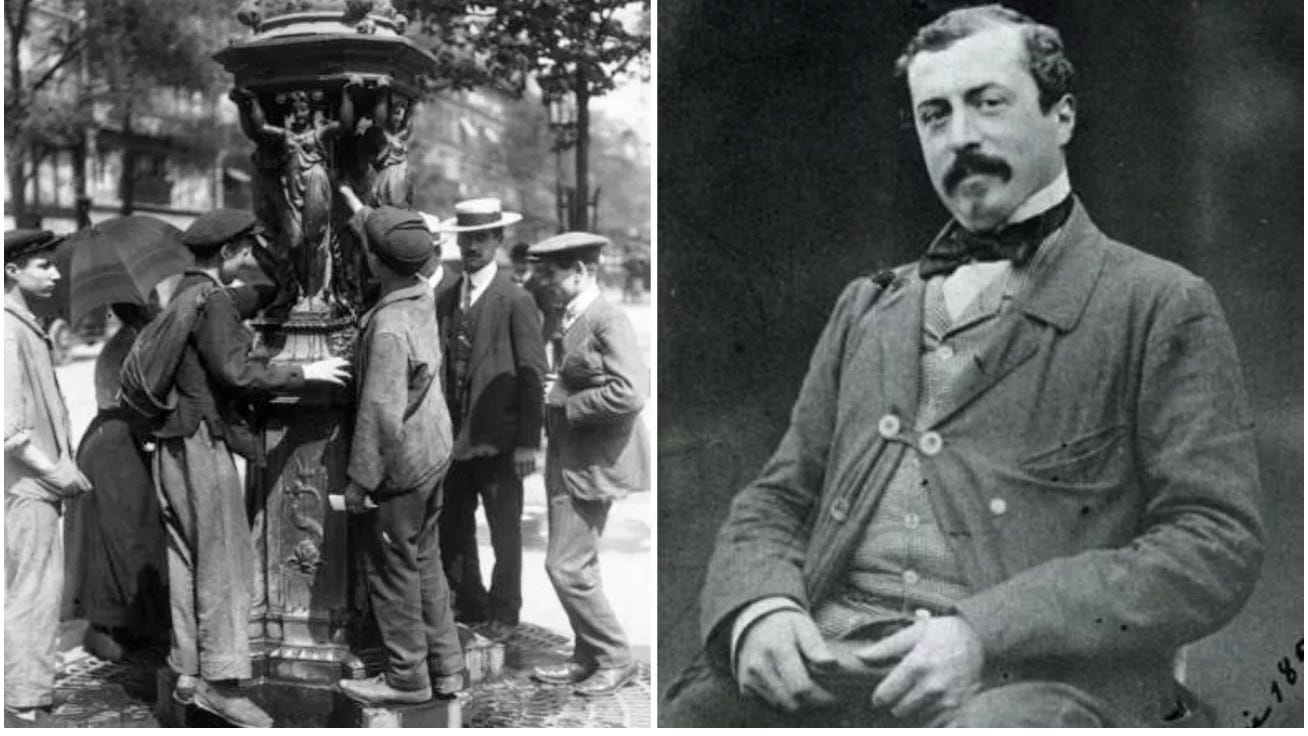
People drinking from a Wallace Fountain during Bastille Day celebrations in 1911 (L) and a photograph of Sir Richard Wallace (R)The Wallace Collection

He established a network of drinking fountains across Paris and every day millions of people pass them without knowing how they came into being.

In the late 19th century, following the siege and bombings during the Franco-Prussian War and the collapse of the Paris commune, clean drinking water in Paris was scarce. Many communities relied on water that was transported from the Seine, which was often unsafe to drink.

The price of potable water became very expensive. As a result, most poor people had difficulty obtaining and paying for water that was safe to consume. Moreover, most of the water sold by vendors and distributed on carts to the poor was drawn from the Seine River. That water was certainly contaminated because at the time all the wastewater from the streets and many of the sewers drained directly into the river. It seemed less risky to drink alcoholic beverages, which were often cheaper than the price of unsafe water. Given the choice, the lower classes were most apt to hydrate with beer or wine.

Barbara Lambesis, President of the Society of the Wallace Fountains says many Parisians turned to beer and wine, a more sanitary – and often cheaper – alternative to water, which drove a large portion of the city into alcoholism.

There were health consequences… lots of alcoholism, which of course tears away the social fabric of community,” Lambesis explained. “Richard Wallace decided he was going to make clean drinking water free and available and easy to access for everyone, regardless of whether they’re a visitor or a resident and regardless of their social status.”

Who was philanthropist Sir Richard Wallace?

Little is known for certain about the early life of Richard Wallace, who was born in 1818 in the UK, although it’s believed that he was the illegitimate son of Richard Seymour-Conway, the 4th Marquess of Hertford, an English aristocrat and art collector. When he passed away in 1870, most of his wealth was unexpectedly left to Wallace.

The Wallace Collection – art

Sir Richard Wallace is best known in the UK for his extraordinary art collection donated to the British people. The Wallace Collection is available for public viewing at his former residence in London. In Paris, he is remembered for aiding the poor and for his generous, steadfast commitment to the common good as symbolized by the iconic drinking fountains that carry his name in Paris.

In 1871, Queen Victoria knighted Wallace for his:

splendid munificence during the difficult period of the siege of Paris,” and he was later made a baron.

He died on July 20, 1890, in Paris at his home—the Château Bagatelle, in the Bois de Boulogne—and was later buried in the Père Lachaise cemetery. But his legacy lives on.

The Wallace donation of 50 fountains to Paris

In 1876, after inheriting a large fortune, Wallace donated 50 fountains to the city of Paris to be installed throughout the capital. Beyond functionality, Wallace put a lot of consideration into the aesthetic and practical elements of the fountains, sketching out the first designs himself before handing them off to Charles-Auguste Lebourg—a sculpture from Nantes—to deliver the final product.

They were made of cast iron because they were durable and easier to replicate; and they were almost three metres tall so that they could be easily seen and recognized,” Lambesis explained. “They’re full of symbolism; the four figures, featured in the fountains, represent human virtues that Richard Wallace wanted people to adopt when they drank from them. Those virtues are simplicity, sobriety, charity, and kindness.”

Formation of The Society of the Wallace Fountains

Barbara Lambesis, rue de Rivoli, devant l’objet de sa passion. DR

A few years ago, Barbara Lambesis – an American, who lives in Paris part-time – was strolling through the city when one of the fountains caught her eye.

“I became very intrigued with it, and that was the beginning of a long journey; I researched it a great deal, studied it a great deal, and decided that I was going to put a purpose to my wandering,” she said.

The first is to promote, preserve, and protect the fountains throughout Paris.

“The second part of the mission is to recognize and encourage philanthropy in the spirit of Richard Wallace,” she explained. “Richard Wallace was an Englishman who was born in London, lived most of his life in Paris and loved Paris… and suddenly inherited a great deal of money during the terrible siege in Paris in 1870. He immediately took that money and went out and distributed it to the poor, to the people who were suffering the most.”

The third part of the mission, Lambesis explained, is to “position the Wallace Fountains as the global symbol of international universal equal access to clean drinking water for everyone on the planet, because that’s really what those fountains stand for.”

As a part of the 150-year anniversary, Lionel and Ariane Sauvage – French philanthropists working particularly with the Louvre Museum in Paris— received the new Wallace Fountain award to celebrate their 30+ years of philanthropy. 

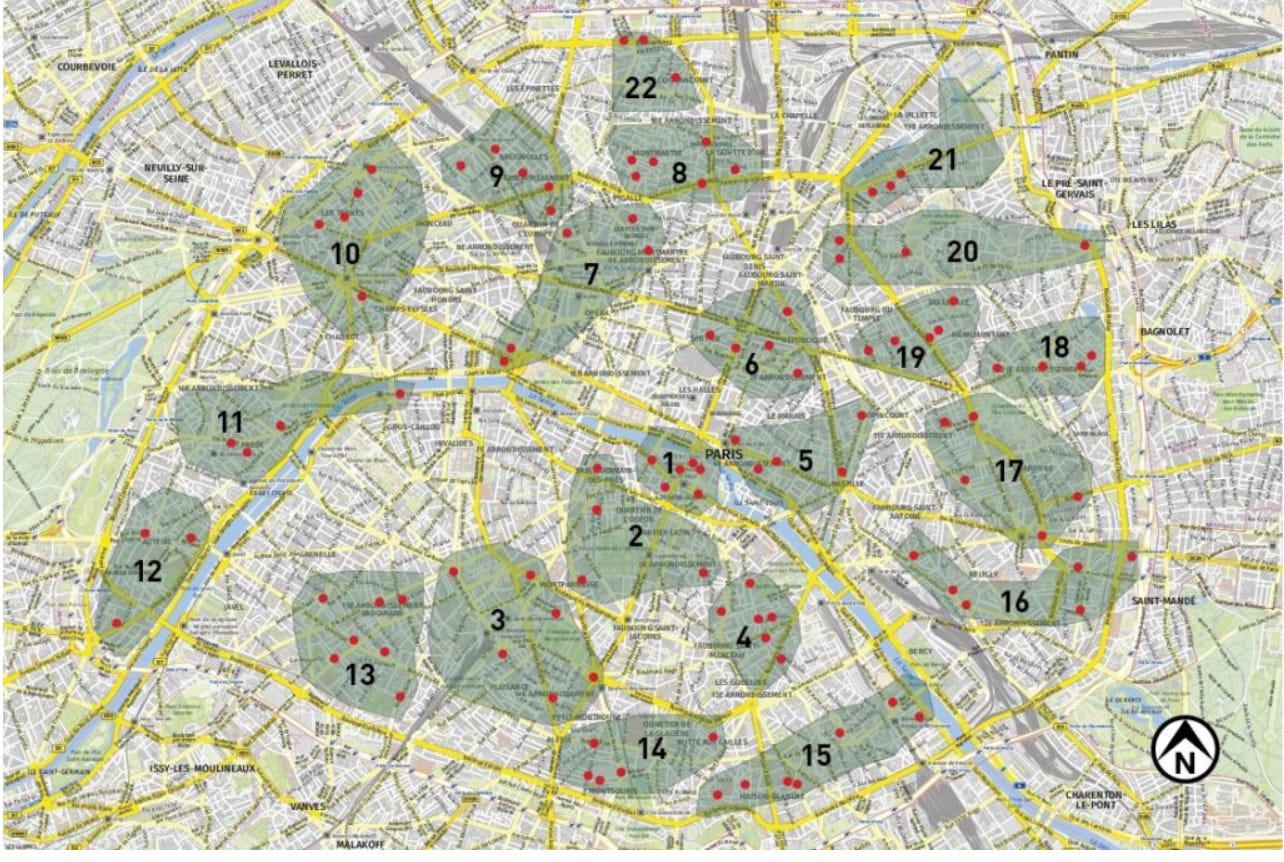
22 Self-Guided Walks

The 22 self-guided walks take you to different parts of ParisUse the map to view the area of Paris for each numbered walk. Each guided walk includes a map and a narrative that gives directions and often mentions points of interest along the route. Use the guided walks to find the fountains and the wonders of Paris.

Download – To download a self-guided walk, click on Get Started Now (← here) The downloads are formatted for mobile devices and are free of charge. 
”But, we hope you will donate a very small amount to help fund the development and maintenance of this website and the work of the Society of the Wallace Fountains. You also will have the option to register to receive updates and information about the fountains.” from the Wallace Fountains Society website.”—Judy MacMahon ‘le bulletin’

Look for the #FrenchStack tomorrow. Judy MacMahon has put together all the Substacks that write about France and called it #FrenchStack!

A bientôt,

Sara

Thanks for reading Out My Window! Subscribe for free to receive new posts and support my work.
Twenty-two years ago today…..

(Thoughts on waking up this morning, not edited)

…I was woken up by a friend asking me if I was watching TV. What was happening was something that she couldn’t describe. I don’t remember if she tried. It was 7:30am in Oakland, California. The first tower had fallen. The second tower went down within thirty minutes of my waking up and turning on my TV. And then the world changed.

I’m not sure what happens to me when I see horrifying events live on TV. I didn’t gasp and start crying like so many friends. Perhaps it was the fact that it was on TV and so many of us, me included, watch films and “make believe” on that same screen. I remember thinking that I could be watching a film. What or how did people react on December 7, 1941 when the Japanese attacked Pearl Harbour? They had to learn of it via the radio. Their horror would be dependent on the reporter’s descriptive skills and whether they had a relative stationed in Hawaii.

9/11 didn’t need description. And in case anyone missed the falling of the towers while it was happening, it was replayed over and over, a hundred, two hundred times until we were numb.

The world was cancelled before it changed. Everything stopped. No flights, no trains, travellers were stuck in strange places and couldn’t get home, no baseball, no theatre, no nothing. Grocery stores were open. Baseball resumed ten days later. I don’t remember who the A’s played against. I do remember the pre-game ceremony, the singing of the Star Spangled Banner and America the Beautiful. There were prayers for New York and for the world. That was when I cried. I was with my tribe and we were together.

Two and a half months later, I flew to NYC. I had to see in person the destruction, the relief efforts, some of the Firehouses with their signs telling how many men they had lost. It was an unseasonably, beautiful, warm weekend in December. 70o. My friend, Michelle, and I walked across the Brooklyn Bridge. We visited two Firehouses. A church group from Georgia was visiting one of them. They’d brought toys for children, lots of food, and donations for the families. We were invited in to join them but we didn’t stay. 

We walked by the hole left by the towers. There was a makeshift wall with a makeshift wooden walkway for people to line up and slowly walk by to look at the charred skeletal remains. A huge white sheet was tacked up on the wall. We were all encouraged to write something hopeful and sign our name. And, of course, American capitalism was present. A man sat near the line selling American Flag earrings and pins that people vulnerable with grief would purchase to show their patriotism. 

We wandered up to the Crisis Center. Huge boards with notices “looking for….” accompanied by a photo crowded the large room. Photos of the destruction were everywhere. People stood in lines to check in with a government official who had a list of the identified dead. New York was very much in a generous mood, love thy neighbor mood. Christmas was coming. The bereaved felt noticed and cared for. But as I learned after the huge Oakland FireStorm ten years earlier, once January comes, the world begins to move on. The suffering family members are left a bit paralysed, not knowing what to do next. Alone with their loss and grief, they pull back and find it hard to identify with the lives of those not suffering.

Today, twenty-two years later, we have beautifully written stories of that time. We have TSA and airport security. We have huge acrylic walls surrounding and protecting the Eiffel Tower. We have the memory of declaring war on Iraq, and the endless war in Afghanistan that America finally pulled out of two years ago.

And, for people like me, all the blinders have been torn off my eyes, ears, and heart to expose the truth about the United States of America. It is not the land of the Free—although its citizens are much freer to express their hatred and fear of others in unspeakable ways. It is not the land of the Brave. Most of us are sheep and look for the door painted either red or blue. We walk through it asking few questions.

For the first time since FDR, we have a President who is truly America’s friend, who has done more to help Americans get on their feet and defend democracy than Obama did in his eight years in office. I love Obama, don’t get me wrong. It’s just the facts. But this president has low ratings because he doesn’t have charisma, because he doesn’t soft sell a crowd while on TV. Here we are back to TV again. Each of us in our Living Rooms alone or with a small family and we believe what’s on TV. We have lost the ability to educate ourselves, to fact check, to form an opinion that is our own (With apologies to my sister who knows exactly how to do it all).

I don’t know how to end this piece. Probably because I don’t want it to be the end. The pandemic has changed us once again. More in the direction of being alone yet feeling connected technologically. Where are we headed?

Thanks for reading Out My Window! Subscribe for free to receive new posts and support my work.
La Rentrée/The End of Summer

After two months of “blog vacation”, I’m back to start telling you about the interesting things I see and do in France. I had such a wonderful time in Saint Jean de Luz that I had to share with you the beauty of that place.

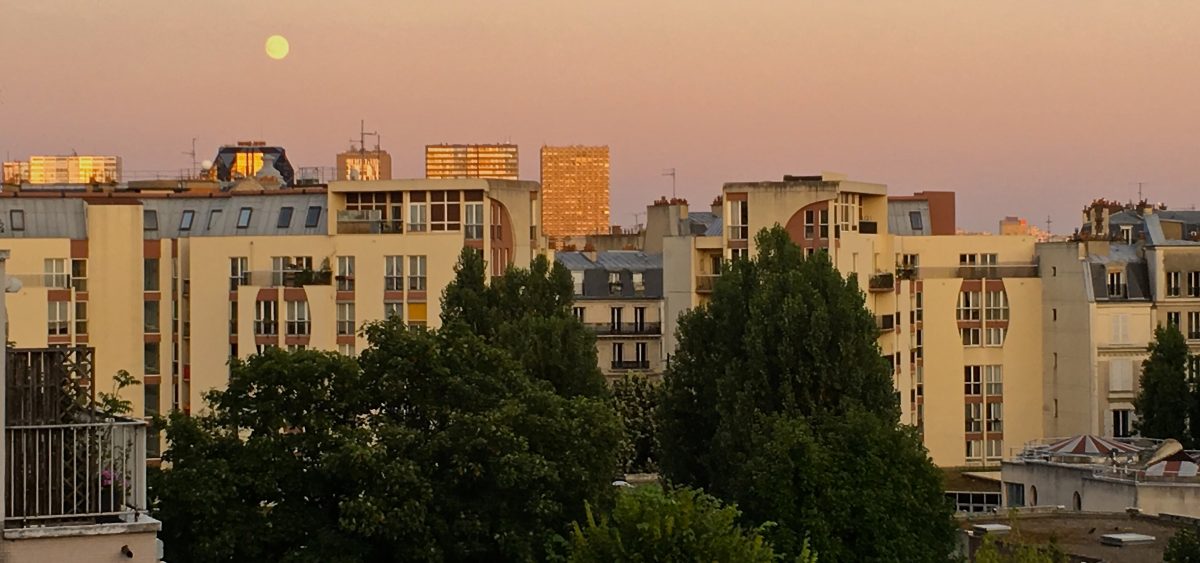
Except for that trip, I remained in Paris for the entire month of August. At least half, and probably much more, of Paris went on vacation. In the outer arrondissements (I’m in the 16th), Paris was quiet. No tourists, most stores were closed, hardly any traffic. Sometimes I’d walk out of my apartment building and wonder if pandemic limitations had restarted. It was SO quiet and there were plenty of parking spaces on the street. During the rest of the year, a driver might sell their next of kin to have a parking space so close to home. Two out of three of my veggie markets were closed; the Boucherie was closed; both bakeries/Boulangeries were closed. The lovely restaurant #41 – closed. In fact, the only thing open on my block of Av. Mozart was the Fromagerie with a big sign that said “We are staying open all of August” and the wine store.

This week starts the fifth season in France: La Rentrée. I write about it every year. I don’t know of any other country that has something like this. It’s not just the beginning of school but, since most people go somewhere else in August, everyone is returning home and getting ready for the new year. People say “Bonne Rentrée” to each other. Stores have sales on office supplies, school needs, anything that might make the end of summer more palatable. It’s September. Today, the temperature is in the high 90s F/30/31oC. Summer weather Store windows have Fall clothing, cozy snuggle up on the couch and stay warm clothing.

The Local gives some definitions of La Rentrée:

“Schools restart 

La rentrée scolaire is when schools begin again for the new academic year. There is a tradition that this cannot happen until September, so this year schools go back on Monday, September 4th. 

A side-effect of la rentrée scolaire is the appearance in shops of huge collections of stationery as stressed-out parents head out to buy the dozens of items on the official lists that schools send out, all of which are deemed essential to educational life.

Return to work

Of course key workers continue to work throughout the summer but many offices close completely for some or all of August as it’s not at all uncommon to receive out-of-office replies simply telling you that the person will be back in September and will deal with your query then.

Many smaller independent businesses including boulangeries, florists, pharmacies, clothes shops and bars also close for some or all of August as their staff and owners enjoy a break.

If you work in an office, the first few days after la rentrée is often a time for chatting to colleagues, hearing other people’s holiday stories and generally easing yourself back into work gently so it’s not too much of a shock to the system.

Return to parliament 

The French parliament takes a break over the summer and resumes sessions in September, while ministers too generally take a few weeks off. Traditionally the president goes to the presidential holiday home – a villa in Bregançon on the Riviera and enjoys a few weeks of sun, outdoor activities and rest.”

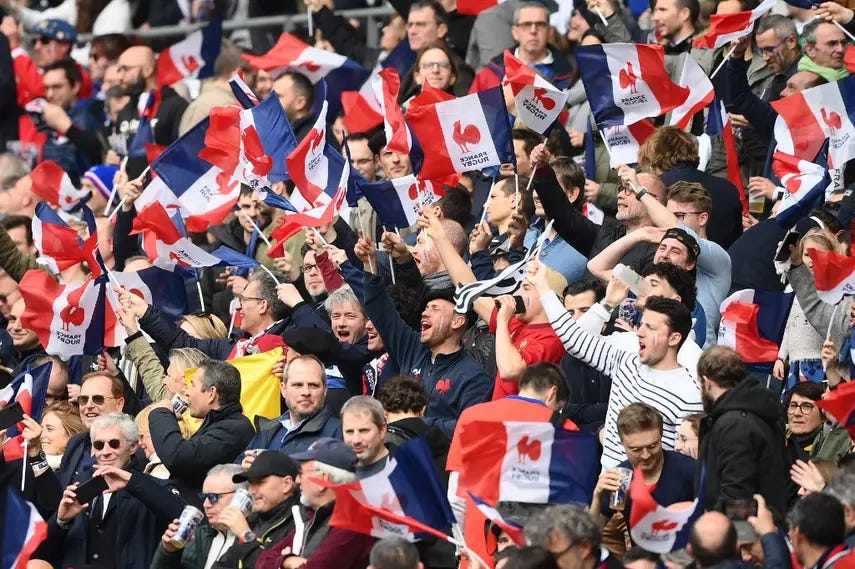
This year, the World Cup of Rugby is being held in France from September 8—October 28, 2023 . Americans always think that Futbol is the definition of sports in Europe. It turns out that Rugby is a huge deal. My first French teacher in my immersion classes many years ago was a die-hard rugby fan. The games in the Stade de France, Paris are all sold out. The opening ceremony will start at 8pm Friday at the Stade, outside Paris, then the first match (France v New Zealand) will kick off at 9.15pm. The Oscar-winner and celebrity French rugby fan, Jean Dujardin, will host the opening ceremony at Stade de France before kick-off of the opening match on September 8th. 

Again from The Local: “If you’re not lucky enough to be among the 80,000-plus crowd at Stade de France, the good news is that the whole shebang will be on TV. In France, the opening ceremony and the France v New Zealand match is on free-to-air channel TF1.

Through the tournament, every match in the tournament is available free to air on TF1, as well as France Televisions and M6.

Rights holder TF1 will show 20 matches, including all matches involving France, while France Télévisions has 10 matches and M6 will show 18 games.”

In the US, the games will be on Peacock or some form of NBCSports.

As for the weather, we will have summer weather for the next two weeks. Which makes me very happy. 

Thanks for reading Out My Window! Subscribe for free to receive new posts and support my work.
A Bientôt,

Sara