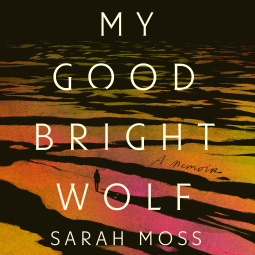
Sarah Moss writes novels. I haven’t read any of them but have read The Immortal Life of Henrietta Lacks for which she wrote the Introduction. I don’t think that really counts. So I’m not sure why I picked up her memoir My Good Bright Wolf, which came out yesterday, knowing nothing about her. Except I loved the title.
There are people who say there are no coincidences. Sarah Moss is anorexic. She has written a memoir that brings the illness of anorexia so intimately to the reader that I felt myself catch my breath several times. When I wrote my book Saving Sara A Memoir of Food Addiction, I wanted to do what I had never read in all the literature of eating disorders. Bring the reader into the mind, insanity, and horror of binging. Until I read My Good Bright Wolf, I never comprehended anorexia. I thought it a completely different animal than binging or bulimia. After reading this memoir, I don’t feel very different from Sarah with an ‘h’.
Thanks for reading Out My Window! This post is public so feel free to share it.
At the end of the memoir, Ms. Moss tells us how hard the book was to write, not just because it is so intimate but because she comes from a good background, had a great education, has a successful profession, and owns real estate. Which, to my mind, only confirms that eating disorders have no bias. Rich, poor, black, white, American, European, these diseases don’t discriminate.
This memoir is beautifully written, courageously written. She is able to convey the dialogue that goes on in our minds when “under the influence.” The part of her that convinces herself that she isn’t really sick, and even as she is inches away from death, she tried to convince a doctor that there are really sick people in the hospital and he should be attending to them.
She writes about the cult, the politics of being Thin. I related to everything she said: the judgments that thin people were better people. I hated my body because I was fat. She hated her body because she wasn’t thin enough. Her last chapter is entitled “My body, my home.” Just those four words gave me a severe jolt. I’ve always been looking for home. What if home is the shelter we carry with us all the time. Like a turtle, we can go to safety by pulling into our homes.
I listened to My Good Bright Wolf. It was narrated by Morven Christie. “”Morven Christie’s limpid, Scottish-inflected voice and gentle, enticing tone combine to lure listeners into Sarah Moss’s astonishing (memoir) as effectively as mermaids tempt sailors into the sea” —AudioFile on Summerwater (Earphones Award winner). Morven’s voice is strong and she enunciates with beauty. It is as if she had written the book, she knew just when to inflect, when to emphasize, when to talk to herself (as Moss) with contempt.
There is an emerging breed of memoir writer: Sarah Moss, Maggie Smith, Leslie Jameson who write poetically, lyrically. Who bring us into their worlds in a soft rocking manner but the subject matter is so serious, the self-talk so vicious and this style makes everything much easier to bare and also to relate to.
I’m not great at book reviews. And wish I could do this memoir justice. If you are at all interested in disordered eating, at the insanity behind the disease, and how one anorexic describes it and dealt/deals with it, I urge you to read this book.
Thanks for reading Out My Window! Subscribe for free to receive new posts and support my work.
Because of an Australian, le Bulletin 🇫🇷by Judy MacMahon, who loves all things French and writes a wonderful Substack, many of us who live and write about Paris and France have come to know and read each others’ Substacks. One of the newest writers I’ve learned about is Jenn Bragg who writes For The Love of France. Under her heading, she says “My life’s work is observing the nuances of different cultures that you may not otherwise notice. I write mostly about French culture.”
I tend to write emotionally, how what I see and do hits me where I live. Jenn does her homework. When she writes about something that has caught her interest, she researches it and the reader, me, gets a history lesson about the city I love so much.
Thanks for reading Out My Window! This post is public so feel free to share it.
We all ride the metro almost every day (unless we can walk but recently it has been raining every day so the metro is it!!!). This week, Jenn wrote about the metro line #6 – one that goes from Etoile at the Arc de Triomphe in the 16th to Nation in the east of Paris, the 12th arrondissement. I’ve never thought about it much as I haven’t had to take it very often. I asked Jenn if I could share her wonderful writing with you:
One of my favorite Paris Metro lines
Line 6 delivers people to destinations and happiness to moi
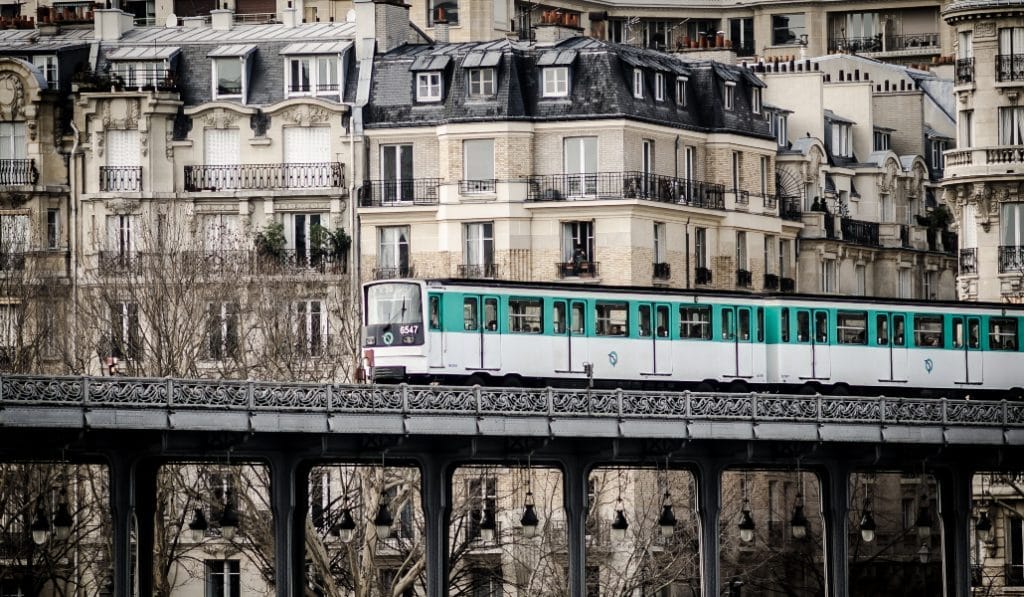
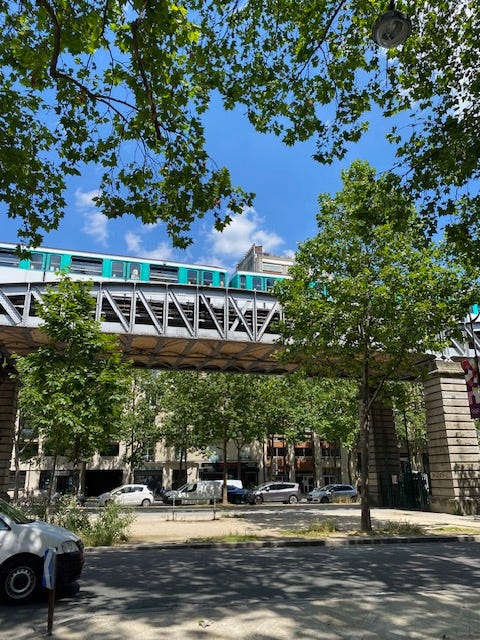
the glorious above-ground metro Line 6. Source: parissecret.com
How do I love thee, Paris metro line 6? Let me count the ways.
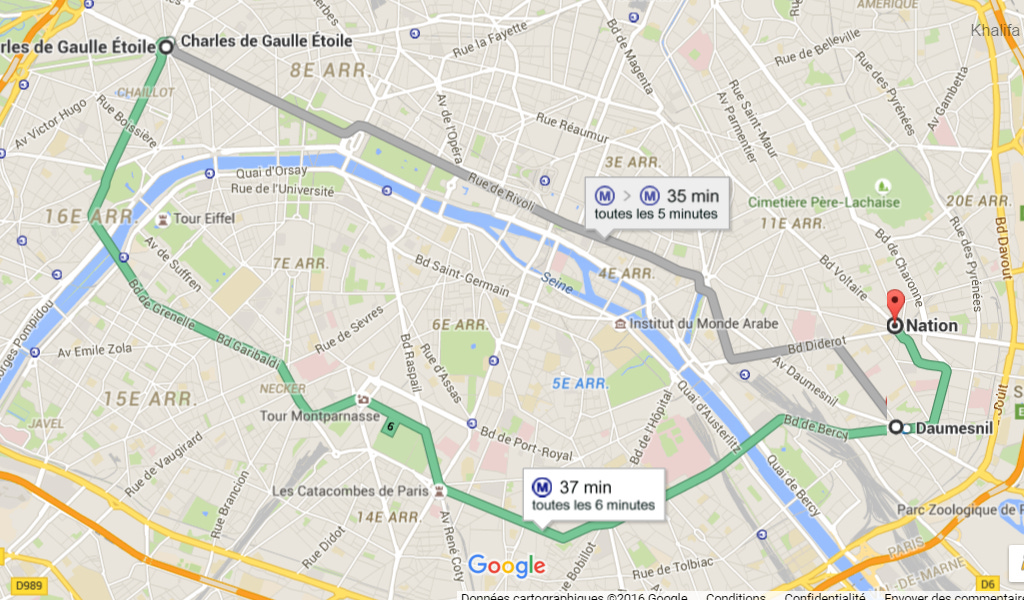
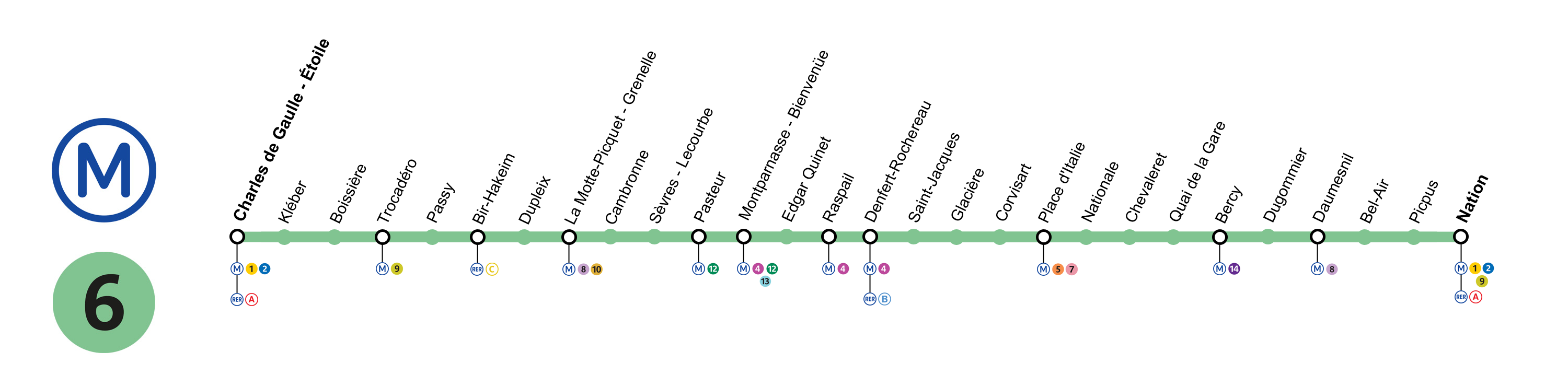
In Paris, each metro line has its own ‘vibe’, but Line 6 is one I really appreciate. It traverses the southern side of Paris, connecting Nation in the east to the Charles de Gaulle – Etoile station in the west, shown as a green line in the image below:
My favorite stretch of Line 6 is between Corvisart and Denfert-Rochereau. Those stops mostly cover above-ground views of Boulevard Saint-Jacques which turns into Boulevard Auguste Blanqui and ends at Denfert-Rochereau, known as the stop for the Paris catacombs.
I went out on Line 6 last week and recorded this video just to give you an idea of its loveliness:
Jenn’s video wouldn’t transfer so I encourage you to go to her Substack For The Love of France and watch it.
Now let’s just do a round-up of some of the interesting things about Line 6:
Open-air stations
Much of Line 6 features above-ground stations. When the track was built, it traced along an old city wall that was demolished in 1860. By building stations above ground, it reduced the need to dig tunnels for the trains. As a result, nearly half the 28 stations along Line 6 are raised platforms and feature glass canopy ceilings.
It’s old
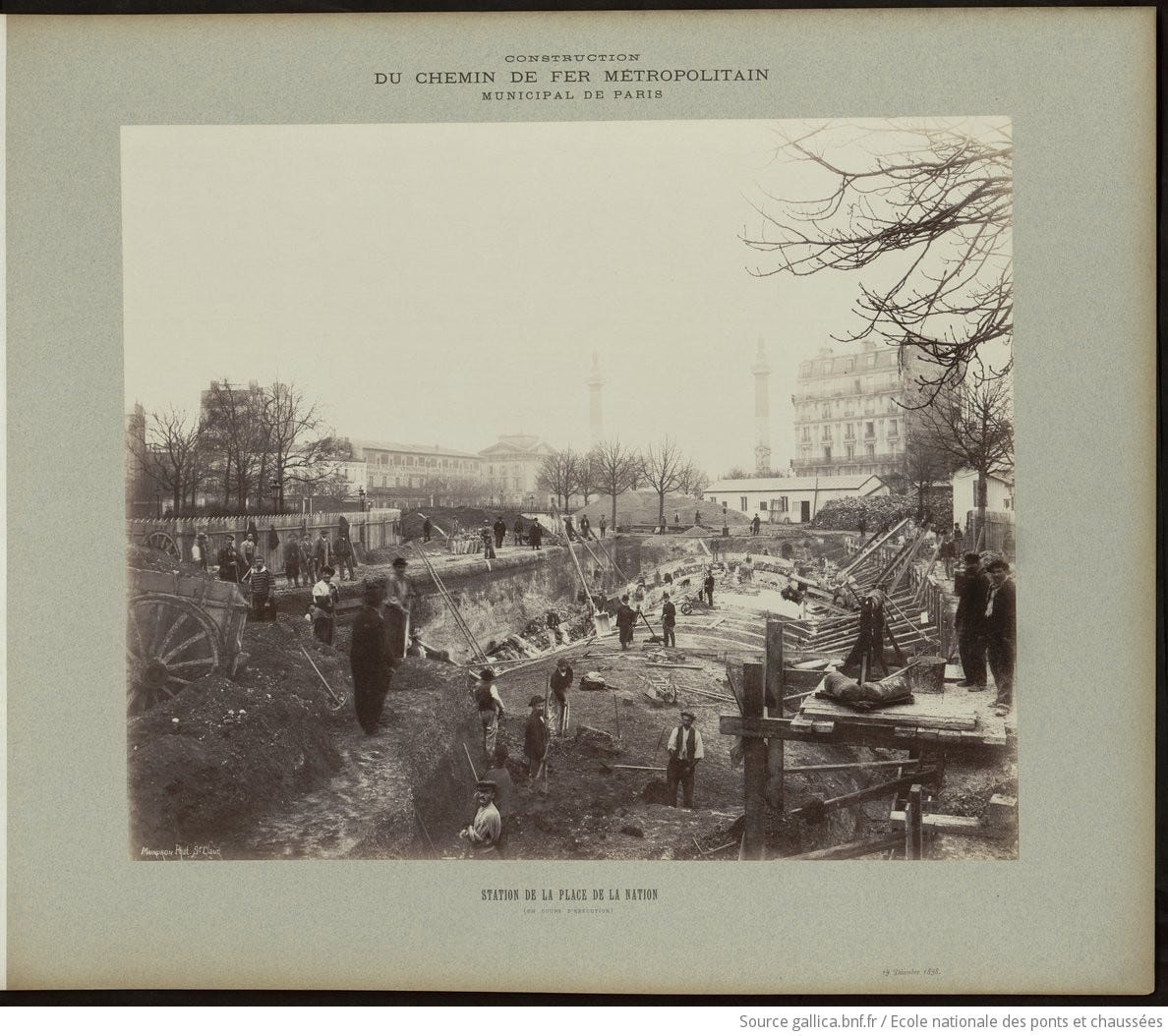
The first iteration of Line 6 was completed in 1900. It was one of the main ways of reaching the area around the Eiffel Tower when Paris hosted the world’s fair that year. Later, more track and stations were added to expand the line so that it became the far-reaching, city-crossing stretch we know today.
Left: construction of the metro/right: and old metro train
Interesting WW2 history
Line 6 even has an interesting connection to the Second World War: a number of station names were used as code names for prominent members of the French Resistance. These code names were designated for several agents under the military leadership of General Charles de Gaulle to help with efforts against the Nazis to retake control of France.
Here are the code names that were assigned:
Passy – Andre Dewavrin was known as ‘Colonel Passy’ – he had a leading role in military intelligence and helped organize the French Resistance under the stewardship of Charles de Gaulle.
Saint-Jacques – the man who took this code name was Maurice Duclos, who also helped found the French Resistance. He created several Paris-based intelligence networks.
Corvisart – Alexandre Beresnikoff was born in Russia but was given the name by de Gaulle from his base in London to help with secret missions for the French Resistance.
Bienvenüe – this moniker was given to Ramond Lagier, who joined de Gaulle’s secret service in 1940.
Bir Hakeim Bridge
If you are heading west on Line 6, you will ride on top the Bir Hakeim Bridge – made famous by that horrible movie, Last Tango in Paris. I went there for the first time (!!) last December and it really is a gloriously beautiful bridge, with an unparalleled view of the Eiffel Tower. The best way to access the bridge is to get off at the Passy stop.
Bir Hakeim Bridge: I told you it was pretty!
So, if you’re coming to Paris with an open agenda (the way I recommend to travel), grab line 6 and ride it through the southern side of Paris. If you go from one side to the other, you’ll see:
Great street art on the buildings in the eastern end of the line
The Eiffel Tower on the Western end of the line approaching Passy station, which is absolutely breathtaking
Gorgeous leafy neighborhoods between Corvisart and Denfeert-Rochereau
Yes, what I’m suggesting is that the next time you come to Paris, add ‘riding the metro’ as one of your activities. You won’t regret it!
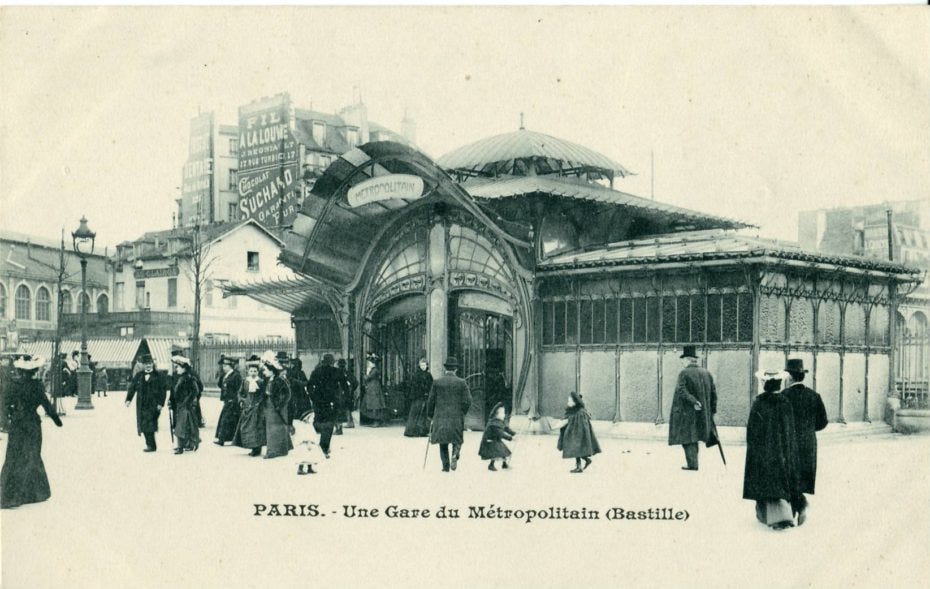
Before I really leave you, in doing my research I stumbled on an old photo of this gorgeous Art Nouveau station at the Bastille metro stop. (Bastille is not on Line 6 but I love this pic so much, I’d be remiss not to share it.)
Betty Carlson: I watched the video, which I rarely do on Substack, and definitely recognized some of the buildings going by.
Something you might be interested in: when I was teaching high school French in the States, I used a book called “Le Monstre dans le Métro” for my second-year classes as a supplement to our textbook. I looked it up this evening, and it appears to have been written in 1977, which means it was quite modern when I started teaching in 1982. The action takes place on Line 6, and that is where I learned the names of many of the stations.
I later led two trips to France with students, and we rode line 6 the way you suggest, as an activity in and of itself. My students loved seeing the actual stations referred to in the book. I’m quite sure it contains a line something like “Corvisart! Glacière! Saint-Jacques! Le monstre se dirige vers la station Denfert-Rochereau!”
Lindsey Johnstone: Such a gorgeous post! I haven’t been on the 6 for years and you’ve inspired me to take it just for the ride.
Thanks for reading Out My Window! Subscribe for free to receive new posts and support my work.
If you are interested in other Substacks about Paris and France, check out Judy’s FranceStack. She has listed each of us who wish to be included in her list of Substack’s on all the many wonderful aspects of France. “Savvy Francophiles read ‘le Bulletin’ newsletter: a luscious immersive weekend of Francophilia, including recently published articles from MyFrenchLife.org by me, Judy MacMahon, Fondatrice, MyFrenchLife™ Magazine”
A bientôt,
Sara
Discussion about this post
Comments
Restacks
Jenn BraggFor Love of France19 mins agoSara, thank you so much for your very kind review of my work. I’m honored to be able to share this platform (and a love of France) with you and Judy and all the others who write about France! 🇫🇷 LIKEREPLYSHARE


 Out My Window