Sylvie Kauffmann, a former correspondent in Moscow and Washington and a member of Le Monde’s editorial board, answers questions about Trump’s second term as US President

Donald Trump’s election for a second term will have consequences beyond the United States and in Europe in particular. The Republican has repeatedly tested the United States’ relationship with its historical allies and he notoriously promised to settle the war in Ukraine in “24 hours”.

But that doesn’t say what Trump will actually do once in office. What do the president-elect’s first declarations and appointments suggest? And will he deal with a united or divided Europe?”—Le Monde

This Q & A was held virtually. To read as the questions were addressed, start at the bottom of this Substack.

Thanks for reading Out My Window! This post is public so feel free to share it.

This is the end of our Q&A. Thank you very much for your great questions, looking forward to discussing Trump again with you on Le Monde in English!

Sylvie Kauffmann (Columnist)

4:47 PM (Paris)

Many Ukrainians I know seem happy about his reelection, hoping for change. Given he often oscilates between extremes, could we actually expect a positive change when it comes to US support for Ukraine?

Haris

Hi Haris,

This is a very good observation. Many Ukrainians, including in the leadership, have been frustrated over the past several months by the Biden administration’s hesitations, particularly by its refusal to grant permission to carry deep strikes within Russian territory using Western long-range missiles. I have even heard the nickname “Snake Sullivan” for Jake Sullivan, Biden’s National Security Advisor. They pointed out that Trump, during his first term, provided them with the first lethal equipment, the Javelin anti-tank missiles, that Obama had denied them. So those who were most critical of Biden hoped for a positive change if Trump was elected. Whether this positive change will actually happen is anybody’s guess. I think it will very much depend on President Putin’s attitude and also in part on China’s position, since it supports Russia in this war.

Sylvie Kauffmann (Columnist)

4:39 PM (Paris)

What will be the consequences of the political crisis in Germany for the union of Europe?

Clem

Hi Clem,

The first consequence of the political crisis in Germany is that it is missing in action at this crucial moment when Europeans should be getting together and showing a united front to the future Trump administration. The general election has been set for February 23, which means that Chancellor Scholz and his team will be busy campaigning when Trump is inaugurated and possibly when negotiations start over Ukraine. And it will probably take at least another month or two, or more, to build a governing coalition after the election.

This is the odd and unfortunate situation in Europe at the moment: its two biggest countries, Germany and France, which are supposed to provide the European “engine,” are weakened by domestic political and economic problems. This gives more space to a new player, Poland, to be more active: this is exactly what the Polish prime minister, Donald Tusk, has been doing since Trump’s victory, trying to coordinate a European common position to strengthen Ukraine in the event of a negotiation.
Poland calls for Europe to wake up after Trump’s victory

Published on November 7, 2024, at 4:06 pm (Paris) 2 min read

Sylvie Kauffmann (Columnist)

4:27 PM (Paris)

Does Trump care about Macron, one of the first leaders to have congratulated him on November 5?

Erika

Hi Erika,

You are right: Macron was actually the third European leader to congratulate Trump on November 6. The first one of course was Viktor Orban, who celebrated on X “the biggest comeback in American political history,” the second was the Austrian chancellor. Macron certainly hopes to resume the friendly relationship he had with Trump during their first term (Macron was elected president for the first time in 2017), even though he failed to convince him not to withdraw from the JCPOA (the Iranian nuclear deal) and from the Paris climate agreement. But they managed to have a working relationship, one that would be very helpful to have this time too.

But things are different today. The world is much more dangerous and unstable, a war is raging in the heart of Europe and the 47th president of the United States will most likely be more radical than the 45th. Also, Macron is weaker than during his own first term because of the political crisis at home and the fact that he no longer has a majority. So it remains to be seen who, with Trump, will speak for Europe. Orban will certainly have a close relationship with him but he can’t claim to speak for Europe.

Sylvie Kauffmann (Columnist)

4:10 PM (Paris)

Can Biden grant Ukraine membership to NATO invitation before the end of his term?

Ali

Hi Ali

Yes, theoretically, President Biden can state that he is in favor of extending an invitation to Ukraine to join NATO − something he has consistently been opposed to so far. This was part of the “victory plan” President Volodymyr Zelensky presented both to Biden and Trump in September. But this is not the most likely scenario.

Read more

‘Zelensky hopes to get an invitation for Ukraine to join NATO out of Biden before he leaves the White House’

Published on September 18, 2024, at 10:23 am (Paris) 4 min read

Sylvie Kauffmann (Columnist)

4:01 PM (Paris)

Are the Europeans hoping to obtain anything from the Biden administration in the next two months? Something that couldn’t be undone immediately by Trump

Liam

Hi Liam,

Yes indeed. This was the subject of the talks held yesterday in Brussels between Secretary of State Antony Blinken and NATO leaders and officials. The idea is to strengthen Ukraine’s armed forces and possibly provide them with more equipment in the short term so that Ukrainian leaders are in a stronger position when a negotiation with Russia eventually starts. But the Biden administration and Europeans must act very quickly, as the situation on the frontline is deteriorating.

Read more

Ukraine’s dashed hopes after three months of an incursion in Russia that was supposed to change the course of the war

Published on November 9, 2024, at 4:00 pm (Paris) 13 min read

Sylvie Kauffmann (Columnist)

3:58 PM (Paris) Further reading

The Republican president-elect has stepped up his threats to withdraw the US from NATO, to which it is the main contributor. Allies anticipate a symbolic withdrawal from the coordination of military aid to Ukraine.

NATO, better prepared for Trump than in 2016, is still leaping into the unknown

Published on November 9, 2024, at 11:45 am (Paris) 6 min read

3:53 PM (Paris)

Are the Europeans involved in negotiations now with Russia to end the war or do they just want to continue to send aid to Ukraine hoping that the Russians capitulate? Trump says he is going to appoint a special negotiator.

Thomas Winterbottom

Hello Thomas,

Very good question! As far as we know, there are no negotiations going on at the moment. Most chances are that in Trump’s mind, any negotiation to end the war in Ukraine will be held between Russia and the United States – hopefully also with Ukraine involved. But he has never mentioned the possibility of inviting Europeans to sit at the table. This is a huge issue for them, particularly for France, because what is at stake in a possible settlement of the war in Ukraine is not only the future of Ukraine but also the whole security environment of Europe. President Emmanuel Macron said on Tuesday: “Let me be clear: nothing must be decided on Ukraine without the Ukrainians, nor on Europe without the Europeans”.

Sylvie Kauffmann (Columnist)

3:44 PM (Paris)

Do you foresee Trump following through with his threats of tariffs?

Ricardo Bruinton

Hi Ricardo,

Yes! I think this is one of the few things we can safely predict, unfortunately. The EU is better prepared this time, but it remains to be seen whether Europeans have really learnt “the art of the deal”.

Sylvie Kauffmann (Columnist)

3:44 PM (Paris)

How will Trump deal with NATO and America’s défense within Europe ?

Nigel

Hello Nigel,

We don’t yet know exactly how Trump will proceed. What we do know is how he behaved in his first term: he accused the Europeans of being free riders in NATO, of taking advantage of the United States and he demanded they spend more for their defense. The situation has improved on that issue: there are now 23 NATO members, out of 30, who have reached the minimum of 2% of their GDP in military spending. It would not be surprising that Trump now raises the threshold to 3%. Some Europeans fear that under a Trump presidency, the US might withdraw from NATO, but that seems highly unlikely, as NATO is also useful to the US. And if Europeans spend more for their defense, logically they will buy more American equipment, which is good for the American economy.

Sylvie Kauffmann (Columnist)

3:30 PM (Paris) Further reading

Hungarian Prime Minister Viktor Orban hosted a European Political Community summit in Budapest on November 7, followed by a European Council meeting.

As Trump returns, Europe’s unity is tested: ‘We’re in a boat that’s going to weather a huge storm’

Published on November 8, 2024, at 12:42 pm (Paris) 5 min read

2:50 PM (Paris) Further reading

The election of Donald Trump has plunged Ukraine into the unknown. The country is preparing for a ‘very delicate diplomacy’ when he takes office on January 20, 2025.

Read more

Ukrainian leaders fear Trump’s future appointments

Published on November 13, 2024, at 4:15 pm (Paris) 3 min read

2:45 PM (Paris) Further reading

Speaking before members of the European Parliament, the European Union’s new high representative for foreign affairs put forward a slightly different vision from the one held by her predecessor, Josep Borrell.

Kaja Kallas tells MEPs she will support EU aid to Ukraine until ‘victory’

Published yesterday at 9:16 am (Paris) 3 min read

2:40 PM (Paris) Further reading

Le Monde’s editorial

Donald Trump’s re-election to a second term on November 6, and the success of the Republican Party, of which he has taken total control, represent a major turning point for the United States.

The end of an American world

Published on November 6, 2024, at 11:15 am (Paris) 2 min read

2:32 PM (Paris) Further reading

Faced with the prospect of a settlement of the war in Ukraine from which they could be excluded, some European countries, such as Poland, are taking action, writes Sylvie Kauffmann in her latest column.

‘One week after Trump’s election, a new alignment is emerging in Europe’

Published on November 13, 2024, at 4:31 pm (Paris) 3 min read

Thanks for reading Out My Window! Subscribe for free to receive new posts and support my work.

A bientôt,

Sar
An Ode to the Democratic Party

The wonderful mary g. writes a substack called What Now? Each week she gives a prompt with lovely thoughts, background, and explanations and those of us that care to write. Prompts are such a wonderful way to write when you don’t know what to write about or you do know what to write about but the words won’t come.

This week, since Wednesday, my mantra has been “Don’t give into despair. Refuse to be numb, refuse to be depressed.” Still the few words I’ve written have been gobbledy gook. So today, in planning for some writing with my writing group, I decided to do mary’s prompt for this past Monday. 

What is an ode, you are asking. Mary’s definition is: “a lyric poem in the form of an address to a particular subject, often elevated in style or manner and written in varied or irregular meter.”

So here is my ode, unedited, but the best thing I’ve been able to express since waking up Wednesday morning. Of course, it’s not really an Ode. Nothing is elevated.

An Ode to the Democratic Party

America has spoken. It was not even close.

The people voted, they walked to booths, and they sent in ballots. 

They said they don’t care if a president is a felon.

They said they don’t care if a president has been impeached

They said they don’t care if a president spreads hatred and violence.

They said they don’t want a woman as president

They said they’ve had it with the Democrats

They said they love the orange man

Dear Democratic Party

Don’t point fingers, don’t turn on each other looking to blame

I love you 

I love what you stand for

But clearly we are out of step.

From here in France, it was a great campaign

But you assumed the average American cares about democracy,

understands the stakes

For the average American WWII was in the Middle Ages

Fascism is just a word with no meaning.

America has voted

The people are very clear what they want

It’s not what you want

It’s not what I want

I no longer recognise the country I was born in

I don’t belong

This is not a blip, something to be corrected if you just find the right cardidate.

Open your eyes, dear Democratic Party

Unblock your ears

Don’t point fingers at each other

Take inventory. Accept that this is America

Until you accept, you won’t know what to do next

You’ll do the same old, same old.

Be patient, accept and wait

Mistakes will be made

Be patient and pull together

Wait for the cracks

Be patient but attentive

Caligula brought down a Roman era

Wishing to be a god did not make him so.

Our Caligula will fly too close to the sun

Maybe not in my lifetime

                  Maybe not in yours

Be patient but be prepared.

Thanks for reading Out My Window! Subscribe for free to receive new posts and support my work.

A bientôt,

Sara

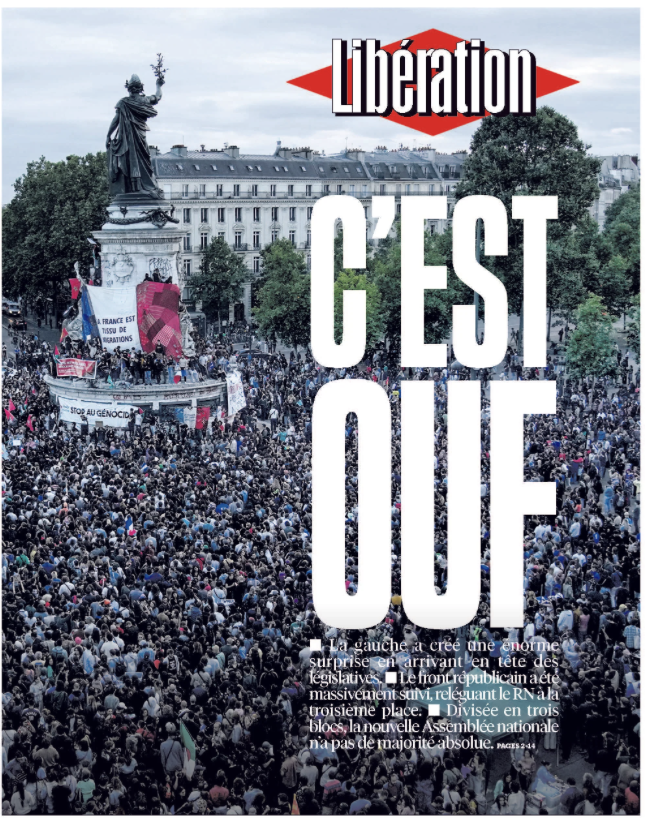
C’est Ouf or What the heck happened in France

Four weeks ago, June 6-9, there was a parliamentary election in Europe, the tenth since the formation of the EU, the first since Brexit. The Far Right won the most delegates in France. Marine Le Pen and Jordan Bardella, her handpicked ersatz leader of RN (Rassemblement National), began to crow. Within one hour of getting the results, without any warning to his deputies or his “friends”, President Macron dissolved the standing Parliament and called for new elections. They would be held on Sundays: June 30 and July 7. 

The country went into a tailspin. Journalists tried to guess why he did this. Most thought it was suicidal. In France, there are many parties from the Far Left to Center Left to Center Right to the Far Right. Macron first ran as Center neither left nor right but has turned out to be far more Right. He won his second election by a hair, many French voting against Marine Le Pen than voting for Macron. His newly formed party, Ensemble (Together) did not win a majority in the Parliament in 2022 so Macron has had difficulty passing many of his reforms. In many cases, the government has used the Article 49 of the French Constitution, paragraph 3 (Article 49.3) which allows the government (essentially Macron) to pass a law without a vote. Some journalists think that he knew he’d reach his limit of doing that. People were angry. He seemed to be favouring the wealthy. If he hadn’t dissolved the parliament, there could have been a call to pass a motion of No Confidence.

My friend, Fatiha, has been explaining to me what has happened day by day. The voters of France were galvinized. For many, the goal became ‘keep the Far Right from getting power.’ The same night as the dissolution, spurred on by François Ruffin, four parties on the left banded together and called themselves Nouveau Front Populaire. These parties do not agree on many things but they do agree that letting the Far Right get power would be disastrous for the country. They put aside any disagreements they had and campaigned as one party They agreed on a social program determining how much each piece of the program would cost. They worked on this for four days. They were the only party to think out and present a detailed plan. Fatiha and her friends were out on the street every day passing out flyers. They went door to door (mostly apartments, they would start at the top floor and work their way down) and talk to people. I asked Fatiha if people slammed doors on her. No, she told me. Some didn’t want to talk but many did. She would send me a photo of the campaigners at the end of the day all happy and exhausted.

Then came the first vote on Sunday, June 30. The outcome was 33% for the RN (Marine Le Pen), 28% for NFP (the Left), and 21% for Macron’s party. All the rest had under 12%. If a delegate received over 50% of the votes AND 25% of the constituency had voted, they were in. Marine Le Pen was in on the first vote. On July 7, all the delegates that had received over 12.5% would run against each other. This meant a triangle. There was real fear that votes would split between Ensemble and the Left giving the Far Right the majority. The left suggested and then followed through with the idea that if their delegate was in third place and RN had a chance of winning, they would drop out making it a two way run off. Macron’s party wasn’t so good. Many did drop out but many stayed. Historically, the Left has helped Macron against Le Pen probably giving him the presidency in both years 2017 and 2022. The favour has not been reciprocated or acknowledged according to Fatiha. I was now caught up in the breathtaking drama of this election. At the first election, 66.7% of France showed up to vote. “63% of French voters turned out to vote for the second round of the country’s snap parliamentary elections on Sunday, July 7, slightly less than for the first round (65%). It is the highest turnout since 1981. These figures confirm intense interest in the vote.” Le Monde

We all know the outcome. Nouveau Front Populaire won 182 seats. Macron’s Ensemble won 168 seats. Marine Le Pen’s Rassemblement National won 143 seats. A hung parliament. “A hung parliament with a large eurosceptic, anti-immigration contingent could weaken France’s international standing and threaten Western unity in the face of Russia’s invasion of Ukraine. European Union officials, already learning to deal with far-right parties in power in Italy and the Netherlands, are watching France closely. And in Rome, Pope Francis chose the day of the French vote to warn against “ideological temptations and populists”, adding: “Democracy is not in good health in the world today.” Le Monde—July 8.

The last time this kind of thing happened was in Mitterand’s Presidency. He honoured the French vote by choosing a prime minister from the party that got the most seats even though it wasn’t a majority. Fatiha has no faith that Macron will do the same. She is ready for anything sneaky, egotistical, and anti the French people. A majority of people now feel as she does. I asked her if she thought anything would happen before or during the Olympics. My common sense says it all should wait. The Olympics are fraught enough. No one knows. The French want a Parliament. Macron may try and stall. So far, he has not made an appearance on television. So far, he has not talked to the French people.

My sister wrote to me and wanted France to send NFP to the US to galvanise them. I wrote her back that there is a fatigue in the US. Much as I detest Marine Le Pen and her beliefs, she is not a criminal, she hasn’t stirred up the kind of violence that Trump has, she seems to keep her language in check. Americans seem inured to the most detestable way of speaking, they expect lies on a daily basis. We, in France, have watched stunned as all the news after the Biden-Trump debate has been about Biden and his age. Nothing about Trump’s criminal acts, his inflammatory speeches and actions, and he seems much more deficient in brain cells than Biden. WTF is going on? (Read my friend Pamela Drake’s Substack for an opinion: 

https://pameladrake.substack.com/p/the-ice-floe-or-the-endtimes

And what the heck does “C’est Ouf” mean? It’s a wonderful expression!

C’est ouf – roughly pronounced say oof – is a colloquial French expression to express shock or surprise. 

It is the rough equivalent of ‘it’s wild’ or ‘it’s crazy/mad’ in English or just ‘wow’. (From Fatiha: ‘ouf’ also means “What a relief!” This is what made the front cover of Liberation so brilliant)

C’est ouf can be either positive or negative, depending on the context. 

The word ouf is the verlan, or backwards slang, of ‘fou’ which means crazy. While ouf is colloquial, you can still hear it used by people of different generations – not just young people.”—the local.fr

More excitement (and I’m afraid not the good kind) coming up.

Thanks for reading Out My Window! Subscribe for free to receive new posts and support my work.

A bientôt,

Sara

Thinking about the midterms from Paris

At 10 pm CET, Tuesday night, Voting Day in the USA, I was ready to go to bed. I’ve been sick and too tired to be anxious. I checked my e-mail from my sister who has worked her butt off for MI Elections: Her last e-mail reported: “We’re all going crazy with worry today–for Michigan and for the country.  I’m having a small election “party” but we all fear it’s going to be a wake…” This last e-mail I received was sent one hour later and read:`’Most of the people I invited aren’t coming because they are so depressed and just don’t want to face it. So it’s going to be weird.” She followed with “Not much is going to be known for MI even by tomorrow (my tomorrow). And if the D’s win anything, they’ll call it fraud, so it’s all a big mess.” 

I woke up Wednesday morning to two wins in MI, Governor Whitmer has retained her seat and a house member has also won. According to CNN, the Dems were very happy and relieved. I wanted to call my sister and wake her up but thought better of it. 

from Frank Bruni’s Op Ed piece in NYTIMES.

People have had a rainbow of reactions. I wondered about my own lack of anxiety. Perhaps it was because I’ve been sick for over a week and didn’t have the energy. Maybe I’m just too far away living here in Paris or maybe I’ve started to integrate that it’s useless to worry without enough information. I did pray- before I went to bed—I think it was a heartfelt prayer to whatever Higher Power watches over us. I prayed for kindness to the US. The papers were predicting a blood bath for the Democrats, and, naive me, just could not fathom that the God of my misunderstanding would send that kind of facism to the US. Unless it was to teach us a lesson. That particular god sent Hitler and the Holocaust. If there was a lesson there, it certainly wasn’t learned. With the arrival of Trump and all the ugliness out from under the rug, there is clearly as much antisemitism and white supremacy as ever.

I’ve been watching the Lincoln Dilemna on Apple TV+ and, it seems to my untrained historical mind, that things were worse back then. Worse to the point that eleven states ceceded from the Union and were willing to go to war for their beliefs. And though the South lost the war, they’ve never really given up or given in. Then there was Woodrow Wilson….”Wilson defended segregation on “scientific” grounds in private, and (scholars) describe him as a man who “loved to tell racist ‘darky‘ jokes about black Americans.” – Wikipedia. I’ve never seen statistics but I’d be interested to know how many Americans sided with Germany during WWII.

People say there will be another Civil War. I’ve said that I didn’t see massive change without violence—as if there wasn’t enough violence now. With the US’s hands in so many other wars, where would there be people willing to fight in a full-out war. The question people over here in Europe are asking is how could so much money be spent on these elections? 9.3 billion dollars. Can that be right? And now more millions will be thrown at Georgia between now and Dec. 6th. I had some naive hope that all the bullying and demanding e-mails for money might stop but no. I’ve received at least 100 in my Spam since the run-off was announced. 

There is great relief that there was no red wave. Biden called it a victory. My Letters from an American, Heather Cox Richardson, says Democracy won. There are still outstanding contests to be called. This morning I learned that Mark Kelly has been declared the winner of the Arizona senate seat. Forty-nine to forty-nine. So it could be that nothing has changed—the Senate divided fifty/fifty. The Times says the big change is Trump. He had 330 personally hand-picked people running. Very few won. 

Is there anyone who hasn’t seen this? 

Trump disgustingly threatened De Santos if he ran against him for President in 2024. Two men with god complexes running against each other. If it wasn’t so sad, it would be fascinating. The media view, one which I agree with, is that the Republican party is moving away from Trump—but towards what? A more eloquent white supremacist or someone else? 

There is still so much to learn from these elections, especially the two Senate seats in Nevada and Georgia. As of this writing, the two contenders in Nevada are neck and neck with a large percentage of mail-in ballots still to be counted. We won’t know Georgia’s outcome for at least a month. And now I learn that Nevada finished counting and has a Democratic Senator. A close call. Fifty/Forty-Nine.

Here in France, the midterms have been in the News. But my french friends say people are tired of us and these shenanigans (my word). Nobody understands what is happening to a great country like the USA. How could so much blatant hatred be tolerated? Of course, we have Marine Le Pen and her far-right but somehow to this American, it isn’t the same.

These are all thoughts. The next two years will be very interesting.

Thanks for reading Out My Window! Subscribe for free to receive new posts and support my work.

A bientôt,

Sara

Update on French Elections

My first foray out into commenting on French politics and I got some of it wrong. How embarrassing. So here’s the deal. The second round of Parliamentory voting was Sunday the 19th not the 26th. Macron’s party won 255 seats, the NUPES won 131 seats with other leftist parties winning 22 seats, and Marine Le Pen’s party, the far right, won an unprecedented 90 seats.

The question on everyone’s mind is ‘Can Macron dissolve Parliament and call for another election?” He is scheduled to speak on TV tonight.

More on all this later,

A bientôt,

Sara

French Parliamentary Elections: Who are the NUPES? A Primer

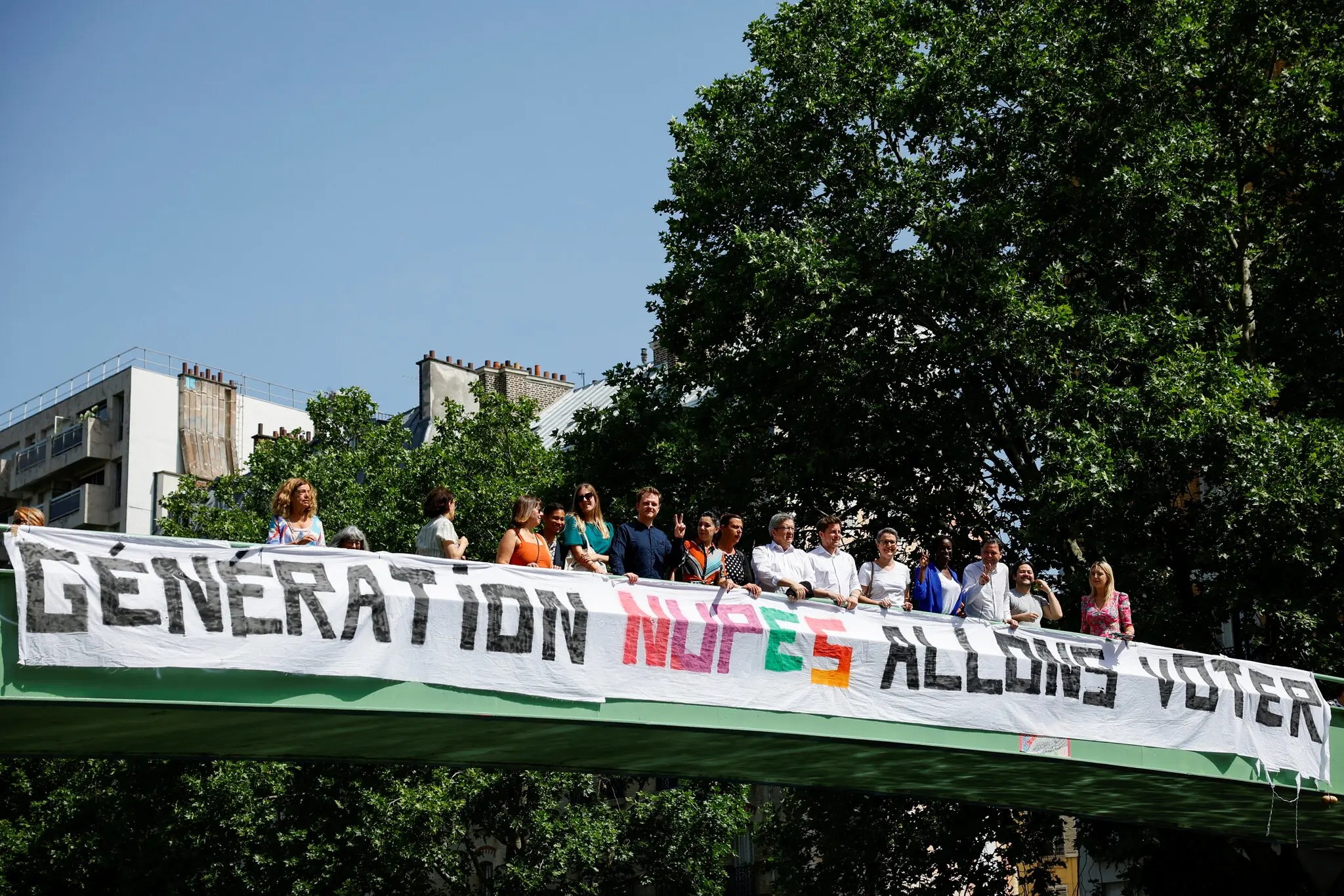
Two Sundays ago, June 12, the citizens of France voted in the first of two elections for seats in Parliament (Assemblée Nationale). For the past five years, President Macron has held a majority and been able to lead top down. Macron won his second election for President but is not enjoying the popularity he had in 2017. The parties on the left, who have a long history of fighting with each other, felt a resurgence of hope when Jean-Luc Mélenchon came in a very close third in the first Presidential elections. Now Jean-Luc Mélenchon’s party, LFI (La France Insoumise) has created along with three other leftist parties a new coalition known as the NUPES (Nouvelle Union Populaire Écologique et Sociale). On June 12th, the NUPES won a tenth of a percentage point more than Macron’s party, En Marche. Who are the NUPES why is this not good news for Macron?

Generation NUPES. Go Vote!!

Mélenchon has not been a popular candidate (He also ran for President in 2017). They call him the Bernie Sanders of the French, but he doesn’t have Sanders’s personality. You mention his name and people used to say, “oh Mélenchon, he’s crazy’. But he is a leftist and with his high percentage of votes during the first round of Presidential elections, people on the left are looking to him for guidance to create obstacles for Macron. He has become the defacto leader of NUPES. As Macron has been leaning more and more right in an effort to appease conservatives, he has neglected what has been happening on the left. The four parties that have allied together to become a new left alliance are Mélenchon’s LFI, the Greens, the Communists, and the Socialists. The Nouvelle Union Populaire Ecologique et Sociale. NUPES (pronounced Newps or New Pays). If this alliance won a majority in the National Assembly on the 26th of June, Macron would be forced to reckon with this block and probably Mélenchon would become Prime Minister. The few times this has happened in the past, the president would deal with foreign policy and the Prime Minister with domestic.  All 577 seats are up for grabs. Macron needs a majority, 289, to maintain the power he has enjoyed his first five years as President. En Marche, soon to be renamed Renaissance, could win 255 seats. NUPES is projected to win 150-190 seats. Marine Le Pen’s party could win as many as 40 up from 8 in 2017.

There is one other block of voters that made themselves known Sunday, the 12th. The no-shows or abstainers. According to the media, this is the largest no-show of voters – 52% — ever in France. It is made up mainly of young people who have stopped caring, who feel powerless to do anything about their circumstances.  There is a chance that these people could be motivated to vote for NUPES. Followers of NUPES are out on the streets campaigning in every arrondissement of Paris urging these people to go to the polls on Sunday. Although the chance of NUPES gaining the majority of seats this Sunday is very low, this group of people if motivated to get to the polls, could make all the difference.

“Perhaps the most notable loser on Sunday was far-right pundit Eric Zemmour, who attracted vast media attention in the presidential race but has so far flopped as a candidate. Zemmour failed to advance to the second round on Sunday in his bid for a seat representing Saint Tropez. Nationally, his Reconquest party won just 4.24 percent of the vote, and did not send a single candidate to the run-offs.”—France24.

To keep leftist voters away from the polls or to convince them not to votes for NUPES, Macron and his buddies have reverted to some bizarre scare tactics. In a guest essay in the New York Times, Cole Stangler, (an American journalist based in France), wrote, “Amid tight polling and mounting anxiety, Mr. Macron and his allies have sought to tap into fears of this very scenario, reverting to red-baiting. The finance minister has likened Mr. Mélenchon to a “Gallic Chavez” who would “collectivize” the economy and bankrupt France, while a leading lawmaker from Mr. Macron’s party has warned of a “return to the Soviet era.” The chief of France’s top business lobby has said Mr. Mélenchon risks pushing the country “to the brink.”

In fact, the coalition’s actual platform is far from revolutionary. It’s inspired more by the golden days of European social democracy than by the Bolsheviks. The coalition’s two signature economic policy proposals — a hike in the minimum wage to 1,500 euros, or about $1,560, a month and a cap on the prices of essential goods — are modest measures at a time of rapidly rising inflation.

Plans to raise taxes on the superrich and boost investment in schools, hospitals and transport networks contrast with Mr. Macron’s embrace of the private sector, it’s true. Yet these are popular, standard-fare progressive policies in Europe. The alliance’s bold climate proposals — a five-year €200 billion, or nearly $209 billion, green investment plan driven by the principle of “ecological planning” — have led the ecology minister to accuse NUPES of “playing on young people’s fears.” But it’s hard to see the plans as anything other than an attempt to tackle the climate crisis head-on. The costs of inaction would be much greater, anyhow.” June 16, 2022

One thing is sure, since Macron will not gain a majority in Parliament, he has to stop governing top down. He and his ministers (some of whom may not even make it back to their seats in Parliament), will have to compromise with both the left and the right.  The right is a solid unit that has actually spread from the southeast of France up North and northeast.  The question will be – can those four entities on the left, the NUPES, who have vehemently disagreed with each other over the years stick together with an overall plan or will they fall in to in-fighting? I may be projecting my own fears of the US Democratic party which seems to shoot itself in the foot whenever possible.

Jean-Luc Mélenchon

My take on French politics has never been very clear. However I have found the rise of NUPES to be very interesting and I’ve caught the excitement that this alliance has incited. I hope I’ve been able to explain, albeit very simply, what is happening here in France and what the results on Sunday may look like.

Watch the voting news on Sunday, June 26, to see how all this plays out.

https://www.theguardian.com/world/2022/jun/12/emmanuel-macrons-coalition-level-with-new-leftwing-group-in-french-elections

A bientôt,

Sara

Slouching towards Inauguration*

Tuesday, I had an ophthalmologist appointment. A reader had written to ask me what the French thought of the insurrection in Washington D.C. last Wednesday. I thought I could answer that: that they were sad for us ex-Pats, couldn’t understand how we couldn’t see it coming, and that it was the nail in the coffin for America as the shining example of democracy. So I asked the good doctor. He laughed at me and said “Have you forgotten the Gilets Jaunes and all the destruction they did?” Actually, I had forgotten. Since the pandemic started last February, much of what happened before is gone from my mind. “The French love to dissent” he said.

“But they don’t use guns,” I told him.

“That’s true. But they did an awful lot of damage over the year of weekly protests. Remember the Champs Elysees?” I never saw it but I remember the photos of stores broken into, glass everywhere, looting, and fires in the street.

“And they weren’t goaded on by the President,” I added. He conceded that point. But he had also made his point. It is not unusual for the French to protest. They love to protest. When I was in university back in the late 60s, Paris was often shut down because of transportation strikes and postal strikes. Since I’ve lived here in Paris, there have been many transportation strikes. But the Gilets Jaunes was the longest protest I’ve seen. And who knows, if we hadn’t had a pandemic, they could still be protesting.

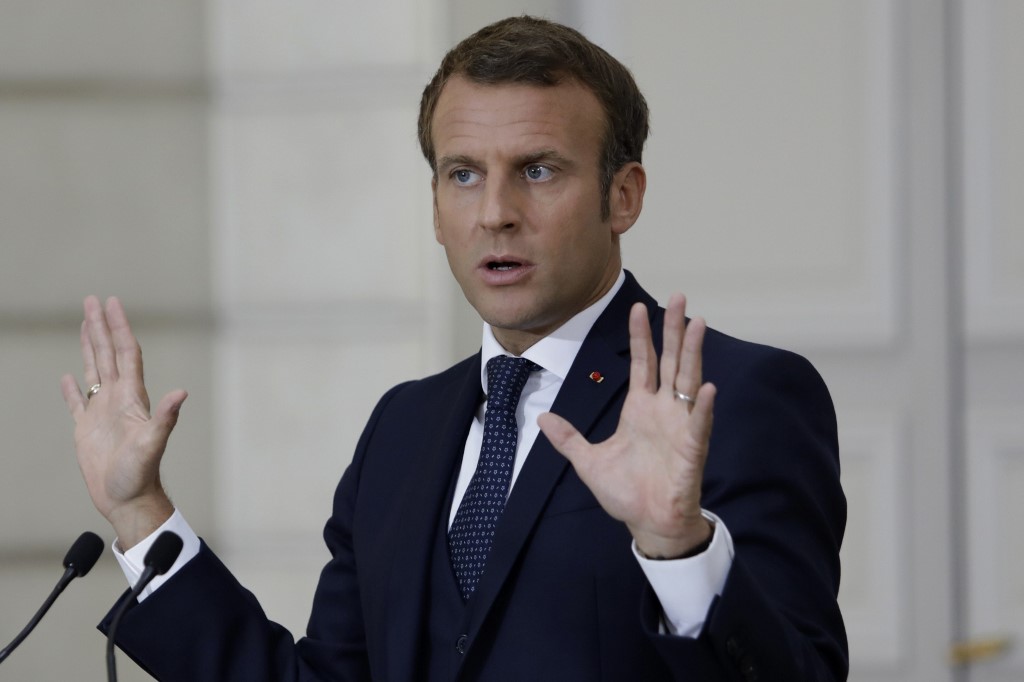
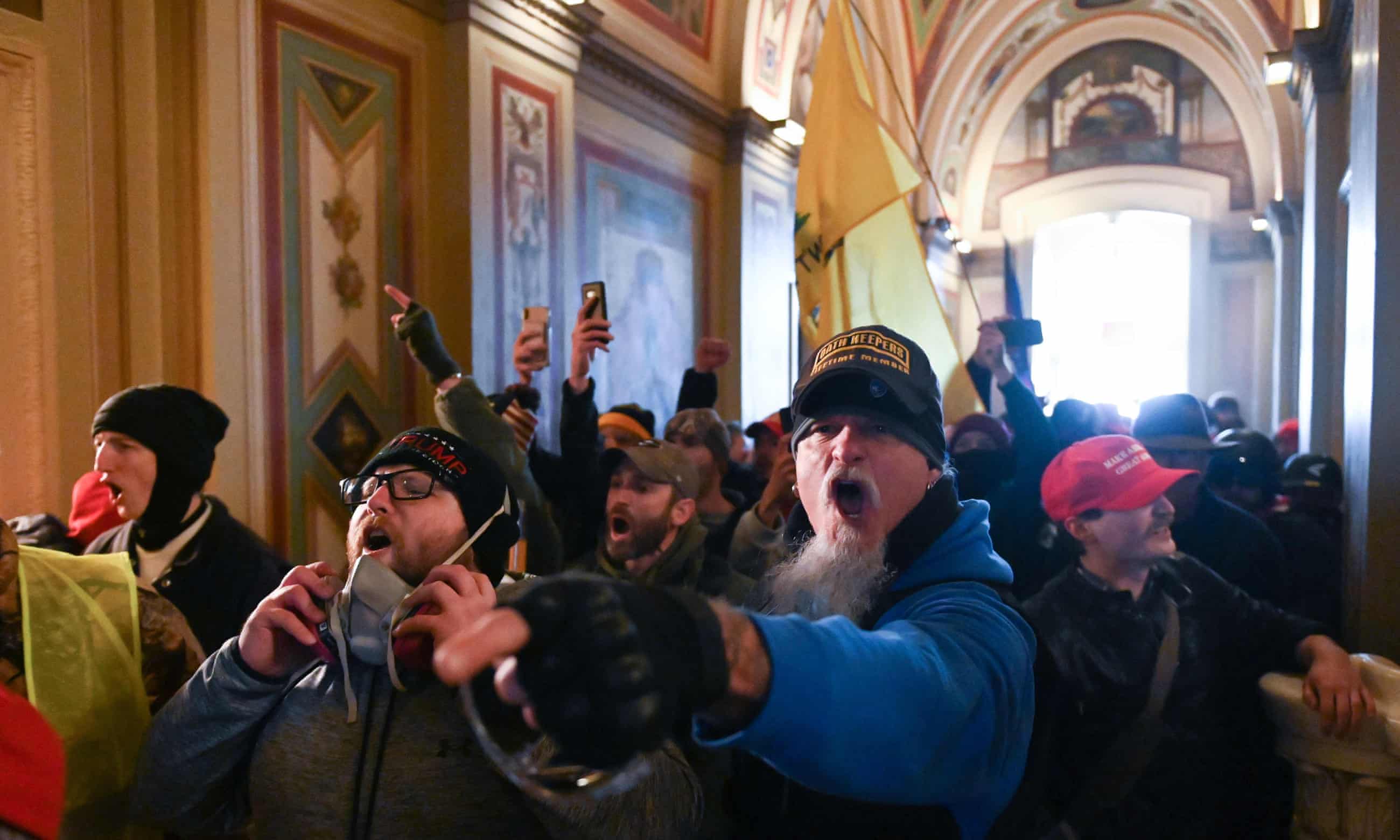
‘This is not America’: France’s Macron laments violence by pro-Trump supporters in US

President Macron is not a very popular president. But, in my opinion, he has done a good job of protecting us, as best he can, from the virus. The pandemic has taken all the focus away from how he was handling the Gilets Jaunes. However, getting the vaccine out to labs and given to people has proved very challenging for him and his administration. I’m not clear where the breakdown is but of all the EU countries, France seems to be the slowest. It’s even hard to get clear information even though someone from the Administration comes on TV to talk to us most Thursday nights. As of today, there is not another lockdown, but the curfew has been changed and extended. For all of France, the curfew is 6pm to 6am. If one has to go out, the ‘attestation’ is absolutely required.

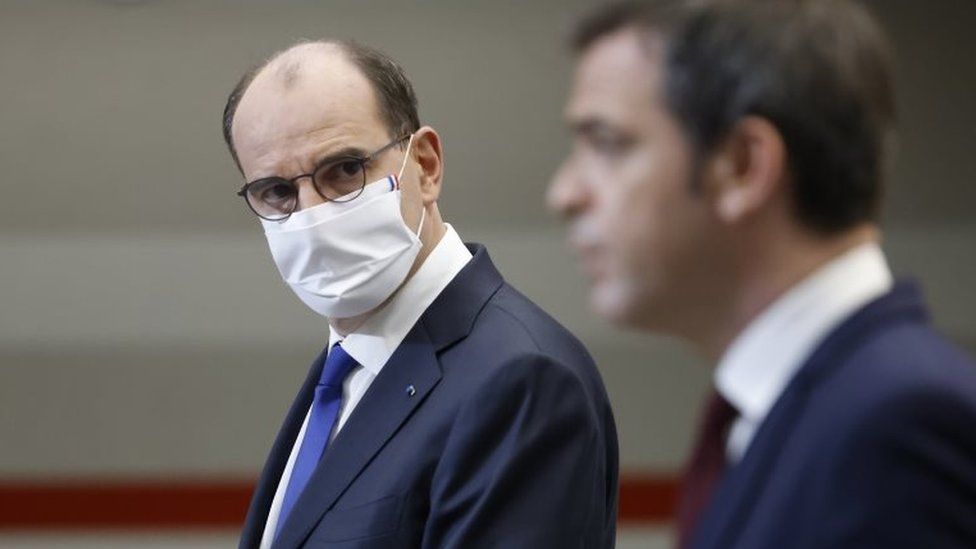
French Prime Minister Jean Castex has announced a new evening curfew will begin nationally across France starting at 18:00 (17:00 GMT) on Saturday.
The move is a tightening of a curfew already in place since December, which restricts movement from 20:00-06:00. BBC News

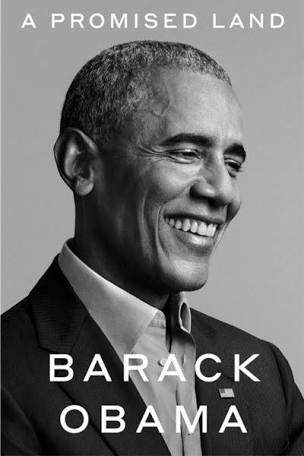
I have been reading Barak Obama’s The Promised Land. I don’t remember his other books but I am absolutely sure he is much improved as a writer. He is thoughtful, self-deprecating, and generous. Too generous. The book is long at almost 800 pages. He doesn’t repeat his earlier books. He skims over his growing up years, and then starts walking us through his many political decisions whether to run for office, their consequences, and how Michelle felt about each one. I couldn’t help but be awed. He clearly had written this book during most of the Trump presidency while Trump was publicly making it his mission to undo everything Obama. Yet, his elegant writing of his hopes and dreams, why he decided to run for President, and his basic humanity never miss a beat while, outside his study, the US was moving into crisis and the direction was clearly not what Obama has worked his whole life for. Visions of the insurrection kept coming to mind, as I was reading about the all the Hope put on Obama’s shoulders, the certainty on November 4, 2008 that finally things would change in the US. I thought once more of Van Jones’ question on CNN January 6, “Is this the death throes of something ugly in our country, desperate, about to go away and then the vision that Biden talked about is going to rise up or is this the birth pains of a worse disorder? Jones asked. “That’s where we are right now tonight. And I think the country has got to make a decision.” I thought of the Greek myths that I read in middle school. The hero has to deal with challenge after seemingly hopeless challenge as he gets closer to the prize. Is this violent outpouring of Trumpites one of the last challenges for American Democracy and the country can again move toward ‘equality for all’ or has the hero fallen and we will witness the sad flutterings of a dying dream?

And so, the world is holding its collective breath. Three and a half days until Biden’s Inauguration. The National Guard has been called out, streets are closed off in Washington. Already one person has been arrested using an unauthorised ID to get in past the “circle” of armed guards that is surrounding DC. He had a loaded Glock pistol and 500 rounds of ammunition in his car. People are being asked not to come to Washington. All 50 states have been warned that violence could erupt in their Capitols. I have canceled everything for late afternoon Wednesday so that I can watch Biden being sworn in. And, like most of my friends around the world, I’m praying for no violence. In the words of my old hippie self, “That may be a pipe-dream.”

Sonia Sotomayor

One historical note that hopefully will get air-time: Vice President-elect Kamala Harris, the first woman, the first Black and Asian, to be elected to such a high office, has asked Sonia Sotomayor, the first woman of color to be nominated to the Supreme Court, to swear her in on Wednesday. Ms Sotomayor has sworn in one other Vice President: Joe Biden in 2013!

A bientôt,

Sara

*apologies to William Butler Yeats

The Second Coming 

Turning and turning in the widening gyre   
The falcon cannot hear the falconer;
Things fall apart; the centre cannot hold;
Mere anarchy is loosed upon the world,
The blood-dimmed tide is loosed, and everywhere   
The ceremony of innocence is drowned;
The best lack all conviction, while the worst   
Are full of passionate intensity.

Surely some revelation is at hand;
Surely the Second Coming is at hand.   
The Second Coming! Hardly are those words out   
When a vast image out of Spiritus Mundi
Troubles my sight: somewhere in sands of the desert   
A shape with lion body and the head of a man,   
A gaze blank and pitiless as the sun,   
Is moving its slow thighs, while all about it   
Reel shadows of the indignant desert birds.   
The darkness drops again; but now I know   
That twenty centuries of stony sleep
Were vexed to nightmare by a rocking cradle,   
And what rough beast, its hour come round at last,   
Slouches towards Bethlehem to be born? —–William Butler Yeats

Watching insurrection from France

I was watching Legends of the Fall last night. I often watch a movie after dinner, all the dishes washed, e-mails read and written, and a few phone calls made. It was 9:30pm and I was ‘closed’ for business. I heard a text come in. Most people know I don’t check my phone after 9pm so this had to be important. “Have you seen the Capital? I’m stunned watching this terrifying spectacle of unhinged rioters smashing windows & storming the capital. I’m afraid this is going to end in a very ugly way & to think this was all created by that monster in the WH. A tragedy. A woman has been shot. It’s out of control.” I had to think about what I would do. If I turned on CNN, I probably wouldn’t get to sleep until very late. I turned it on anyway.

This image has an empty alt attribute; its file name is 4500.jpg
All the photos except the news covers were taken from the New York Times. The photos of the covers were taken from The Guardian.

CNN was doing that thing where they have a panel of ‘experts’ opining on what’s happening and why while the cameras are on the Capital outside and inside. There is also a blue dialogue box informing us who is speaking. You have to rush to keep up with them and be able to jump tracks when they do but, in the end, if you listen for an hour, you pretty much hear the same thing over and over. When I came on, Rick Santorum was speaking against the mob but not understanding how this could happen. David Axelrod jumped in disbelievingly and said ” how can you not know how this happened? Trump was out there this morning telling them to march on the Capital. To be strong and how he wished he could be with them.” Meanwhile the cameras were showing rioters mobbing the capital steps, pushing aside cops who definitely did not look like they were up to the job, more of the mob breaking windows and crawling into the building where they got onto the Senate floor and into individual offices. You could see them taking selfies of themselves in Pence’s chair, in Pelosi’s office.

Unlike baseball on TV where the announcers will give you a blow-by-blow description of what was happening visually, these many reporters and guests were asking each other and themselves questions. Like ‘Where are the police.? Why are there so few?” And everyone watching heard the understory–if this was Black Lives Matter, the police, riot squad, National Guard would be here in minutes. Van Johnson tried to spin a new way of looking at this. That we were either witnessing the death throws of this crazy movement that has ended in an attempted coup. Or we could be watching the birth of Trumpism without Trump. He pointed out that much of that choice was up to the Republicans to decide what they were going to do next-support the Coup or denounce it.

When it was quite obvious that Trump was not going to come make a statement (He was so angry at Pence that he was ‘home’ in his chair watching all this unfold), Biden, as he has done several times since he became President-Elect, called a press conference. He looked old, and in a lot of pain, but he managed to remind us all what the Capital building stood for, a citadel of democracy. He ended by saying straight to Trump “Step Up”. Ten minutes later, Trump was video’d telling his ‘crew’ to go home. Yes, the election was stolen right out from under us, everyone knows we won by a landslide. I know you are angry. I feel your pain. But go home” He then repeated the lies before asking them to please go home.

By the time I turned off the TV at a little past 11pm/5pm in Washington, the DC Mayor had announced a curfew of 6pm, a camera was showing the Nat’l Guard getting prepared to do something and we were told that all the police from Virginia and Maryland had been activated and were on their way. Even I was thinking by that time about the hypocrisy of it all. According to CNN, this had been going on for four hours. The perimeter had been breached-easily. They were inside the building. One announcer said the last time this kind of assault on the Capital had happened was in 1814 when the English attacked and burned the Capital down. The word Treason was being used more and more. Yet, four hours later, there were still only a handful of police to deal with hundreds of rabid, angry Trump lovers. When I woke up this morning, no newspaper had an explanation. Everyone I know knew absolutely there would have been violence. We would have been prepared for the worst.

Four people have died. Fifty-two people have been arrested (only 52?? I shouldn’t be surprised). The Guardian is calling for Trump to be removed by the 25th amendment or impeachment but the 25th is faster. There is a headline somewhere that announces that Ms. Pelosi has already started that process. My own personal fear is that he would start a ‘little’ war, let’s say… with Iran and dump it in Biden’s lap. There really is no end to the damage he can do in fourteen days. The good news is that since the Democrats won the two seats in Georgia — can you remember that far back in history? That there was an election day before yesterday?–the Democrats have control of the Senate and the House. Proceedings to remove Trump from office would be very different that the last impeachment.

One Opinion piece I read, and it was the only one, underscored QAnon’s responsibility in what happened yesterday. The author is Farhad Manjoo: “With One Presidential Phone Call, QAnon Shows Its Power. The sprawling online conspiracy network is at the center of Trump’s attempt to overturn the election.” This was the last thing I read last night so I hope I get it right. I don’t know if Q is a person or a group but Q will fabricate a lie and post it, it will go viral. Trump will see it and report it which then validates the lie as real news. Some of the kinder announcers last night said it was very possible that if QAnon and all its offshoots were the only thing these Trumpers read, then they really did think they were patriots. They really did think the Washington Swamp was stealing their country from them. And this is what politics and a two party system has come to. Those who believe science and the news and those who think it is all a scam by the devil to steal the country.

God please bless America

And all of us. Stay safe, stay healthy, stay alive to see a better day

A bientôt,

Sara

GOTV (Get Out The Vote)

A reader asked if I would say something about voting from abroad. I will do my best. What I’ve learned, I learned from Democrats Abroad which is a huge organization. Right now, all the energy of Dems Abroad is focused on making sure that all voters have requested their ballots. We can get them snail-mail or by e-mail. Information, state by state, on voting from abroad can be found at: https://www.votefromabroad.org

As a voter who still votes in California but lives in Paris, it is mandatory for me to register every year. On my on-line registration form, I was asked how I would like to receive my ballot. I asked that mine come by e-mail. I read recently that a good 25% of absentee ballots get thrown out because the voter didn’t do something correctly. Dems Abroad Paris has set up tables with volunteers to help people walk through filling out their ballot step by step. On Sunday, phone lines are open all day long. Volunteers are answering any questions a voter might have.

Unlike voters in the US, we can vote twice. It is a backup ballot known as the Federal Write-In Absentee Ballot (FWAB). Volunteers are set up in two places in Paris to walk people through that process. At the volunteer table, I was given two pieces of paper. I filled out the first with all my pertinent information: what state I vote in, how to identify me and my signature. The second piece of paper is a ballot with only federal offices. I filled that out with my choice of President, Senator (if someone was running), House of Representatives. Once I filled that out, I put it in an envelope and wrote Ballot on the front. I folded up the first piece of paper and, along with the envelope, put it in a second envelope. I addressed that to my Registrar of Voters in Oakland, California.

Why can we vote twice? The back-up vote is opened ONLY if the the absentee ballot doesn’t reach me in time to meet the voting requirements. At the time that I sent in my FWAB, I had not received my ballot. It has since arrived. Since I asked that it come by e-mail, I had to do all my choices on-line. When I was satisfied that it was complete, the program put it onto one piece of paper which I printed. I then went to the Poste and sent it with tracking. Some states allow you send back by e-mail. California only allows fax or snail mail.

I will probably wait three weeks and then go into the website of Alameda County Registrar of Voters. I can put in my name, address, and the end part of my Social Security number and I will get a message if my ballot has arrived. With all that I have heard about the beleaguered postal system, I felt it necessary to allow five weeks for it to arrive on or before Nov. 3.

Dems Abroad Paris is very active. Since we cannot gather inside with more than ten people, all the volunteer tables are outside in front of sympathetic stores. Shakespeare and Co., in the 5th arrondissement, has had volunteers helping Americans vote every Saturday since the beginning of September.

I will finish up this blog by telling you about something that I think is wonderful. On Monday, the website and app, http://www.TenPercent.com (a wonderful tool for learning and practicing mindfulness mediation) created something called The 2020 Election Sanity Guide. Started by Dan Harris of Channel ABC, ten percent will have a podcast each Monday in October and meditations available all the time for those of us whose brains are fried by the onslaught of information, the viciousness of campaigning and the weariness that makes one feel as if this will never end. “This guide will help you stay sane and engaged during the 2020 US Elections, without burning out. There’s something for everyone in the resources below.” says the webpage. And below there are talks and mediations and podcasts and more. Check it out. There will be a daily gift to us for the last seven days before the election. Even if you have never thought about meditation, you will enjoy the talks and podcasts. Dan Harris is funny, irreverant and knowledgeable.

Stay safe, maintain distance, be smart and stay well,

A bientot

Sara

Even the Republican ‘skinny’ relief bill failed. How is such unnecessary suffering justified?

The following is a repost from The Guardian, September 14. It is still timely. And I’m a bit more than biased about the quality of the writing as the author is my sister. Enjoy.

Margaret Somers

Republicans shouldn’t be immune from being called out for their inconsistency. Let’s not forget they once said cutting taxes on the wealthy would incentivize them to work harderMitch McConnell’s sounded ‘all but liberated from any more pressure to show compassion before the election’ after the failure of the ‘skinny’ Covid-19 relief bill.Mitch McConnell’s sounded ‘all but liberated from any more pressure to show compassion before the election’ after the failure of the ‘skinny’ Covid-19 relief bill. Photograph: Michael Brochstein/Sopa Images/Rex/ShutterstockMon 14 Sep 2020 08.44 EDT

The 31 million Americans struggling with unemployment today are not a whit less desperate and fearful now that Mitch McConnell’s “skinny” Covid-19 relief bill failed to pass the US Senate. Thursday’s performative theatrics did little more than provide cover to vulnerable Republicans and add one more day to the now six weeks since Senate Republicans refused to extend the extra $600 in Covid-related weekly jobless benefits. With McConnell sounding all but liberated from any more pressure to show compassion before the election, and the media’s attention pinned to shinier Trumpian objects, it is even more imperative to refocus on the crisis at hand and to dig beneath the hollow excuses for such demonstrable indifference on the part of lawmakers. It is time to find an answer to the question: how is such unnecessary suffering justified?The danger is now clear: Trump is destroying democracy in broad daylightJonathan FreedlandRead more

According to the Republicans, the aid is “too generous” and “disincentivizes” the unemployed from seeking work. So perverse are the effects of these benefits, they argue, that it is actually workers gaming the system who are slowing the economic recovery, not the Covid-driven loss of millions of jobs.

That these charges persist despite significant evidence to the contrarytestifies to the power of the conservative creed that few things in life are more perilous than excess government compassion: “unearned” income such as unemployment benefits perversely undermines recipients’ self-discipline and willingness to work, leaving them even worse off. It is a self-evident truth of human nature, conservatives avow, that relieving the suffering of those in need induces dependence and indolence, whereas deprivation incentivizes labor.Advertisementhttps://tpc.googlesyndication.com/safeframe/1-0-37/html/container.html

Here’s the secret sauce: since that which is “self-evident”, such as ideas about human nature, can be neither proved nor disproved, such truths are conveniently immune to debunking evidence. Thus they persist.

They should not, however, be immune from being called out for their stunning inconsistency. In 2017 these same Republicans trumpeted a radically different truth about human nature when they pronounced that cutting taxes on the wealthy would incentivize them to work harder, invest more and spur rapid economic growth.

But how is it that extra money incentivizes the rich to become paragons of moral virtue and economic rainmakers, whereas for working people it incentivizes them to become social parasites and economic saboteurs? How can there be one human nature for the 1%, and another for the rest of us?

It’s a question too rarely asked. So deeply rooted in Anglo-American political culture is this bifurcated view of human nature that it’s treated almost like natural law. In fact, it’s a product of history, originally designed to solve a problem not unlike our own, and tied to the early capitalist need for a new industrial workforce.

In the last decades of the 18th century, the English upper classes revolted against the tax burden of the centuries-old system of poor relief – so named not because it was welfare but because “the poor” were simply those who had to work for a living. As protection against cyclical structural unemployment, its recipients bore no stigma, and access to its benefits was considered a right.

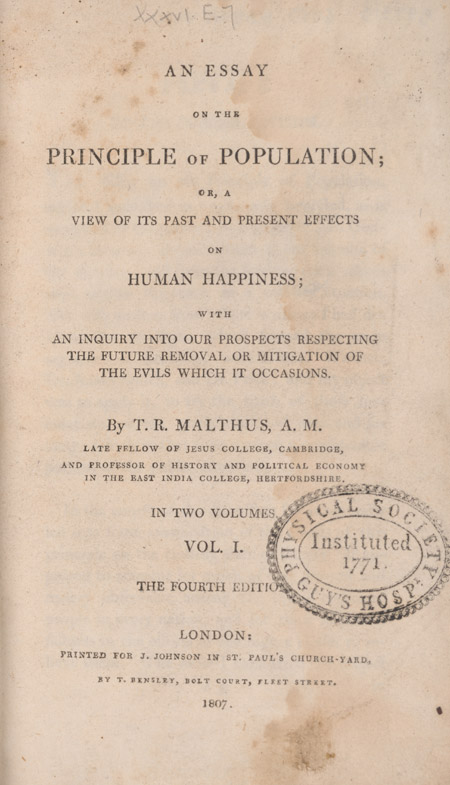
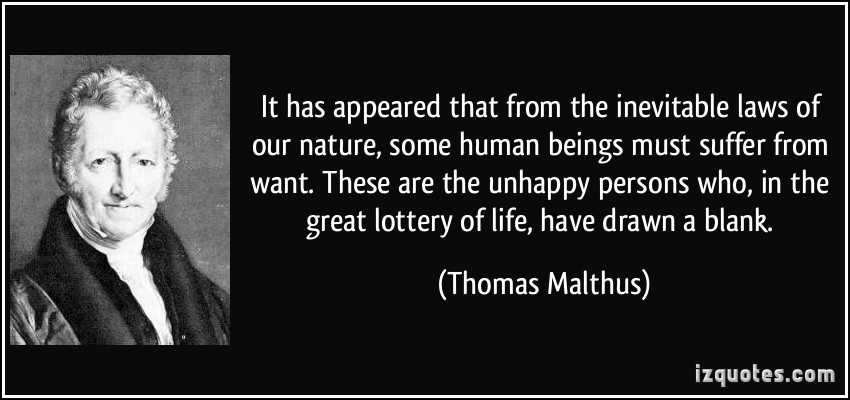
When the need for jobless benefits escalated under the pressures of early industrialization, angry taxpayers found an advocate in Thomas Malthus, who turned centuries of social policy on its head by asserting that poverty was caused not by systemic unemployment but by government assistanceitself. Providing the template for today’s Steve Mnuchins and Lindsey Grahams, he explained that aid to the jobless perversely incentivized them not to seek work.

Malthus based his argument on a novel view of human nature: society consisted of two “races”: property owners and laborers. While the first embodied the high morality of Enlightenment rationality, the latter were not moral actors but motivated only by their biological instincts. When hungry, they were industrious; when full, they lazed. They did little more than think through their bodies.

As in the natural world, maintaining chronic scarcity was the necessary motor of the whole system. Since the pangs of hunger alone disciplined the poor to work, if you remove that scarcity by “artificial” means – and nothing was more artificial than government assistance – the incentive to work dissolves. But it was not enough to simply abolish public assistance, although Malthus is rightfully credited for his role in doing just that. He also railed apocalyptically against reducing scarcity through charity. Society’s very future depended on the unemployed being fully exposed to the harsh discipline of the labor market.

Malthus’s enduring contribution to social policy was thus to make hunger the virtuous suffering that underpins a productive workforce, and “too much” the virtuous luxury that unleashes the social contributions of the rich. Armed with these two views of humanity – the rich depicted as noble paragons, the poor as inherently indolent and parasitic – conservative social policy continues to declaim the unfounded “truth” that a strong economy depends on inflicting pain on workers while providing government largesse to the rich.

The most recent iteration began with Reagan’s massive tax cuts in tandem with his attacks on “welfare queens”. It continued through the derisive conservative trope of “makers and takers” to Mitt Romney’s infamous “47%” of “entitled” “tax shirkers” to former House speaker John Boehner’s 2014 claim that the jobless think “I really don’t have to work … I’d rather just sit around” to today’s tax-cutting Republicans, who announced that they will extend jobless benefits “over our dead bodies”.

To be sure, today’s policymakers would be hard pressed to name the Malthusian roots of their belief in the perils of compassion. But that makes it no less urgent to expose their policies as based on nothing more than historical fiction. For there is a darker message lurking within this view of human nature: Reducing working people to their bodily instincts robs them of their moral worth and, as we know from how our “essential” workers have been treated, makes them utterly disposable.

  • Margaret Somers is Professor of Sociology and History, University of Michigan, Ann Arbor. Her most recent book, co-authored with Fred Block, is The Power of Market Fundamentalism: Karl Polanyi’s Critique (Harvard, 2016)