Ways to feel good during the holidays

Happy 1st of December. I hope everyone had a lovely Thanksgiving in the US and, those that live in France, that you celebrated with friends and family sometime over the weekend. I am late in wishing you a Merci Donnant as I managed to catch a cold. On Thursday, just a regular day here in Paris, I went to the 13th arrondissment to take advantage of a yarn sale by the company La Bien Aimée. They hold the once a year sale in a rented spot, calling in all their yarns, hoping, I assume, to get rid of the old and get ready for the new.

When my friend, Anjali, and I arrived at the posted address, there was a line that was half a block long, a very long half block. It was cold and had started to rain very quietly. Anjali and I had a lot to catch up on so the first 40 minutes went by quickly. Anjali had to get back to work and left after we’d been standing in the same spot—at least it seemed to me that we had not moved—for a long time. The rain had picked up, it seemed colder than the 44o posted on my iPhone and, by the time, I actually got in the store, I’d been freezing and wet for almost two hours. Not fun. 

I thought I had a plan but all plans went out of my head. I felt overwhelmed by all the beautiful yarn. I grabbed some that I was pretty sure I’d use though I had no patterns in mind and left having shopped just half the store. I took the metro back home and climbed in bed trying to get warm hoping I wouldn’t get sick. Oh well, I did get a cold and had to cancel on my Merci Donnant dinner Saturday evening.

Last year, at the same dinner, my host allowed me to read the famous Art Buchwald piece that he wrote for the Herald Tribune when he lived in Paris. I did not get through it without laughing so hard I had to keep repeating sentences. She was going to allow me to read it again. So, since that didn’t happen, I’m giving it to you, unedited.
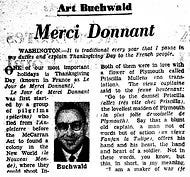
“Le Grand Thanksgiving by Art Buchwald

This confidential column was leaked to me by a high government official in the Plymouth colony on the condition that I not reveal his name.

One of our most important holidays is Thanksgiving Day, known in France as le Jour de Merci Donnant .

Le Jour de Merci Donnant was first started by a group of Pilgrims ( Pelerins ) who fled from l’Angleterre before the McCarran Act to found a colony in the New World ( le Nouveau Monde ) where they could shoot Indians ( les Peaux-Rouges ) and eat turkey ( dinde ) to their hearts’ content.

They landed at a place called Plymouth (now a famous voiture Americaine ) in a wooden sailing ship called the Mayflower (or Fleur de Mai ) in 1620. But while the Pelerins were killing the dindes, the Peaux-Rouges were killing the Pelerins, and there were several hard winters ahead for both of them. The only way the Peaux-Rouges helped the Pelerins was when they taught them to grow corn ( mais ). The reason they did this was because they liked corn with their Pelerins.

In 1623, after another harsh year, the Pelerins’ crops were so good that they decided to have a celebration and give thanks because more mais was raised by the Pelerins than Pelerins were killed by Peaux-Rouges.

Every year on the Jour de Merci Donnant, parents tell their children an amusing story about the first celebration.

It concerns a brave capitaine named Miles Standish (known in France as Kilometres Deboutish) and a young, shy lieutenant named Jean Alden. Both of them were in love with a flower of Plymouth called Priscilla Mullens (no translation). The vieux capitainesaid to the jeune lieutenant :

“Go to the damsel Priscilla ( allez tres vite chez Priscilla), the loveliest maiden of Plymouth ( la plus jolie demoiselle de Plymouth). Say that a blunt old captain, a man not of words but of action ( un vieux Fanfan la Tulipe ), offers his hand and his heart, the hand and heart of a soldier. Not in these words, you know, but this, in short, is my meaning.

“I am a maker of war ( je suis un fabricant de la guerre ) and not a maker of phrases. You, bred as a scholar ( vous, qui tes pain comme un tudiant ), can say it in elegant language, such as you read in your books of the pleadings and wooings of lovers, such as you think best adapted to win the heart of the maiden.”

Although Jean was fit to be tied ( convenable tre emballe ), friendship prevailed over love and he went to his duty. But instead of using elegant language, he blurted out his mission. Priscilla was muted with amazement and sorrow ( rendue muette par l’tonnement et las tristesse ).

At length she exclaimed, interrupting the ominous silence: “If the great captain of Plymouth is so very eager to wed me, why does he not come himself and take the trouble to woo me?” ( Ou est-il, le vieux Kilometres? Pourquoi ne vient-il pas aupres de moi pour tenter sa chance ?)

Jean said that Kilometres Deboutish was very busy and didn’t have time for those things. He staggered on, telling what a wonderful husband Kilometres would make. Finally Priscilla arched her eyebrows and said in a tremulous voice, “Why don’t you speak for yourself, Jean?” ( Chacun a son gout. )

And so, on the fourth Thursday in November, American families sit down at a large table brimming with tasty dishes and, for the only time during the year, eat better than the French do.

No one can deny that le Jour de Merci Donnant is a grande fete and no matter how well fed American families are, they never forget to give thanks to Kilometres Deboutish, who made this great day possible.” — Art Buchwald

Thanks for reading Out My Window! This post is public so feel free to share it.

A Reason to Smile

Every Sunday, Dan Rather posts on his substack along with the YouTube address, a song that has made him feel good. He has wonderful taste and I look forward to the Sunday substack each week. This week, the duet of Tony Bennet and Lady Gaga sang Cole Porter’s I’ve Got You Under my Skin. (Click on the song to hear them).  After the first couple of weeks of his songs, I was shaking my head. ‘Who knew that Dan Rather had such great taste!”

Listen and then look forward to smiling on Sundays.

Finally Chop Wood, Carry Water by Jess Craven

My friend, Jane S. in Albany, California, told me about this wonderful Sunday substack written by Jess Craven. Sundays are for all the successes, feel goods, wonderful wins in the US and the world. She and her team root out everything (though she apologises that due to wifi problems, yesterday’s wasn’t as full as usual). Who cares. Nowhere that I know of will you find in one place all the successes to combat that numbing bad news of the rest of the week. On Sundays, she adds ‘extra extra’ to her headline. To read yesterday’s Nov. 30, click here

So that’s it. I’m giving thanks for the people who take the time to unearth all the ways to get me to smile and feel good each week.

I also give thanks to all of you who read this substack weekly and especially to those of you who comment and try to get discourse going: a rare commodity in this world of 50 characters. By the way, can someone explain to me the difference between those of you who become a Follower and those that subscribe. I thought followers were for social media sites and one could wear the number on your sleeve ‘see how many followers I have!’ Here on substack, I get a notice that I have a follower and that’s the end of that—what do the followers get? 

If you are a follower, please consider becoming a subscriber over on Substack. That way you support and encourage me. 

A bientôt,

Sara
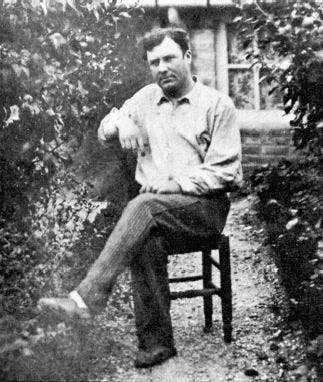
My favorite French photographer. The man who captured ‘vieux Paris’ captured my heart with his images

Those of you who have been reading me for awhile know that many of us who write about France are in a FranceStack that was organized by Judy MacMahon. This week I’d like to introduce you to Jenn Bragg and her recent post about her favorite photographer. Jenn writes For the Love of France.  You can find her substack by putting either her name or the name of the Substack in Search.

I hope you enjoy her post as much as I did.

“Something I have come to learn about France is that it puts a very high value on those who engage in literary or artistic endeavors. This is something I love about this country. And as many of us know, some of the best artists and creatives in history come from France.

love old photographs, especially of Paris, so this week I wanted to tell you about one of my absolute favorite French photographers – Eugène Atget.

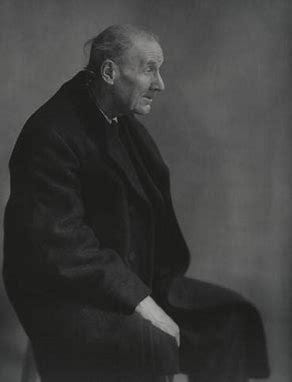
Eugène Atget, young and old. The photo on the right was taken by Berenice Abbott.

Atget always seemed destined for the arts.

Born in 1857, he was raised by his grandparents after being orphaned at the age of five. In his 20s, he worked as a cabin boy on passenger ships destined for South America. He returned to France and became an actor in the theater until he had problems with his vocal cords. Then he tried his hand (literally!) at painting. Not finding much success, he pursued photography.

Towards the end of the 19th century, Atget’s work mostly served as images on which artists could base their paintings.

But things started rapidly changing in Paris.

Industrialization began to change the city, which was being torn down and rebuilt by a man named Georges-Eugene Haussmann. Haussmann was tasked with cleaning up grimy old Paris. He did away with the narrow, rickety old streets and dilapidated buildings to create a more open, ‘breathable’ city.

Atget foresaw the disappearance of ‘vieux Paris’ (old Paris), so he decided to devote the next 30 years to documentary photography. Thank goodness, because without his work, we wouldn’t have much to go on.

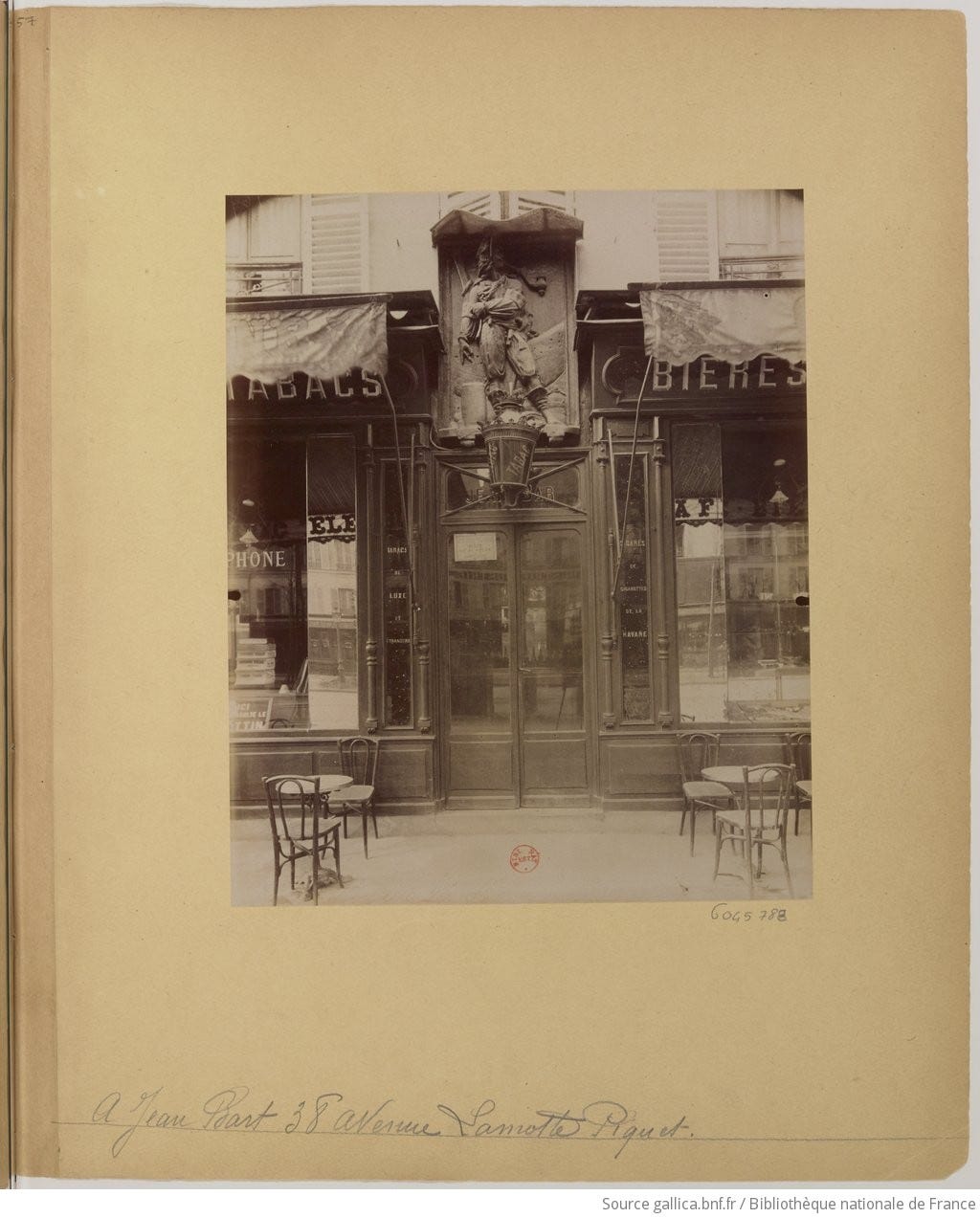
Photos of old Paris boutiques by Eugène Atget

Eugène Atget took photos of streets, storefronts, private hotels, and people. He traveled far and wide, from central Paris to the outskirts, which were entirely undeveloped.

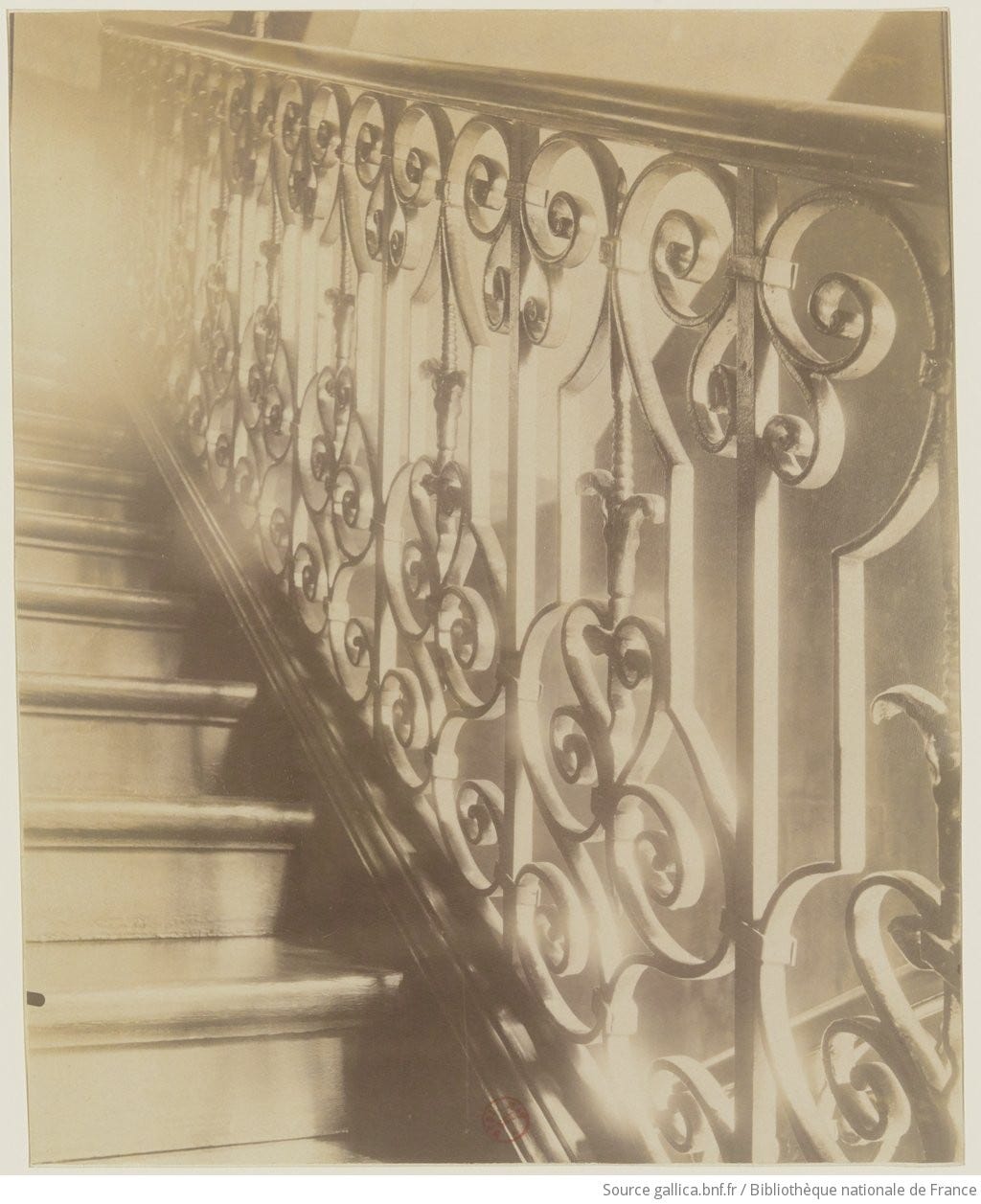
Photos capturing hotel design details. Source: BnF Gallica/Eugène Atget

Those undeveloped areas were along the periphery of Paris, an area that was known as The Zone. (Today it’s known as ‘la péripherique’ and it’s fully developed and more affordable than central Paris.)

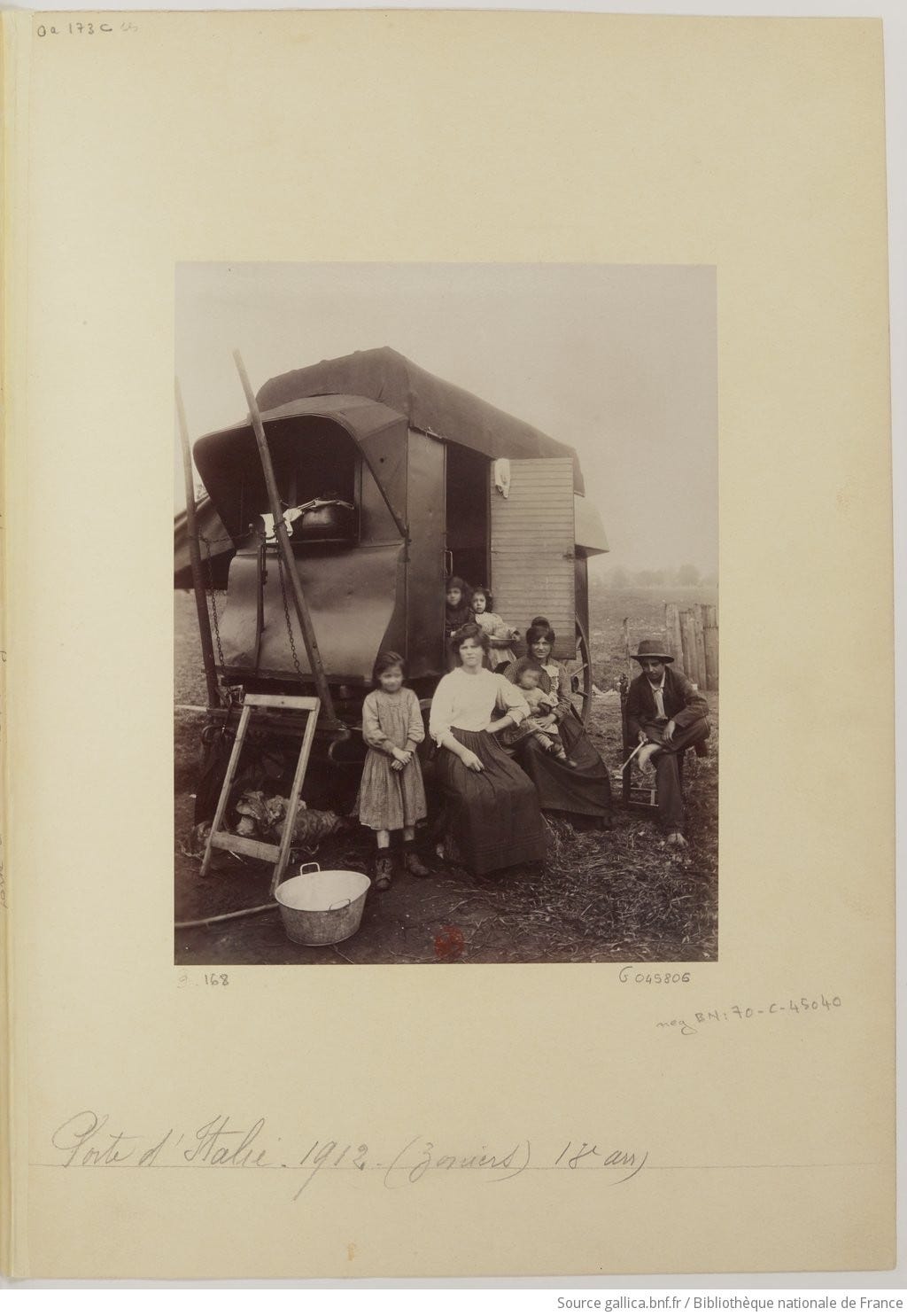
By the turn of the 20th century, the people living in la Zone were very poor, often in ramshackle, makeshift dwellings surrounded by trash. They were known as les zoniers. Their living conditions were unhygienic to say the least. It only got worse with Haussman’s project, which drove up real estate prices in Paris. (An entire article could be devoted to les zoniers, but I’ll leave that for another time.)

Atget did well to document the lives of les zoniers. When I see their images in his photos (below), they remind me of the scenes described in John Steinbeck’s ‘Grapes of Wrath’.

Except this was Paris, not the United States during the Dust Bowl.

Photos of people on the edges of Paris. Source: BnF Gallica/Eugène Atget

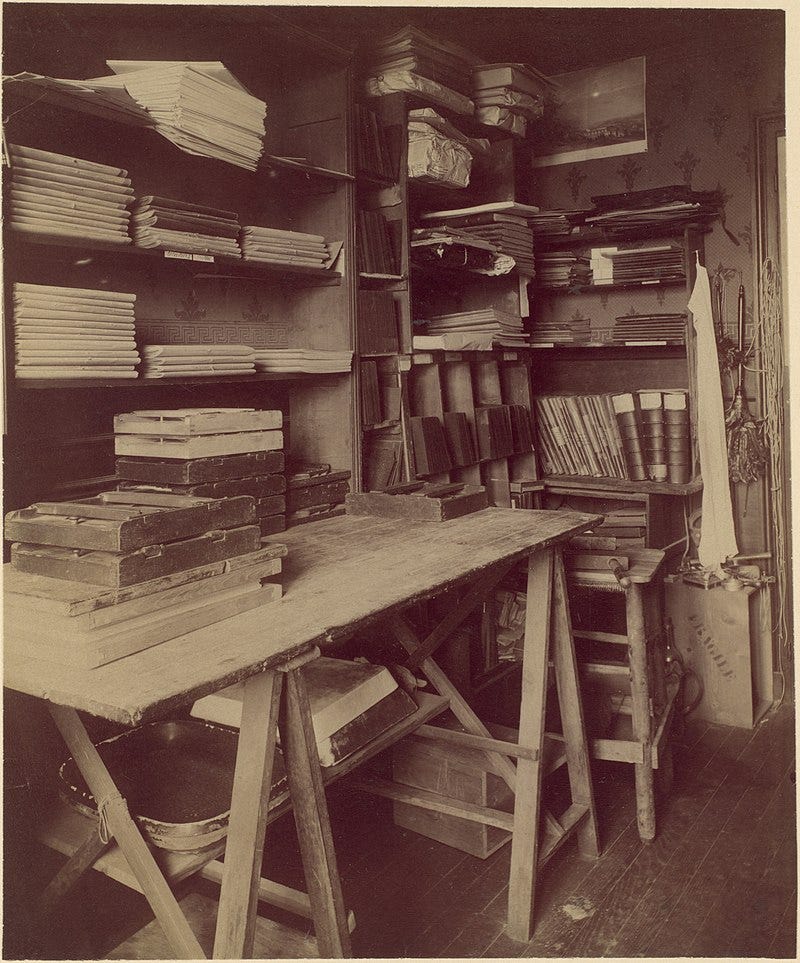
Over the years, Eugène Atget took more than 15,000 photographs, meticulously documenting exact locations and dates on his photos. He even captured his own studio (below), but identified it under a different name to create some distance between the artist and his subject.

Atget’s studio around 1910; photo: Metropolitan Museum of Art, New York

A few years before Eugène Atget died in 1927, he became acquainted with an American photographer named Berenice Abbott. At the time, Abbott was working for Man Ray in his Paris studio. (Man Ray and Atget lived on the same street in the Montparnasse neighborhood of Paris.)

Atget and Abbot shared a love for documenting (and preserving) the magic of their modernizing cities – New York for her, Paris for him. Abbott took his portrait photos before he died. Sadly, she learned about his death when she returned to Paris to show them to him.

Eugène Atget by Berenice Abbott; photo of Berenice Abbott

Seizing the opportunity to tell the world about Atget’s work, Abbott spread the word among her New York circles. She also acquired thousands of his photographs, which gave to the Museum of Modern Art. (Separately, the National Library of France also has thousands of Atget’s photographs.)

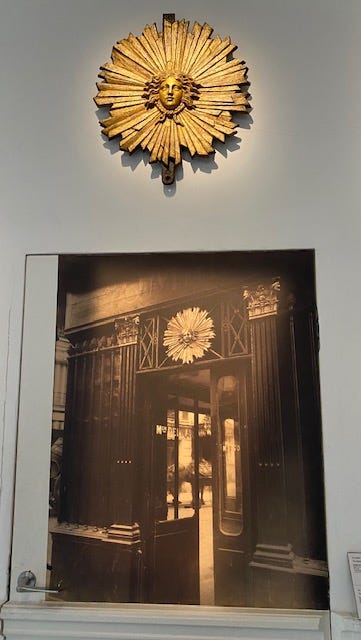
If you’re coming to Paris and have an interest in Atget’s work, you MUST visit the Musée Carnavelet, which is entirely devoted to Paris’ history. One of the best depictions of ‘vieux Paris’ is through Atget’s photography.

‘Au soleil d’or’ photo by Eugène Atget (1912) & the actual ‘golden sun’ sculpture above the door of Maison Delmas, displayed at the Musée Canavalet in Paris

Leave a comment

Sources:

Fondation Henri Cartier-Bresson: Eugene Atget

Museum of Modern Art: Eugene Atget

Bibliotheque Nationale de France

Chicago Tribune article about Atget and Abbott (from 1991)

Before you leave me, I would really appreciate if you would share my article, or my Substack, with anyone you think might be interested. I just know there is an audience out there for these ‘different’ kinds of stories from France! Thank you.”

Thanks for reading Out My Window! Subscribe for free to receive new posts and support my work.

A bientôt,

Sara

Please Keep your Hands in my Food: Why this butter made people mad by Anna Muckerman

I have mentioned before that the indefatigable Judy MacMahon, who writes “le bulletin” substack has pulled as many of us that write about France or Paris together into FranceStack (click to see all the substacks).
She encourages us to repost each other’s writings 1—because they are often on different subjects and 2—to bring attention to other blogs and Substacks that might interest readers. I urge you to go visit Judy’s Substack ‘le bulletin.’ Unlike me, she consistently writes every week, does amazing research on fascinating subjects of French life, and is a wonderful, encouraging supporter of all of us that write here in France.

The following is an article from last week’s ‘le bulletin’ written for her magazine MyFrenchLife.org. She also has a book club that meets on Zoom about 4 times a year. Before the Zoom meeting, readers have a chance to discuss the book as they are reading it. Presently, the book club is reading The Postcard by Anne Berest.

beure - Butter
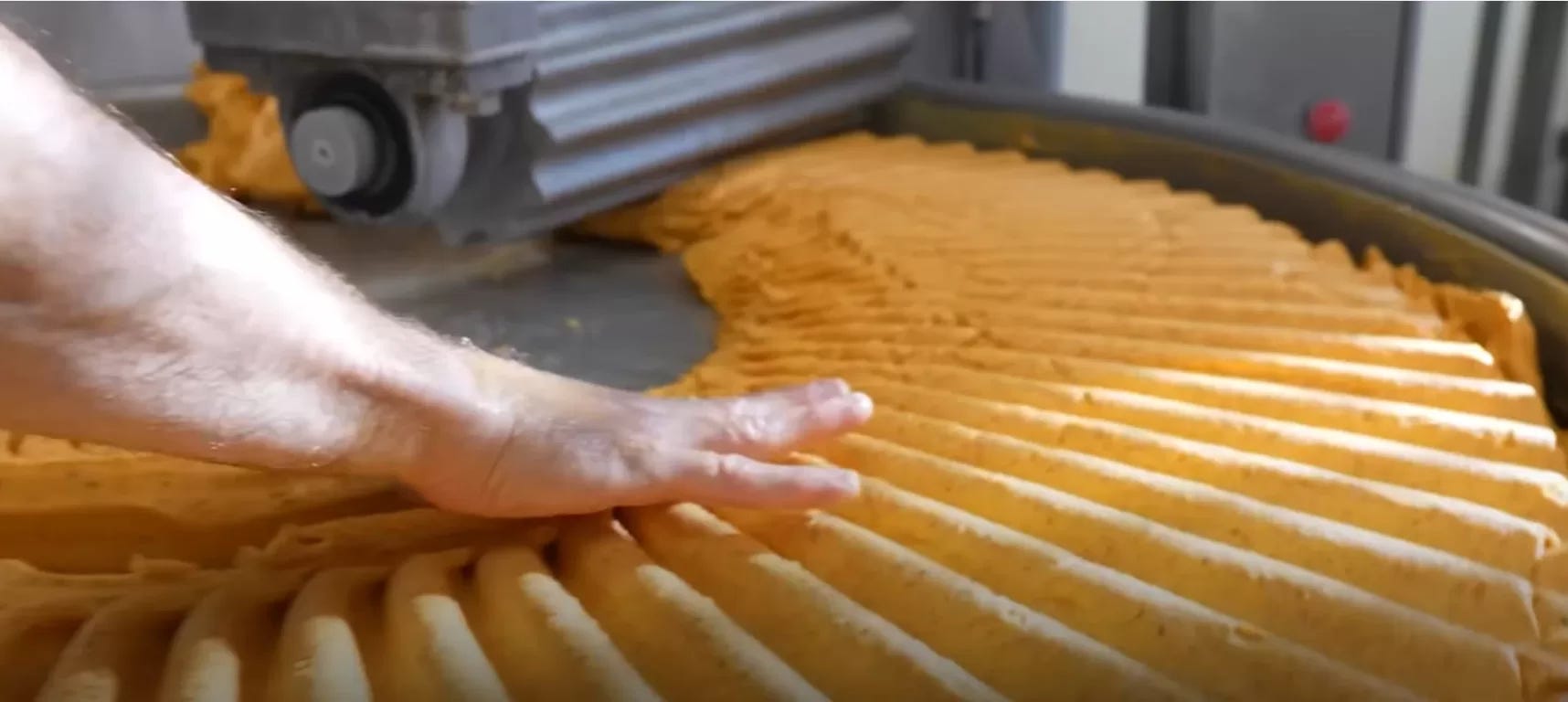
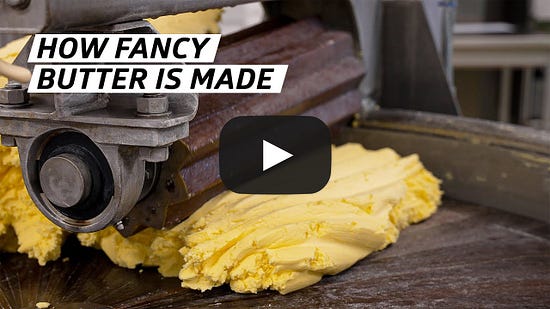
Kneading butter at the Beurre Bordier atelier in Brittany. Image from the Eater video found below

And now to the article by Anna Muckerman…….

Thanks for reading Out My Window! Subscribe for free to receive new posts and support my work

“In July 2022, I was filming a video about Dijon mustard in a village restaurant in Burgundy when the chef said to me,

You should really do a story about Beurre Bordier up in Saint-Malo. That’s what all the big French chefs use.”

Beurre Bordier

I had never heard of Beurre Bordier, but I soon discovered that it was almost like never having heard of Ben & Jerry’s — it was the butter, renowned both in France and worldwide, a gem, but hardly a hidden one.

Four months later, Eater sent me to Beurre Bordier’s atelier in Brittany to see the magic for myself. The company was founded by Jean-Yves Bordier, who in the 1980s revived the historical technique of remalaxage – or re-kneading – and developed a roster of flavored butter including the signature Brittany seaweed butter that the company is known for today.

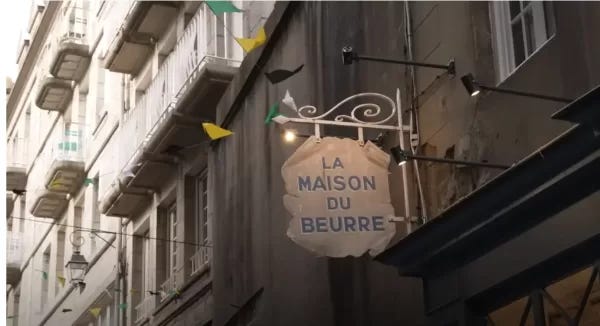
La Maison Du Beurre
Bordier’s flagship store La Maison Du Beurre in Saint-Malo

Monsieur Bordier had recently retired, but the company’s oldest employee Vincent Philippe graciously walked us through the process. I learned that Beurre Bordier does not produce butter from cream. They buy high-quality, organic churned butter in giant blocks and rework it on a giant wooden kneading machine by adding salt and removing water until the flavors become more developed (read: delicious).

Then they add exciting flavors like wild garlic, Madagascan vanilla, buckwheat, or yuzu, to name a few, and form it into custom sizes and shapes for customers around the world.

A few months later, I spotted Beurre Bordier for sale in a swanky Bangkok shopping mall. I excitedly told the young woman behind the counter that I had just been to the place where the butter was made. Understandably, she pointed at the butter as if to say Cool story, and would you like to buy some?

You can see the whole process here:

Butter and YouTube

To date, 6.6 million people have watched this video, making it my most-viewed work (full disclosure: anything about butter performs well on YouTube). Nearly 2,000 people also took the time to leave a comment. Here is a selection of them:

 – “i really like the amount of hand hair that went to making of this butter”

– “love how they wear a Hairnet but his Hairy arms are wide open”

– “Love the taste of finger prints in slice of butter..!!” (This one really cracks me up: What do fingerprints taste like? Imagine slicing butter and finding one inside!)

– “While I’m sure this is quality butter I don’t want employees working gloveless with hairy ass arms kneading my butter.”

– “Hand sweat adds flavor.”

Now, if you’re going to work with YouTube in any capacity, you can’t get bent out of shape about the comments. In fact, it’s wise not to read them at all, except in specific cases like Eater videos because there are often a lot of lovely comments from people who have nice things to say.

However, these particular comments are emblematic of a wider societal problem: We can’t stand hands touching our food. I’ve noticed it in other places, too – like this Instagram Reel and this one where people are wearing gloves while cooking for no apparent reason.

Sure, some people may wear gloves to avoid the squishy texture of raw meat (although in the first video, he doesn’t even touch the ground beef!) but what purpose do gloves serve when slicing an onion or an avocado?

It seems that somewhere along the line, we got the idea that hands = contamination and that we should use gloves when preparing everything, as if the kitchen were a hospital. We forgot that cheese is made of mold and yogurt formed by bacteria. Food should be clean, but it was never sterile to begin with.

No longer a germaphobe

Ironically, I grew up quite the germaphobe. Even as a kid, I couldn’t stand to see people make food while wearing rings and so much as an eyelash hair on my plate would ruin my whole meal. Over time though, as I’ve traveled more and eaten in other people’s homes, I’ve come to realize that hands are precisely what elevates food from a simple means of sustenance to one of life’s greatest pleasures.

Food safety is important, but cleanliness should not mean avoiding human involvement.

In many places worldwide, food is now something that comes in a brightly colored package with lab-derived ingredients. Cheese is wrapped in plastic with a picture of an idealistic-looking farm that hardly resembles modern, industrial dairies. In the U.S., I recently saw flawless, elongated bell peppers, bagged and branded with a cutesy name as if they were produced in a candy factory instead of a field.

This isn’t a rant against mass-scale food production, which has allowed us to more efficiently feed ourselves, and refocus our energy on other areas. I’m simply pointing out that the more detached we become from what food is, the more we develop a warped view of how it should be produced. We’d rather a machine pop out perfectly uniform, brightly dyed pieces of cereal than eat butter molded with care by clean, washed hands.

At Beurre Bordier, Vincent explained that bare hands allow the workers to understand; if the butter has been mixed correctly, and if the temperature and consistency are right. In other words, whether it’s safe and delicious.

To be clear, not all cultures seem to suffer from the fear of hands touching food – some embrace it wholeheartedly. After all, isn’t this the way it’s been done since the literal beginning of mankind?

I, for one, would like to say:

please keep your hands in my food. “

As Vincent told me on the day I visited Beurre Bordier, clean hands are much preferable to dirty gloves.


What’s your view on cooking with your hands? Share in the comments below.


Further reading:
French Butter why is it so delicious?
Butter: Exploring the French Paradox

Thank you for reading Out My Window. This post is public so feel free to share it.

Thank you for being such an important part of my week. This blog wouldn’t exist without you: someone who wants to know more about this wonderful country.

A bientôt,

Sara

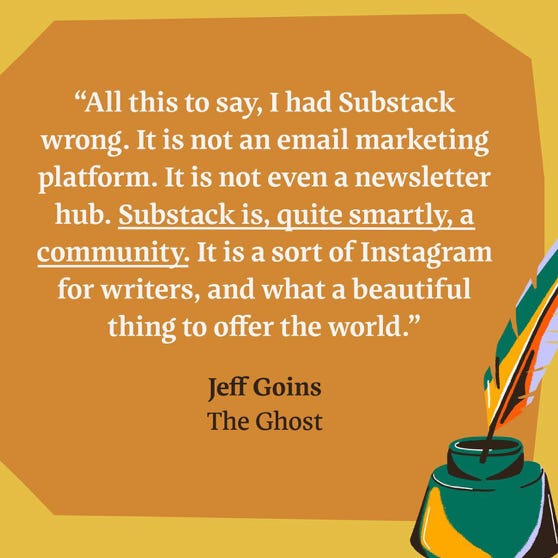
Substack–What is it?

I remember back in 2007 (only sixteen years ago) when some people logged on to FaceBook and some went to MySpace. My memory says that MySpace was difficult to navigate and FaceBook looked nothing like it does today. No one had any idea that our privacy was being stolen away from us without permission. I think I ended up using FaceBook, not because I liked it better, but because all my buddies preferred it. If the Oakland Athletics were having an Away Game, many of us sat in front of our TVs watching the game, computers on our laps, “talking” to each other on FB. It felt exciting, and fun, and we were all together—a baseball family—chatting away and enjoying the game while sitting separately in our homes.

A similar thing seems to be happening with blogging/newsletter platforms. When I started my blog in 2016, I chose the platform WordPress. I didn’t do much research. I wasn’t sure how long I might be writing it. I just wanted something that would be fairly easy and not frustrate me. I had moved to Paris three years earlier and I wanted a way to let my friends and family know what I was up to without writing separate e-mails to everyone. A few years later, Medium appeared which attracted many different kinds of writers: health gurus, Apple computer geniuses, the best apps to download and how to use them. Periodically, there was some serious writing.

A year and a half ago, my sister, knowing I admire the writing of George Saunders, sent me a link to Story Club with George Saunders. He was writing on the brand new (new to me) platform Substack. I could choose to be a free or paid subscriber. Since George was essentially teaching a course on how to read and appreciate short stories, I immediately signed up as a paid subscriber. Generous human that he is, I’ve gotten my money’s worth many times over.

Something interesting was happening at Story Club that I hadn’t experienced at WordPress or Medium. The readers were interesting, articulate, and also very generous. The give and take amongst the highly motivated subscribers was, for me, like attending one of George’s graduate courses at Syracuse. As I read the comments, I’d check the photo or avatar of the writer and learn what other substacks that person read. I discovered Heather Cox Richardson, whom I wrote about earlier this year. Her substack is now required reading with my breakfast. As of today, I’m signed up for twenty substacks and I’m a paying subscriber to four of them.

Substack attracts writers. It was founded in 2017 by Chris Best, Jairai Sethri, and Hamish McKenzie. I believe initially it was to give journalists a place to write as printed media was dying out of our world. The majority of the substacks, however, offer personal writing, opinion pieces, and research. Moderation of what is written is done by the founders. For authors, Substack is a way to make money writing. Which is VERY hard to do. A Substack is not expensive. Ten percent of the earnings goes to the founders. Initially, the founders reached out to well-known authors and provided “scholarships” to start writing on this platform. A writing community has been founded. I can read writings by some of my favorite authors: Rebecca Makkai, Jami Attenberg, Roxanne Gay, Katherine May, Joyce Carol Oates, and Matt Bell among others.

I wanted in and eighteen months ago, I started writing my own Substack: Out My Window. I also post it on my WordPress site also called Out My Window. I wasn’t sure if I was ready to get all my WordPress followers to migrate over to Substack but I was sure I wanted to be a part of this literary community. Writing about Substack this week is partly to prepare my WordPress followers to contemplate the move!

I’ve met and made friends through Substack. As I wrote last week, a new ‘friend’ I’ve not yet met, Judy MacMahon, created #FranceStack. She has collected together many of us who write about France and Paris, and created “a list” now known as a Stack! Rather than competing with each other, we can repost something that our readers would probably find interesting, AND bring attention to other writers who love and write about France.

For now, Substack is a wonderful idea that has brought well-known authors into our living rooms and made it possible for writers whose names are not Steven King or John Grisham to make a living doing what they love to do.

I did see this morning that someone has started #SobrietyStack and is charging for it which goes against all the traditions of Twelve Step programs. Recovery is free if you’re willing to do the work. 

So nothing is perfect—big surprise! For now, we have a booming literary society available to everyone. And it’s a wonderful way to support the authors you enjoy—especially if you are a library patron as I am and don’t buy that many books. If you are a WordPress follower of mine, go to SaraSomers.substack.com (click this link) and subscribe for free. Then look around Substack and find other publications that might interest you. Now is a great time to do it. Like FaceBook, like so many things in our technological world, most everything gets too big and the underbelly shows. The Internet is still the Wild, Wild, West.

A bientôt,

Sara

Thanks for reading Out My Window! Subscribe for free to receive new posts and support my work.