To the women who write with skin unzipped

How could I, someone who loves to read, loves poetry, reach the age of seventy-seven and know so little about the life of Sylvia Plath? I knew “The Story”. That she struggled with suicide, moved to the UK and married Ted Hughes. She suceeded in killing herself when she was thirty. The underlying, always hinted at, current was that she was crazy and brilliant. 
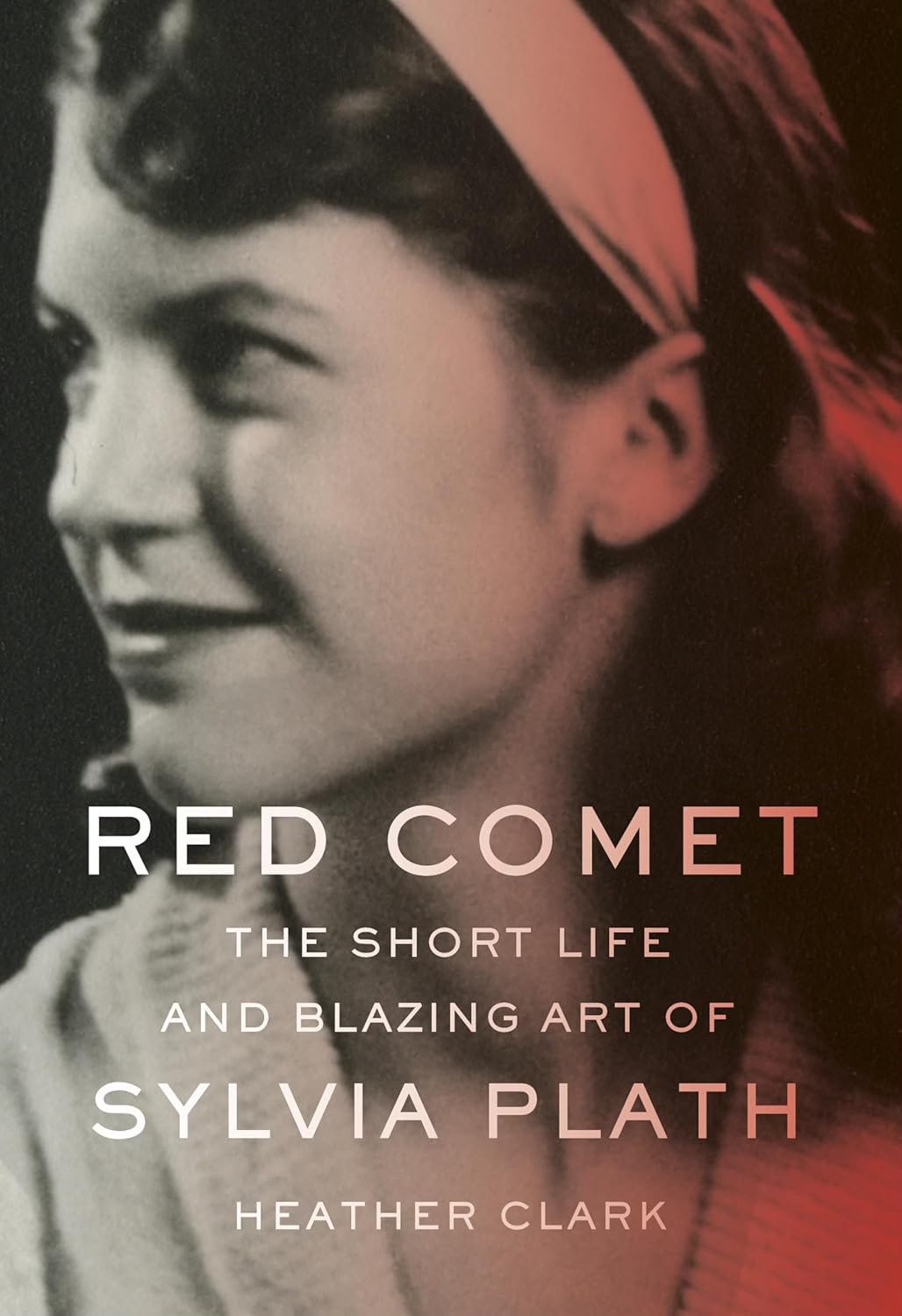
When I picked up the Red Comet: The Short Life and Blazing Art of Sylvia Plath by Heather Clark, I’m fairly certain I hadn’t read a single one of her poems. Would I have picked it up (I listened to the audio) if I’d known it was just over 1100 pages? I’ll never know. A friend, a poet, had mentioned her love and admiration for Plath’s poetry in mid-June. I was about to leave on my self-imposed Writing Residency in Saint Jean de Luz (southwest France) and looking for something to accompany me on my train ride, I found Red Comet on Libby and started listening. In reviews that I read while I was listening to the book, it was unanimous that Ms. Clark was presenting the most objective, thorough, story of Plath’s life. Not the dramatic circumstances of her death. In the years since her death, “she has become a protean figure, an emblem of different things to different people, depending upon their viewpoint — a visionary, a victim, a martyr, a feminist icon, a schizophrenic, a virago, a prisoner of gender — or, perhaps, a genius, as both Plath and Hughes maintained during her lifetime.” —Daphne Merkin, New York Times.

Her life, her love of her father, the relationship with her mother who possibly projected all her desires and ambitions onto Plath, her teen years, her internship at Seventeen, and college years at Smith were a revelation to me. 

I loved every minute of listening to this audiobook. I found reasons to take long walks just so I could listen to more. The Sylvia Plath of this book was a determined, focused student then young woman who excelled at almost everything she did. She suffered depressive episodes as I did, as so many teens do, yet she remained true to her north star. I was stunned at her singlemindedness of purpose, write and get published. I paused at one point and listened to The Bell Jar.  If you ask me why I had never read that book, I couldn’t tell you. But I had avoided it. I found the writing to be lovely, simple, easy to enter into the story and root for the protagonist, Esther. I wanted to know how much was based on her real life. Red Comet told me.
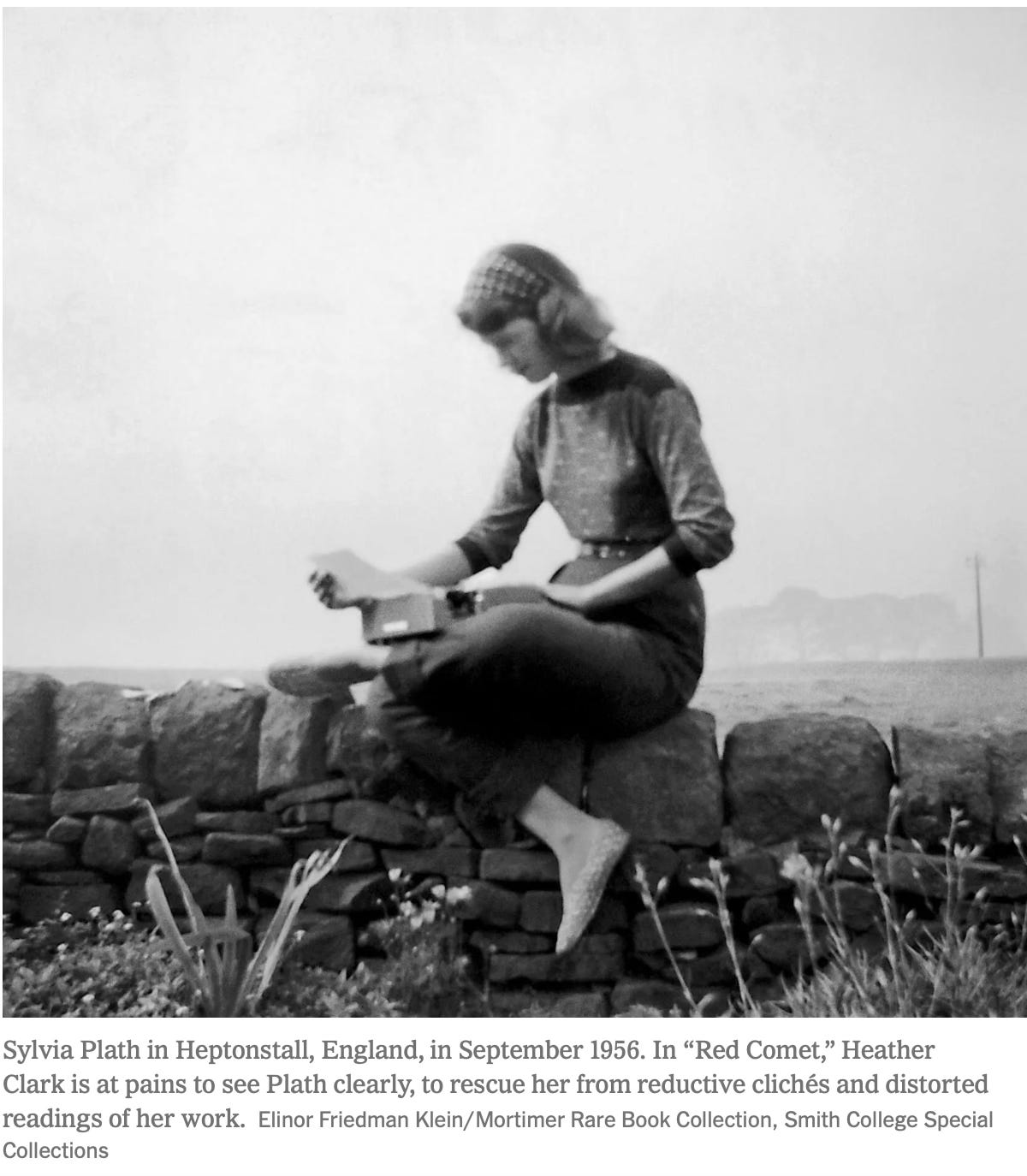
Sitting at my computer in 2025, having lived through the Feminist revolution, the #metoo uprising, all the years where, because of leaders like Gloria Steinham and Betty Friedan, women have come a long way since the 1950s when Plath was writing and advocating for herself, it’s stunning to me how she was able to stand up for herself in the only way she knew how. Her sense of competition was so strong, it drove her forward, but also may have led to her death. She had few female inspirations to look up to. 

I hadn’t planned to make it a summer of reading feminist powerhouses. For various reasons: wanting to read more essays written by women in order to emulate them; meeting Melissa Febos at the American Library in Paris and getting some positive and encouraging feedback from her, I also read Leslie Jamison’s The Recovering: Intoxication and Its Aftermath (I read Splintering last summer) and Febos’ Girlhood and Abandon Me.  Like Plath, both these women take huge risks in their writing, exposing their vulnerabilities, writing from a deeply personal place. Jamison writes about tremendous pain. Febos writes about sex and loving women and her awful childhood of being teased and ridiculed because of her large breasts. Girlhood“dissembles many of the myths women are told throughout their lives: that we ourselves are not masters of our own domains, that we exist for the pleasure of others, and so our own pleasure is secondary and negligible.”—Melissa Hart, OprahDaily.com. Jamison writes about her alcoholism, her lousy choice of lovers and in Splintering, the demise of her marriage.

All three women became professors. Plath at her alma mater, Smith College; Febos currently works as a Full Professor at the University of Iowa, where she teaches in the Nonfiction Writing Program; and Jamison at the Columbia University MFA program, where she directs the nonfiction concentration. In other words, all three women, writing as they do, leave themselves very exposed, unzipped in the world. 
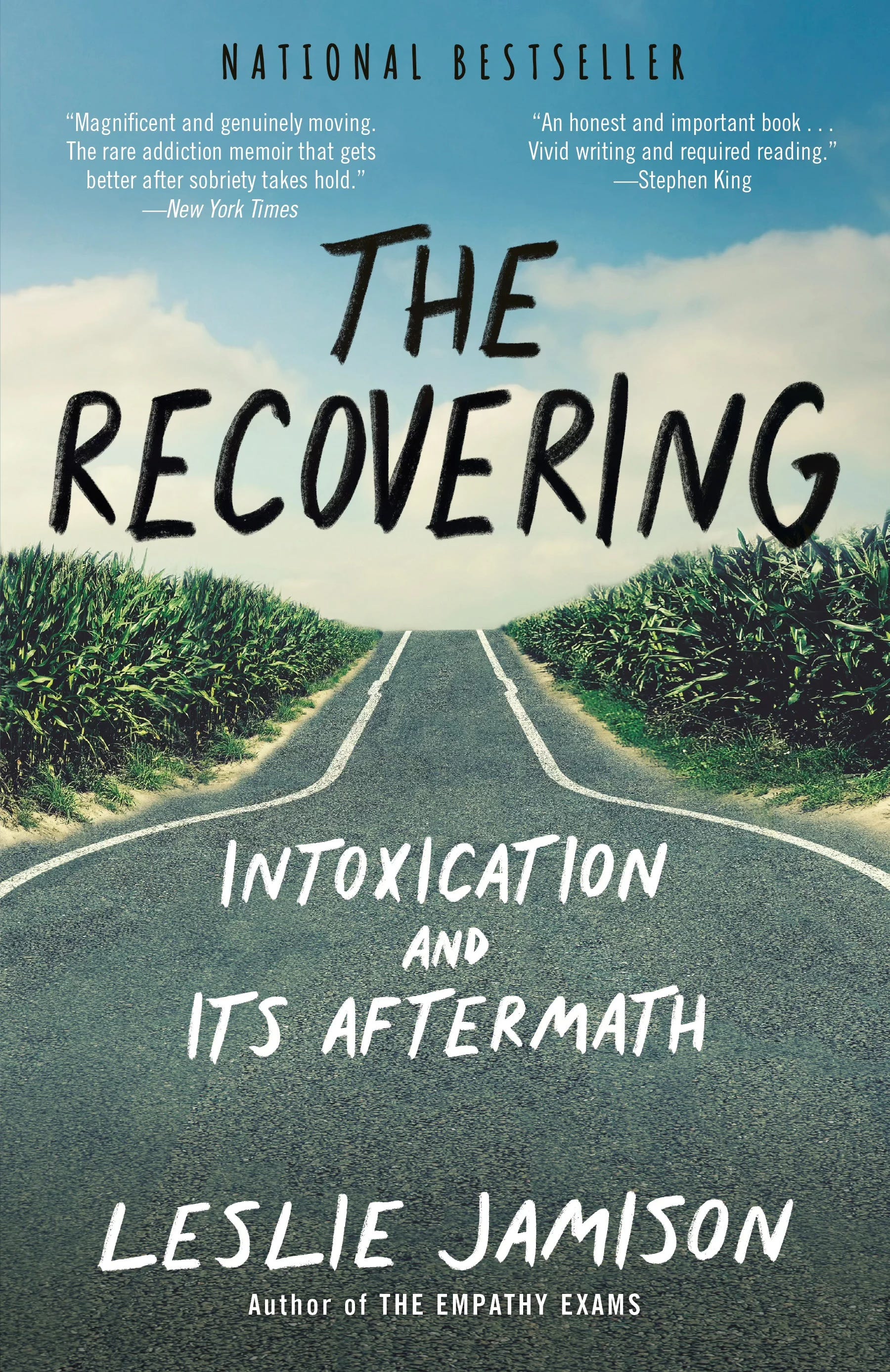
As a writer myself, I love knowing these women in depth. Febos and Jamison are alive, young, and headed towards higher accolades than they have already earned. I admire their style of writing. I am in awe of their willingess to expose such vulnerabilities. Jamison is in a twelve step program which encourages self-examination and, therefore, deep shovelling below the surface to face and admit why we do what we do and the consequences. Febos’s work asks us to question every single ‘myth’ we were raised with, every story we were told about who we are and should be, who holds the power in our world and do we, inadvertently, support that world while secretly wanting to have our own personal power. 
In the August 4th issue of the New Yorker, Jamison writes about the Pain of Perfectionism. I was struck by so much information, the kind where you smack yourself on the forehead and say “yes, that’s exactly it!”, that I was scrambling to locate on old therapist of mine from California to talk about my personal revelations. 

“To Flett and Hewitt (two psychologists she interviewed at length for the New Yorker article), the idea of perfectionism as a form of admirable striving is a dangerous misconception, one they have devoted three books and hundreds of peer-reviewed papers to overturning. “I can’t stand it when people talk about perfectionism as something positive,” Flett told me, as we sat at his kitchen table in Mississauga, a Toronto suburb where he has spent most of his life. “They don’t realize the deep human toll.” Hewitt, a clinical psychologist, has seen with his therapy patients how perfectionism can be “personally terrorizing for people, a debilitating state.” It’s driven not by aspiration but by fear, and by the conviction that perfection is the only “way of being secure and safe in the world.”—Leslie Jamison, The New Yorker August 4, 2025

Read the article.

This summer was an interesting digression for me, someone who loves to escape into mysteries and thrillers. I was revising three chapters of my forthcoming book to submit to a Writing Retreat. I was deep in an attempt to express myself without self-pity, with honesty, with self-reflection, and a desire to show my growth from one period of my life to another. I found inspiration from all three (four if you count Heather Clark, a remarkable writer and researcher) women. They guided me in going deeper, get to the real truth, the truth under what I thought was the truth, the truth that makes me squirm.

To all four of you, I say Thank You.

Thanks for reading Out My Window! Subscribe for free to receive new posts and support my work.

Please remember to go to sarasomers.substack.com and subscribe to Out My Window. I will be shutting down this WordPress blog by the end of the year.

A bientôt,

Sara
Joy and Serendipity

I am interrupting my six month WordPress sabbatical to write about 1-being back in heavenly Saint Jean de Luz and 2—an amazing experience (amazing to me) I had last Saturday.

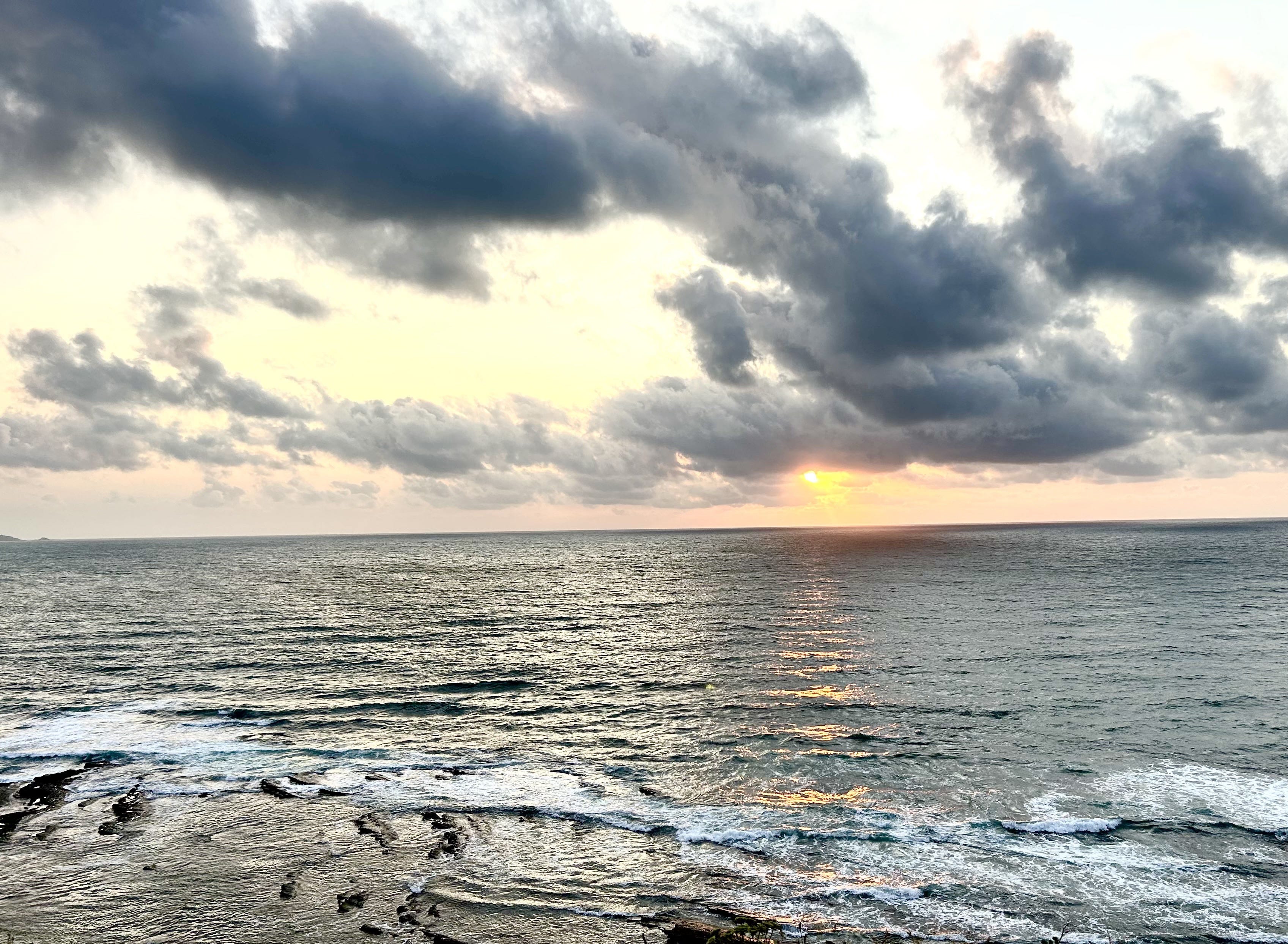
Sun setting over white caps after a very windy afternoon in Saint Jean de Luz

After being introduced to Saint Jean de Luz a number of summers ago, I have come down for two to four weeks each summer. This summer, I planned a self-imposed writing residency for myself to prepare submissions for a September writing retreat. Two or three months ago, my friend Jane from the Bay Area called to let me know she was hiking in the west of Ireland and would I like to meet up in Dublin at the end of her trip. Yes, I would love to but I had this trip to SJdeL planned, bought train tickets, paid for my rental. What did she think of coming to SJdeL? She had been here on my recommendation with her husband last summer and loved it. Needing a couple of days to figure it out, she made it happen. RyanAir from Dublin to Biarritz, taxi to SJdeL, stay 4 nights and then make the reverse trip in order to fly back to SFO. BUT….she needed to come on the 22nd and I had tickets for the 24th. I changed my train reservation and we have just spent four wonderful, heavenly days here in SJdeL. 

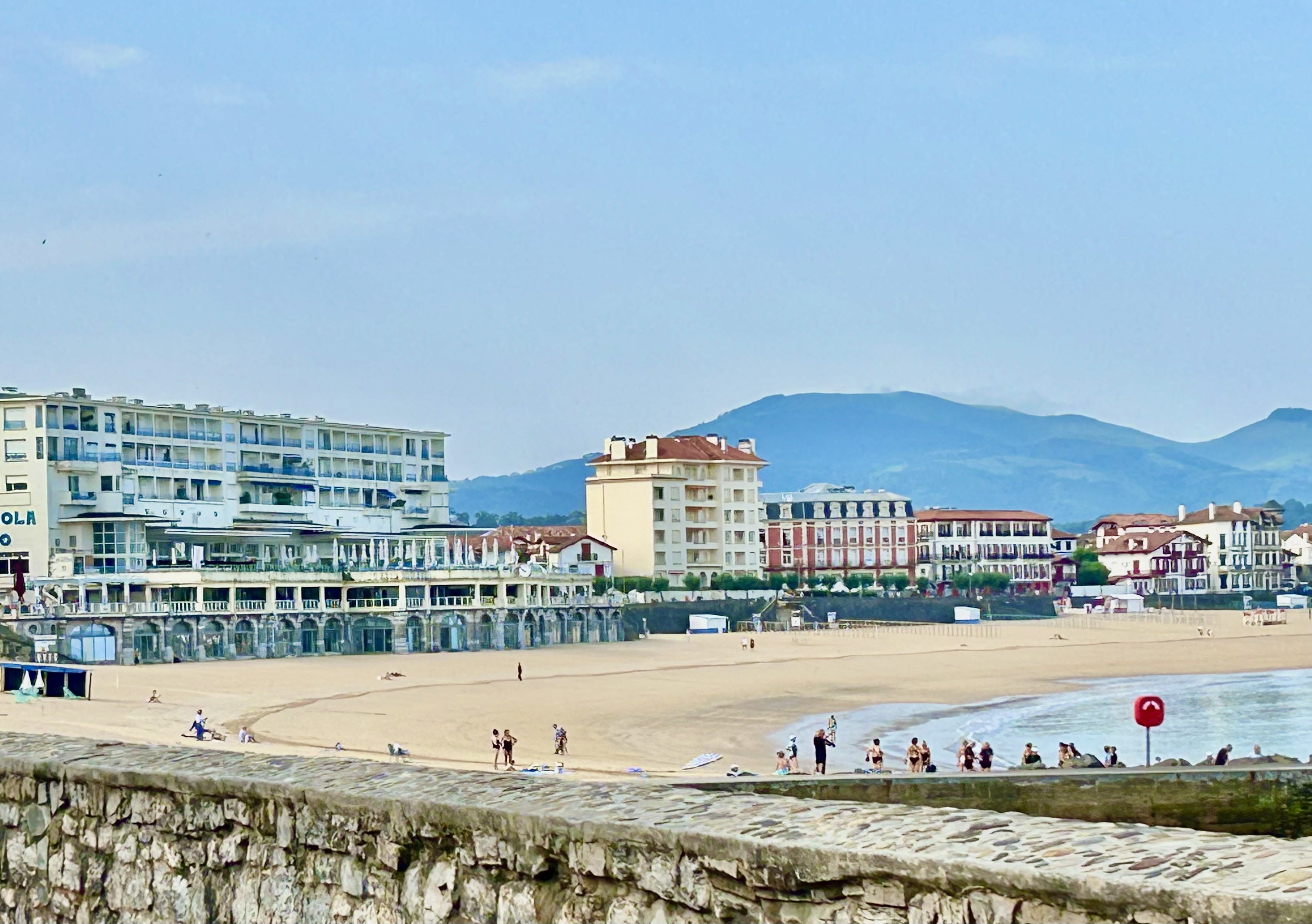
Looking at La Grande Plage from the Quai leading up to Saint Barbe

For me, it turned out to be a vacation before the writing started. I’ve been battling one thing after another health wise, none serious but all very annoying: vertigo, another carpal tunnel surgery that wanted to take its sweet time healing, etc. I slept in every morning, ate a leisurely breakfast, and then we walked the boardwalk to the marina, bought food at the marché, and shopped! I would leave Jane at the beach on our way back, and she swam while I came back to do I don’t know what. Jane stayed at a wonderful hotel at the top of the cliffs called La Réserve. A terrace extended off her bedroom and offered a view of the Atlantic Ocean that mesmerised. We’d make our dinner each evening and talk our way late into the night. Then walk to Saint Barbe and down the hill headed to my apartment. She’d leave me at the turn-off away from the beach. 

Sunset June 25, 2025

Jane and I have known each other for fifty years. We’ve gotten to be better friends as we’ve grown older and now, no matter the last time we were together, we fall into talking as if we’d been together a week ago. It’s very precious – the friendship with her and also with her husband. They have taught me a lot about thoughtfulness, open heartedness, curiosity about others just by living their lives, being examples of a life well lived.

Sharing SJdeL, one of my favorite places in the world, with Jane over these past four days has been so delightful—in the full sense of the word: full of delights. One evening as she walked back to La Réserve, she witnessed a lightning storm and took a video:

I had heard the thunder and went out on my little balcony to watch the sky explode with light. I don’t remember ever seeing such a sight. The next day after a lovely sunny morning, the wind picked up. Wind surfers gathered on the beach at the edge of the water raring to go. I was headed up to La Réserve and took this video of the sails flying by. If you turn the sound on, you can hear how loud the wind was roaring.

I’m now putting off feeling the sadness of her departure by writing about the last four days. 

*** ***

Last Saturday, my last day in Paris before leaving on this trip, I attended a poetry literature gathering. Our prof, Heather, had put together a number of poems for us to read and talk about. The first was Robert Frost The Road Less Traveled. Chatterbox that I am, I announced that Robert Frost had been the commencement speaker at my school, Baldwin School for Girls, when I was in 7th grade. The woman seated to my left, jumped and asked “What school did you say?” 

Baldwin School for Girls” I responded. 

“I graduated 1965,” she said. 

I told her that if I had stayed I also would have graduated 1965. “Did you know KV?” I asked. 

“Yes, she is a good friend of mine.”

By this time, it felt a bit Twilight Zone. In an apartment in the 15th arrondissement in Paris, France, what are the chances of sitting next to someone I probably knew but not well sixty-six years ago. When the salon had ended, we ran more names by each other. She knew them all. By the time I went to bed, that night, she had written emails to a number of them cc’ing me telling them what happened.

I had been writing a story that included skating in the afternoon when I attended Baldwin. I had been thinking of KV as she had looked then. A dreamy memory, more black and white than color. Monday morning, she wrote saying that she well remembered me. And my sister. And our thick hair—mine brunette, P’s red. 

There is something wonderful about accidents like these happening. I have unpleasant memories of being twelve, thirteen, and fourteen, actually most of my teens were not great. Here come witnesses to tell me if my memory is distorted or maybe just maybe, those times were not quite what I thought them to be. KV said she “always had fun when we got together.” I don’t think of myself as a fun person back then. It’s possible I still have some things to learn.

*** ***

My intention was to not write here until the end of the Writing Retreat in September. Time just didn’t allow for everything I wanted to do. Unless something jumps up and hits me in the face, I will stick to that resolution.

Thank you for reading and being there. Your support of my writing means the world to me.

Thanks for reading Out My Window! Subscribe for free to receive new posts and support my work.

A bientôt,

Sara

I am a daffodil

Reader: (this is my Jane Eyre moment)

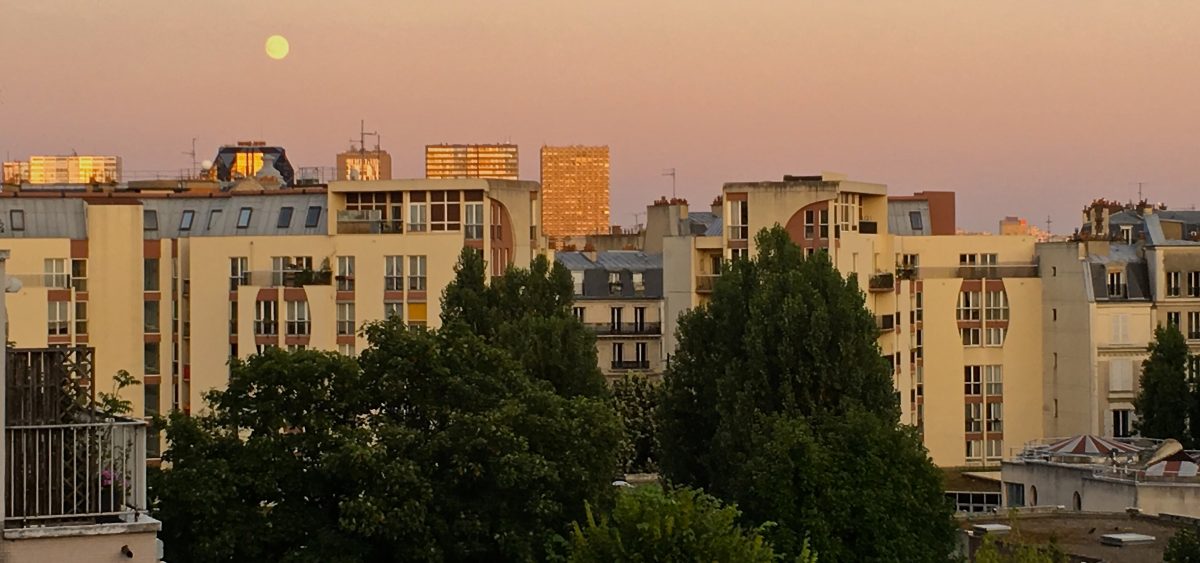
Over the past three weeks, I have had so much to write about but every morning, I read the headlines out of the US and, much like many others on Substack, it takes me most of the day to shake off the feeling of dread. Unless I’m writing fiction, writing brings me closer to whatever is going on inside my head and heart. I end up staring out the window in front of my desk, gazing at the Parisian rooftops, both grateful I live in France yet very aware that what happens in the US will affect us all.

I have also learned that I have to have a second carpal tunnel surgery on March 31. This time on my right wrist. This will dampen my writing 95% and I still am rubbish at dictating to my computer.

I have a deadline. I have to submit three chapters of my next book by sometime in June which means a lot of work. I have been viscious in axing many of the things I do on a volunteer basis and hoping that what is on my calendar now is the most neccessary appointments with myself and the things that keep my heart and soul healthy and growing. Not easy in this strange time of being alive.

Between now and September, I will only be writing sporadically. I’m suspending the paid subscriptions and everything will be free. Meanwhile, here are the things I’ve been thinking about, experiencing, and responding to:

THE BRUTALIST: I saw this movie last week. I rarely go to a cinema these days for no reason that I can explain. My friend, Elsie, said “It’s vacation here in France and I’d love to go a movie. Which one?” I didn’t even know what the word Brutalist referred to and fearing that it would be violent yet knowing it was nominated for every award possible, I thought this was my chance to see it and not go alone!!! Another friend had seen it the night before, loved it, and said the almost four hours flew by. I suggested going to it. We went to a 4pm showing. 

I thought the movie was stunning. Visually, it was a treat and not to be seen on a small screen. Adrien Brody plays what he does best—a long suffering Jew. His face was made for that role. My friend was right. The time flew by. The intermission is a welcome respite for those of us who need to stand up or go to the Toilettes during a movie. And the themes of the movie, whether you like it or not, make you think. Fascism vs Capitalism. Little educated guy vs power-hungry uneducated rich guy. Brutalism itself: which is the name of the school of architecture that came out of the Bauhaus movement in Germany. Immigration in North America: how immigrants get used and thrown away. Psychological violence vs physical violence.

I left the cinema wanting to read everything I could about the movie, about the writer and director. There was a similarity to reading a one thousand page book that has a profundity on every page. I couldn’t stop thinking about it. The next day, I had lunch with three friends and recommended they see it. All three looked at me in surprise. “Everyone I know who saw it, hated it,” they said. How could that be possible? More to think about. I came to my own conclusion that we are all overloaded and overwhelmed. During WWII, musicals became the rage as did Film Noir. Escapist movies that took the viewer away from the realities of their lives.  The Brutalist pushed issues in the viewer’s face. Many of us don’t want our movies to do that right now. When I’m at home, I want to watch All Creatures Great and SmallFather Brown, reruns of Miss Marple, old classic movies. Every part of me feels so sensitive that my tolerance for violence and too much suspense is nil. Yet, I loved The Brutalist. Go figure.

CLOCKS: REMINDER to all readers around the world: On March 9th, somewhere in the dead of night or early morning, the US will move clocks forward one hour. Here in Europe, we don’t have the luxury of late days until March 30. That is three weeks of mayhem if you don’t plan ahead. What is usually six hours difference between New York and Paris becomes five hours. If I have a scheduled phone call every Monday morning at 9am ET and the call originates in Michigan, I need to call at 2pm in Paris instead of 3pm. If a friend in California calls me each week on a Tuesday at 5pm in Paris, she would call me at 9am PT instead of 8am. 

The best thing to do is use your smart phone and look up the world clock and the times. I have missed many meetings because I couldn’t, on the spur of the moment, think correctly if I was to call one hour before or one hour after the normally scheduled time.

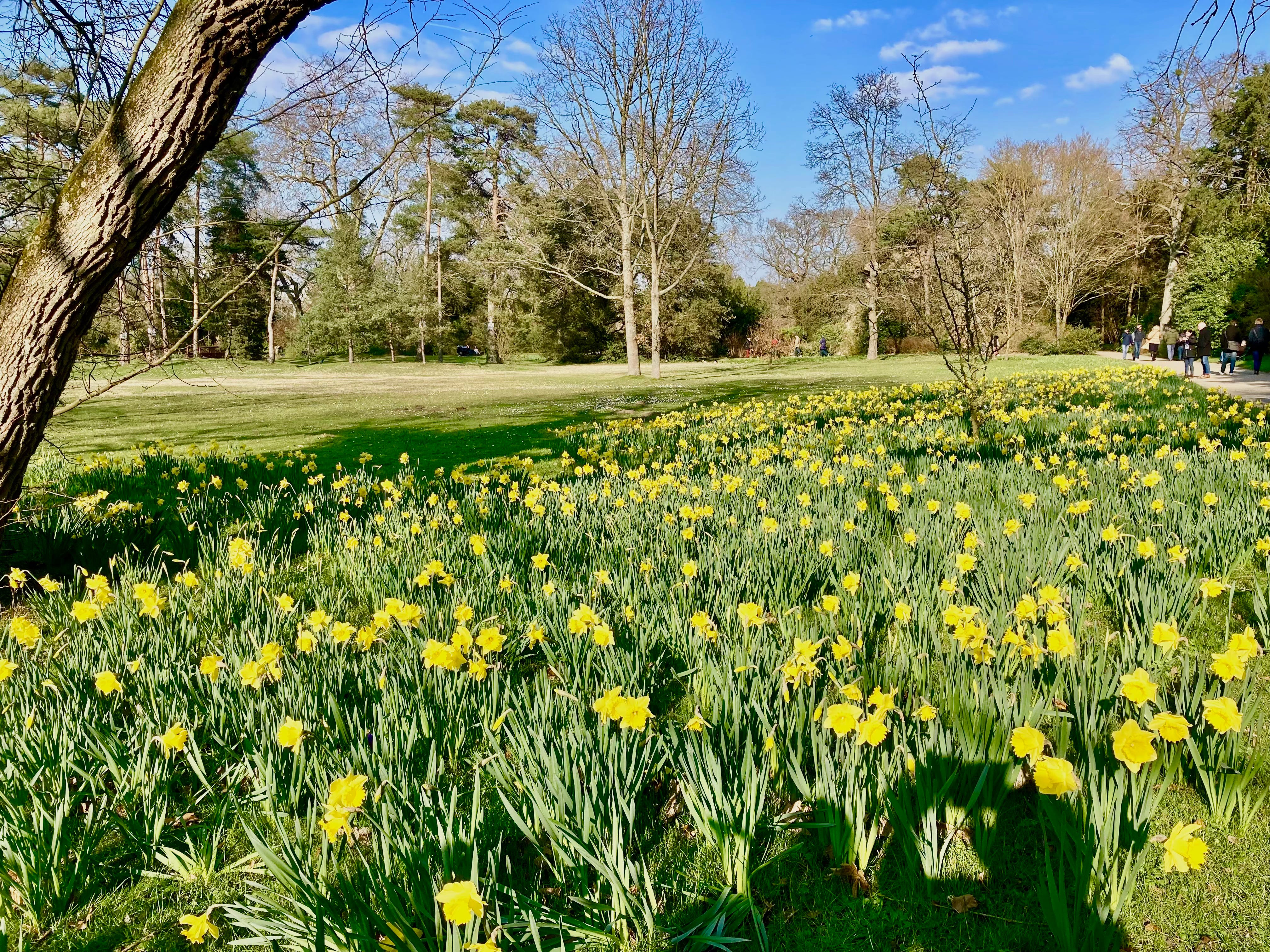
daffodils – Parc de Bagatelle 2022

PARC DE BAGATELLE: As long time readers know, I love to write about my favorite park at least once a year. The Parc de Bagatelle is situated in the upper north west corner of Bois de Boulogne. It is now a 50 minute walk for me instead of the 35 minute walk when I lived two stops higher on the metro #9. I strolled there two weeks ago to investigate the daffodils fields. These fields flower like a Wordsworth poem every February and March. It is a stunning sight if you hit it at the right time. Two weeks ago was not the right time. Maybe it is the cold of this winter, the amount of rain, the lack of sun—although none of those things is particularly unParisian—there wasn’t a bloom to be seen. Scraggly stems about three to five inches high were pushing their way up from the ground. The tulips, which usually follow daffodil season in mid March to mid April and love cold ground, the colder the better, were sprouting right on time. You can imagine the disappointment when rounding a corner and expecting to see YELLOW. Yellow everywhere. This time, just green shoots.

Today, I’m returning and taking some friends with me. The sun has been out a lot in the past two weeks and I’m crossing my fingers, hoping, hoping, hoping, to show them the glory of daffodil season at the Parc de Bagatelle. Truthfully, nothing can dampen the joy I feel when I’m there. Seeing the cats who gather very close to the majority of daffodil fields, the many peacocks who strut the grounds, barking and honking and showing off their gorgeous plumage, the lovely mallards who stroll around near the lakes they frequent, and the anticipation of tulip season, iris season, peony season, and the formal rose garden that has a yearly competition for the best rose in Paris for the year. If the daffodils are at a minimum, I will have to draw on every oral skill I have to paint a portrait of this parc that the City of Paris maintains so beautifully.

Thanks for reading Out My Window! Subscribe for free to receive new posts and support my work.

Until the next time,

A bientôt,

Sara

Four and a half years after the book!!

A interview/podcast with a lovely interviewer, Danielle Richardson

Danielle Richardson searched and found me and interviewed me about my food addiction, my memoir, and moving to Paris, France in my 60s.

It’s an hour long so listen to some of it or all of it.

Thank you,

A bientôt,

Thanks for reading Out My Window! Subscribe for free to receive new posts and support my work.

Sara

An Ode to the Democratic Party

The wonderful mary g. writes a substack called What Now? Each week she gives a prompt with lovely thoughts, background, and explanations and those of us that care to write. Prompts are such a wonderful way to write when you don’t know what to write about or you do know what to write about but the words won’t come.

This week, since Wednesday, my mantra has been “Don’t give into despair. Refuse to be numb, refuse to be depressed.” Still the few words I’ve written have been gobbledy gook. So today, in planning for some writing with my writing group, I decided to do mary’s prompt for this past Monday. 

What is an ode, you are asking. Mary’s definition is: “a lyric poem in the form of an address to a particular subject, often elevated in style or manner and written in varied or irregular meter.”

So here is my ode, unedited, but the best thing I’ve been able to express since waking up Wednesday morning. Of course, it’s not really an Ode. Nothing is elevated.

An Ode to the Democratic Party

America has spoken. It was not even close.

The people voted, they walked to booths, and they sent in ballots. 

They said they don’t care if a president is a felon.

They said they don’t care if a president has been impeached

They said they don’t care if a president spreads hatred and violence.

They said they don’t want a woman as president

They said they’ve had it with the Democrats

They said they love the orange man

Dear Democratic Party

Don’t point fingers, don’t turn on each other looking to blame

I love you 

I love what you stand for

But clearly we are out of step.

From here in France, it was a great campaign

But you assumed the average American cares about democracy,

understands the stakes

For the average American WWII was in the Middle Ages

Fascism is just a word with no meaning.

America has voted

The people are very clear what they want

It’s not what you want

It’s not what I want

I no longer recognise the country I was born in

I don’t belong

This is not a blip, something to be corrected if you just find the right cardidate.

Open your eyes, dear Democratic Party

Unblock your ears

Don’t point fingers at each other

Take inventory. Accept that this is America

Until you accept, you won’t know what to do next

You’ll do the same old, same old.

Be patient, accept and wait

Mistakes will be made

Be patient and pull together

Wait for the cracks

Be patient but attentive

Caligula brought down a Roman era

Wishing to be a god did not make him so.

Our Caligula will fly too close to the sun

Maybe not in my lifetime

                  Maybe not in yours

Be patient but be prepared.

Thanks for reading Out My Window! Subscribe for free to receive new posts and support my work.

A bientôt,

Sara

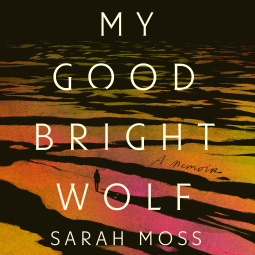
My Good Bright Wolf

by Sarah Moss

Sarah Moss writes novels. I haven’t read any of them but have read The Immortal Life of Henrietta Lacks for which she wrote the Introduction. I don’t think that really counts. So I’m not sure why I picked up her memoir My Good Bright Wolf, which came out yesterday, knowing nothing about her. Except I loved the title. 

There are people who say there are no coincidences. Sarah Moss is anorexic. She has written a memoir that brings the illness of anorexia so intimately to the reader that I felt myself catch my breath several times. When I wrote my book Saving Sara A Memoir of Food Addiction, I wanted to do what I had never read in all the literature of eating disorders. Bring the reader into the mind, insanity, and horror of binging. Until I read My Good Bright Wolf, I never comprehended anorexia. I thought it a completely different animal than binging or bulimia. After reading this memoir, I don’t feel very different from Sarah with an ‘h’. 

Thanks for reading Out My Window! This post is public so feel free to share it.

At the end of the memoir, Ms. Moss tells us how hard the book was to write, not just because it is so intimate but because she comes from a good background, had a great education, has a successful profession, and owns real estate. Which, to my mind, only confirms that eating disorders have no bias. Rich, poor, black, white, American, European, these diseases don’t discriminate.

This memoir is beautifully written, courageously written. She is able to convey the dialogue that goes on in our minds when “under the influence.” The part of her that convinces herself that she isn’t really sick, and even as she is inches away from death, she tried to convince a doctor that there are really sick people in the hospital and he should be attending to them.

She writes about the cult, the politics of being Thin. I related to everything she said: the judgments that thin people were better people. I hated my body because I was fat. She hated her body because she wasn’t thin enough. Her last chapter is entitled “My body, my home.” Just those four words gave me a severe jolt. I’ve always been looking for home. What if home is the shelter we carry with us all the time. Like a turtle, we can go to safety by pulling into our homes.

I listened to My Good Bright Wolf. It was narrated by Morven Christie. “”Morven Christie’s limpid, Scottish-inflected voice and gentle, enticing tone combine to lure listeners into Sarah Moss’s astonishing (memoir) as effectively as mermaids tempt sailors into the sea” —AudioFile on Summerwater (Earphones Award winner). Morven’s voice is strong and she enunciates with beauty. It is as if she had written the book, she knew just when to inflect, when to emphasize, when to talk to herself (as Moss) with contempt. 

There is an emerging breed of memoir writer: Sarah Moss, Maggie Smith, Leslie Jameson who write poetically, lyrically. Who bring us into their worlds in a soft rocking manner but the subject matter is so serious, the self-talk so vicious and this style makes everything much easier to bare and also to relate to.

I’m not great at book reviews. And wish I could do this memoir justice. If you are at all interested in disordered eating, at the insanity behind the disease, and how one anorexic describes it and dealt/deals with it, I urge you to read this book. 

Thanks for reading Out My Window! Subscribe for free to receive new posts and support my work.

A bientôt,

Sara

So many books……so little time.

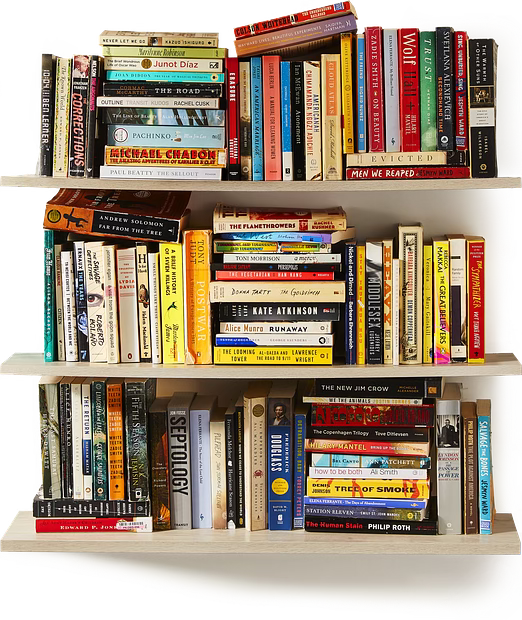
You may have noticed that many Substacks this month have focused on books. The release of the 100 Best Books of the century (yikes, did they have to use that word?) by the NY Times has many people talking about what was included and what wasn’t. As voted on by 503 novelists, nonfiction writers, poets, critics and other book lovers — with a little help from the staff of The New York Times Book Review.—from NYTimes website.

I have read a number of posts in which the author groused about a book missing from the list. And how could George Saunders be on it not twice but three times!!! The most amusing thing I saw was the book that was No. 1: My Brilliant Friend by Elena Ferrante; translated by Ann Goldstein 2012. I chose this book for my bookclub two years ago when I wanted to read it a second time. Not one person in the book club liked it—except me! No 9 is Never Let Me Go by Kazuo Ishiguro 2005. I picked this book for my book club three years ago and the same thing happened. I was the only reader to enjoy it! 

The New York Times is not the end all be all as we have certainly seen with their political stance lately. It is a revered publication (though if it doesn’t watch out, it will suffer a very painful falling out amongst intelligent people). Many, many people disagree with this book list. Reading all the lists that have been inspired by the Times, has caused me to think about the books I’ve read this summer. I thought I’d tell you about some and why I liked, or didn’t like them. So here we go in no particular order.

1  Tianammen Square—Lai Wen Thirty years after Lai Wen survived the Tianammen Square uprising and massacre, she has written a lovely book about her childhood and teen years leading up to the revolt. It is called a novel. It is a snapshot of life in China under two different regimes, neither particularly encouraging to an intelligent young girl wanting to succeed in life. We are privy to her relationships with both mother and father and a boy that she was sometimes girlfriend/boyfriend with but was constantly questioning. 

2  Tell Me Everything—Elizabeth Strout The world of Elizabeth Strout is a world that reminds me of Our Town or It’s a Wonderful Life, small towns where everyone knows everyone and, in each of her books, we learn about a different resident. This book is about Bob Burgess. She tells us that on the first page. Lucy Barton meets Olive Kitteridge in this book. It’s a bit like going back and revisiting old friends who have grown and changed since last seeing them but their essential natures never change. The plot isn’t as important as how people relate to each other. Strout writes in simple language, short sentences and, if you are open to it, wallops you in the end with some truths that are good to hold onto in our own lives. 

3  A Woman of No Importance: The Untold Story of the American Spy Who Helped Win World War II (2019)—Sonia Purcell My sister told me to read this book. She loved it. I loved it. Reading any story of the resistance in France is stirring. The courage, the belief in what was right is impressive and most of us don’t have that kind of physical or moral courage. This story is particularly fascinating because the woman in question, Virginia Hall, a Baltimore socialite, became one of the most targeted spies by the Gestapo. She lost part of a leg in an accident early in her life and managed to walk the Pyrenees, out manoeuvre Nazis, and lead an ever changing team of resistance fighters. Thirty or forty years later, no one knew her name.

4  The Marlow Murder Club—Robert Thorogood There are three books in this series. I stumbled on the second one in a little free library box near my apartment building. I recognised Thorogood’s name because he writes the series Death in Paradise and it’s off-shoot Beyond Paradise—both of which I enjoy. These are just plain fun books. Like the Thursday Murder Club, the “detectives” are older and have to find a way to work with real detectives and not ruffle their feathers. I’ve now read all three books in the series and what entertainment! I believe the BBC has serialized the first book with Samantha Bond in the starring role.

5  The Women—Kristen Hannah Kristen Hannah has written two dozen books. She spoke recently at the Sun Valley Writers Conference and her event was live-streamed. She said that for the last fifteen years, she’s been writing about women whose voices get lost or forgotten.  The Women, published this year, is about the nurses who went to Vietnam, worked hard, and returned to the US to be told, when seeking help for PTSD, that 1) there were no women in Vietnam or 2) she couldn’t possibly be suffering as she didn’t see combat. It is a beautifully written description of both Vietnam and the emotional and mental falling apart that followed.

6  The Bird Artist—Howard Norman I had never heard of Howard Norman until this year when my writing teacher, Jennifer Lauck, assigned us I Hate to Leave this Beautiful Place, a small book of five essays, to read for class. I fell in love with him. Jennifer suggested The Bird Artist, published in 1994, the first book of his Canadian trilogy. Written in spare sentences, the book concerns Fabian who wants to be a bird painter. Set in Newfoundland (where my aunt came from adding to my love of this book), we follow Fabian through relationships with his parents and various women. It has a haunting quality because of the writing style. Though we are distanced from the narrator, by the end of the book, it is hard to forget the story, the landscape, and the characters that make up this wonderful tale.

7  The Self is the Only Person—Elisa Gabbert Like Howard Norman, I had never heard of Elisa Gabbert until recently. If I wasn’t writing my own book of essays, I don’t think other essayists would jump out at me when I’m reading book reviews. The review I read of this book, loved it and who wouldn’t with a title like that? Elisa Gabbert loves books, she loves libraries, and she loves to discuss books. These well-researched essays talk about books. How her husband and she, along with friends, started the Stupid Classics Book Group. They picked classics to read that were under 450 pages. Gabbert tells us what she thinks of Fahrenheit 451 and a couple of other picks. She doesn’t like any of the choices until she gets to Frankenstein by Mary Shelley. She talks about the part of the Library she likes the best. Macmillan Publishers says “Contagiously curious essays on reading, art and the life of the mind.” Yes!

8  Splinters: Another Kind of Love Story—Leslie Jamison  Splinters is Jamison’s most recent book, about the dissolution of her marriage and raising her daughter on her own. She is a recovering alcoholic and, though not drinking, she finds herself in addictive relationships constantly self-examining her motives, her choices, and her priorities. I have read some of Jamison’s earlier essays. This book is the most vulnerable she has made herself. She doesn’t gloss over her behaviours nor rush through to what she learns as a result. At one point I thought to myself ‘this is brilliant writing but I don’t think I’d like her as a friend’.’ She probably felt the same way. By the end of the book, she is learning about self-love, experiencing grief and joy at the same time, and her descriptions of the love she feels for her daughter will leave you breathless.

Thanks for reading Out My Window! Subscribe for free to receive new posts and support my work.

Happy Reading,

A bientôt,

Sara

Big Magic

Do you believe in magic……???

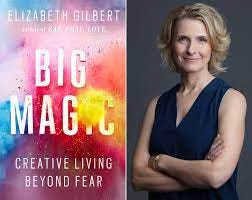
Big Magic: Creative Living Beyond Fear, an inspirational book by Elizabeth Gilbert, was published in 2015 and instantly became a bestseller. This was nine years after her breakout bestseller Eat, Pray, Love. After hearing writing group friends talk about it in my presence, I broke down and bought a copy in 2021. I think I read two chapters. Since I have just finished reading the entire thing today (July 2024), I cannot tell you why I wasn’t interested back in the pandemic years when being able to read for long periods of time wasn’t such a luxury. Maybe I considered it airy-fairy and that approach wasn’t going to improve my writing. Whatever the reason, I put it in the Living Room closet next to some books on the Writing of Memoir, and there it has sat ever since. In fact, it is still sitting there. I listened to Elizabeth Gilbert read the audiobook while I walked the trails and beaches of Saint Jean de Luz in the Pays Basque region of southwest France.

The book can be summed up as EG taking every possible fear and rationale we writers have to not write and shows us why it is poppycock. She claims she was the most fearful of children, scared of everything, scared of waves, scared of snow. She lists at least two pages of fears to not write. “I’m too old”, “I’m not old enough”. I found myself laughing as I remembered almost each and every fear she mentioned.

Thank you for reading Out My Window. This post is public so feel free to share it.

She says something very interesting. Something that goes against one of the blurbs of her book: which said something to the effect ‘how to learn to have a creative life.’ My words. Gilbert says we don’t learn anything. We already are creative. We either use our creativity in living or we don’t. But it’s always there. 

I enjoyed listening to the book. I enjoyed it because I’m on the other side of a lot of the fears she’s talking about. So I was nodding my head as she talked, agreeing with her on many points. I’m pretty sure if I hadn’t been writing for eight years, hadn’t had a book published, hadn’t talked about some of my fears with my coach and editor, I would have had a hard time groking what she was saying. It was a bit like the huge Nike poster I had scotch taped to the back of my toilet door years ago. JUST DO IT!

Gilbert seems to think if she could do it, anyone can. So she talks about courage, persistence, trust, enchantment and how she met each one head on. What she doesn’t say is that, in fact, she is an exceptional person. She has a huge personality, she’s probably impulsive and when she gets into something, she jumps in 110%. She takes risks—introducing herself to Ann Patchett at a conference by telling her how much she loved her. I recognise this. In my 70s, I have much the same personality. But it took sixty-five years to be born. I think I might have cried reading this book in my 30s. Of course, I have no way of knowing. Looking at that Nike poster every day actually drove home the sentiment – forget all your excuses, Sara, just do it! And sometimes I did!

I think my take away from the book and one I want to pass on is: love what you do. If you love to write, write. Don’t think about the end result. Will it get published? Do I need an agent? etc, etc, etc. Just write because you love it. I need to say that I’m in a very lucky and enviable situation. I am retired from my first profession, have savings, and am in a position that many writers are not. I don’t have to depend on my writing for income, to make ends meet. I get to write because I love to write. I am discovering that more and more. I find on-line challenges and things like Jamie Attenberg’s #1000 Words of Summer that encourage me to write every day and account to someone, even in the virtual world. Writing every day makes it easier to write every day. Yes, that’s English and it’s true. And getting prompts from people like mary g.’s substack What Now? has led to interesting stories—ones I wouldn’t have thought up just sitting on my butt at the dining room table hoping for inspiration.

I have a hard time getting through any book on writing. Some craft books are written by smart and wiley people. They give you a teaching then two or three short stories that use the very thing the writer hopes you will learn. For instance: Tell It Slant (Miller and Paola, 3rd edition 2019). I was finished the book before I had time to give up on it. There were fascinating stories, most I hadn’t read. I may have learned something also. My writing teacher, Jennifer Lauck, refers to it often.

So if you, like me, like to listen to audio books while you walk, and you want some inspiration to take a next step or do a high five because you’ve already figured out something Elizabeth Gilbert writes about, then you will probably enjoy this book. EG’s voice is extremely pleasant to listen to. Since she wrote the book, she can emphasize words and points she wants emphasized. 

Thanks for reading Out My Window! Subscribe for free to receive new posts and support my work.

A bientôt,

Sara

Writing in Paris – Part 2

The Paris Writers Workshop

In January, I wrote about the first workshop I ever participated in and why it was so valuable to me. And because of the Workshop, I went on to write and publish a book, and call myself an author.  Now that the Paris Writers Workshop is open for registration and only three months away, I wanted to describe specifics. As dry as this writing might be, every word is written with gratitude for the opportunity granted to me.  As my mother used to say to me constantly: “There is no such thing as luck. It’s grabbing at an opportunity when it presents itself.”

Why would Paris residents want to register for PWW? For one, it is so accessible–a metro ride away. It’s affordable—as in the past, there is an early bird registration which I took advantage of each year that I registered. And as WICE is a nonprofit, the price is very reasonable.

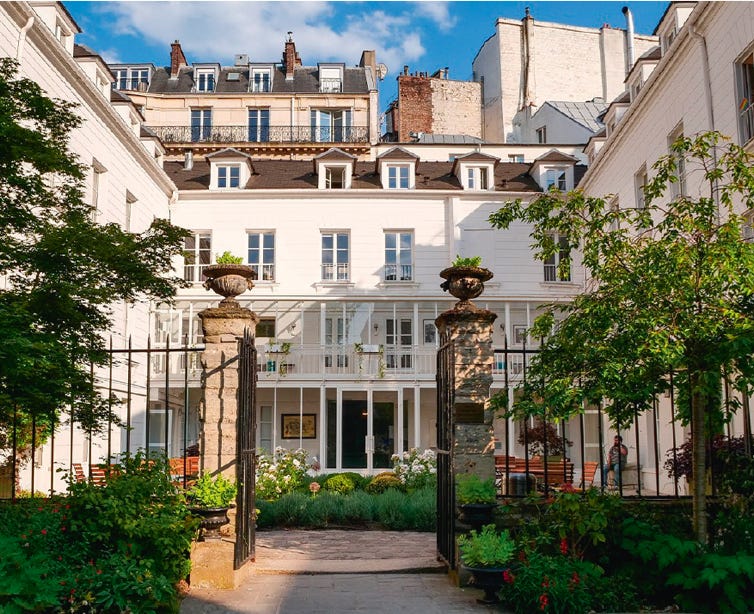
PWW will be held at the beautiful Reid Hall in the Columbia Global Centers in the literary Montparnasse neighborhood. There is a large beautiful garden area with plenty of seating. One can write at one of the many tables or bring a bag lunch to enjoy with your cohorts surrounded by trees and summer flowers. Le SelectLa CoupoleLe Dome, and Le Closerie de Lilas (one of Hemingway’s hangouts) are in walking distance.

Reid Hall

And non-Paris residents? Who would turn down a chance to visit Paris in the early summer before the craziness of the Olympics starts? We will happily make suggestions for reasonable accommodations (but I’m told you need to make those reservations now as Paris is raising prices in anticipation of the Summer Olympics), and you will have a new literary home away from home.

Now to the really good part:

We have an amazing lineup of teachers for six tracks.

The Novel master class will be taught by Samantha Chang. I know her as Sam.

Sam is the Director of the famous Iowa Writers’ Workshop. She is the author of The Family Chao (she spoke at the American Library Summer 2022), Inheritance and other titles.

The Memoir/ Creative Nonfiction class will be taught by Jennifer Lauck.

Jennifer is the Founder of the Blackbird Studio for Writers. She is the author of Blackbird,a Memoir of her childhood, and 3 more memoirs that followed. Oprah said that everyone should read Blackbird. She also writes a wonderful Substack: Flight School with Jennifer Lauck

Poetry will be taught by Heather Hartley.

Heather, a resident of Paris, teaches Creative Writing at the University of Kent (UK) Paris School of Arts and Culture.  She is the author of the poetry collections Adult Swim and Knock Knock.

This year, we are offering three new tracks:

Speculative Fiction will be taught by Kevin Brockmeier.

Kevin is the author of The Brief History of the DeadThe Truth about Celia and other titles. He frequently teaches at the Iowa Writers’ Workshop.

Screenwriting will be taught by Diane Lake.

Diane has written many screenplays for major studios including the Academy Award winning Frida. She is the author of The Screenwriter’s Path: From Idea to Script to Sale.

Travel Writing will be taught by Don George.

Don is Editor-at-Large for National Geographic Travel. He is the author of How to Be a Travel Writer: the best selling travel writing guide in the world.

Go to our website, https://wice-paris.org/paris-writers-workshop for more details about our amazing faculty. Each track has its own registration page. Click on the photo of the teacher to get to that registration.

Once you register, you will receive an acceptance e-mail unless the course is full. Each Masterclass will have a maximum of twelve students.  You will be given some choices if that is the case.

Your masterclass package includes:

·       Daily small group masterclasses in your selected genre

·       Individual meetings with your faculty instructor

·       Inspirational and practical guidance for your work in progress

·       Panel discussions focused on tools of writing and paths to publishing

·       Readings by your fellow writers and faculty

·       Social gatherings with an amazing community of writers from all over the world

Students and faculty will meet together Sunday, June 2 from 2 PM to 4 PM at Reid Hall.

The masterclasses will meet each weekday from 2 to 5 PM Monday through Friday. There will be literary events each evening.

Monday morning there will be a LITERARY walking tour of the Montparnasse area for anyone who is interested. The whole week will be topped off on Friday evening June 7 with readings by the faculty and students.

And on Wednesday and Thursday, we will have two well-known British agents here. You can pre-send a writing sample to one or both and pitch your project face-to-face.

Registration is now open. The earlybird registration fee is €975.

After March 15, the fee for the workshop will be €1100.

This is a wonderful opportunity to write, to meet other writers and authors, to organize writing groups at the end of the week, and to pick the brains of published authors.

If you know anyone who is a writer who wants to write as I did or is a secret writer please pass on this information.

A group of people raising their hands

Description automatically generated

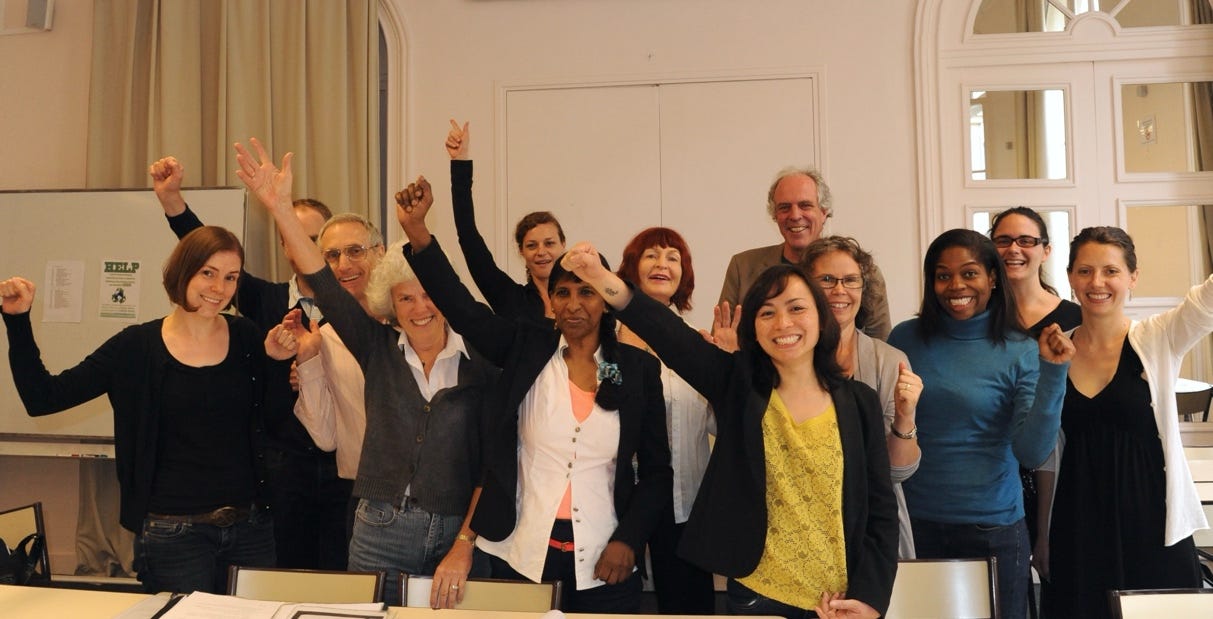
Participants of the Short Story track at a PWW.

Thanks for reading Out My Window! Subscribe for free to receive new posts and support my work.

A bientôt,

Sara

AWP 24 in Kansas City

I’m sitting in the Long Beach airport waiting for a plane back to Oakland. The weather is beautiful, the airport is small, and I could pretend I’m at some beach airport in a foreign country. It has that feel. On the TV is the Super Bowl. I’ve come from Kansas City which, it turns out, is a huge sports town. Everywhere was red and yellow. People walking in swag, banners hanging off lamp posts, signs in business windows. Now going up to the Bay Area where I imagine most everyone is rooting for the Forty-Niners. I once flew during the World Series and asked the pilot if he would give us the score periodically. He kindly accommodated me. Many others were very happy!

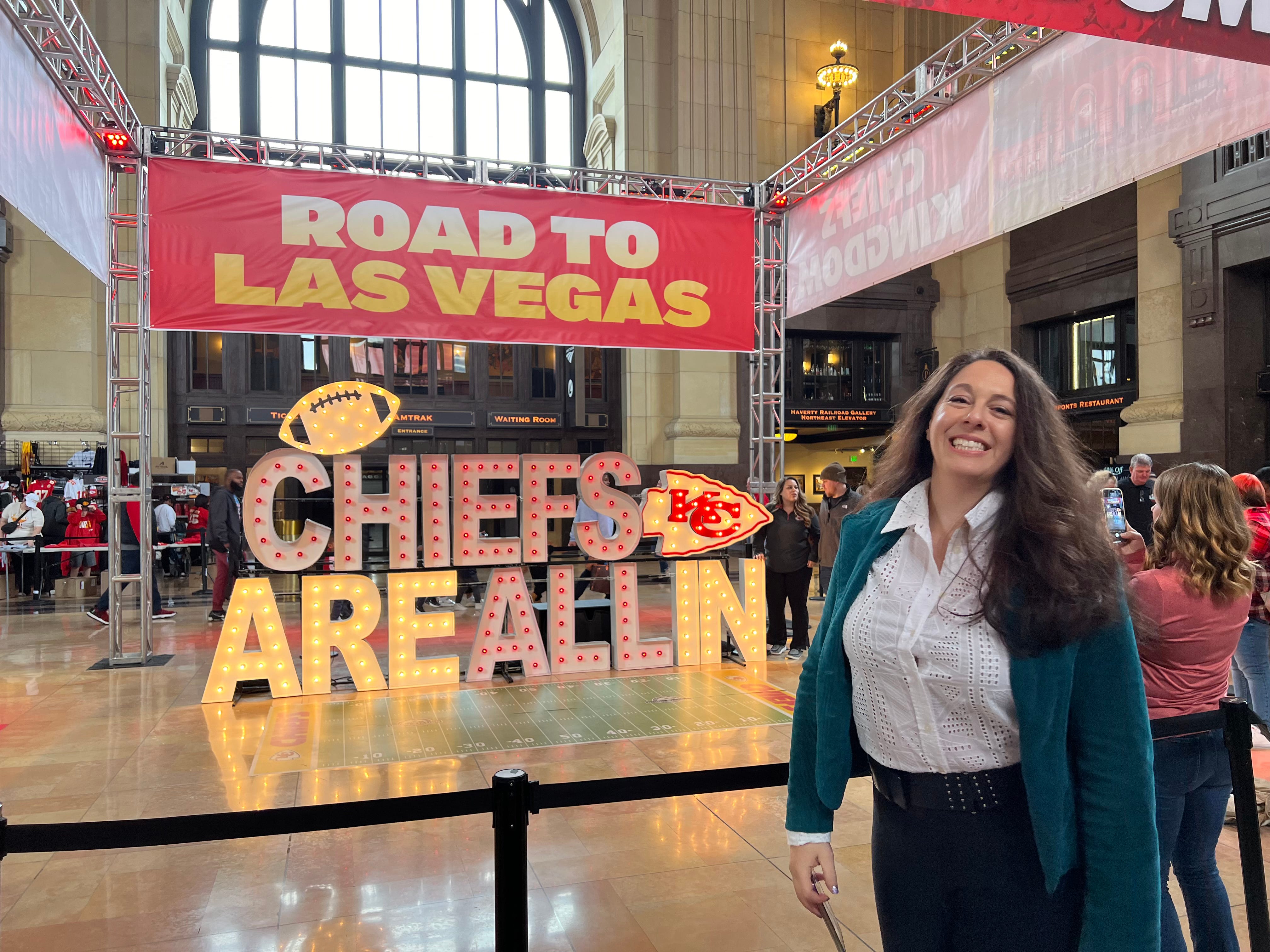
Angela, on our visit to Union Station where all things Chiefs was happening!

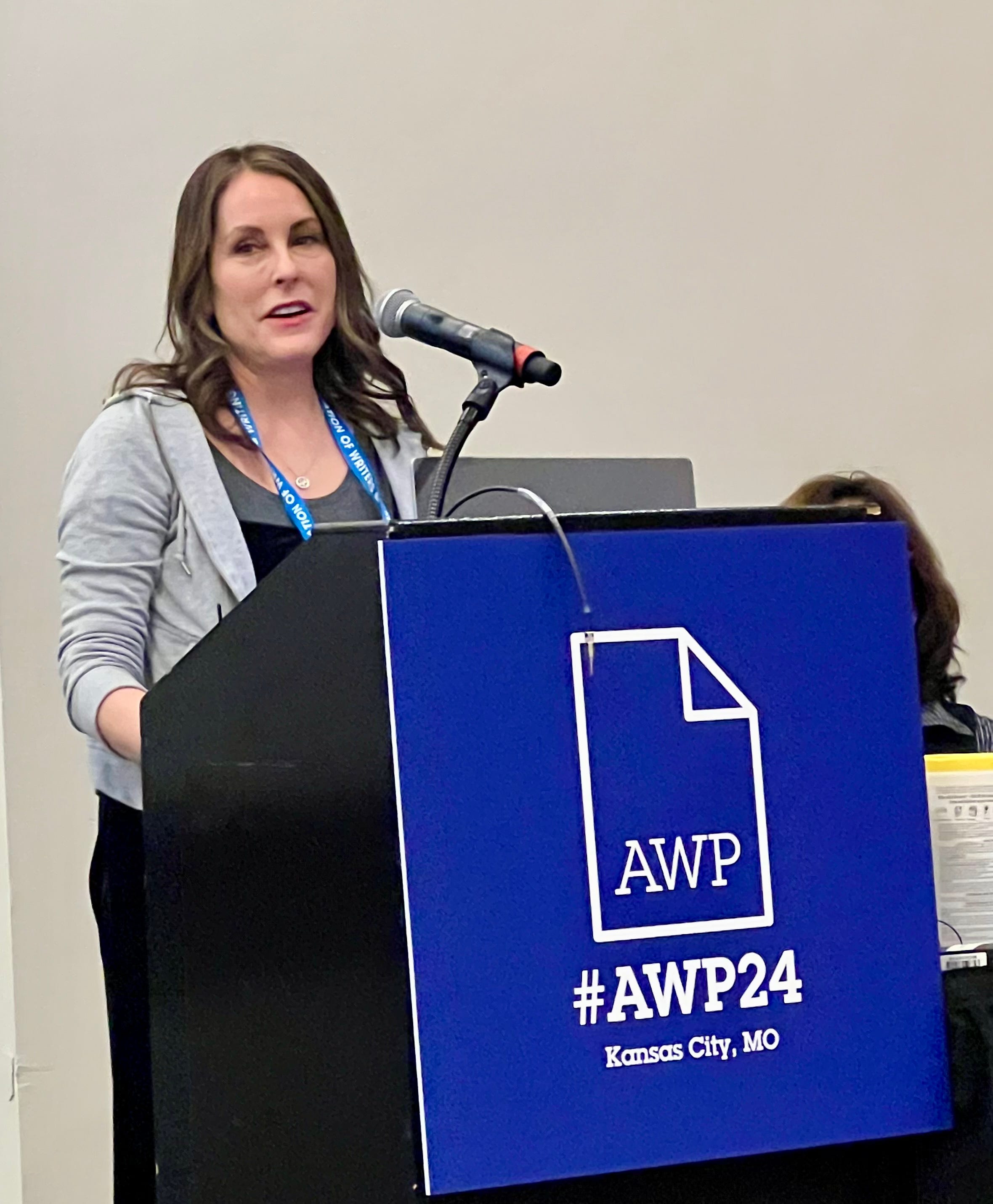
I went to Kansas City with four members of my writing group to attend AWP 24 (Association of Writers and Writing Programs). Most people register Wednesday afternoon. The panels officially start on Thursday morning and last until Saturday evening. There are so many panels, up to fifty every hour, that it is overwhelming. Last year, I looked at the titles and attended ones that sounded good. This year, I looked at the presenters and went to panels where I knew the presenters. Jeannine Ouellette, who writes Writing in the Dark, was on the first panel that I attended Thursday morning.. It was a craft panel on How to write trauma so that it doesn’t overwhelm your reader. Jeannine did not disappoint. In 15 minutes, she gave a Masterclass in trauma writing using excerpts from her book The Part that Burns to illustrate her points. She is easy to listen to and her students who have her for longer IN PERSON are very lucky, in my opinion. Those of us who subscribe to her Substack are treated to masterclasses every week. She is a generous teacher and interacts with those who are vulnerable enough to write what they have written.

Jeannine Ouellette

Thanks for reading Out My Window! Subscribe for free to receive new posts and support my work.

My next panel was an homage to James Baldwin. I believe Thursday would have been his 100th birthday. The moderator had chosen people who “commune” with Baldwin. I was touched by both panelists. Unfortunately, two other panelists had to cancel last minute because of illness. It didn’t make any difference to me. I was so moved by the love and dedication he still inspires in people. I consider myself an essayist and look to his writings as examples of terrific essay writing. 

Baldwin struggled with his love of living in France with his guilt that he should be home……That hit a nerve with me. My mother, if she were alive, would look down on my choice of living in Paris. She would tell me to come back to the US and fight for democracy.

Friday was a wonderful day for panels. But the panels, as interesting as they are, aren’t the main reason that many of us attend the Convention. It’s a chance to meet and talk with publishers, meet and talk with the editors of journals, emerging and established, and to meet other authors. Last year, I met the editors of the Under Review. I liked them and they liked me. Eleven months later, they have published my story The Perfect Game. They had a small celebration at a place called Sinkers on Friday night and six of us read our stories. It was thrilling. This year I’ve set my sights on a Canadian Journal called Brick.

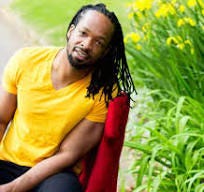
The highlight of the Convention was the Opening Keynote Speech given by Jericho Brown. All five of us in my writing group were tired even though only one day of the Convention had passed. Just navigating one’s way around the Kansas City Convention Center, without a map in hand, was an exhausting experience. I figure that three of the Seattle Convention Centers, where AWP was held last year, could fit in the KC one. The Center took up three long city blocks with bridges over the streets. A long underground unfinished walkway. It was daunting.

The Keynote speech was virtual and the AirBnB we stayed at had a smart TV! So we ate a wonderful home cooked meal of chicken, butternut squash, and salad. Then we piled onto the living room couches to listen to Jericho. I have only read his poems. I had never heard him speak. He is funny. He is passionate. He is smart. And he cares about this country. I don’t think I could find the words to do justice to his 20-30 minute talk so please know that whatever I say here, it was 1000% better. So far, the video is only available to convention goers so I can’t even refer you to that. I can start by saying he has a smile that would light up any room. He has a smile that is warm and sunny and in no way gives away the violent childhood he suffered and writes about in his poetry. He opened by making us laugh and slowly, word in hand, moved us to our responsibilities as writers and as Americans. He did this by citing many of the books that have been banned in the state of Florida: five versions of the Dictionary, the Encycopedia, the Bible (the Bible????), to mention a few that students need just to progress in school. He brought home that we writers are being banned. We aren’t spectators, we are victims if we want the freedom to express ourselves. As I’m a fairly new author, I had not made the connection that I could be banned if someone thought I used a wrong word. 1984 should be renamed. Images of Nazis burning books in the street came to mind. Jericho Brown kept at it. making sure we got it. This is happening, it can happen to you, it is happening to many of us.

By the time he finished, I was breathless. I was paying attention.

A bientôt,

Sara