You may have noticed that many Substacks this month have focused on books. The release of the 100 Best Books of the century (yikes, did they have to use that word?) by the NY Times has many people talking about what was included and what wasn’t. As voted on by 503 novelists, nonfiction writers, poets, critics and other book lovers — with a little help from the staff of The New York Times Book Review.—from NYTimes website.
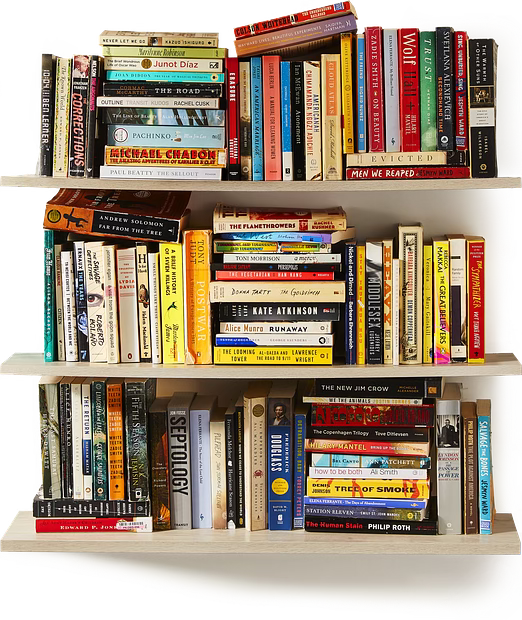
I have read a number of posts in which the author groused about a book missing from the list. And how could George Saunders be on it not twice but three times!!! The most amusing thing I saw was the book that was No. 1: My Brilliant Friend by Elena Ferrante; translated by Ann Goldstein 2012. I chose this book for my bookclub two years ago when I wanted to read it a second time. Not one person in the book club liked it—except me! No 9 is Never Let Me Go by Kazuo Ishiguro 2005. I picked this book for my book club three years ago and the same thing happened. I was the only reader to enjoy it!
The New York Times is not the end all be all as we have certainly seen with their political stance lately. It is a revered publication (though if it doesn’t watch out, it will suffer a very painful falling out amongst intelligent people). Many, many people disagree with this book list. Reading all the lists that have been inspired by the Times, has caused me to think about the books I’ve read this summer. I thought I’d tell you about some and why I liked, or didn’t like them. So here we go in no particular order.
1 Tianammen Square—Lai Wen Thirty years after Lai Wen survived the Tianammen Square uprising and massacre, she has written a lovely book about her childhood and teen years leading up to the revolt. It is called a novel. It is a snapshot of life in China under two different regimes, neither particularly encouraging to an intelligent young girl wanting to succeed in life. We are privy to her relationships with both mother and father and a boy that she was sometimes girlfriend/boyfriend with but was constantly questioning.
2 Tell Me Everything—Elizabeth Strout The world of Elizabeth Strout is a world that reminds me of Our Town or It’s a Wonderful Life, small towns where everyone knows everyone and, in each of her books, we learn about a different resident. This book is about Bob Burgess. She tells us that on the first page. Lucy Barton meets Olive Kitteridge in this book. It’s a bit like going back and revisiting old friends who have grown and changed since last seeing them but their essential natures never change. The plot isn’t as important as how people relate to each other. Strout writes in simple language, short sentences and, if you are open to it, wallops you in the end with some truths that are good to hold onto in our own lives.
3 A Woman of No Importance: : The Untold Story of the American Spy Who Helped Win World War II (2019)—Sonia Purcell My sister told me to read this book. She loved it. I loved it. Reading any story of the resistance in France is stirring. The courage, the belief in what was right is impressive and most of us don’t have that kind of physical or moral courage. This story is particularly fascinating because the woman in question, Virginia Hall, a Baltimore socialite, became one of the most targeted spies by the Gestapo. She lost part of a leg in an accident early in her life and managed to walk the Pyrenees, out manoeuvre Nazis, and lead an ever changing team of resistance fighters. Thirty or forty years later, no one knew her name.
4 The Marlow Murder Club—Robert Thorogood There are three books in this series. I stumbled on the second one in a little free library box near my apartment building. I recognised Thorogood’s name because he writes the series Death in Paradise and it’s off-shoot Beyond Paradise—both of which I enjoy. These are just plain fun books. Like the Thursday Murder Club, the “detectives” are older and have to find a way to work with real detectives and not ruffle their feathers. I’ve now read all three books in the series and what entertainment! I believe the BBC has serialized the first book with Samantha Bond in the starring role.
5 The Women—Kristen Hannah Kristen Hannah has written two dozen books. She spoke recently at the Sun Valley Writers Conference and her event was live-streamed. She said that for the last fifteen years, she’s been writing about women whose voices get lost or forgotten. The Women, published this year, is about the nurses who went to Vietnam, worked hard, and returned to the US to be told, when seeking help for PTSD, that 1) there were no women in Vietnam or 2) she couldn’t possibly be suffering as she didn’t see combat. It is a beautifully written description of both Vietnam and the emotional and mental falling apart that followed.
6 The Bird Artist—Howard Norman I had never heard of Howard Norman until this year when my writing teacher, Jennifer Lauck, assigned us I Hate to Leave this Beautiful Place, a small book of five essays, to read for class. I fell in love with him. Jennifer suggested The Bird Artist, published in 1994, the first book of his Canadian trilogy. Written in spare sentences, the book concerns Fabian who wants to be a bird painter. Set in Newfoundland (where my aunt came from adding to my love of this book), we follow Fabian through relationships with his parents and various women. It has a haunting quality because of the writing style. Though we are distanced from the narrator, by the end of the book, it is hard to forget the story, the landscape, and the characters that make up this wonderful tale.
7 The Self is the Only Person—Elisa Gabbert Like Howard Norman, I had never heard of Elisa Gabbert until recently. If I wasn’t writing my own book of essays, I don’t think other essayists would jump out at me when I’m reading book reviews. The review I read of this book, loved it and who wouldn’t with a title like that? Elisa Gabbert loves books, she loves libraries, and she loves to discuss books. These well-researched essays talk about books. How her husband and she, along with friends, started the Stupid Classics Book Group. They picked classics to read that were under 450 pages. Gabbert tells us what she thinks of Fahrenheit 451 and a couple of other picks. She doesn’t like any of the choices until she gets to Frankenstein by Mary Shelley. She talks about the part of the Library she likes the best. Macmillan Publishers says “Contagiously curious essays on reading, art and the life of the mind.” Yes!
8 Splinters: Another Kind of Love Story—Leslie Jamison Splinters is Jamison’s most recent book, about the dissolution of her marriage and raising her daughter on her own. She is a recovering alcoholic and, though not drinking, she finds herself in addictive relationships constantly self-examining her motives, her choices, and her priorities. I have read some of Jamison’s earlier essays. This book is the most vulnerable she has made herself. She doesn’t gloss over her behaviours nor rush through to what she learns as a result. At one point I thought to myself ‘this is brilliant writing but I don’t think I’d like her as a friend’.’ She probably felt the same way. By the end of the book, she is learning about self-love, experiencing grief and joy at the same time, and her descriptions of the love she feels for her daughter will leave you breathless.
Thanks for reading Out My Window! Subscribe for free to receive new posts and support my work.
Happy Reading,
A bientôt,
Sara
 Out My Window