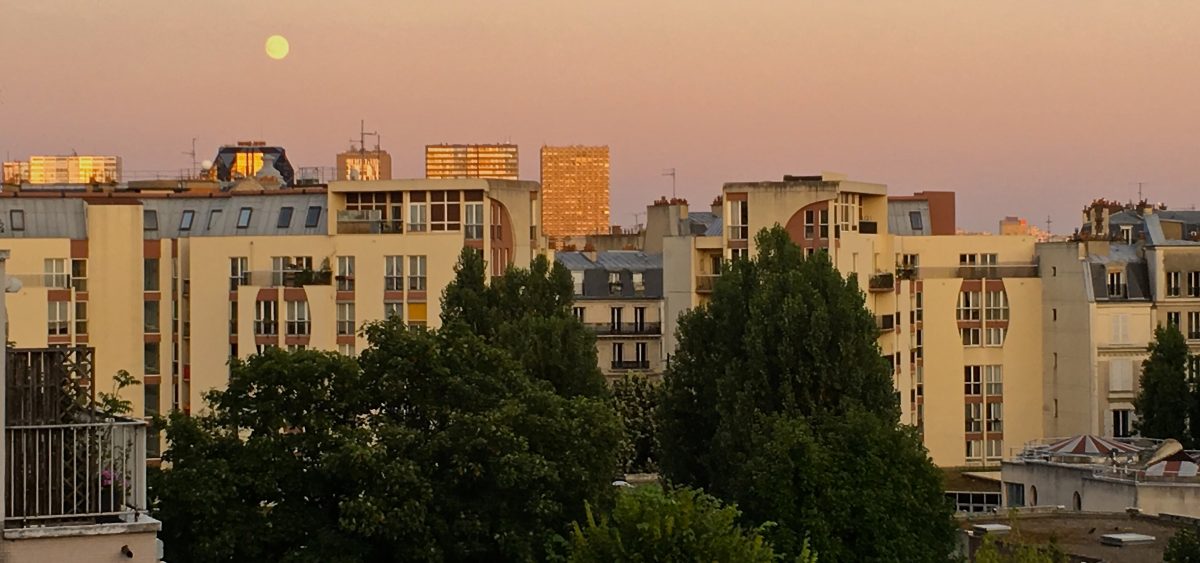
My favorite French photographer. The man who captured ‘vieux Paris’ captured my heart with his images

Those of you who have been reading me for awhile know that many of us who write about France are in a FranceStack that was organized by Judy MacMahon. This week I’d like to introduce you to Jenn Bragg and her recent post about her favorite photographer. Jenn writes For the Love of France.  You can find her substack by putting either her name or the name of the Substack in Search.

I hope you enjoy her post as much as I did.

“Something I have come to learn about France is that it puts a very high value on those who engage in literary or artistic endeavors. This is something I love about this country. And as many of us know, some of the best artists and creatives in history come from France.

love old photographs, especially of Paris, so this week I wanted to tell you about one of my absolute favorite French photographers – Eugène Atget.
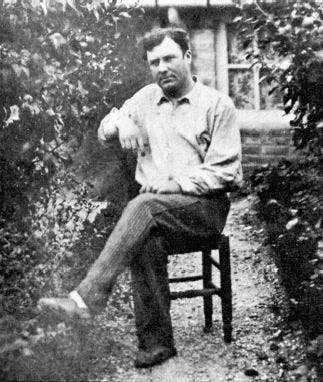
Eugène Atget, young and old. The photo on the right was taken by Berenice Abbott.

Atget always seemed destined for the arts.

Born in 1857, he was raised by his grandparents after being orphaned at the age of five. In his 20s, he worked as a cabin boy on passenger ships destined for South America. He returned to France and became an actor in the theater until he had problems with his vocal cords. Then he tried his hand (literally!) at painting. Not finding much success, he pursued photography.

Towards the end of the 19th century, Atget’s work mostly served as images on which artists could base their paintings.

But things started rapidly changing in Paris.

Industrialization began to change the city, which was being torn down and rebuilt by a man named Georges-Eugene Haussmann. Haussmann was tasked with cleaning up grimy old Paris. He did away with the narrow, rickety old streets and dilapidated buildings to create a more open, ‘breathable’ city.

Atget foresaw the disappearance of ‘vieux Paris’ (old Paris), so he decided to devote the next 30 years to documentary photography. Thank goodness, because without his work, we wouldn’t have much to go on.
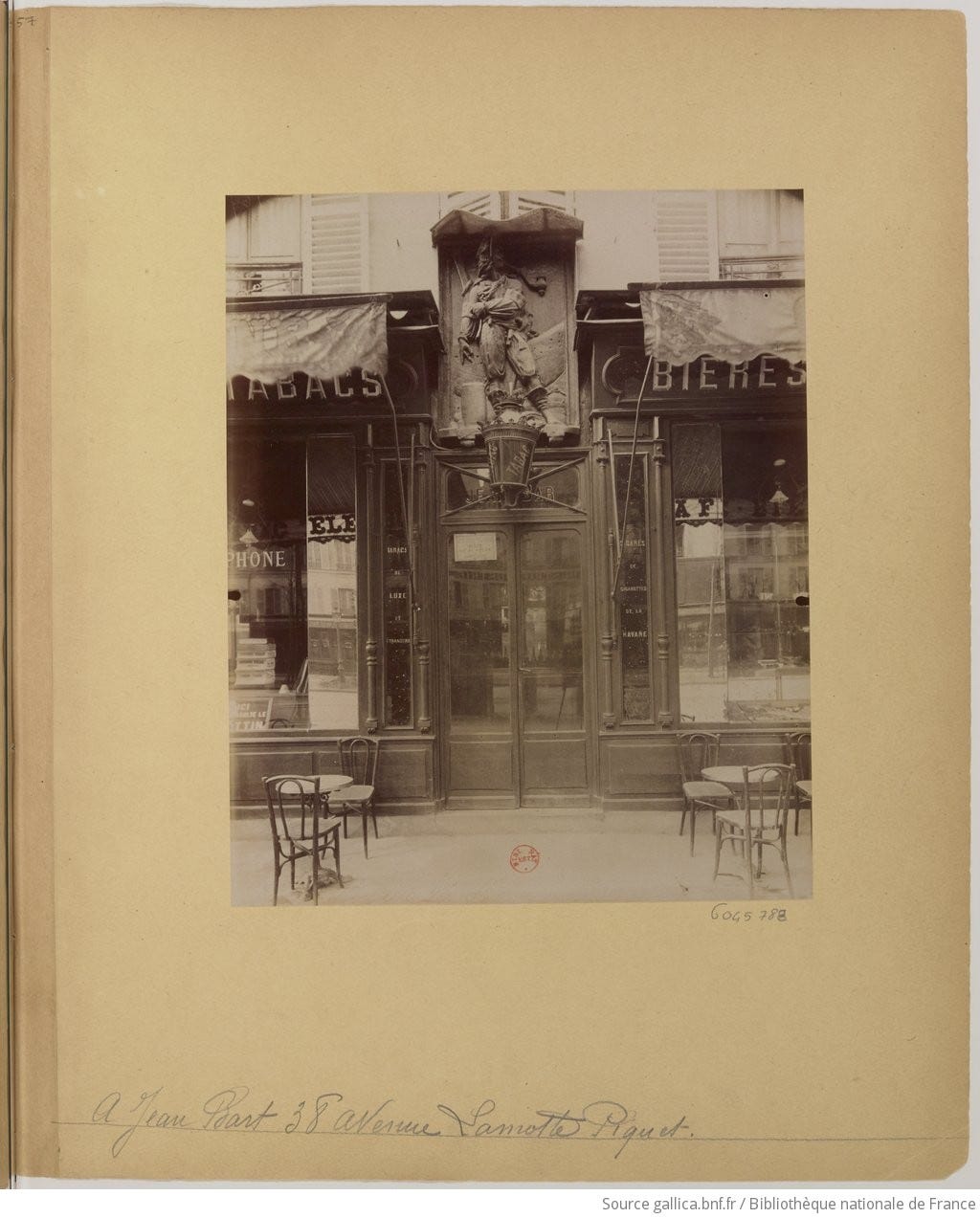
Photos of old Paris boutiques by Eugène Atget

Eugène Atget took photos of streets, storefronts, private hotels, and people. He traveled far and wide, from central Paris to the outskirts, which were entirely undeveloped.
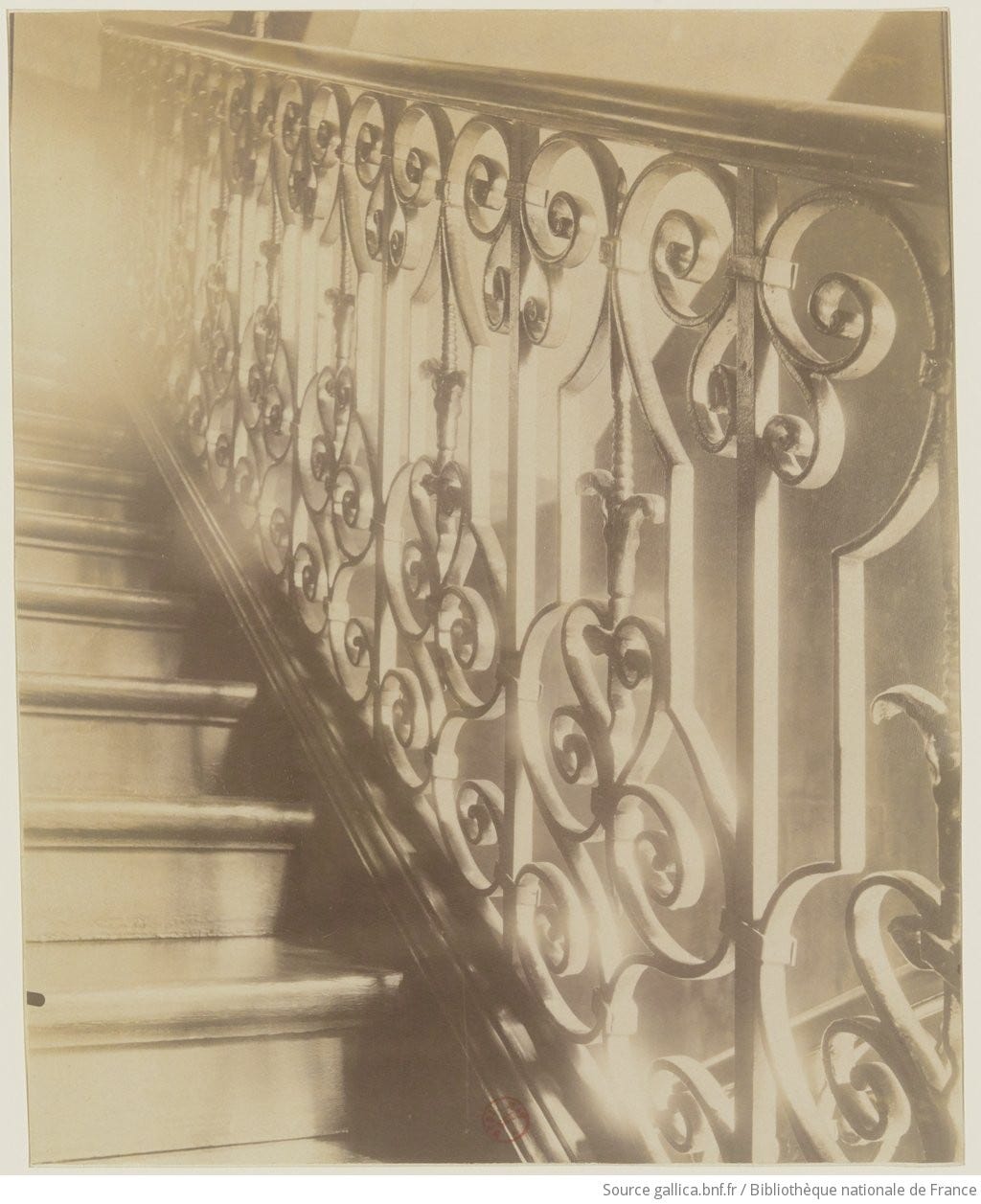
Photos capturing hotel design details. Source: BnF Gallica/Eugène Atget

Those undeveloped areas were along the periphery of Paris, an area that was known as The Zone. (Today it’s known as ‘la péripherique’ and it’s fully developed and more affordable than central Paris.)

By the turn of the 20th century, the people living in la Zone were very poor, often in ramshackle, makeshift dwellings surrounded by trash. They were known as les zoniers. Their living conditions were unhygienic to say the least. It only got worse with Haussman’s project, which drove up real estate prices in Paris. (An entire article could be devoted to les zoniers, but I’ll leave that for another time.)

Atget did well to document the lives of les zoniers. When I see their images in his photos (below), they remind me of the scenes described in John Steinbeck’s ‘Grapes of Wrath’.

Except this was Paris, not the United States during the Dust Bowl.
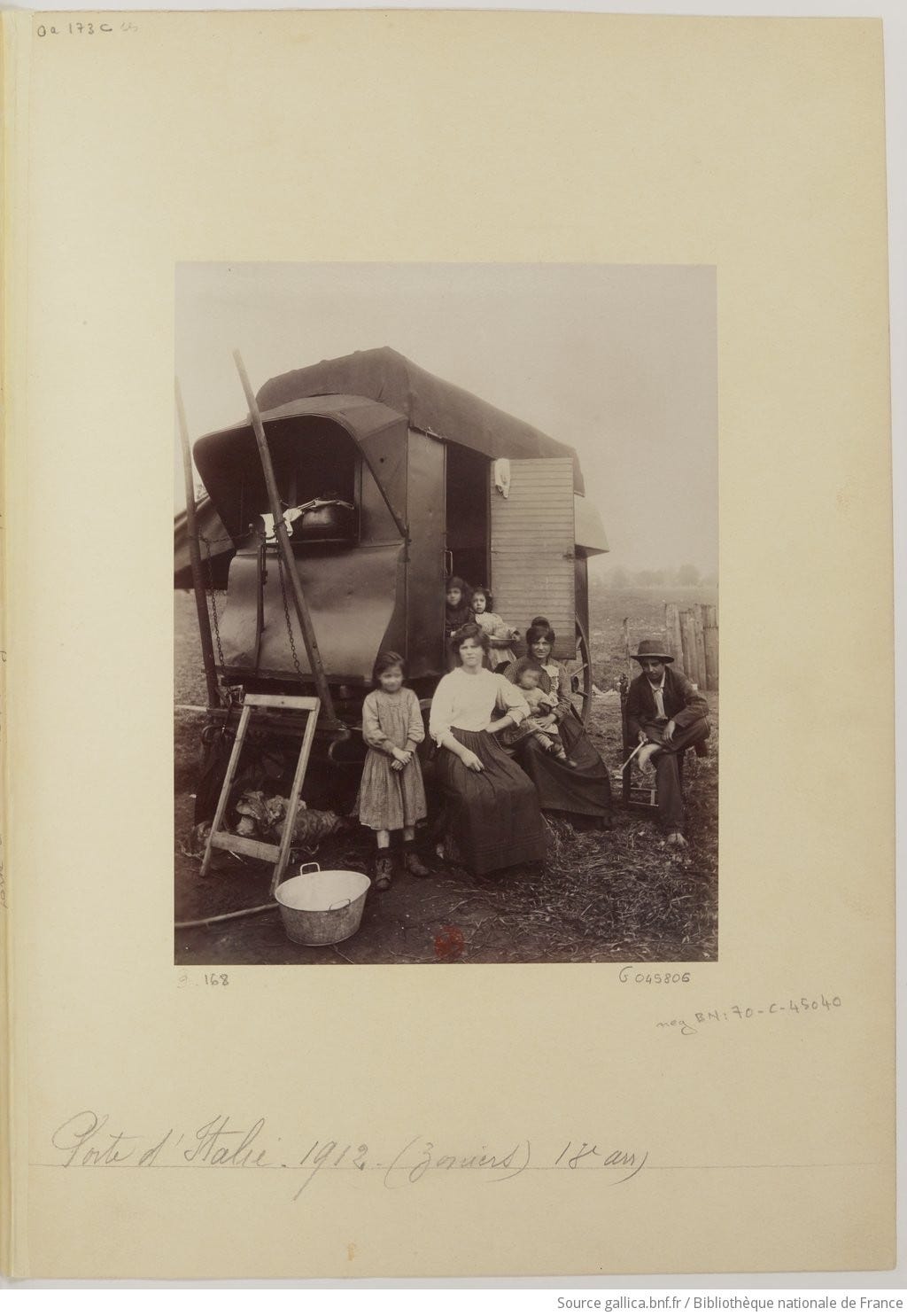
Photos of people on the edges of Paris. Source: BnF Gallica/Eugène Atget

Over the years, Eugène Atget took more than 15,000 photographs, meticulously documenting exact locations and dates on his photos. He even captured his own studio (below), but identified it under a different name to create some distance between the artist and his subject.
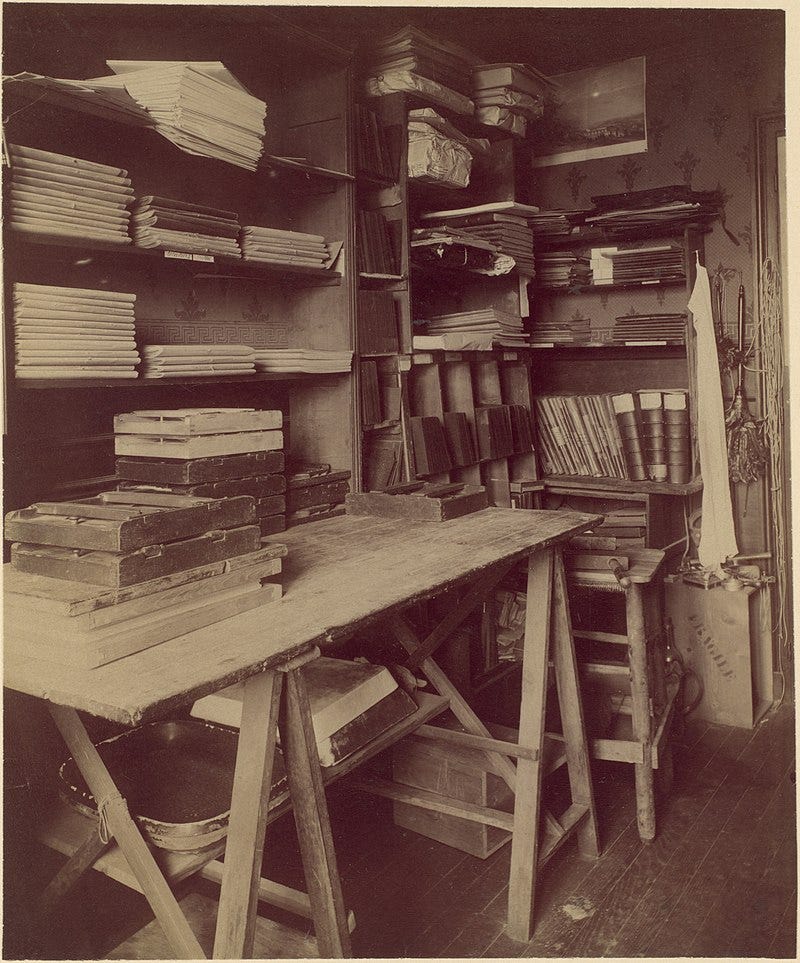
Atget’s studio around 1910; photo: Metropolitan Museum of Art, New York

A few years before Eugène Atget died in 1927, he became acquainted with an American photographer named Berenice Abbott. At the time, Abbott was working for Man Ray in his Paris studio. (Man Ray and Atget lived on the same street in the Montparnasse neighborhood of Paris.)

Atget and Abbot shared a love for documenting (and preserving) the magic of their modernizing cities – New York for her, Paris for him. Abbott took his portrait photos before he died. Sadly, she learned about his death when she returned to Paris to show them to him.
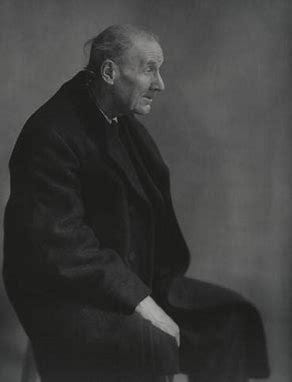
Eugène Atget by Berenice Abbott; photo of Berenice Abbott

Seizing the opportunity to tell the world about Atget’s work, Abbott spread the word among her New York circles. She also acquired thousands of his photographs, which gave to the Museum of Modern Art. (Separately, the National Library of France also has thousands of Atget’s photographs.)

If you’re coming to Paris and have an interest in Atget’s work, you MUST visit the Musée Carnavelet, which is entirely devoted to Paris’ history. One of the best depictions of ‘vieux Paris’ is through Atget’s photography.
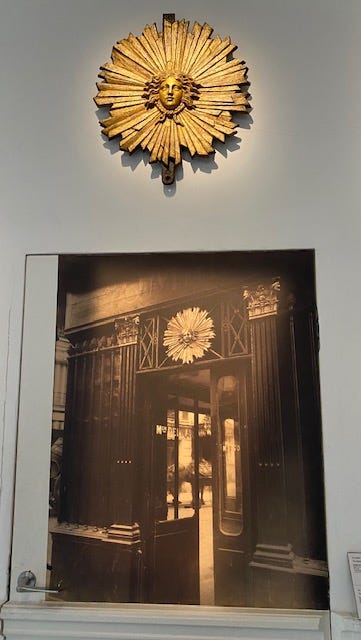
‘Au soleil d’or’ photo by Eugène Atget (1912) & the actual ‘golden sun’ sculpture above the door of Maison Delmas, displayed at the Musée Canavalet in Paris

Leave a comment

Sources:

Fondation Henri Cartier-Bresson: Eugene Atget

Museum of Modern Art: Eugene Atget

Bibliotheque Nationale de France

Chicago Tribune article about Atget and Abbott (from 1991)

Before you leave me, I would really appreciate if you would share my article, or my Substack, with anyone you think might be interested. I just know there is an audience out there for these ‘different’ kinds of stories from France! Thank you.”

Thanks for reading Out My Window! Subscribe for free to receive new posts and support my work.

A bientôt,

Sara
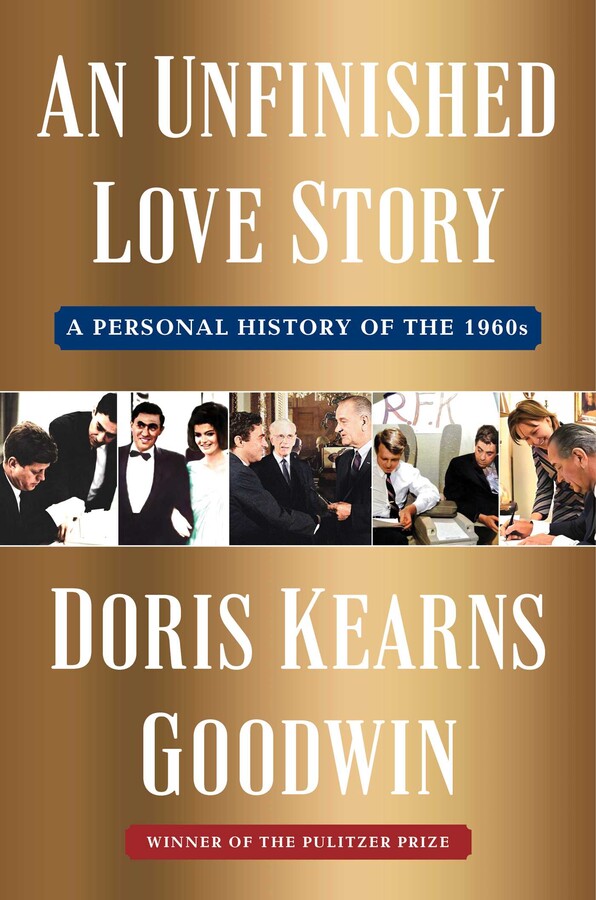
An Unfinished Love Story: A Personal History of the 1960s–Doris Kearns Goodwin.

I was thirteen years old the year, 1960, that John F. Kennedy ran against Richard Nixon for President of the United States. My family lived on the Main Line west of Philadelphia which was republican country. At that point in my life, I had no interest in politics. One of the main reasons being that I had to compete with the goings on in the world for attention from both my parents. I wanted to be seen and to be heard and hated the competition.

In the summer and fall of 1960, a lot of that changed. JFK was stirring up passionate feelings in his supporters who were doubling and tripling with each of his planned campaign stops. When he came to Philadelphia, I don’t remember where, my father took me with him to stand in the glow of this 43 year old man who had captured the attention of a nation with his movie star good looks and his fresh opinions. This may be a faulty memory, but I remember being in a large parking lot. He was standing higher than us, his adoring fans-probably in a car or makeshift stand of some sort. My father and I made it to the front of the crowd and JFK shook my hand. I don’t remember anything else.

I have another memory of bicycling from Haverford, where we lived, to Ardmore the next town over. We, my friends and I, usually went there to buy 45s (If you remember those, you are as ancient as I am!). Across the street, an enterprising person was selling Democrat buttons and trinkets. With my own money, I bought a gold donkey. Of course, it was rubbish stuff but it was my rubbish stuff! I pinned it on whatever blouse I was wearing and sensed my parents would approve.

I have thought a lot of that time during the past week as I’ve been reading Doris Kearns Goodwin’s latest book: An Unfinished Love Story: A personal history of the 1960s (2024). Goodwin was married to Dick Goodwin for forty-two years and “married to American History” even longer. Doris worked under President Johnson, helped him with writing his memoirs, and wrote a biography of him after he died. Dick Goodwin was a speech writer for JFK and Johnson and then became very close friends with Robert Kennedy as he contemplated and then decided to run for President. 

DKG is such an engaging writer that I felt yanked back to the 60s but witnessing it as an adult as well as through the eyes of the two Goodwins. Anyone who lived through the 60s knows what an amazing decade it was. One of such hope and possibility then tragedy after tragedy. I have tended to look back on that decade as one that failed us. That my generation somehow screwed up. By the end of reading An Unfinished Love Story, I was willing and happy to view it from DKG’s eyes—much more positively.

This book came to exist because Dick collected every piece of paper that he ever held. He carted around 300 boxes of his letters, journals, speeches, and memorabilia but would never open them. On his 80th birthday, he told Doris that he was ready to see what was there. It took them two and a half years to get through all the boxes. By then, Dick was ill and eventually died. It took her several years of grief and moving her home, to take up their project again. She felt she had to write the book as she watched what was going on in the country. 

The two met in 1973 after most of the events in the book had taken place. She takes us through the boxes, through those years before they met, and tells us how they discussed each event, their reminiscences. I listened to the audio version of the book and was treated to a number of speeches made by JFK, RFK, and Johnson. What a jolt hearing those voices again. 

What makes this book so interesting for me, aside from the fact that it is so well-written and engaging, is that it fills in details that I didn’t know about because I wasn’t especially political. I began to appreciate why Goodwin is so interested in leadership (She has also written a book entitled Leadership). She lays out the qualities of these men that were trying to guide our country to live as a democracy. The decisions they made and how they made them. It is such a contrast to much of what is going on today. The two of them would often argue the traits of JFK and Johnson.

When I finished the book, I wondered about President Biden. How would they describe his leadership qualities? I am now a person who reads a lot about politics in the US. There is a different perspective watching and listening when living in France. We don’t get the 24 hour loop on TV that people in the States get – if they watch TV. Most of my information comes from reading and I am choosy about what publications I read. I have wondered out loud why Biden’s ratings are so low when he has done so much for the citizens of the United States—all citizens. In fact, I believe he is on record as getting passed more laws that help the ordinary man and woman of the US than any president since FDR. I’ve watched his State of the Union speeches and chuckled out loud as he cleverly led MAGA Republicans into traps that were hard to get out of. Famous for his gaffs, I’ve noticed very few in his years as President. He works hard at being a leader for everyone. 

In general, leadership qualities are not valued in the US anymore. The media rarely reports an event where Biden has spoken with skill and compassion (I was amazed at how often Bobby Kennedy used that word in all his speeches while running for President) when referencing us as a population or an event that needed interpretation by the President. The media believes that the US population is far more interested in all the hate speeches, all the threats of violence, and the fascist ramblings of the other candidate.

These are my thoughts only. I ponder while I walk around Paris and the Parc de Bagatelle. To me, Biden has grown into a leader. He is a leader in a world that no longer wants his kind of leadership. More and more, the world seems to want Fascist leadership, authoritarian leadership. A Big Brother who tells us what to do and will punish severely if we trespass. So is Biden a leader? Has he taken the temperature of the whole country and finessed how to lead us through this ‘valley of the shadow of death’? I don’t know. I don’t read the polls, which are usually wrong, anymore. I have no way of predicting since so many Americans have very short-term memories and vote passionately.

I would be very interested if you, my readers, would put your thoughts in the comments below. And then go get yourself a copy of An Unfinished Love Story by Doris Kearns Goodwin. You’ll thank me.

Thanks for reading Out My Window! Subscribe for free to receive new posts and support my work.

A bientôt,

Sara