I had a thought of writing about the beautiful Wallace Fountains that are scattered all over Paris and parts of France. It would make a wonderful post. Then I woke up to another blogger who had already written up something and posted it over the weekend. This isn’t just any blogger. Her name is Judy MacMahon. She is Australian and is a Francophile. She authors MyFrenchLife.org and ‘le Bulletin’-another Substack. This summer she had the brilliant idea of pulling together all of us who write about Paris and France (whether we live here or not) and calling it #FrenchStack! I have been looking for an opportunity to share with you Judy’s #FrenchStack.
First I’m going to repost Judy’s write-up about the Wallace Fountains. Then give you #FrenchStack. Some of these you may already know quite well. Others you may never have heard of. Just because they are listed does not mean that Judy or I endorse them. Just that they are available and everyone’s taste is not the same. In the future, I will repost some of these wonderful stories that are included in #FrenchStack.
“1. How much do you know about these forest green icons in Paris? The Wallace Fountains

One year ago, this September, the Wallace Fountains were part of a month-long celebration commemorating the 150th anniversary of the Wallace Fountains—Sir Richard Wallace—an English philanthropist—and his project to bring clean drinking water to 19th-century Paris and beyond.
What are Wallace Fountains?
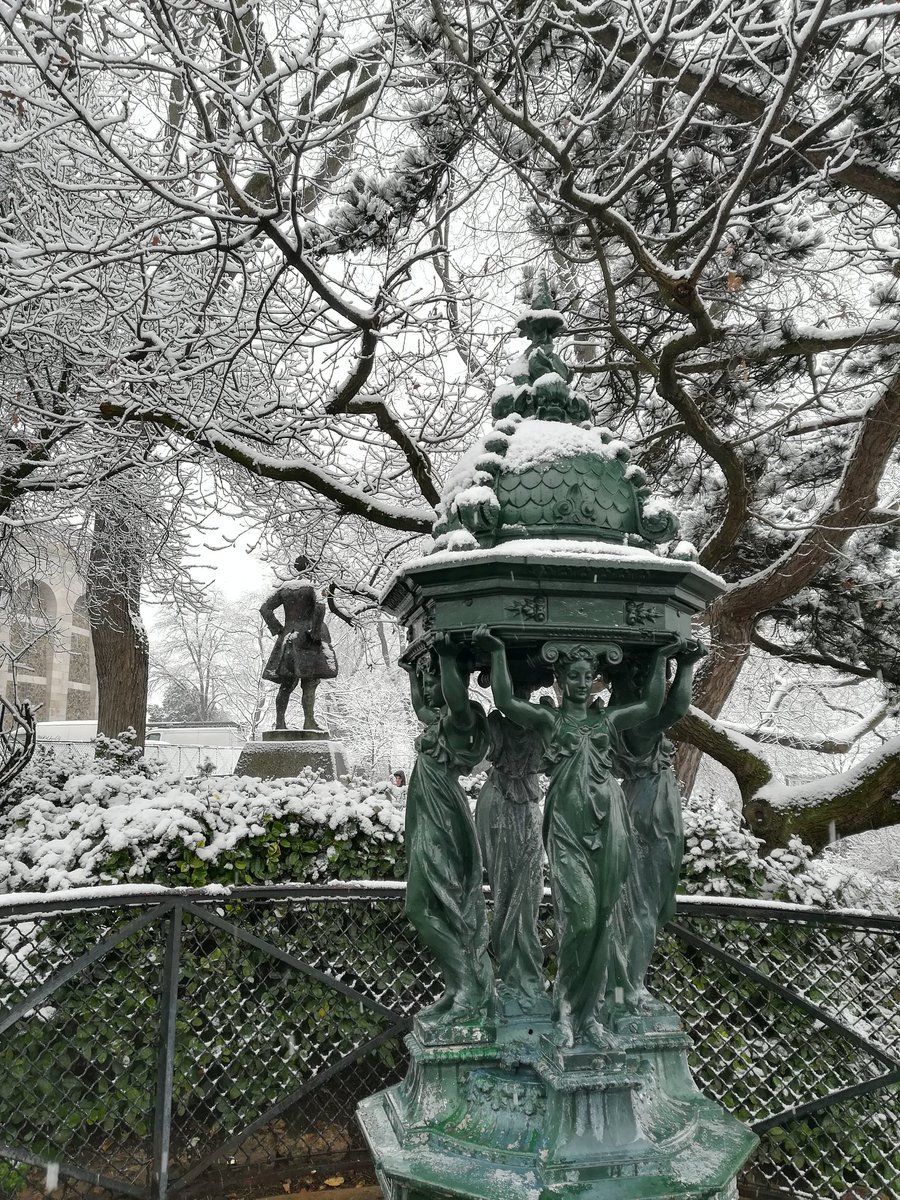
We’ve all seen them… these ornate cast-iron green fountains scattered throughout Paris, but I’ve never known their history. Ornate structures that are named after an Englishman. Why? My curiosity got the better of me, once again, and I was off on a mission to find out more.
- Wallace Fountains are public drinking water sources primarily located throughout Paris, although replicas exist at various locations worldwide.
- The grand model fountain stands almost nine feet tall and weighs more than 1,300 pounds!
- There are now more than 100 fountains from an original 50 in 1872.
- No, they are not all green… You will perhaps spot some in more avant-garde colors in bold red, pink, blue, and yellow, located in the 13th district in the southwest of Paris.
- How much water do the French really drink?
In 1872, British philanthropist Sir Richard Wallace set off to provide safe drinking water for all in Paris.
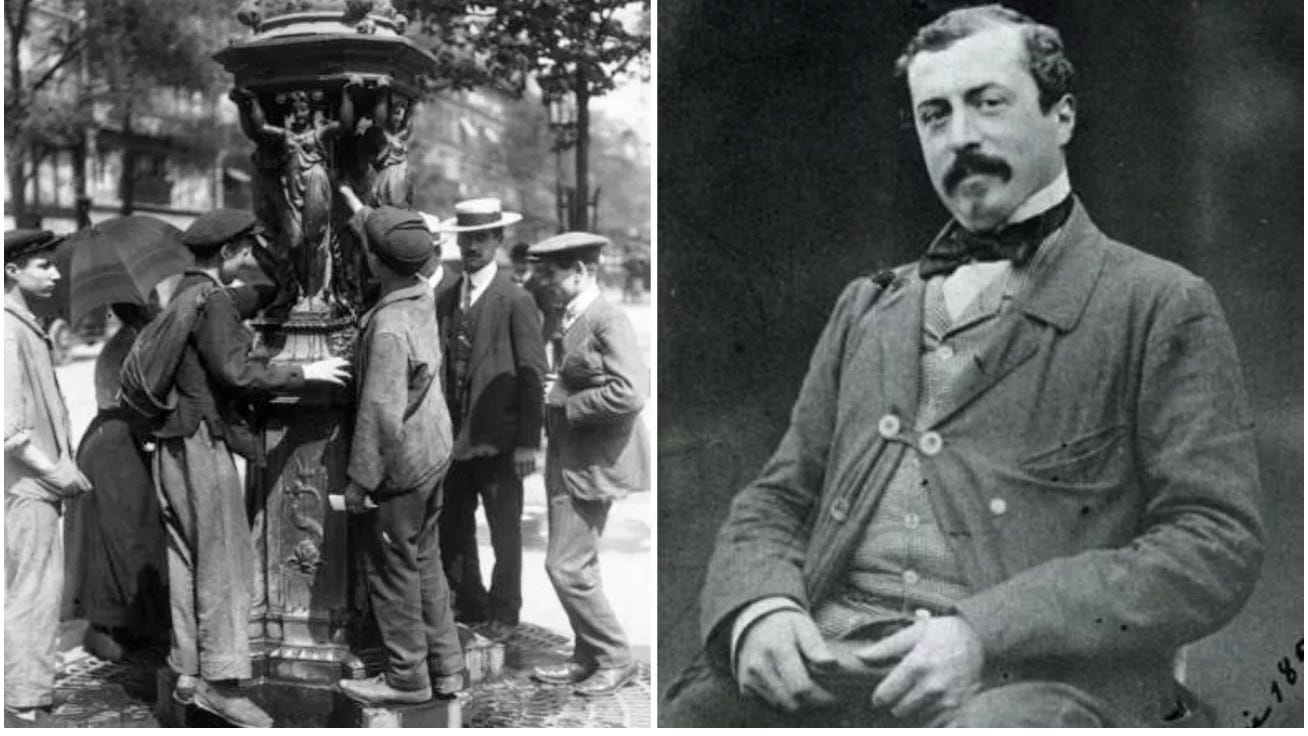
People drinking from a Wallace Fountain during Bastille Day celebrations in 1911 (L) and a photograph of Sir Richard Wallace (R)The Wallace Collection
He established a network of drinking fountains across Paris and every day millions of people pass them without knowing how they came into being.
In the late 19th century, following the siege and bombings during the Franco-Prussian War and the collapse of the Paris commune, clean drinking water in Paris was scarce. Many communities relied on water that was transported from the Seine, which was often unsafe to drink.
The price of potable water became very expensive. As a result, most poor people had difficulty obtaining and paying for water that was safe to consume. Moreover, most of the water sold by vendors and distributed on carts to the poor was drawn from the Seine River. That water was certainly contaminated because at the time all the wastewater from the streets and many of the sewers drained directly into the river. It seemed less risky to drink alcoholic beverages, which were often cheaper than the price of unsafe water. Given the choice, the lower classes were most apt to hydrate with beer or wine.
Barbara Lambesis, President of the Society of the Wallace Fountains says many Parisians turned to beer and wine, a more sanitary – and often cheaper – alternative to water, which drove a large portion of the city into alcoholism.
There were health consequences… lots of alcoholism, which of course tears away the social fabric of community,” Lambesis explained. “Richard Wallace decided he was going to make clean drinking water free and available and easy to access for everyone, regardless of whether they’re a visitor or a resident and regardless of their social status.”
Who was philanthropist Sir Richard Wallace?
Little is known for certain about the early life of Richard Wallace, who was born in 1818 in the UK, although it’s believed that he was the illegitimate son of Richard Seymour-Conway, the 4th Marquess of Hertford, an English aristocrat and art collector. When he passed away in 1870, most of his wealth was unexpectedly left to Wallace.
The Wallace Collection – art
Sir Richard Wallace is best known in the UK for his extraordinary art collection donated to the British people. The Wallace Collection is available for public viewing at his former residence in London. In Paris, he is remembered for aiding the poor and for his generous, steadfast commitment to the common good as symbolized by the iconic drinking fountains that carry his name in Paris.
In 1871, Queen Victoria knighted Wallace for his:
splendid munificence during the difficult period of the siege of Paris,” and he was later made a baron.
He died on July 20, 1890, in Paris at his home—the Château Bagatelle, in the Bois de Boulogne—and was later buried in the Père Lachaise cemetery. But his legacy lives on.
The Wallace donation of 50 fountains to Paris
In 1876, after inheriting a large fortune, Wallace donated 50 fountains to the city of Paris to be installed throughout the capital. Beyond functionality, Wallace put a lot of consideration into the aesthetic and practical elements of the fountains, sketching out the first designs himself before handing them off to Charles-Auguste Lebourg—a sculpture from Nantes—to deliver the final product.
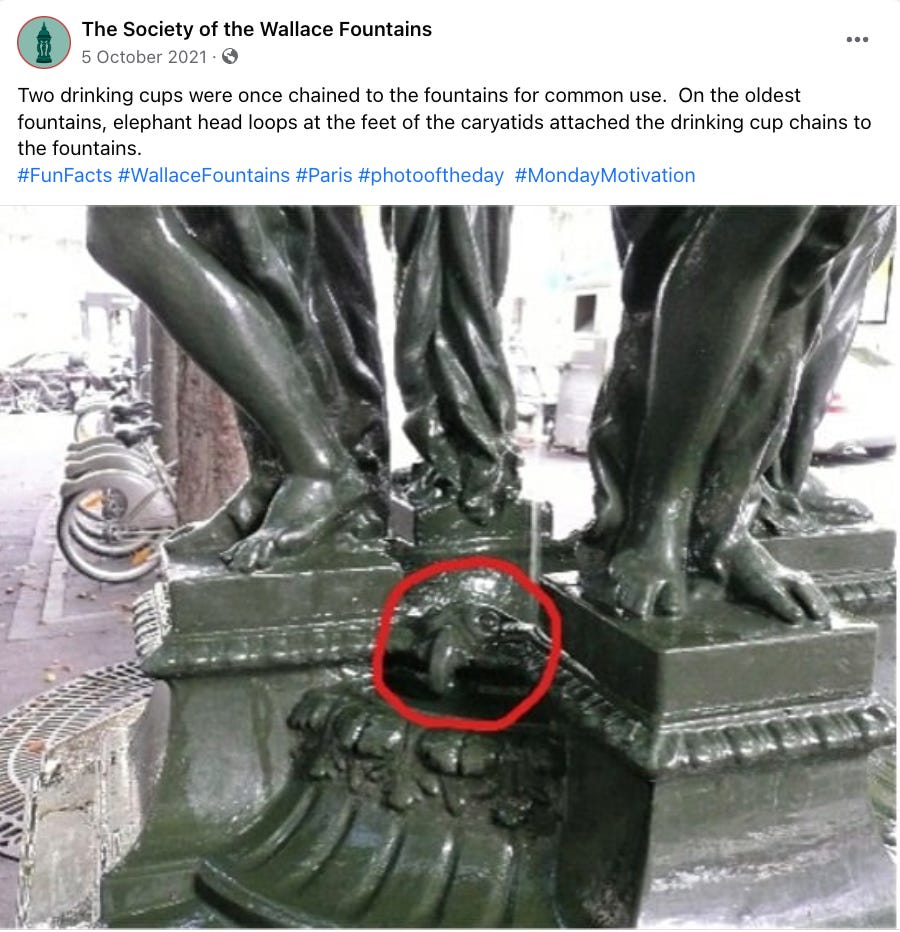
They were made of cast iron because they were durable and easier to replicate; and they were almost three metres tall so that they could be easily seen and recognized,” Lambesis explained. “They’re full of symbolism; the four figures, featured in the fountains, represent human virtues that Richard Wallace wanted people to adopt when they drank from them. Those virtues are simplicity, sobriety, charity, and kindness.”
Formation of The Society of the Wallace Fountains
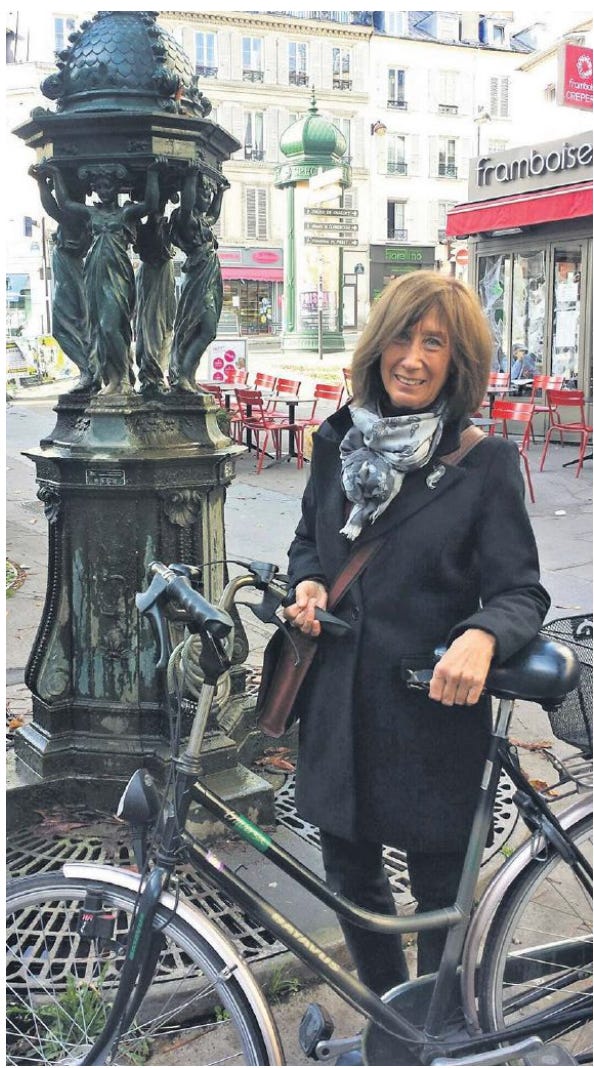
Barbara Lambesis, rue de Rivoli, devant l’objet de sa passion. DR
A few years ago, Barbara Lambesis – an American, who lives in Paris part-time – was strolling through the city when one of the fountains caught her eye.
“I became very intrigued with it, and that was the beginning of a long journey; I researched it a great deal, studied it a great deal, and decided that I was going to put a purpose to my wandering,” she said.
The first is to promote, preserve, and protect the fountains throughout Paris.
“The second part of the mission is to recognize and encourage philanthropy in the spirit of Richard Wallace,” she explained. “Richard Wallace was an Englishman who was born in London, lived most of his life in Paris and loved Paris… and suddenly inherited a great deal of money during the terrible siege in Paris in 1870. He immediately took that money and went out and distributed it to the poor, to the people who were suffering the most.”
The third part of the mission, Lambesis explained, is to “position the Wallace Fountains as the global symbol of international universal equal access to clean drinking water for everyone on the planet, because that’s really what those fountains stand for.”
As a part of the 150-year anniversary, Lionel and Ariane Sauvage – French philanthropists working particularly with the Louvre Museum in Paris— received the new Wallace Fountain award to celebrate their 30+ years of philanthropy.
22 Self-Guided Walks
The 22 self-guided walks take you to different parts of Paris. Use the map to view the area of Paris for each numbered walk. Each guided walk includes a map and a narrative that gives directions and often mentions points of interest along the route. Use the guided walks to find the fountains and the wonders of Paris.
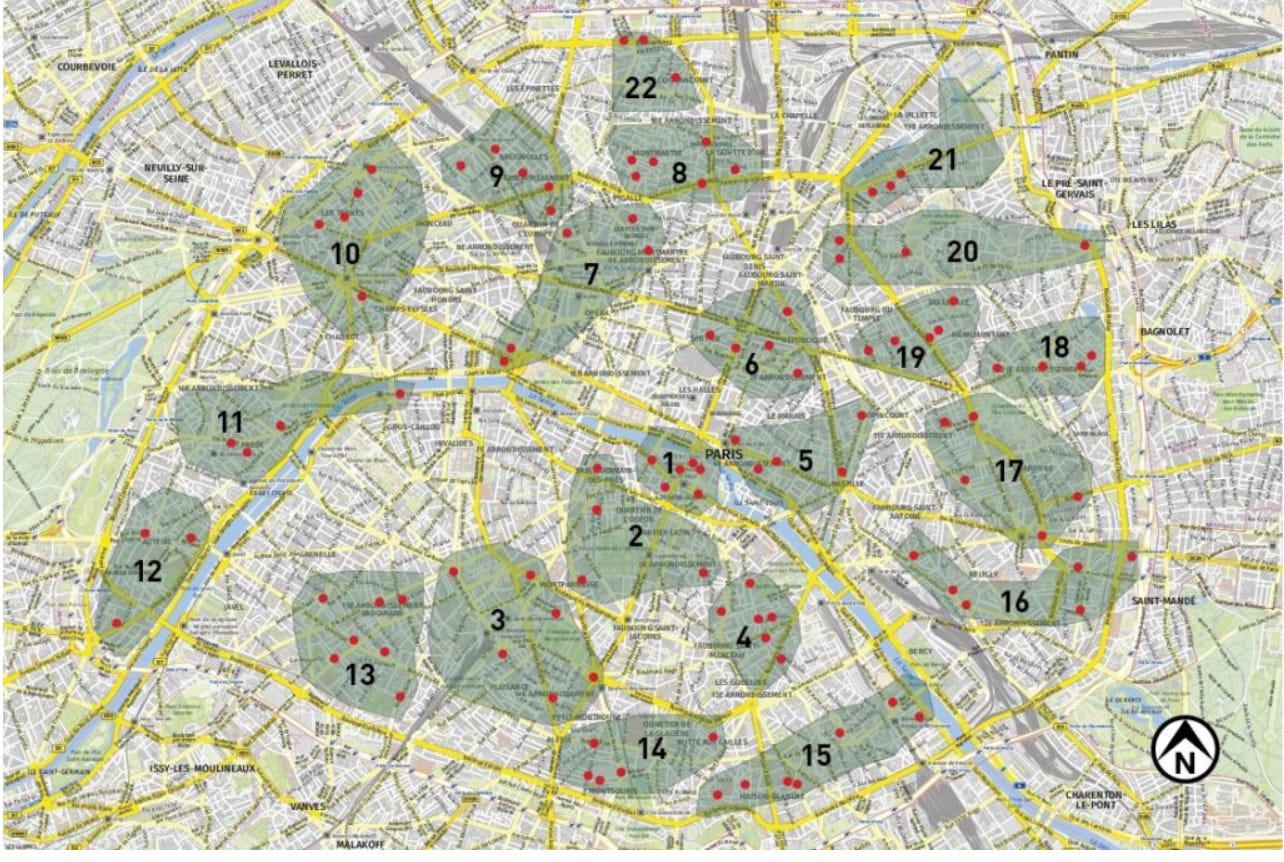
Download – To download a self-guided walk, click on Get Started Now (← here) The downloads are formatted for mobile devices and are free of charge.
”But, we hope you will donate a very small amount to help fund the development and maintenance of this website and the work of the Society of the Wallace Fountains. You also will have the option to register to receive updates and information about the fountains.” from the Wallace Fountains Society website.”—Judy MacMahon ‘le bulletin’
Look for the #FrenchStack tomorrow. Judy MacMahon has put together all the Substacks that write about France and called it #FrenchStack!
A bientôt,
Sara
Thanks for reading Out My Window! Subscribe for free to receive new posts and support my work.



 Out My Window