Substack–What is it?

I remember back in 2007 (only sixteen years ago) when some people logged on to FaceBook and some went to MySpace. My memory says that MySpace was difficult to navigate and FaceBook looked nothing like it does today. No one had any idea that our privacy was being stolen away from us without permission. I think I ended up using FaceBook, not because I liked it better, but because all my buddies preferred it. If the Oakland Athletics were having an Away Game, many of us sat in front of our TVs watching the game, computers on our laps, “talking” to each other on FB. It felt exciting, and fun, and we were all together—a baseball family—chatting away and enjoying the game while sitting separately in our homes.

A similar thing seems to be happening with blogging/newsletter platforms. When I started my blog in 2016, I chose the platform WordPress. I didn’t do much research. I wasn’t sure how long I might be writing it. I just wanted something that would be fairly easy and not frustrate me. I had moved to Paris three years earlier and I wanted a way to let my friends and family know what I was up to without writing separate e-mails to everyone. A few years later, Medium appeared which attracted many different kinds of writers: health gurus, Apple computer geniuses, the best apps to download and how to use them. Periodically, there was some serious writing.

A year and a half ago, my sister, knowing I admire the writing of George Saunders, sent me a link to Story Club with George Saunders. He was writing on the brand new (new to me) platform Substack. I could choose to be a free or paid subscriber. Since George was essentially teaching a course on how to read and appreciate short stories, I immediately signed up as a paid subscriber. Generous human that he is, I’ve gotten my money’s worth many times over.

Something interesting was happening at Story Club that I hadn’t experienced at WordPress or Medium. The readers were interesting, articulate, and also very generous. The give and take amongst the highly motivated subscribers was, for me, like attending one of George’s graduate courses at Syracuse. As I read the comments, I’d check the photo or avatar of the writer and learn what other substacks that person read. I discovered Heather Cox Richardson, whom I wrote about earlier this year. Her substack is now required reading with my breakfast. As of today, I’m signed up for twenty substacks and I’m a paying subscriber to four of them.

Substack attracts writers. It was founded in 2017 by Chris Best, Jairai Sethri, and Hamish McKenzie. I believe initially it was to give journalists a place to write as printed media was dying out of our world. The majority of the substacks, however, offer personal writing, opinion pieces, and research. Moderation of what is written is done by the founders. For authors, Substack is a way to make money writing. Which is VERY hard to do. A Substack is not expensive. Ten percent of the earnings goes to the founders. Initially, the founders reached out to well-known authors and provided “scholarships” to start writing on this platform. A writing community has been founded. I can read writings by some of my favorite authors: Rebecca Makkai, Jami Attenberg, Roxanne Gay, Katherine May, Joyce Carol Oates, and Matt Bell among others.

I wanted in and eighteen months ago, I started writing my own Substack: Out My Window. I also post it on my WordPress site also called Out My Window. I wasn’t sure if I was ready to get all my WordPress followers to migrate over to Substack but I was sure I wanted to be a part of this literary community. Writing about Substack this week is partly to prepare my WordPress followers to contemplate the move!
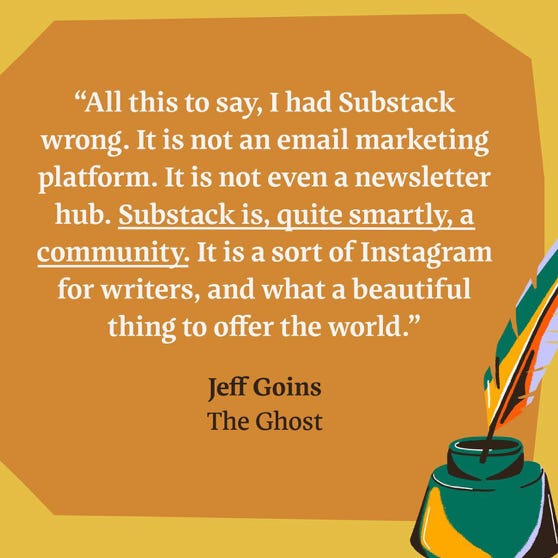
I’ve met and made friends through Substack. As I wrote last week, a new ‘friend’ I’ve not yet met, Judy MacMahon, created #FranceStack. She has collected together many of us who write about France and Paris, and created “a list” now known as a Stack! Rather than competing with each other, we can repost something that our readers would probably find interesting, AND bring attention to other writers who love and write about France.
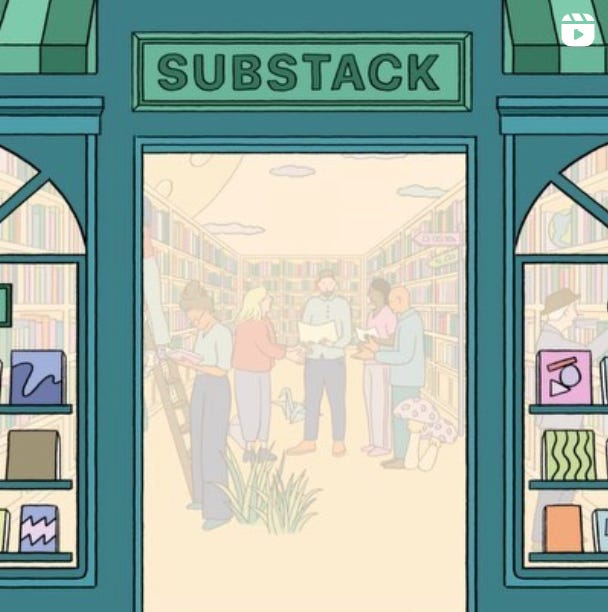
For now, Substack is a wonderful idea that has brought well-known authors into our living rooms and made it possible for writers whose names are not Steven King or John Grisham to make a living doing what they love to do.

I did see this morning that someone has started #SobrietyStack and is charging for it which goes against all the traditions of Twelve Step programs. Recovery is free if you’re willing to do the work. 
So nothing is perfect—big surprise! For now, we have a booming literary society available to everyone. And it’s a wonderful way to support the authors you enjoy—especially if you are a library patron as I am and don’t buy that many books. If you are a WordPress follower of mine, go to SaraSomers.substack.com (click this link) and subscribe for free. Then look around Substack and find other publications that might interest you. Now is a great time to do it. Like FaceBook, like so many things in our technological world, most everything gets too big and the underbelly shows. The Internet is still the Wild, Wild, West.

A bientôt,

Sara

Thanks for reading Out My Window! Subscribe for free to receive new posts and support my work.

The Wallace Fountains

I had a thought of writing about the beautiful Wallace Fountains that are scattered all over Paris and parts of France. It would make a wonderful post. Then I woke up to another blogger who had already written up something and posted it over the weekend. This isn’t just any blogger. Her name is Judy MacMahon. She is Australian and is a Francophile. She authors MyFrenchLife.org and ‘le Bulletin’-another Substack. This summer she had the brilliant idea of pulling together all of us who write about Paris and France (whether we live here or not) and calling it #FrenchStack! I have been looking for an opportunity to share with you Judy’s #FrenchStack.

First I’m going to repost Judy’s write-up about the Wallace Fountains. Then give you #FrenchStack. Some of these you may already know quite well. Others you may never have heard of. Just because they are listed does not mean that Judy or I endorse them. Just that they are available and everyone’s taste is not the same. In the future, I will repost some of these wonderful stories that are included in #FrenchStack.

“1. How much do you know about these forest green icons in Paris? The Wallace Fountains

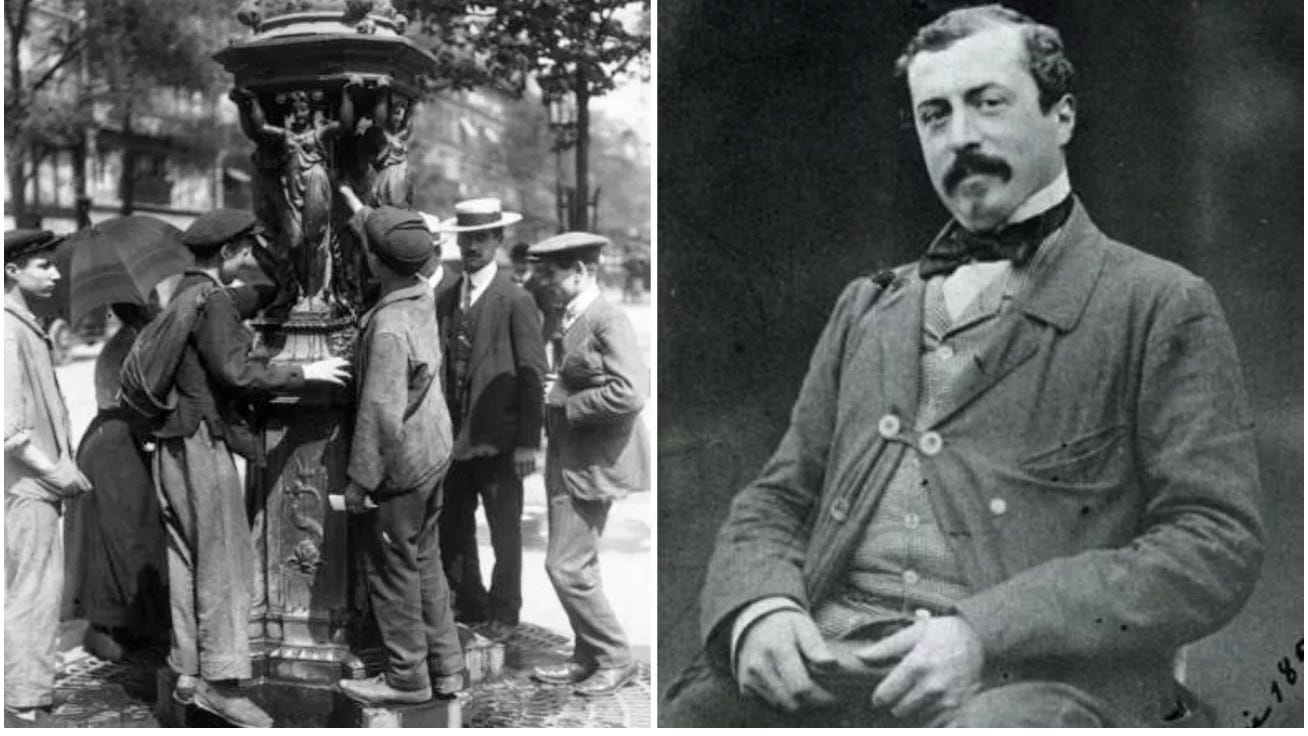
One year ago, this September, the Wallace Fountains were part of a month-long celebration commemorating the 150th anniversary of the Wallace Fountains—Sir Richard Wallace—an English philanthropist—and his project to bring clean drinking water to 19th-century Paris and beyond.

What are Wallace Fountains?

We’ve all seen them… these ornate cast-iron green fountains scattered throughout Paris, but I’ve never known their history. Ornate structures that are named after an Englishman. Why? My curiosity got the better of me, once again, and I was off on a mission to find out more.

  • Wallace Fountains are public drinking water sources primarily located throughout Paris, although replicas exist at various locations worldwide.
  • The grand model fountain stands almost nine feet tall and weighs more than 1,300 pounds!
  • There are now more than 100 fountains from an original 50 in 1872.
  • No, they are not all green… You will perhaps spot some in more avant-garde colors in bold red, pink, blue, and yellow, located in the 13th district in the southwest of Paris.
  • How much water do the French really drink?

In 1872, British philanthropist Sir Richard Wallace set off to provide safe drinking water for all in  Paris. 

People drinking from a Wallace Fountain during Bastille Day celebrations in 1911 (L) and a photograph of Sir Richard Wallace (R)The Wallace Collection

He established a network of drinking fountains across Paris and every day millions of people pass them without knowing how they came into being.

In the late 19th century, following the siege and bombings during the Franco-Prussian War and the collapse of the Paris commune, clean drinking water in Paris was scarce. Many communities relied on water that was transported from the Seine, which was often unsafe to drink.

The price of potable water became very expensive. As a result, most poor people had difficulty obtaining and paying for water that was safe to consume. Moreover, most of the water sold by vendors and distributed on carts to the poor was drawn from the Seine River. That water was certainly contaminated because at the time all the wastewater from the streets and many of the sewers drained directly into the river. It seemed less risky to drink alcoholic beverages, which were often cheaper than the price of unsafe water. Given the choice, the lower classes were most apt to hydrate with beer or wine.

Barbara Lambesis, President of the Society of the Wallace Fountains says many Parisians turned to beer and wine, a more sanitary – and often cheaper – alternative to water, which drove a large portion of the city into alcoholism.

There were health consequences… lots of alcoholism, which of course tears away the social fabric of community,” Lambesis explained. “Richard Wallace decided he was going to make clean drinking water free and available and easy to access for everyone, regardless of whether they’re a visitor or a resident and regardless of their social status.”

Who was philanthropist Sir Richard Wallace?

Little is known for certain about the early life of Richard Wallace, who was born in 1818 in the UK, although it’s believed that he was the illegitimate son of Richard Seymour-Conway, the 4th Marquess of Hertford, an English aristocrat and art collector. When he passed away in 1870, most of his wealth was unexpectedly left to Wallace.

The Wallace Collection – art

Sir Richard Wallace is best known in the UK for his extraordinary art collection donated to the British people. The Wallace Collection is available for public viewing at his former residence in London. In Paris, he is remembered for aiding the poor and for his generous, steadfast commitment to the common good as symbolized by the iconic drinking fountains that carry his name in Paris.

In 1871, Queen Victoria knighted Wallace for his:

splendid munificence during the difficult period of the siege of Paris,” and he was later made a baron.

He died on July 20, 1890, in Paris at his home—the Château Bagatelle, in the Bois de Boulogne—and was later buried in the Père Lachaise cemetery. But his legacy lives on.

The Wallace donation of 50 fountains to Paris

In 1876, after inheriting a large fortune, Wallace donated 50 fountains to the city of Paris to be installed throughout the capital. Beyond functionality, Wallace put a lot of consideration into the aesthetic and practical elements of the fountains, sketching out the first designs himself before handing them off to Charles-Auguste Lebourg—a sculpture from Nantes—to deliver the final product.

They were made of cast iron because they were durable and easier to replicate; and they were almost three metres tall so that they could be easily seen and recognized,” Lambesis explained. “They’re full of symbolism; the four figures, featured in the fountains, represent human virtues that Richard Wallace wanted people to adopt when they drank from them. Those virtues are simplicity, sobriety, charity, and kindness.”

Formation of The Society of the Wallace Fountains

Barbara Lambesis, rue de Rivoli, devant l’objet de sa passion. DR

A few years ago, Barbara Lambesis – an American, who lives in Paris part-time – was strolling through the city when one of the fountains caught her eye.

“I became very intrigued with it, and that was the beginning of a long journey; I researched it a great deal, studied it a great deal, and decided that I was going to put a purpose to my wandering,” she said.

The first is to promote, preserve, and protect the fountains throughout Paris.

“The second part of the mission is to recognize and encourage philanthropy in the spirit of Richard Wallace,” she explained. “Richard Wallace was an Englishman who was born in London, lived most of his life in Paris and loved Paris… and suddenly inherited a great deal of money during the terrible siege in Paris in 1870. He immediately took that money and went out and distributed it to the poor, to the people who were suffering the most.”

The third part of the mission, Lambesis explained, is to “position the Wallace Fountains as the global symbol of international universal equal access to clean drinking water for everyone on the planet, because that’s really what those fountains stand for.”

As a part of the 150-year anniversary, Lionel and Ariane Sauvage – French philanthropists working particularly with the Louvre Museum in Paris— received the new Wallace Fountain award to celebrate their 30+ years of philanthropy. 

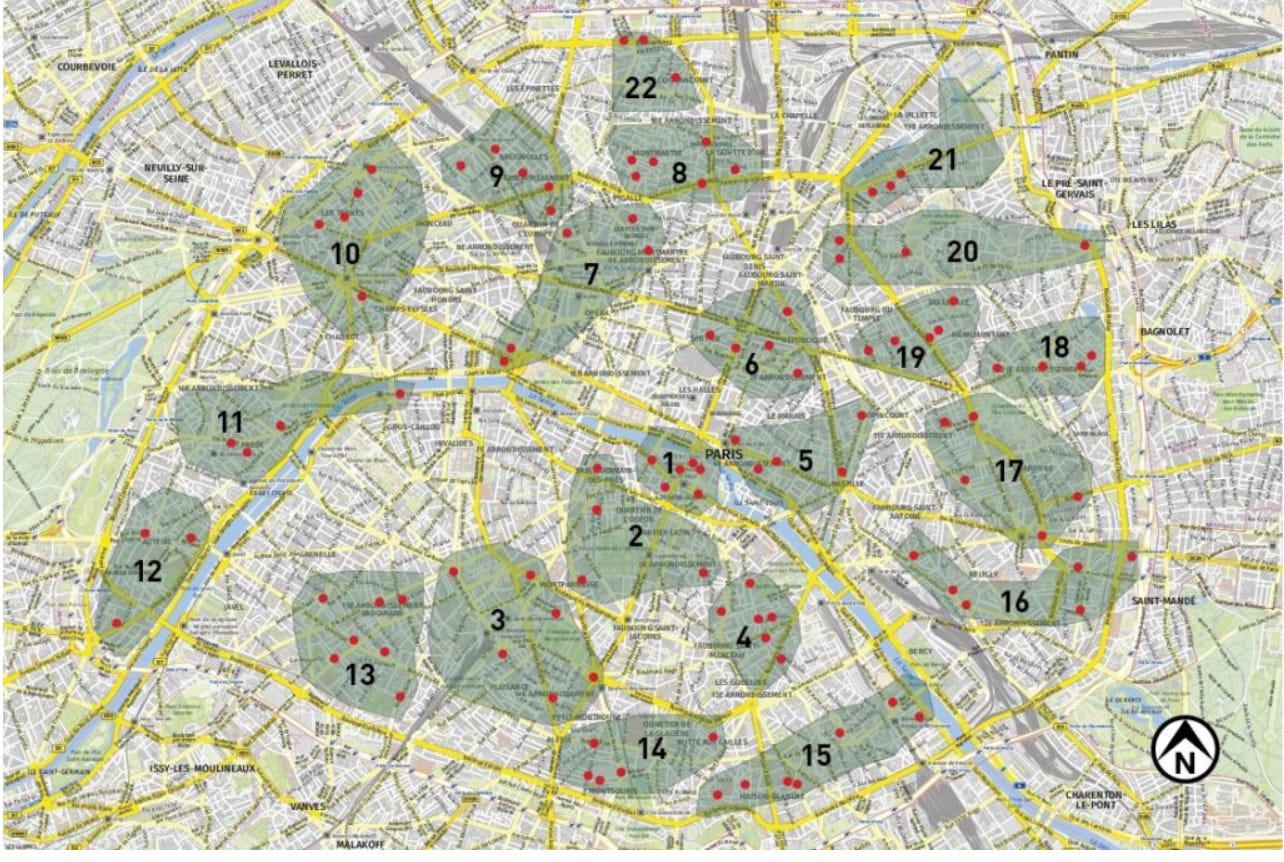
22 Self-Guided Walks

The 22 self-guided walks take you to different parts of ParisUse the map to view the area of Paris for each numbered walk. Each guided walk includes a map and a narrative that gives directions and often mentions points of interest along the route. Use the guided walks to find the fountains and the wonders of Paris.

Download – To download a self-guided walk, click on Get Started Now (← here) The downloads are formatted for mobile devices and are free of charge. 
”But, we hope you will donate a very small amount to help fund the development and maintenance of this website and the work of the Society of the Wallace Fountains. You also will have the option to register to receive updates and information about the fountains.” from the Wallace Fountains Society website.”—Judy MacMahon ‘le bulletin’

Look for the #FrenchStack tomorrow. Judy MacMahon has put together all the Substacks that write about France and called it #FrenchStack!

A bientôt,

Sara

Thanks for reading Out My Window! Subscribe for free to receive new posts and support my work.
Twenty-two years ago today…..

(Thoughts on waking up this morning, not edited)

…I was woken up by a friend asking me if I was watching TV. What was happening was something that she couldn’t describe. I don’t remember if she tried. It was 7:30am in Oakland, California. The first tower had fallen. The second tower went down within thirty minutes of my waking up and turning on my TV. And then the world changed.

I’m not sure what happens to me when I see horrifying events live on TV. I didn’t gasp and start crying like so many friends. Perhaps it was the fact that it was on TV and so many of us, me included, watch films and “make believe” on that same screen. I remember thinking that I could be watching a film. What or how did people react on December 7, 1941 when the Japanese attacked Pearl Harbour? They had to learn of it via the radio. Their horror would be dependent on the reporter’s descriptive skills and whether they had a relative stationed in Hawaii.

9/11 didn’t need description. And in case anyone missed the falling of the towers while it was happening, it was replayed over and over, a hundred, two hundred times until we were numb.

The world was cancelled before it changed. Everything stopped. No flights, no trains, travellers were stuck in strange places and couldn’t get home, no baseball, no theatre, no nothing. Grocery stores were open. Baseball resumed ten days later. I don’t remember who the A’s played against. I do remember the pre-game ceremony, the singing of the Star Spangled Banner and America the Beautiful. There were prayers for New York and for the world. That was when I cried. I was with my tribe and we were together.

Two and a half months later, I flew to NYC. I had to see in person the destruction, the relief efforts, some of the Firehouses with their signs telling how many men they had lost. It was an unseasonably, beautiful, warm weekend in December. 70o. My friend, Michelle, and I walked across the Brooklyn Bridge. We visited two Firehouses. A church group from Georgia was visiting one of them. They’d brought toys for children, lots of food, and donations for the families. We were invited in to join them but we didn’t stay. 

We walked by the hole left by the towers. There was a makeshift wall with a makeshift wooden walkway for people to line up and slowly walk by to look at the charred skeletal remains. A huge white sheet was tacked up on the wall. We were all encouraged to write something hopeful and sign our name. And, of course, American capitalism was present. A man sat near the line selling American Flag earrings and pins that people vulnerable with grief would purchase to show their patriotism. 

We wandered up to the Crisis Center. Huge boards with notices “looking for….” accompanied by a photo crowded the large room. Photos of the destruction were everywhere. People stood in lines to check in with a government official who had a list of the identified dead. New York was very much in a generous mood, love thy neighbor mood. Christmas was coming. The bereaved felt noticed and cared for. But as I learned after the huge Oakland FireStorm ten years earlier, once January comes, the world begins to move on. The suffering family members are left a bit paralysed, not knowing what to do next. Alone with their loss and grief, they pull back and find it hard to identify with the lives of those not suffering.

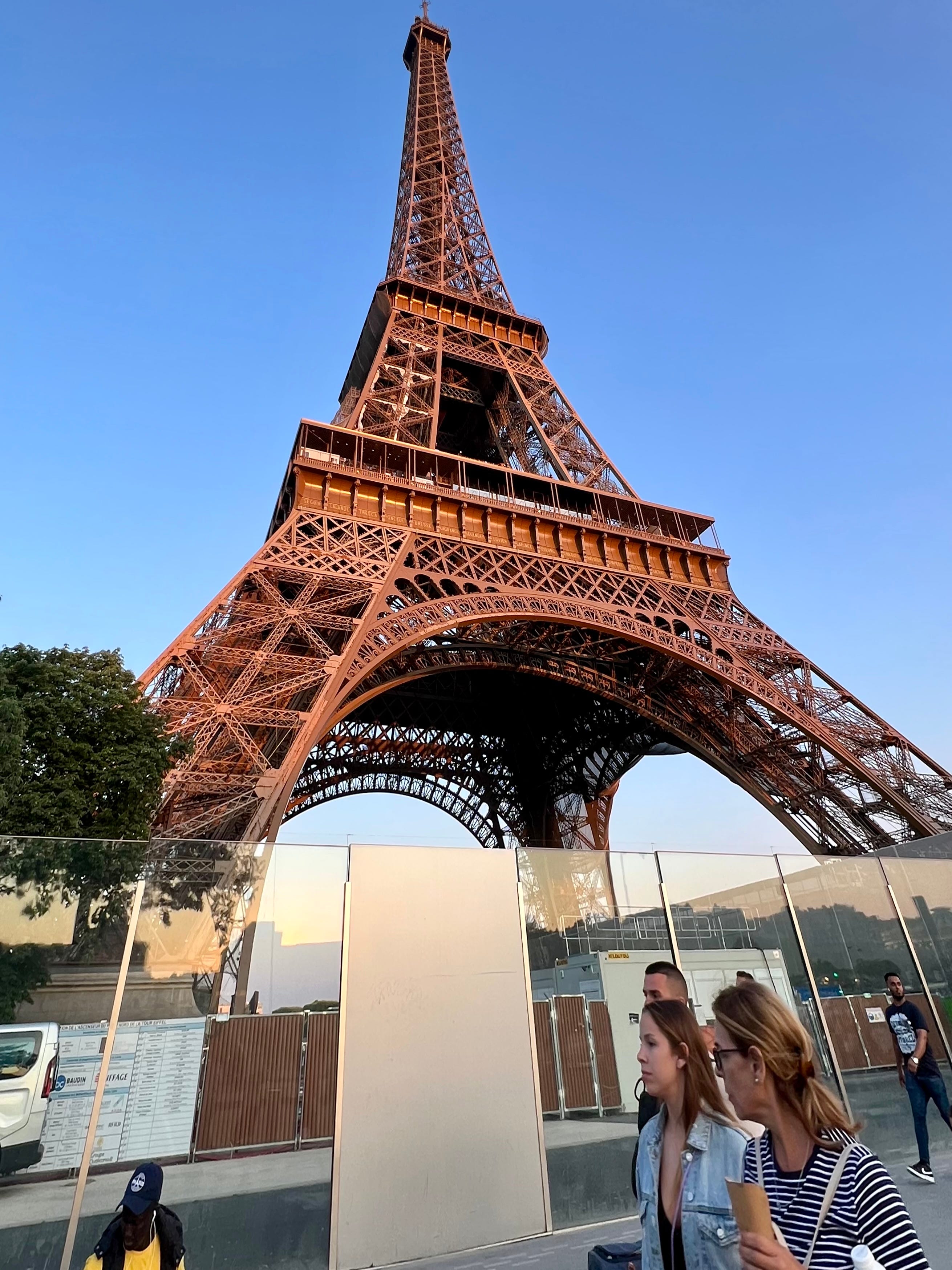
Today, twenty-two years later, we have beautifully written stories of that time. We have TSA and airport security. We have huge acrylic walls surrounding and protecting the Eiffel Tower. We have the memory of declaring war on Iraq, and the endless war in Afghanistan that America finally pulled out of two years ago.

And, for people like me, all the blinders have been torn off my eyes, ears, and heart to expose the truth about the United States of America. It is not the land of the Free—although its citizens are much freer to express their hatred and fear of others in unspeakable ways. It is not the land of the Brave. Most of us are sheep and look for the door painted either red or blue. We walk through it asking few questions.

For the first time since FDR, we have a President who is truly America’s friend, who has done more to help Americans get on their feet and defend democracy than Obama did in his eight years in office. I love Obama, don’t get me wrong. It’s just the facts. But this president has low ratings because he doesn’t have charisma, because he doesn’t soft sell a crowd while on TV. Here we are back to TV again. Each of us in our Living Rooms alone or with a small family and we believe what’s on TV. We have lost the ability to educate ourselves, to fact check, to form an opinion that is our own (With apologies to my sister who knows exactly how to do it all).

I don’t know how to end this piece. Probably because I don’t want it to be the end. The pandemic has changed us once again. More in the direction of being alone yet feeling connected technologically. Where are we headed?

Thanks for reading Out My Window! Subscribe for free to receive new posts and support my work.

La Rentrée/The End of Summer

After two months of “blog vacation”, I’m back to start telling you about the interesting things I see and do in France. I had such a wonderful time in Saint Jean de Luz that I had to share with you the beauty of that place.

Except for that trip, I remained in Paris for the entire month of August. At least half, and probably much more, of Paris went on vacation. In the outer arrondissements (I’m in the 16th), Paris was quiet. No tourists, most stores were closed, hardly any traffic. Sometimes I’d walk out of my apartment building and wonder if pandemic limitations had restarted. It was SO quiet and there were plenty of parking spaces on the street. During the rest of the year, a driver might sell their next of kin to have a parking space so close to home. Two out of three of my veggie markets were closed; the Boucherie was closed; both bakeries/Boulangeries were closed. The lovely restaurant #41 – closed. In fact, the only thing open on my block of Av. Mozart was the Fromagerie with a big sign that said “We are staying open all of August” and the wine store.

This week starts the fifth season in France: La Rentrée. I write about it every year. I don’t know of any other country that has something like this. It’s not just the beginning of school but, since most people go somewhere else in August, everyone is returning home and getting ready for the new year. People say “Bonne Rentrée” to each other. Stores have sales on office supplies, school needs, anything that might make the end of summer more palatable. It’s September. Today, the temperature is in the high 90s F/30/31oC. Summer weather Store windows have Fall clothing, cozy snuggle up on the couch and stay warm clothing.

The Local gives some definitions of La Rentrée:

“Schools restart 

La rentrée scolaire is when schools begin again for the new academic year. There is a tradition that this cannot happen until September, so this year schools go back on Monday, September 4th. 

A side-effect of la rentrée scolaire is the appearance in shops of huge collections of stationery as stressed-out parents head out to buy the dozens of items on the official lists that schools send out, all of which are deemed essential to educational life.

Return to work

Of course key workers continue to work throughout the summer but many offices close completely for some or all of August as it’s not at all uncommon to receive out-of-office replies simply telling you that the person will be back in September and will deal with your query then.

Many smaller independent businesses including boulangeries, florists, pharmacies, clothes shops and bars also close for some or all of August as their staff and owners enjoy a break.

If you work in an office, the first few days after la rentrée is often a time for chatting to colleagues, hearing other people’s holiday stories and generally easing yourself back into work gently so it’s not too much of a shock to the system.

Return to parliament 

The French parliament takes a break over the summer and resumes sessions in September, while ministers too generally take a few weeks off. Traditionally the president goes to the presidential holiday home – a villa in Bregançon on the Riviera and enjoys a few weeks of sun, outdoor activities and rest.”

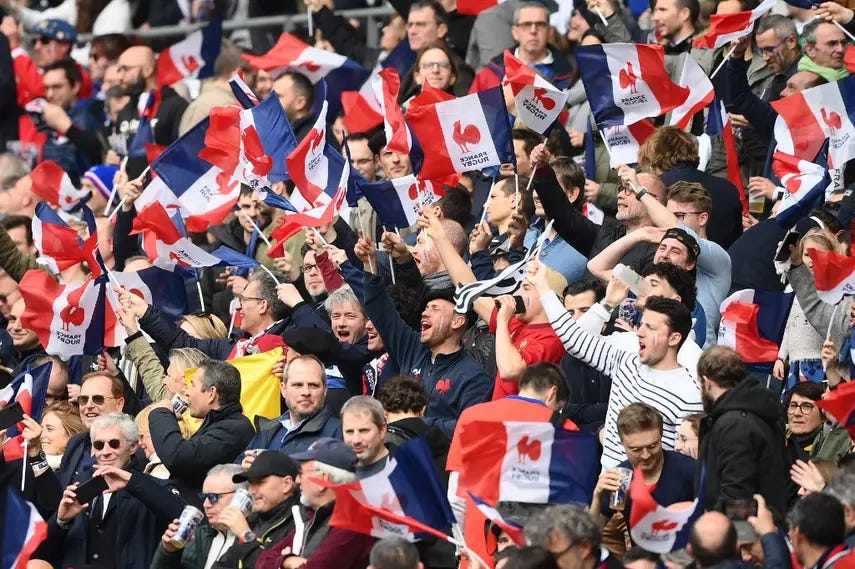
This year, the World Cup of Rugby is being held in France from September 8—October 28, 2023 . Americans always think that Futbol is the definition of sports in Europe. It turns out that Rugby is a huge deal. My first French teacher in my immersion classes many years ago was a die-hard rugby fan. The games in the Stade de France, Paris are all sold out. The opening ceremony will start at 8pm Friday at the Stade, outside Paris, then the first match (France v New Zealand) will kick off at 9.15pm. The Oscar-winner and celebrity French rugby fan, Jean Dujardin, will host the opening ceremony at Stade de France before kick-off of the opening match on September 8th. 

Again from The Local: “If you’re not lucky enough to be among the 80,000-plus crowd at Stade de France, the good news is that the whole shebang will be on TV. In France, the opening ceremony and the France v New Zealand match is on free-to-air channel TF1.

Through the tournament, every match in the tournament is available free to air on TF1, as well as France Televisions and M6.

Rights holder TF1 will show 20 matches, including all matches involving France, while France Télévisions has 10 matches and M6 will show 18 games.”

In the US, the games will be on Peacock or some form of NBCSports.

As for the weather, we will have summer weather for the next two weeks. Which makes me very happy. 

Thanks for reading Out My Window! Subscribe for free to receive new posts and support my work.

A Bientôt,

Sara 

Saint Jean de Luz, Pays Basque

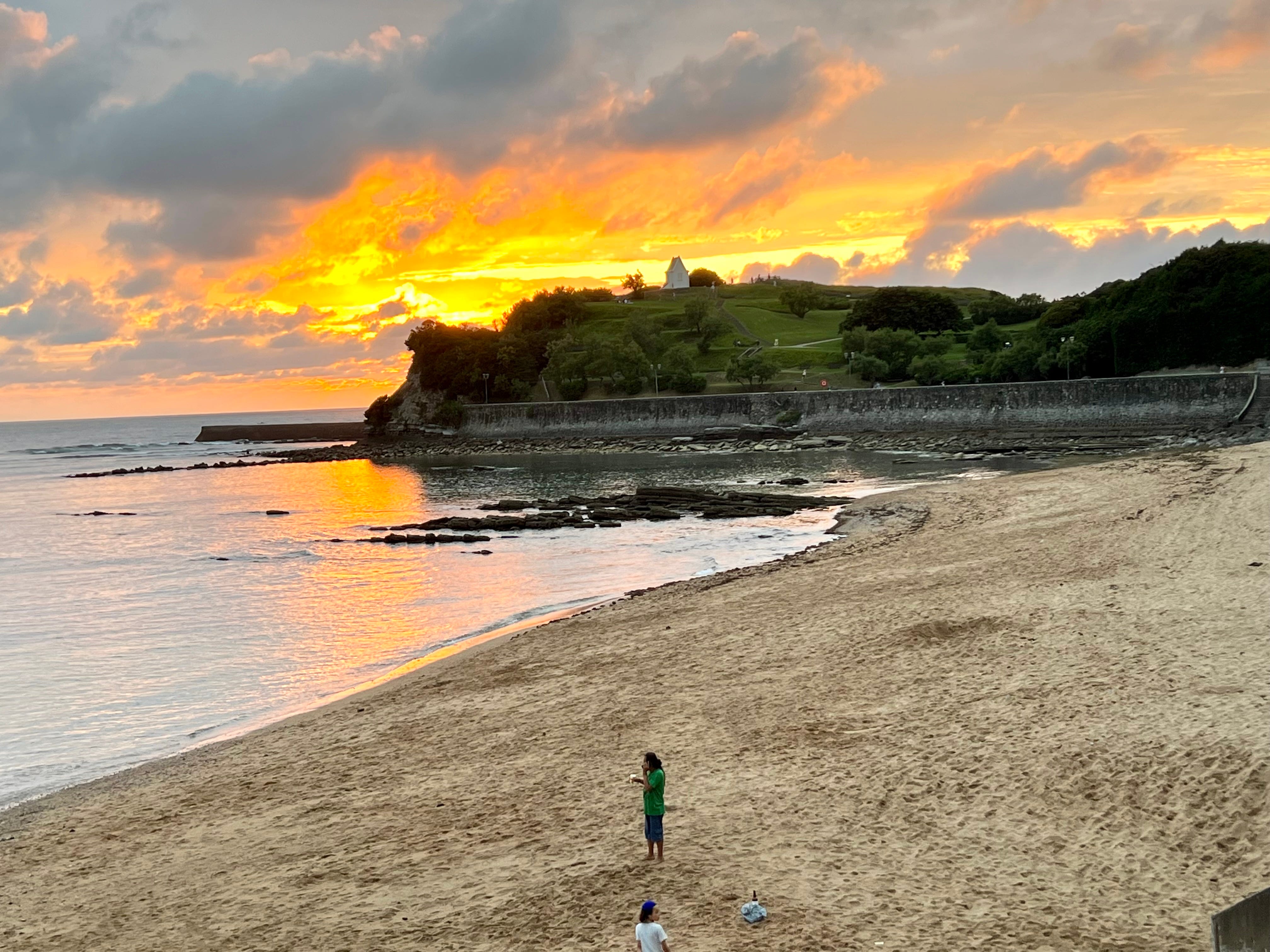
I watched the sun slowly fall into the ocean, her long orange reflection on the silvery blue water pulling back until there was no more orange disc, only a horizon of pinks, purples, and deep blues scattered like toffs of cotton candy over the darkening orange sky.

Sunset behind Saint Barb

Every evening was similar in Saint Jean de Luz, a small fishing village in the southwest of France, ten miles from the Spanish border. We had come on vacation for two weeks and been given perfect weather. It was the beginning of July. School vacations had not yet started in France so, though the boardwalk and beaches had plenty of people, it was still easy to navigate one’s way from one end of the boardwalk to the other. The dense crowds would arrive starting Quattorze Juillet.

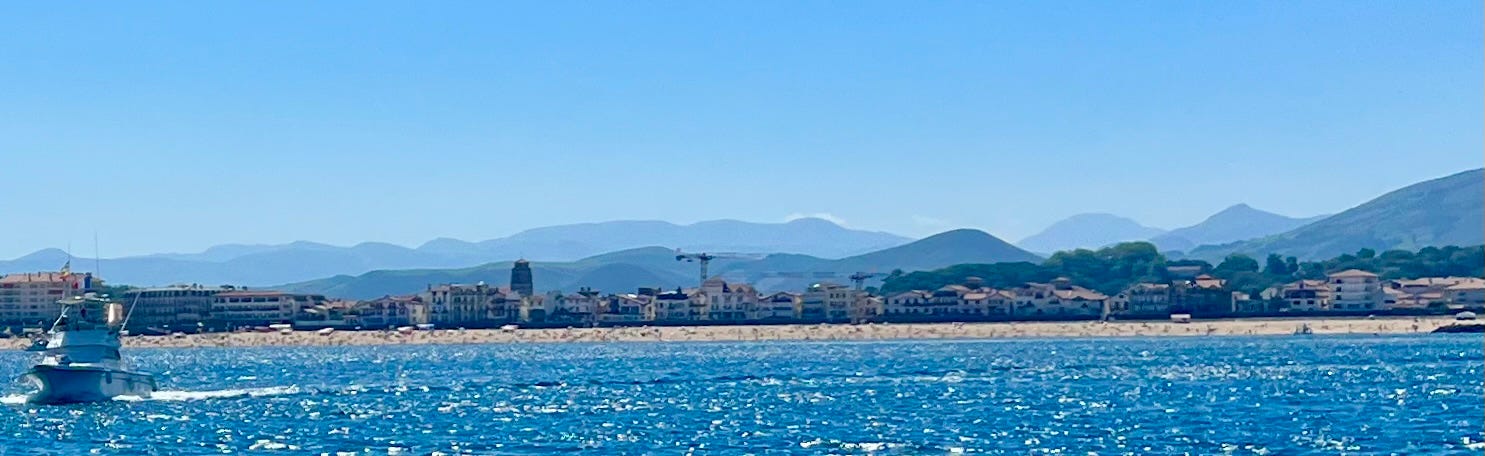
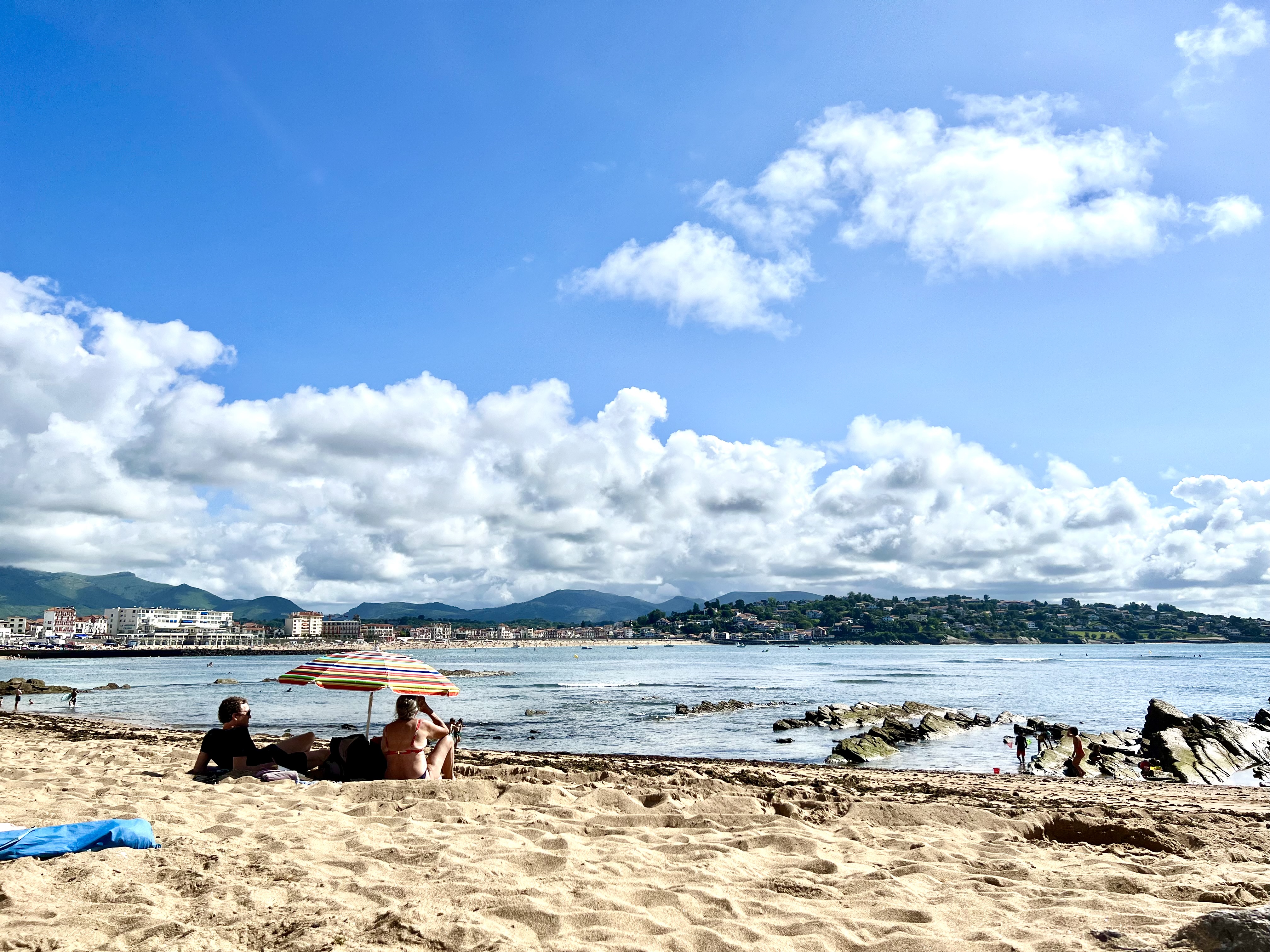
The bay of Saint Jean de Luz with the Pyrénées in the background

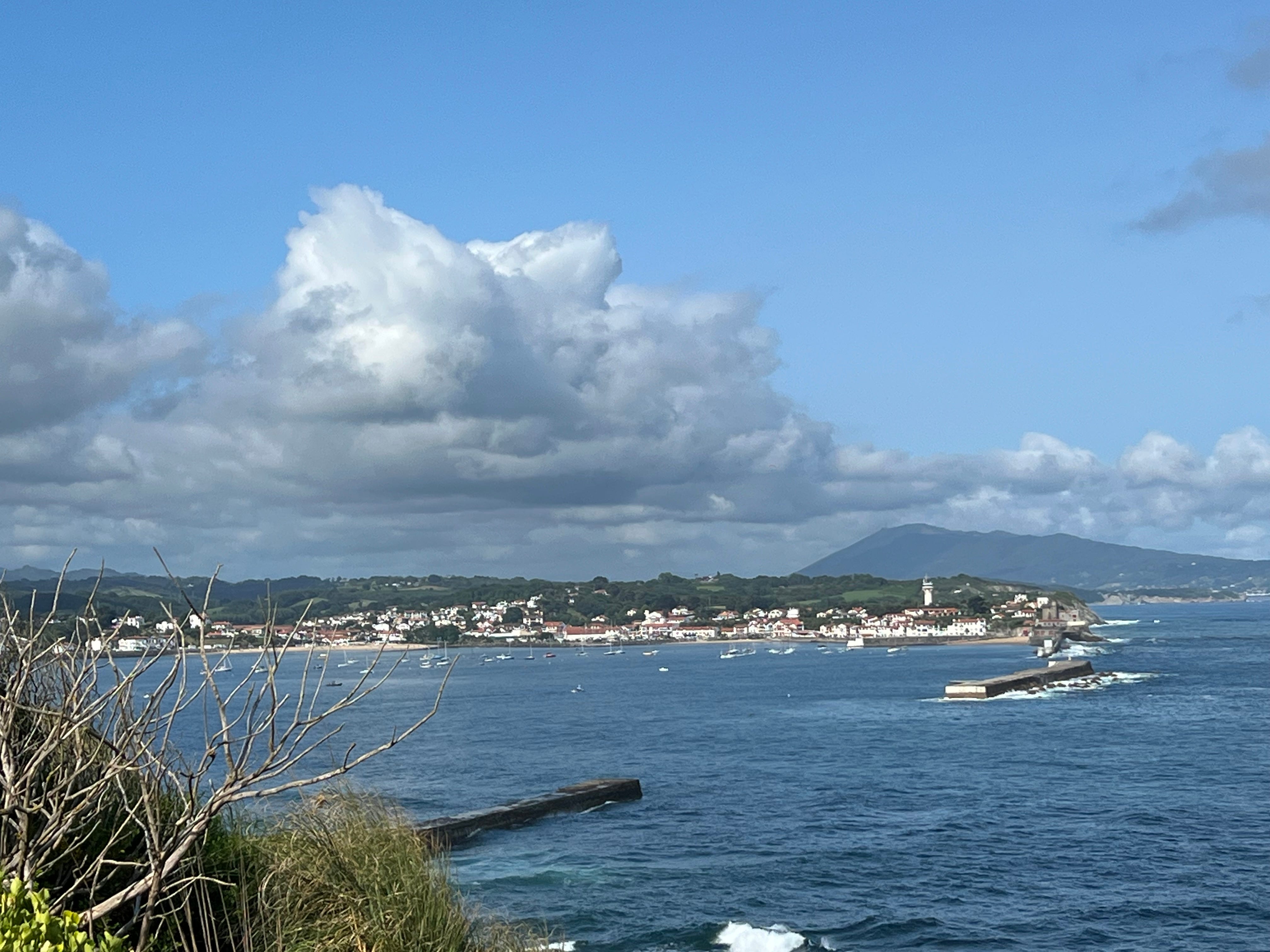
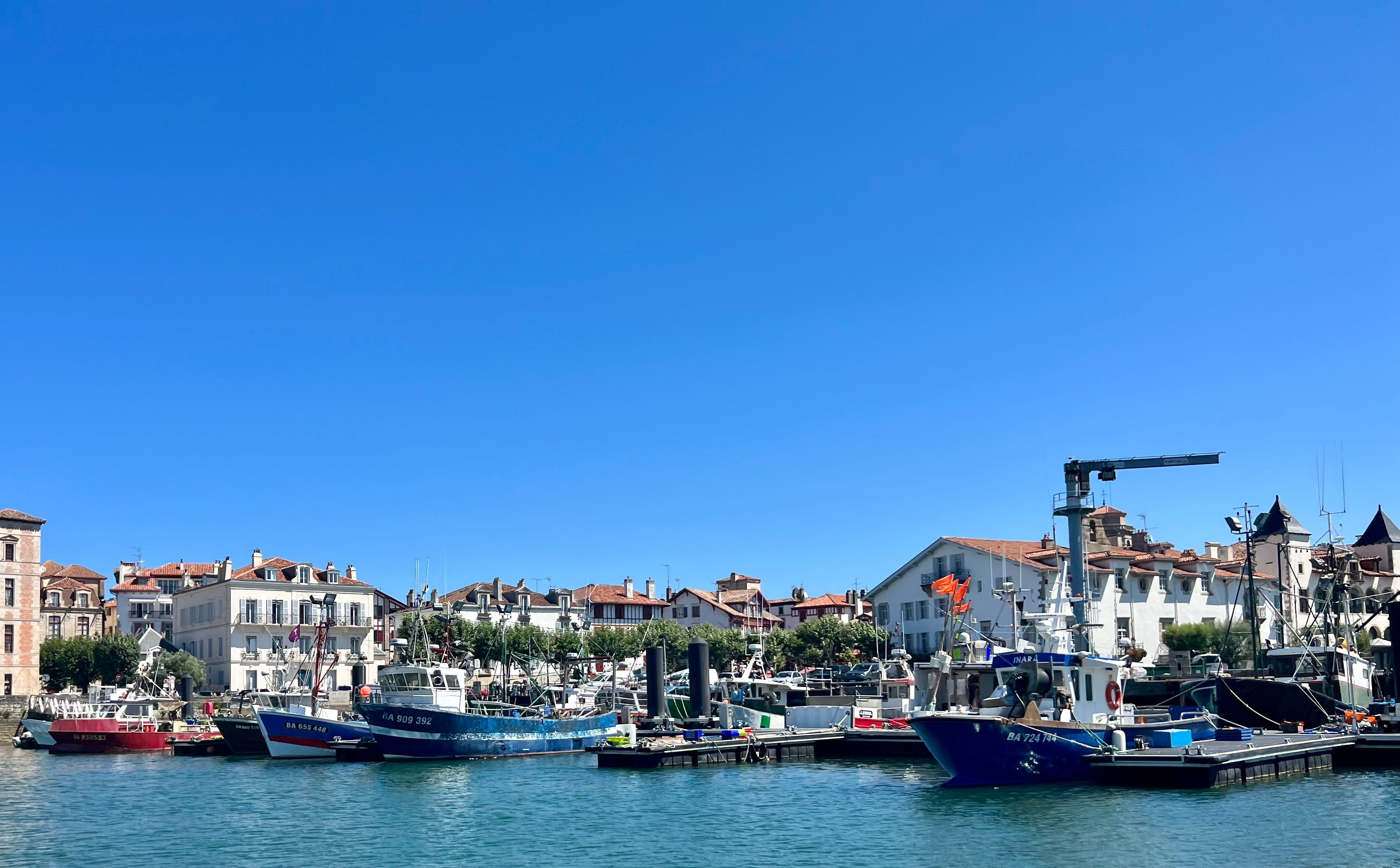
To some, Saint Jean de Luz is a resort beach town not just a fishing village. The Pyrénées is a majestic blue-grey backdrop that is a constant reminder of the geography between France and Spain. Sea walls have been built at the mouth of the Baie of Saint Jean to protect the town from the devastating floods that have wiped out the entire place several times. The Baie is a large U with one tip being the Chapel of Saint Barb situated on a cliff that is the beginning of the twenty-five-mile trail that goes north in the direction of Biarritz. The other tip is the small town of Socoa with its ancient fort and the route that takes one to Hendaye and then into Spain. The bottom of the U is La Pergola, a casino and boardwalk, built in the 1920s. Behind the boardwalk is the central village with its many boutiques, and the Port of Saint Jean where the fisherman board boats to fish for tuna, trout, and mackerel at one or two o’clock every morning, returning around 4 am with fresh fish for me to buy at Les Halles, the covered market in the center of the Port Area.

View of the bay from Saint Barb, Socoa is at the far end of the Bay

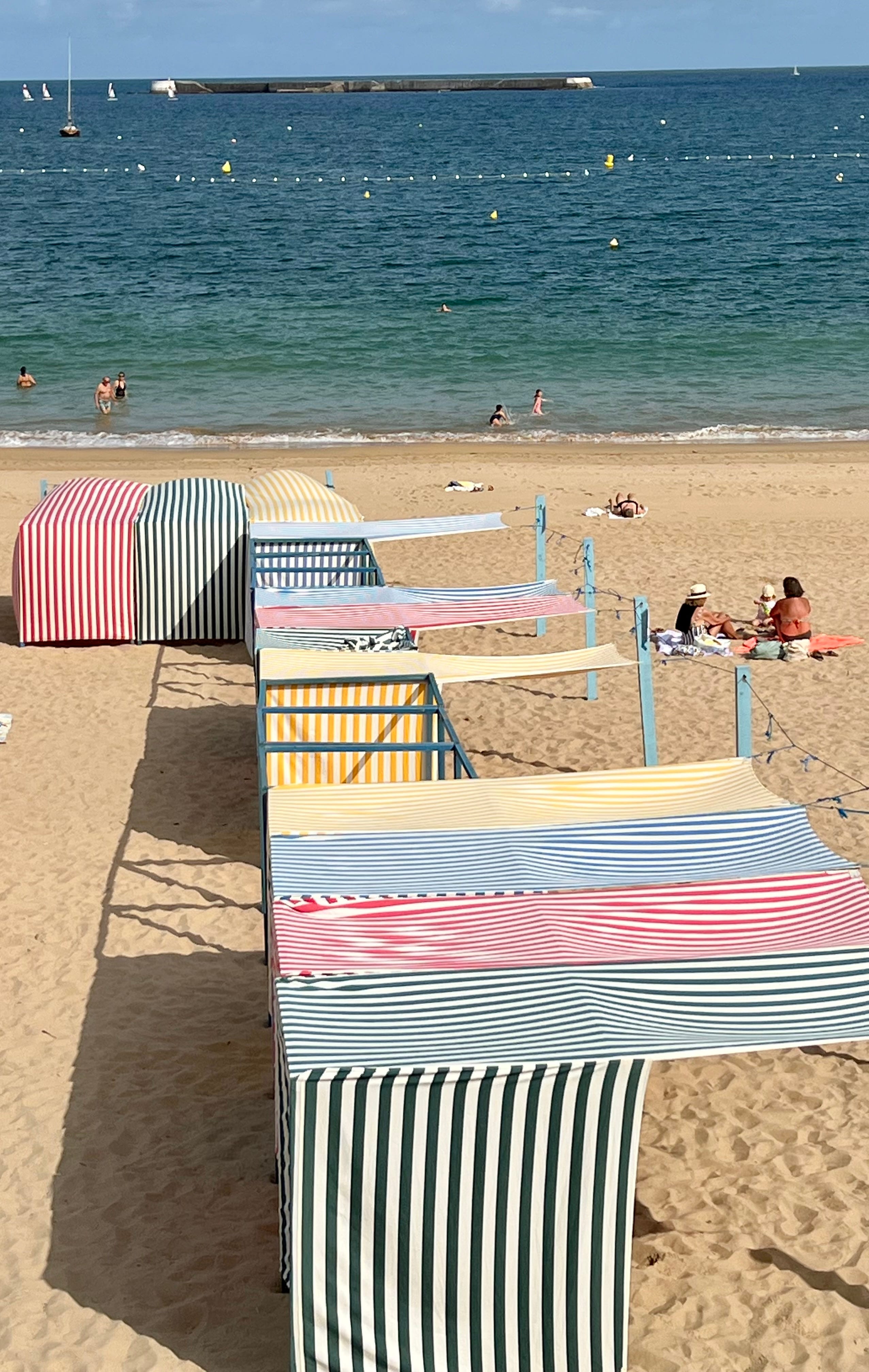
Every morning, my friend, Fatiha, and I, either together or separately, walked from our rented apartment, up to the Sentier (the cliff trail), turned left toward Saint Barb, and then were greeted by the vast expanse of the Atlantic Ocean. For an American, raised with the certainty that the Atlantic ocean was and always would be the East Coast, each time I saw the ocean, I would shake my head to remember that this is the same Atlantic Ocean, the same body of water, that washes up on Massachusetts and New York. We’d follow a new path, with the ocean on our right, and the beaches below us, that made its way down the pristine grass of Saint Barb until we found ourselves on the far end of the promenade. We’d head towards La Pergola, watching the beach boys setting up the little “rooms” that people could rent to get out of the sun and rest in a lounge chair. At La Pergola, we’d turn right and wander the boardwalk full of touristy attractions, selling striped marine T-shirts, linen dresses and pants, and espadrilles, the shoes that the farmers wear daily whether in the field or climbing in the Pyrenees. We’d eventually reach the end of the beach and the end of the boardwalk, walk down some stairs, and turning backward, walk past the Port harbor with her colorful boats. We’d arrive at Les Halles.

Places people can rent to escape the sun.

Tuesdays and Saturdays (and Sundays during July and August) an outdoor marché surrounds Les Halles on all sides. There is an abundance of fruit and vegetables. Cheese made from goat’s milk is sold everywhere and to get cow’s milk cheese, one has to go inside the covered market. Each morning, we left with fresh fish for our dinner and an accompanying veggie to cook, and all our salad makings. 

Beach

Then we’d make our way to rue Gambetta, the pedestrian street that goes south to north and has boutiques on each side as far as one can see. Another favorite for the tourist, me! is the colorful linens in the stripes of Pays Basque colors. Table cloths, napkins, washcloths, towels, cooking gloves, place settings, and bed linens. It’s a plethora of greens and reds and cream colors. I found it all so beautiful, I wanted to take everything home with me.

Port of Saint Jean de Luz

At the end of Gambetta, we found ourselves at the intersection with Boulevard Thiers. We would normally turn left there to head home. However, if we walked straight, crossing Thiers, we’d come to Monoprix and Carrefour. Carrefour has everything you can’t get at the Marché. And the Monoprix?…. Well, it happened to be the summer sales in France and Monoprix has some of the best clothes at the best prices, especially during the sales. It was irresistible not to go in there every couple of days and see what new things had been put on sale. I had to purchase a new over-the-shoulder bag to get all my purchases home to Paris!

Fatiha and I did this walk two or three times a day. For Fatiha, it included an afternoon at the beach, pulling out her blanket made of straw, a cloth to go on top, her earphones, and music on her iphone. I usually joined her for an hour or two. When the tide was out, we would splash around in the saltwater, swimming out towards the seawalls but always able to put our feet on the bottom. I spent my afternoons on schoolwork in the apartment. In the evening, I loved to walk down to the port where there was music from 9:30pm to 11:30pm in the large Rotonda. Everyone came out. Kids bought bags of confetti, threw it up in the air, and danced. They threw it on strangers’ heads who usually laughed. Couples danced old 50s swing to the music. Every night was something different. My favorite evening was a group playing Bob Dylan songs. I felt as if I was 25 years old and danced as I would have at a concert long ago. It all came back so easily. I thanked the lead singer who turned about to be British and lived in France, so he could sing the songs in English and in French. 

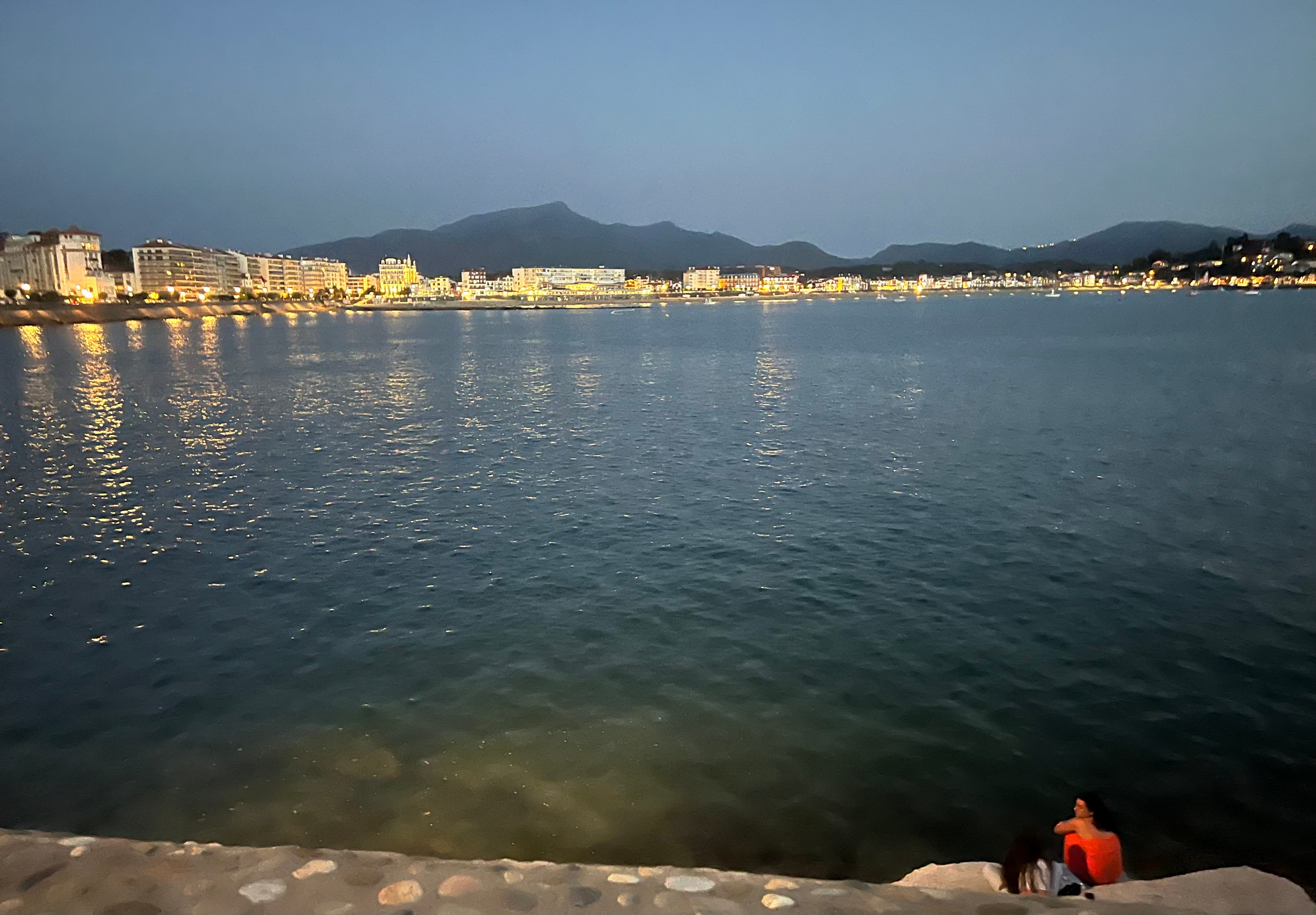
Saint Jean at night

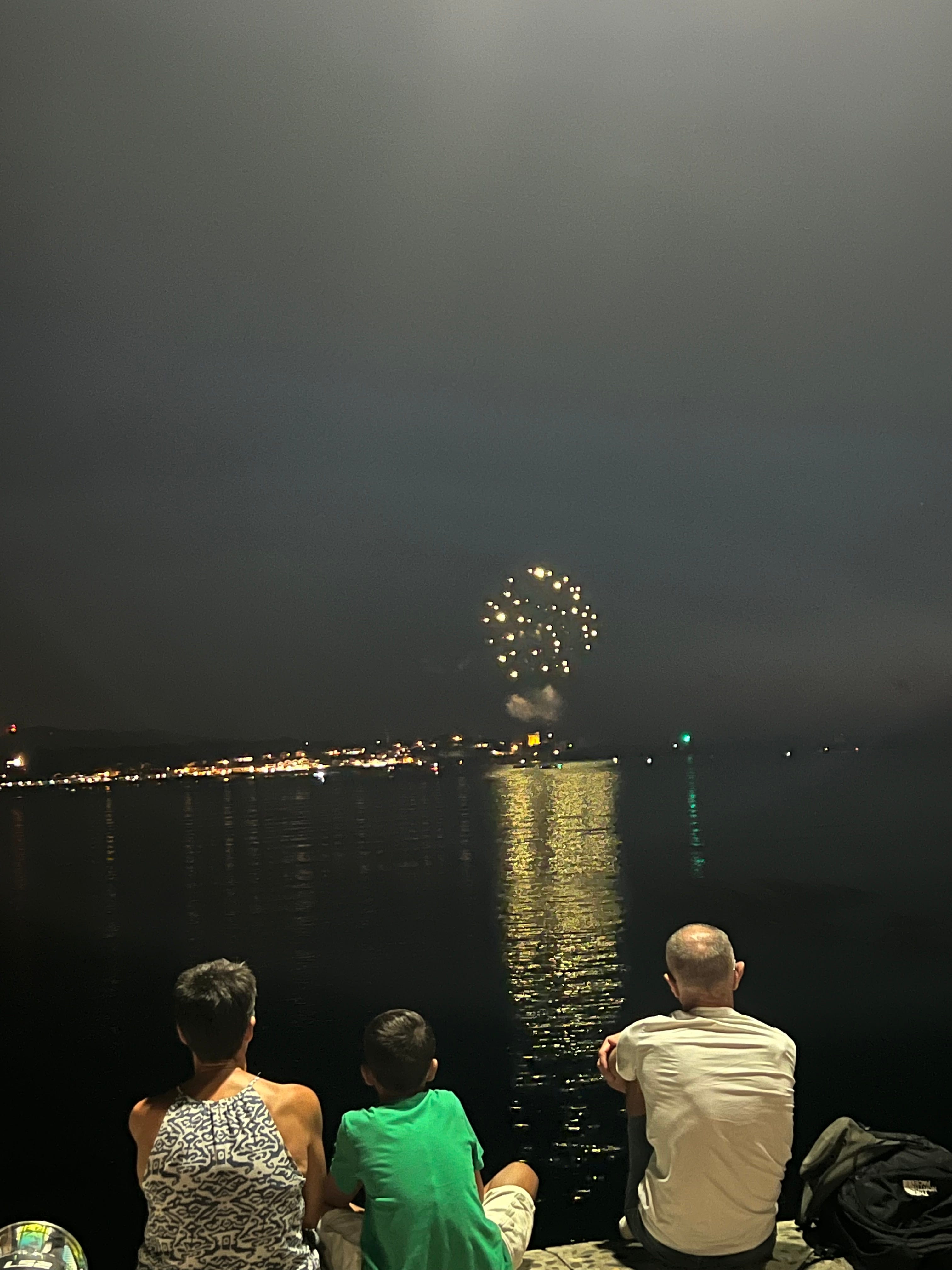
We were there for Quattorze Juillet. It didn’t get dark till late and fireworks wouldn’t start until 11 pm. So we walked, taking photos of the clouds reflecting all the colors of the sunset, and found places to sit on a wall of the Promenade. Promptly at 11 pm, fireworks started shooting skyward above Socoa. We were too far away to appreciate them. Then at 11:15 pm, the fireworks started at Saint Barb. We were right under them. It was a spectacular show—not the Eiffel Tower show that I got to watch last year—but here I was in a sun dress, sitting on a wall with hundreds of other people. We had just witnessed yet another stunning sunset, the air warm, the laughter all around me (I never once heard a harsh word coming from anyone the entire time I was there), watching fireworks that hissed and sizzled and sighed and popped in all the Pays Basque colors and I thought “It doesn’t get better than this.”

Fireworks from Socoa
Fireworks from Saint Barb

We were in Saint Jean de Luz for two weeks. It passed in a flash. This small fishing village is fifteen minutes south of Biarritz. Biarritz has bling, glamour, very expensive hotels and restaurants and attracts the wealthiest of the rich. Saint Jean is simple. I didn’t see any glitz, nothing flashy. Even the popular brand stores were not there. Every person we met was friendly and helpful if help was needed. 

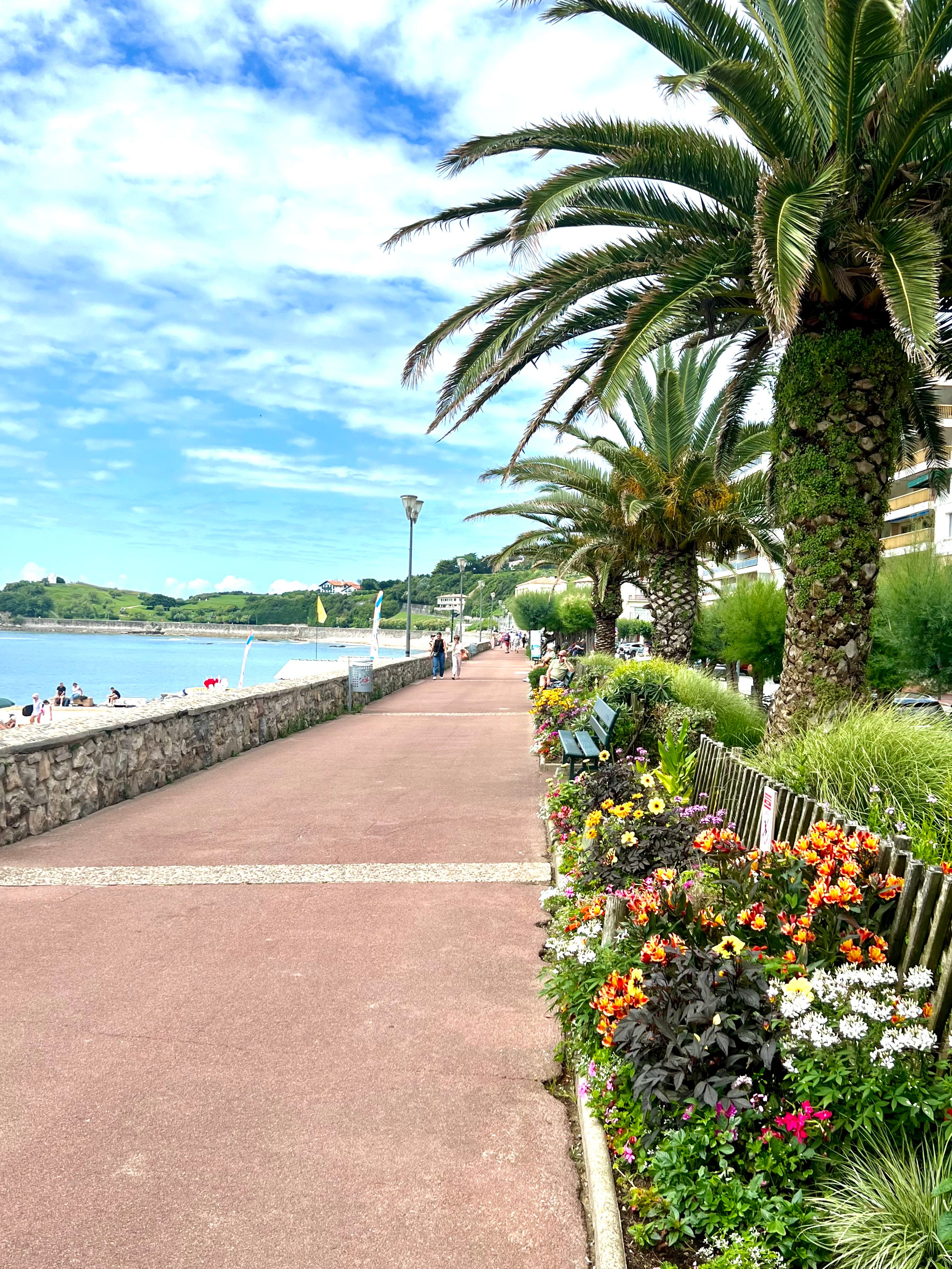
Promenade along the beach. Saint Barb in the distance on the left.

Ah if only summer would last and last.

Thanks for reading Out My Window! Subscribe for free to receive new posts and support my work.

A bientôt,

Sara

RACISM | POLICE BRUTALITY | WILL PROTESTS ACHIEVE THE DESIRED RESULTS

A post by Kit Desjacques

A number of you have written to make sure I was okay since there is so much rioting, violence, and arrests here in France. Yes, I am fine. Inconvenience is the biggest issue for people like me. Transportation stops at 9 pm in an effort to discourage the rioters from going places.

My friend, Kit Desjacques, has written a column for Medium. I would like to share it with it. Kit is in my Paris writing group and writes regularly for Medium so please check her out.

A Traffic Stop Ended in a Police Shooting That Provoked Violent Protests in France

The headline ‘tension between rioters and law enforcement’ doesn’t quite capture what’s going on

Kit Desjacques

Kit Desjacques

Photo of television coverage on Canal News France June 30, 2023 (Author’s photo)

At 12:15 am on Friday, we’re in bed but we can’t sleep.

“What’s that noise? Shh. Listen.”

It sounds like thunder, but there’s no storm. An explosion? A bomb? There’s a big sucking sound followed by a boom. Someone is shooting off giant commercial-grade fireworks, but there’s nothing visible in the sky.

The rockets are being launched at the police. On the ground.

Helicopters have been circling since nightfall. Despite the 9:00 pm curfew in Ile de France, the ring of suburbs that surround Paris, gangs of young French protesters are roaming the streets, launching rockets, and starting fires.

There’s a war going on, and it’s right next door.

It started on Tuesday with the shooting of a 17-year old boy from Nanterre, “Nahel M.” He and a couple of friends were stopped by police for driving in a bus lane. Witnesses say that the police got off their motorcycles and approached the car.

At that moment, Nahel hit the gas, apparently intending to escape.

An unidentified policeman fired his gun through the driver’s window hitting Nahel’s arm and chest. He died an hour later in a nearby hospital. The officer involved claimed Nahel was driving the car toward him.

An amateur video suggests otherwise.

It’s hard to maintain you were acting in self-defense if the other guy was fleeing. According to the lawyer for the officer who shot Nahel, his client was aiming for the driver’s legs but got bumped.

The lawyer said his (unidentified) client was “devastated” by Nahel’s death and didn’t mean to kill him.

Nahel’s mother disputes this version.

Appearing in TV interviews she was quoted as saying, “The policeman saw an Arab face, a little kid, and he wanted to take his life.” She asked residents of Nanterre to hold “a peaceful march” on Thursday afternoon.

By Thursday night, it had turned ugly.

Nahel was of Moroccan and Algerian descent. Protesters claim this is another case of police brutality and racial profiling. Are there policemen who are racist? Likely so.

Whether that was a factor, in this case, is unknown.

France prides itself on being colorblind, and the government goes to what seems (to my American perspective) extreme lengths to treat all citizens as “French,” prohibiting the collection of data on the racial or ethnic composition of its citizens.

The last time that kind of data was collected was when the Nazis occupied France.

It’s too early to know what happened. No one has any answers, but everyone has an opinion.

A number of public figures, including President Macron, have weighed in on the event. Macron was initially quoted as saying the shooting was “inexplicable and inexcusable,” but he later condemned the protests as “absolutely unjustifiable.”

He may be right on both counts.

French actor, Omar Sy, (star of the popular Lupin series), said, “May a justice system worthy of its name honor the memory of this child.” Popular Paris Saint-Germain soccer player Kylian Mbappe tweeted, “I am hurting for my France. An unacceptable situation.”

Meanwhile, we’re in our fourth day of violent protests—all over France.

Last night, 40,000 police, gendarmes, and the Anti-Gang Brigade were dispatched all over France to try and maintain order. Despite their efforts and the arrests of over 800 people, there was enough burning, looting, and destruction to leave everyone feeling skittish.

It feels like there is a civil war going on in France.

Earlier in the evening I had gone to a friend’s house with a few of her journalist friends for cold drinks and to admire her rooftop view of the Eiffel Tower. A journalist friend was on call to meet an incoming news team from London.

She had her phone nearby, awaiting developments. Everyone shared information—and misinformation—about the incident. The cop was a veteran who had served in Afghanistan, “not a hothead,” someone ventured.

“That’s true,” said another person. “There were no prior complaints about him. In fact, he got a couple of commendations as a policeman.”

We know that at age 17, Nahel M. didn’t have a driver’s license since the minimum age for one in France is 18. Further unconfirmed reports suggest that Nahel M. was known to police, but his record was clean.

Just then, my phone buzzed. It was my husband letting me know to come home early because public transportation was shutting down. It was only 7:30 pm, but we don’t live in central Paris.

We’re in a small suburban town that adjoins Nanterre, where the shooting occurred.

The Metro was still running, but all surface transportation was shutting down by 8:00 pm because of the curfew.

I was lucky to find a train that got me within walking distance of home.

We live in a white-bread bedroom community that was built as an affordable alternative to expensive Paris real estate when the car factories that previously occupied this bank of the river shut down.

It’s a slice of petite bourgeoisie that borders the working-class town of Nanterre.

Nanterre, a town of 100,000 people, is home to a large university and a sizeable immigrant population. It is where Nahel and his mother lived, and where the shooting took place.

My husband and I gave up trying to sleep and got up to watch the TV news.

The protesters have put up barricades and are shooting off fireworks from behind them. There are armored vehicles and troops in riot gear and fires everywhere.

The news resembles war footage with armed soldiers stepping over the burned skeletons of what used to be cars. There are buses on fire. A tram. A school. A community center. A bank.

Our neighborhood usually quiets down around midnight, but everyone is awake. Up and down the courtyard, building lights and TVs are on. People silently watch the war unfold on TV, less than three miles from our apartment.

The police officer has been charged with homicide intentional.

As the only lawyer at the party earlier, I was asked to translate the term for one of my reporter friends and the American network she works for.

“Voluntary manslaughter, I think.”

It was a guess. I know very little about American criminal law and even less about its French counterpart. I saw later that the New York Times called it “voluntary murder,” and wondered if I’d given her bum information.

Is there a such thing as involuntary murder? Sounds like an oxymoron.

Tension continues to build. There is a curfew again tonight. We canceled our weekend plans. Everyone is watching and waiting to see what will happen.

On the one hand, violent protests get important issues like racial profiling and police brutality on the table for people to discuss.

Will these discussions have the desired effect or will they just push more people into Marine Le Pen’s anti-immigrant camp in the next presidential election?

It remains to be seen.

Please consider Following me by clicking Follow above. You will be supporting my work and my weekly blogs will come right to your mailbox. Thank you.

A bientôt

Sara

Paris..1..2..3

Today, I want to show you photos I’ve taken over the past couple of weeks, tell you some of the highlights of coming events in Paris, and for those of you traveling to Paris and France, how to find out about any strikes involving airports and trains.

Eiffel Tower in the setting sun

1—For three weeks, we have had glorious weather: anywhere between 75o to 84o. Yes, that’s hot, but it’s not canicule (heatwave) weather. Most homes and apartments in Paris do not have air conditioning. We buy up all the fans during the winter and have them going all summer! Most apartments also have window and door shutters that can be closed during the highest temperatures of the day. That brilliant invention keeps the room dark and cool. In California, where I am from, the temperature climbs until about 2/2:30 pm when it reaches its peak. Then comes down and, before climate change got so bad, evenings in Northern California were cool. Mark Twain famously said: “The coldest winter I’ve ever spent was a summer in San Francisco.” That’s about right. I always envied people who lived in places where they could eat outdoors and stay long into the evening and not have to put on a coat or sweater. Now, one of those people is me!

Walking home Saturday evening

Here in France, the mornings are cool. The temperature climbs and reaches its peak around 6 pm, staying there for awhile, then slowly goes back down.  Unless there is a thunder storm ahead. Summer evenings in France are heavenly. So many of the districts have music festivals all summer long and one can lie in the grass, with a picnic dinner, and just enjoy!

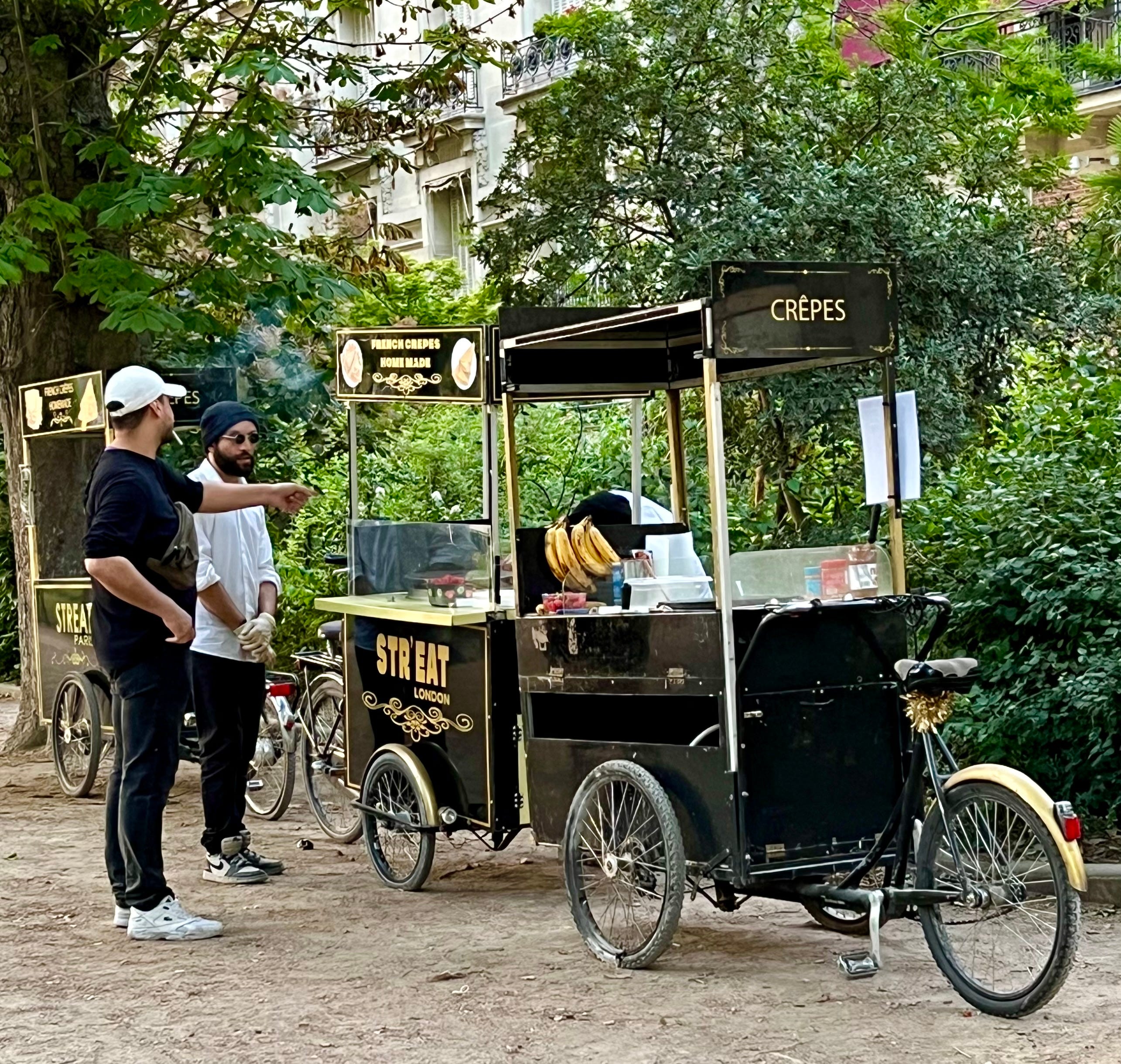
US has pop-up food vans, Paris has Crepes by Bicycle

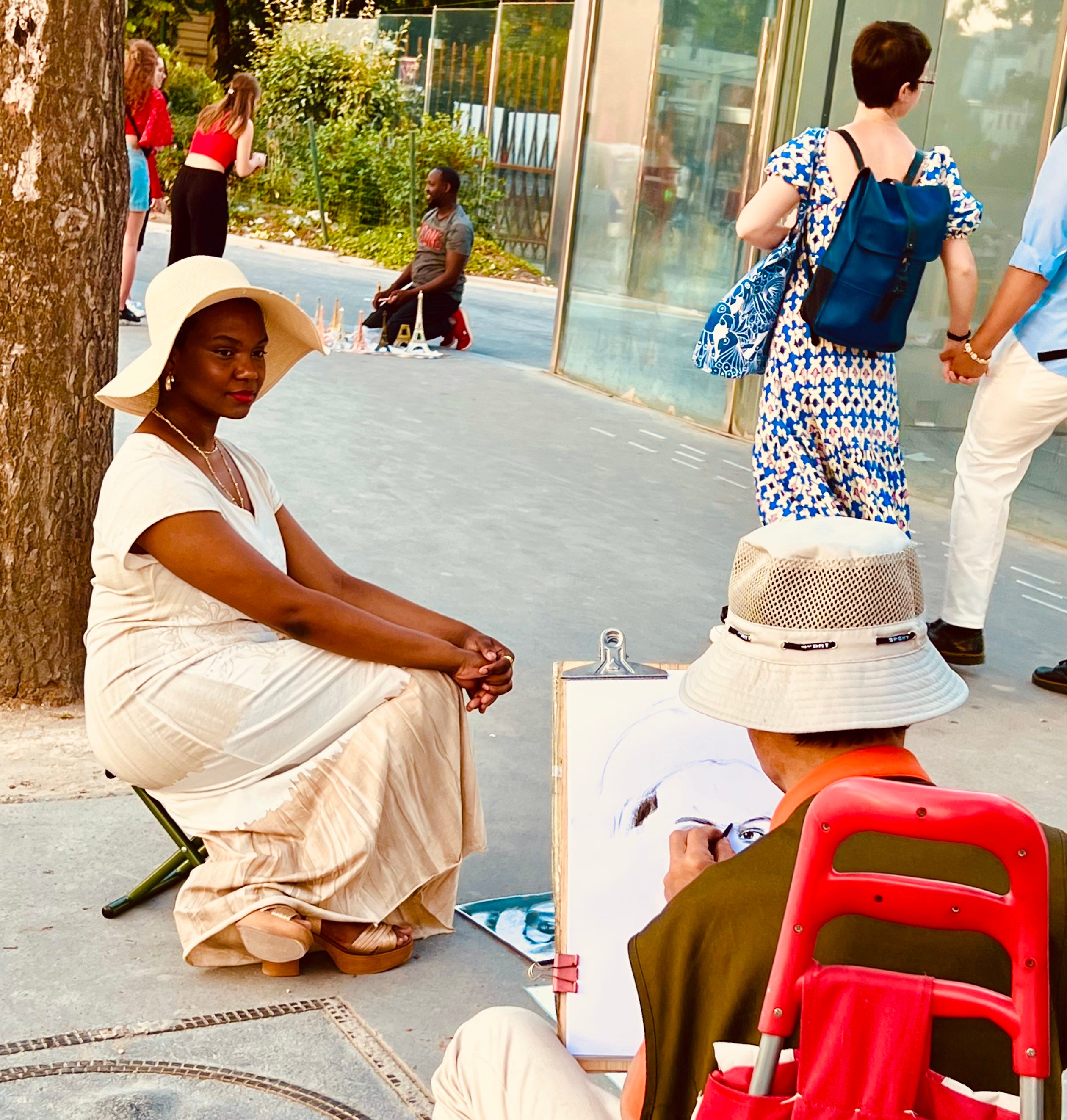
One of the thousands of artists who will draw your facial image. They are usually pretty good.

Saturday, Paris had a surprise thunder storm. I was with a friend and we were going out. She told me to bring my umbrella and a collapsable raincoat I could stick in my backpack. I checked my iPhone which said ‘no rain’. To appease her, I grabbed my umbrella. We got on the metro #9 and got off at Alma-Marceau. We could barely get past all the people huddled in the walkways leading to the exists. It was raining. No. It was pouring. We climbed the stairs, opened our umbrellas, and within a minute, both of us were soaked completely-head to toe. Umbrellas basically non-functional as the wind blew them the wrong way. I ran back down into the station and she followed me. After about 8 minutes when it didn’t look like it would slow down, I told her I was going to take a bus. We had planned on walking because it is such a short distance. Lucky me, I got to the #63 bus stop and the bus was there!!! She walked. Can I defend myself by saying she is a decade younger and walking in the rain is still fun?! This morning, the news said the winds were so high, the rains so bad, that trees were blown over, the coastal town of Dieppe flooded, and there was much damage. There are still storm warnings out. My iPhone now says: “moderate thunderstorm warning until 00.00 Wednesday, June 21.

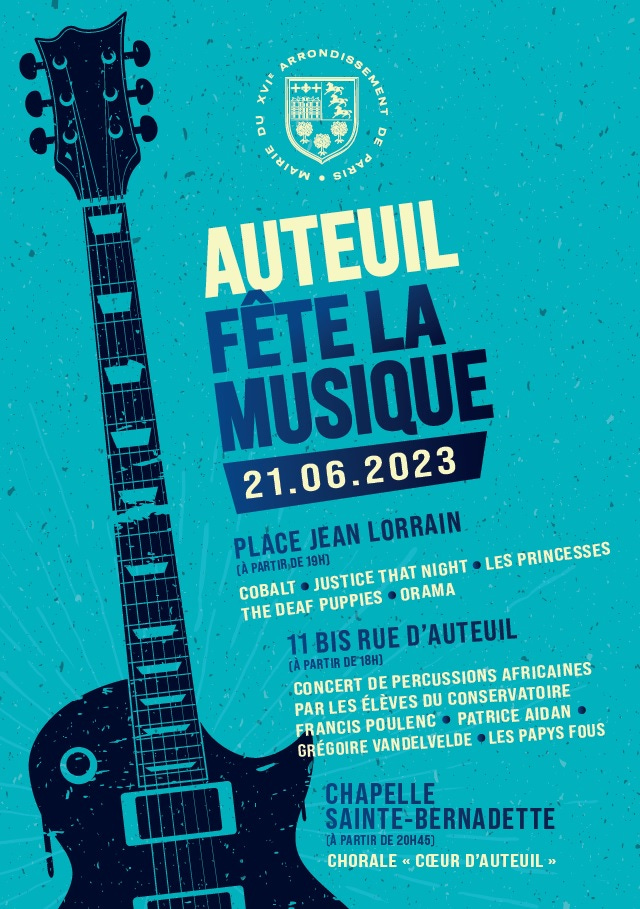
2—My iPhone (with the untrustworthy weather predictions) says that there will not be rain on Wednesday. No sun either. Cloudy and warm. Wednesday is La nuit de la Musique. All over Paris, street musicians will be out playing till midnight, some arrondissements are planning actual concerts. All public and private venues will be open and are free. My arrondissement is doing something in-between. There is one concert in the chapel of a church, another at Place Jean Lorrain in front of the Monoprix which will have music and story telling, and near the street of Rue d’Auteuil—African musique by students of the Francis Poulenc Conservatory and more, much more.

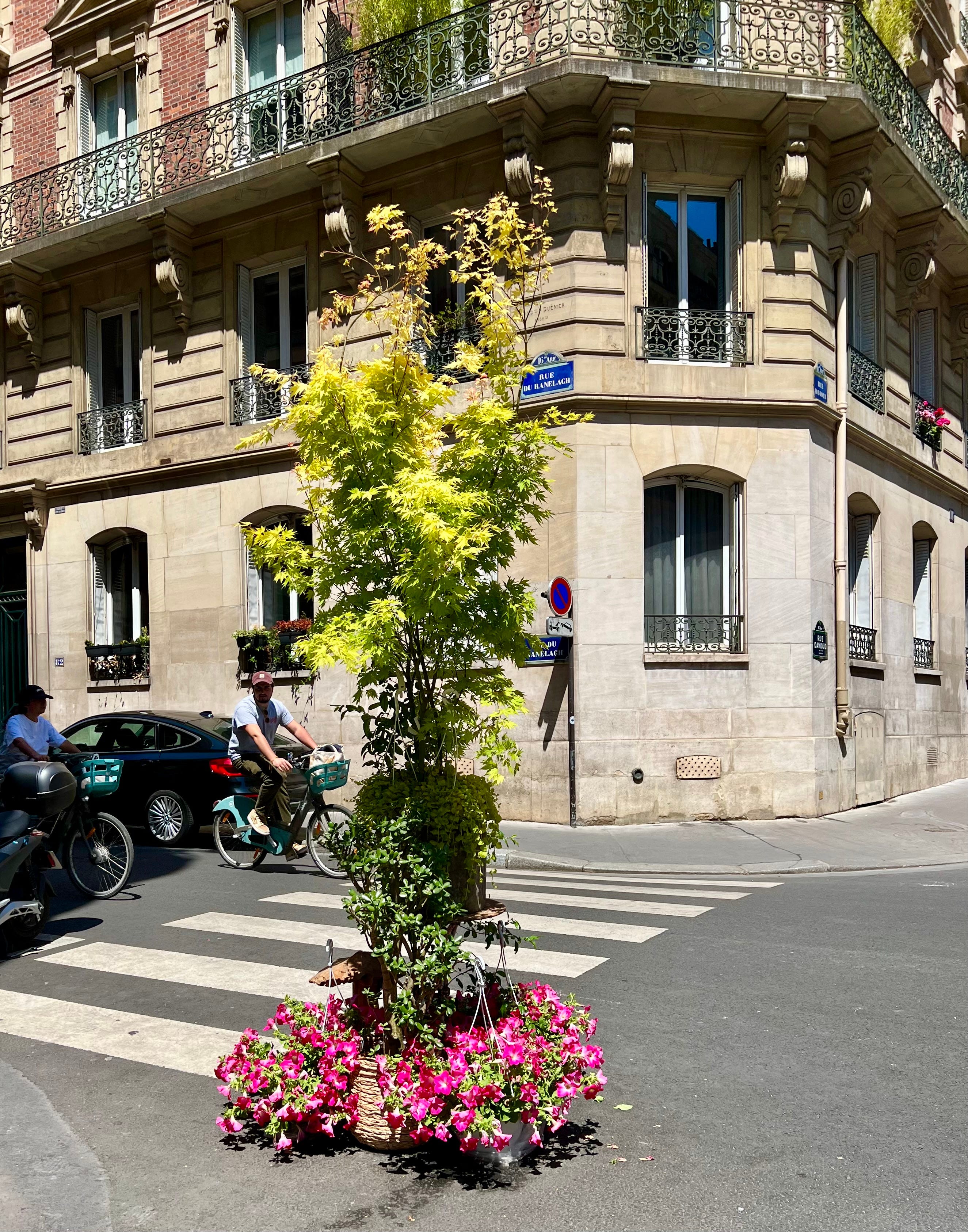
On rue de Ranelagh, a flower store put this up in the middle of the street!

June 21st is also the first day of summer. Parisians and tourists alike are happy. School vacations aren’t far away. A large percentage of Paris leaves for the summer. August is so quiet that about 50% of stores, that aren’t in the very center of Paris, close for the month. So, there is dancing in the street, big smiles everywhere, and a fleeting sense that all is good in the world. Oh those precious moments when we can forget.  La Nuit de la Musique started in Paris, quickly spread thoughout France, then to Europe, and I’m told is celebrated in most countries in the world.

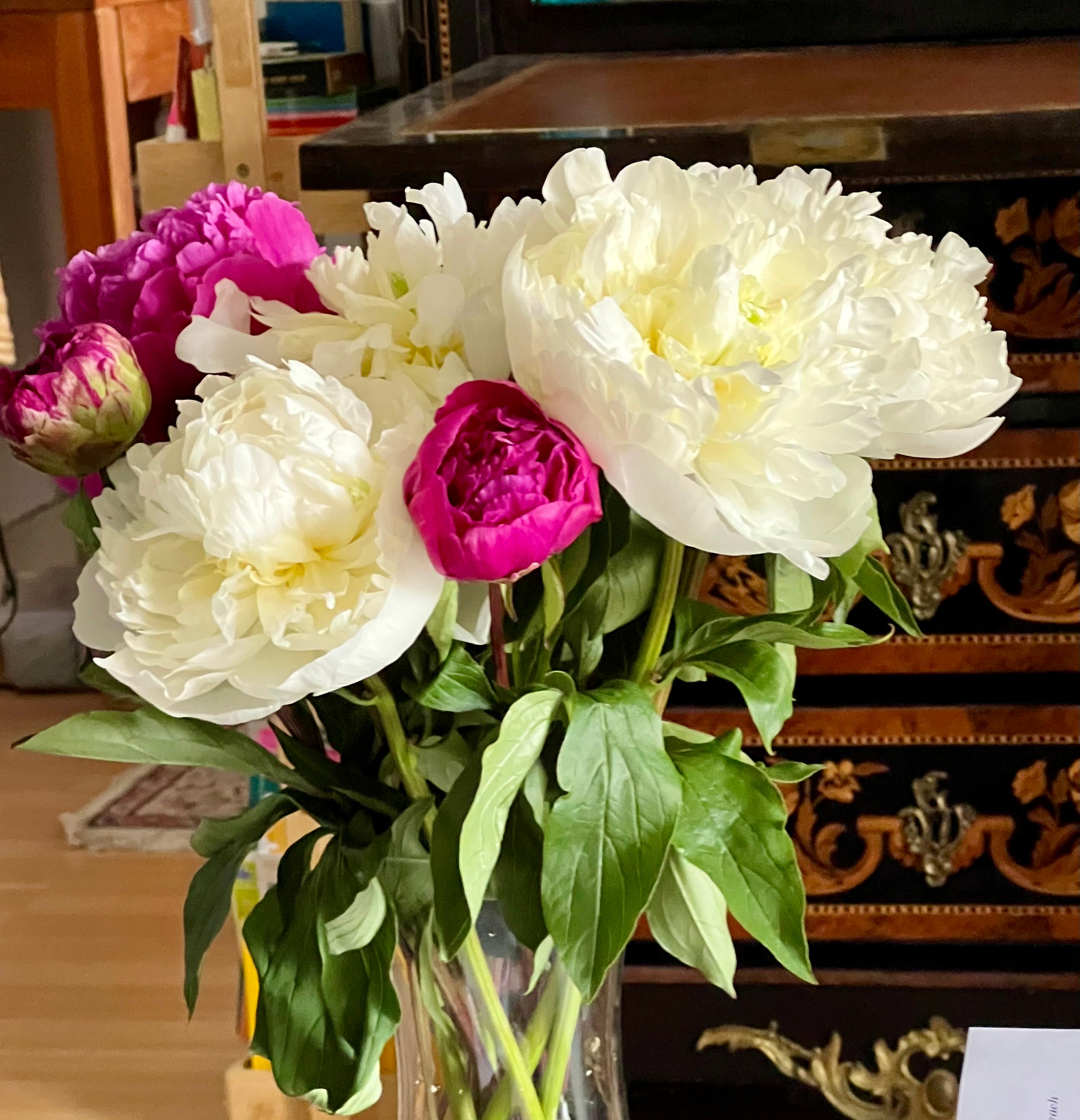
I’ve fallen in love with peonies over here—-but the seasong is far too short.

3—If you are traveling to France this summer, keep an eye out for possible transport strikes. One source to read is Euronews.travel or thelocal.fr. No strikes have been announced for France by the French. But…“travellers to and from France from the UK should be aware of the security staff strikes at Heathrow Airport which will affect British Airlines flights to Paris, Toulouse, Nice, and Mulhouse airports on some dates. There is also potential for a strike at Edinburgh Airport, which could affect flights to France run by several airlines, including Air France.”—TheLocal.fr

I will not be writing this blog on a regular schedule from now until the beginning of September. Just thought I’d give you a heads up. I’m not sick or playing hookey just trying to enjoy as much of the summer weather as I can. Thanks for reading this newsletter. It means a lot.

A bientöt,

Sara

Thanks for reading Out My Window! Subscribe for free to receive new posts and support my work.
It’s almost summer and in the US that means…..Baseball.

We are six days away from the start of summer. Here in Paris, the weather has been gorgeous. Radio Roland Garros kept saying over and over that the two weeks of near-perfect weather were heaven-sent. I have a large terrace with doors from both my bedroom and living room. From mid-May to the end of October (and sometimes longer) it’s like having a large extra room in the apartment. I have a dining table, a chaise longue for reading, and a planter garden full of hortensia (hydrangea) and geraniums. It’s very hard to be dissatisfied with life when the weather is like this. Wearing a linen sundress and sandals is a reason for huge smiles.

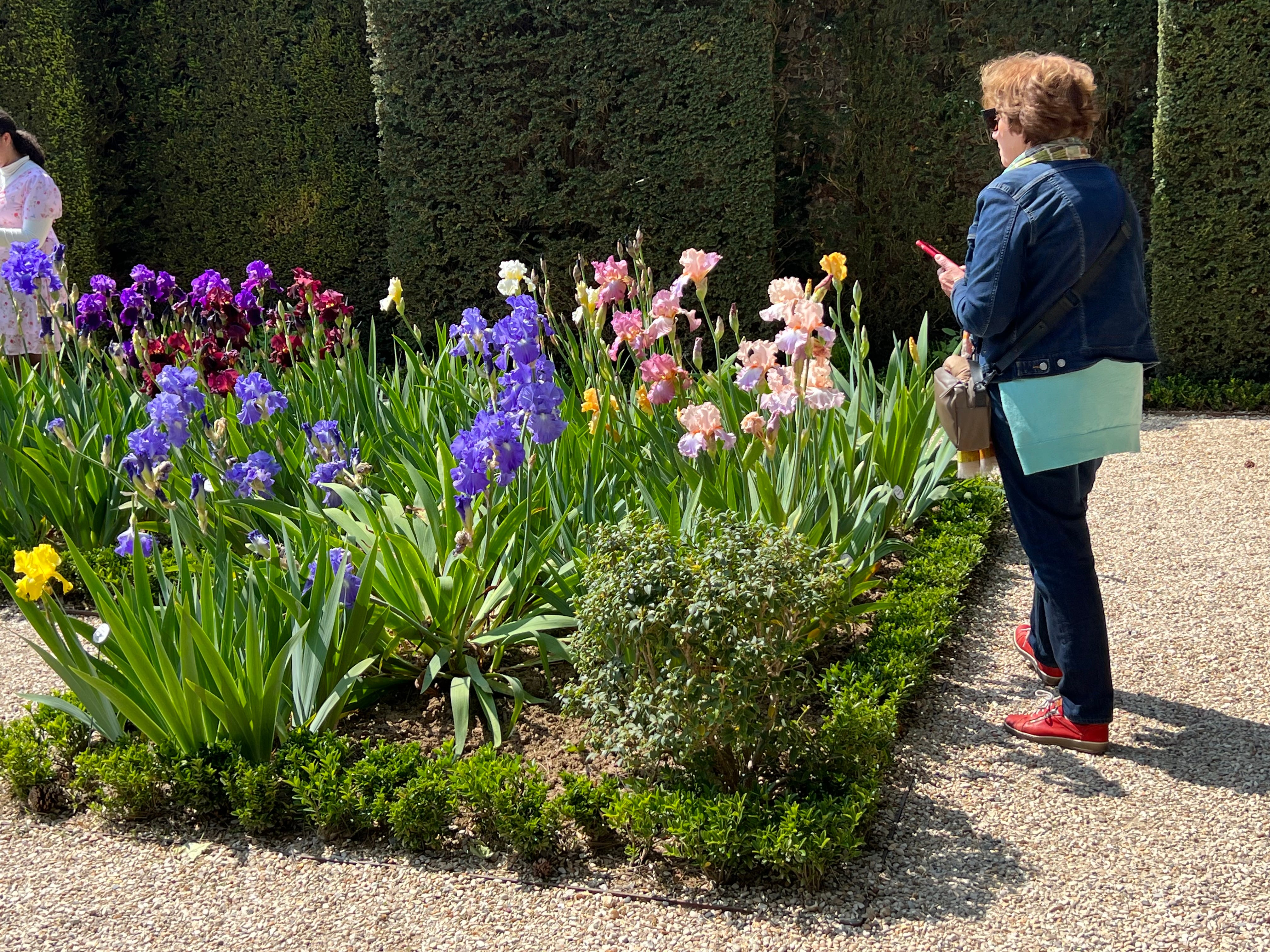
The iris in Parc de Bagatelle

I write this newsletter/blog 1—to keep my friends appraised of what I’m doing. 2—to let Americans into secret parts of Paris that most tourists don’t have time to discover, and 3—to reflect on the US from over here. Usually, that means politics. I guess what I want to talk about – baseball – is also politics.

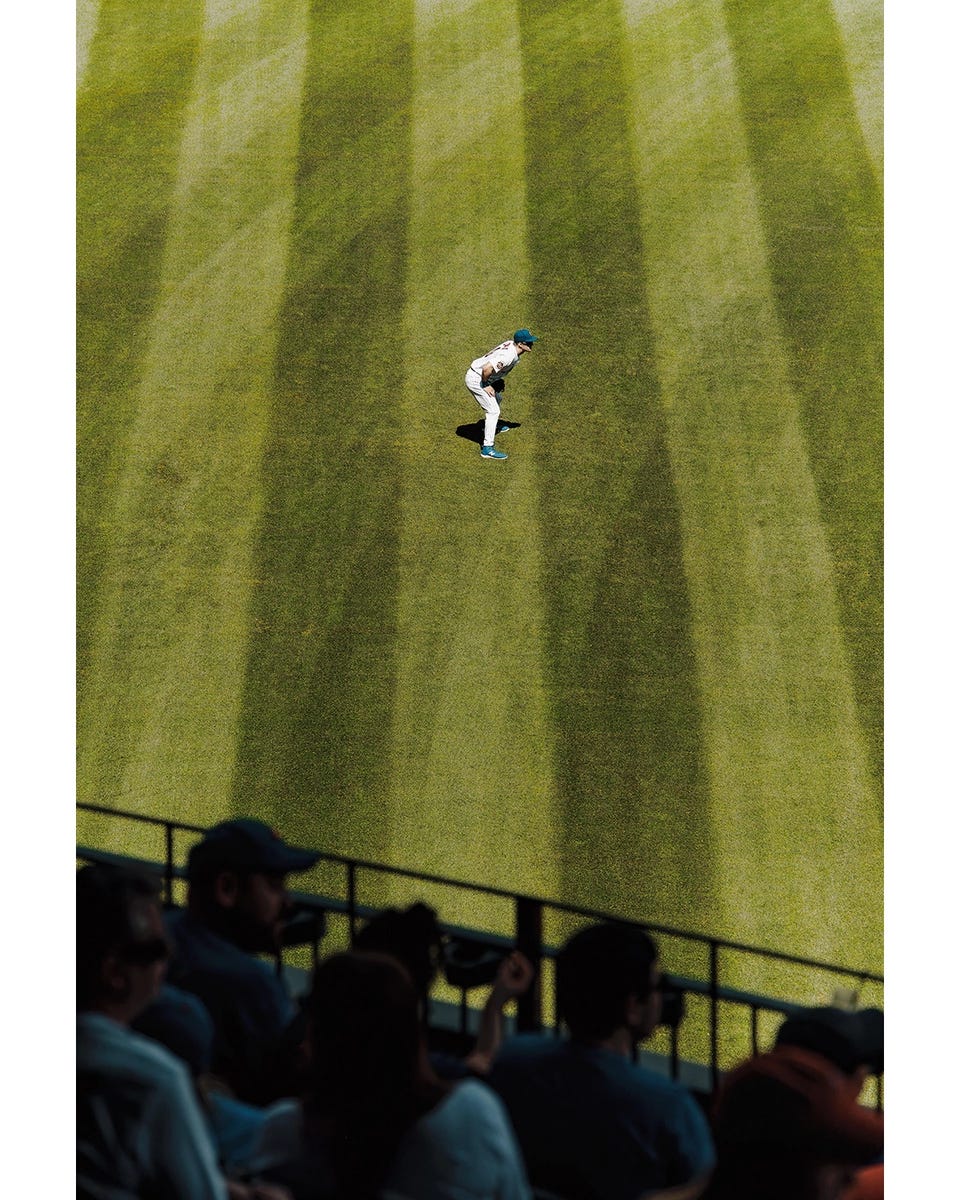
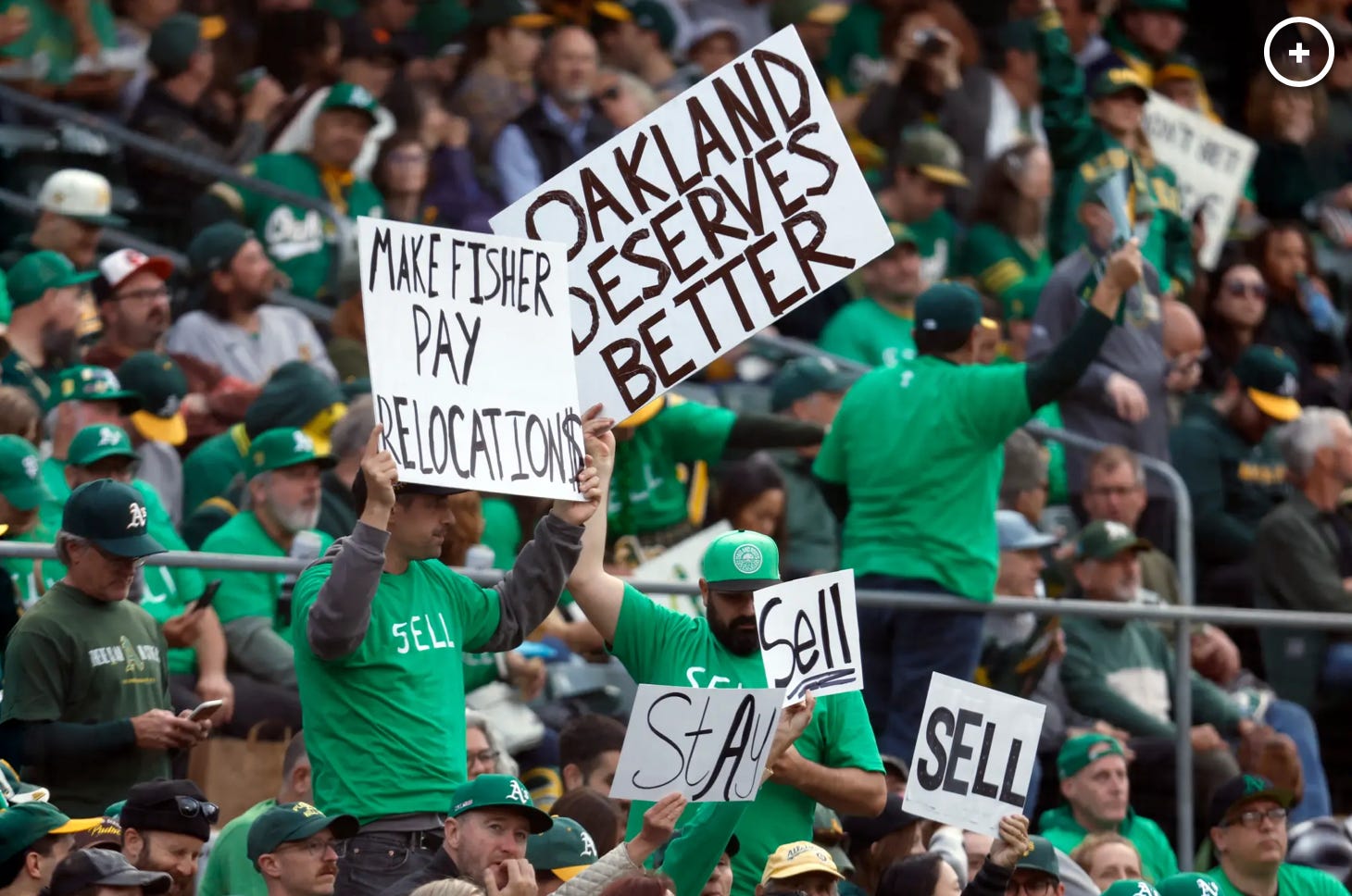
Photo by Tony Luong, The Atlantic

I am an Oakland Athletics (A’s) fan. Before I moved to Paris, I had season tickets on the lower level near home plate. If you go to enough games over a season and you know your baseball, you soon get to know your neighbors, and the section or a couple of sections become a baseball family. It’s a community. God knows we all need some type of community in our lives. My baseball family was extremely passionate about the Oakland A’s. Many had been fans and season ticket holders since the A’s moved from Kansas City in 1968. Many of us were like little kids wanting autographs, getting to know the players, and going to Spring Training for as long as work would allow.

In the 1980s, the A’s were owned by the Hass family (of Levi Strauss fame). They were golden years for the A’s. They got Manager Tony La Russa from the White Sox, Dennis Eckersley from the Cubs, and Dave Stewart from the Texas Rangers when he was almost out of options. All three got MVP of something while they were with the A’s. The team went to the World Series three times in as many years and won against the Giants in 1989 after the games were interrupted by the earthquake. The Haas family seemed to love the fans. They treated fans, players, front office with respect and with courtesy. Everyone had a good time.

When the Haas family sold the A’s, things started to go downhill. The owners held on to their money rather than investing in good players. They complained about the Coliseum but wanted the City of Oakland to do something about it. In 2003, Michael Lewis wrote his famous book Moneyball: The art of winning an unfair game. The book showed how Billy Beane, the general manager, used statistics to find and hire players with very little money (in the world of baseball, a little money would be a fortune to most of us.) A movie was made starring Brad Pitt. The movie centered around the 2002 season when the A’s won 20 games in a row breaking the American League record and tying the baseball record.

When I volunteered in the Mayor’s office of Jean Quan, I got to meet and talk to Lew Wolff, the managing owner of the A’s at the time. The silent partner was John Fisher. Everyone was miserable. The owners hated the coliseum and wanted a new stadium. Wolff was beyond frustrated with the city of Oakland. The fans hated ownership because everytime they had a good player, the owners traded him. It was a nasty time with a lot of nasty things said.

In 2016, Lew Wolff stepped down as a part-time owner. Dave Kaval took over as team President pushing Michael Crowley aside. ‘Kaval said the A’s are committed to staying in Oakland, per John Hickey of Bay Area News Group. Kaval said the team is looking at several potential sites but likes the idea of a “ballpark village” concept, according to Joe Stiglich of CSN Bay Area.”—Adam Wells, 2016

.

Smart A’s fans knew better than to believe that. They were cautiously hopeful as the City of Oakland began pushing for a spot near Jack London Square, Howard Terminal. Earlier this year, Kaval said he was going to sit down with the Mayor and work the Howard Terminal deal out. A week later, the A’s announced they were moving to Las Vegas. There was no intention to work with Oakland only empty words now known as False News. It is VERY clear that the only important thing to the ownership of John Fisher is money. He refused to give money for players, ticket prices doubled and attendance went way down. There are many who believe that was the point—show Major League Baseball that the fans won’t show up (and that had to be manipulated) and they would give their blessing to moving the A’s to Money Land following the Oakland Raiders.

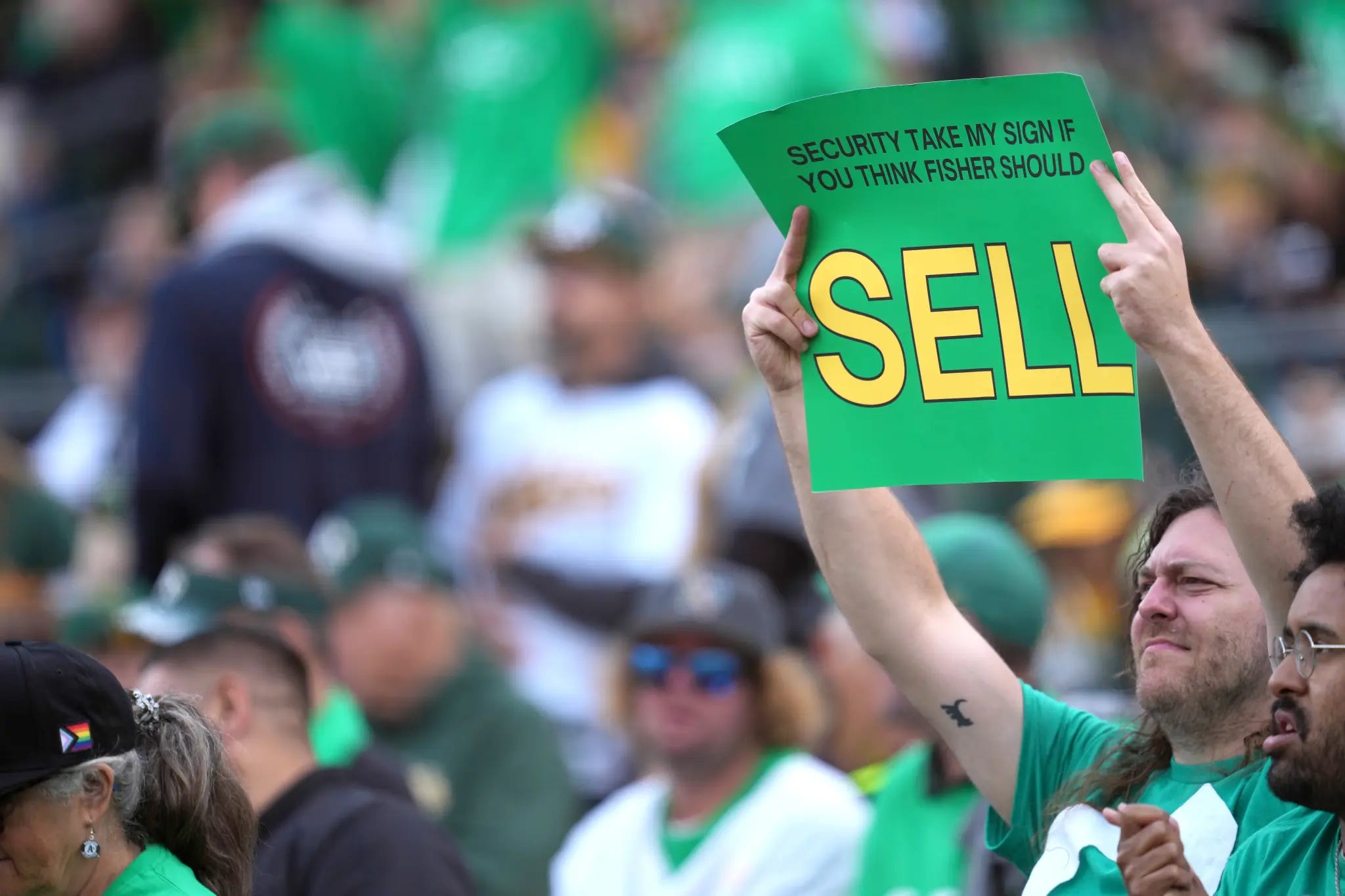
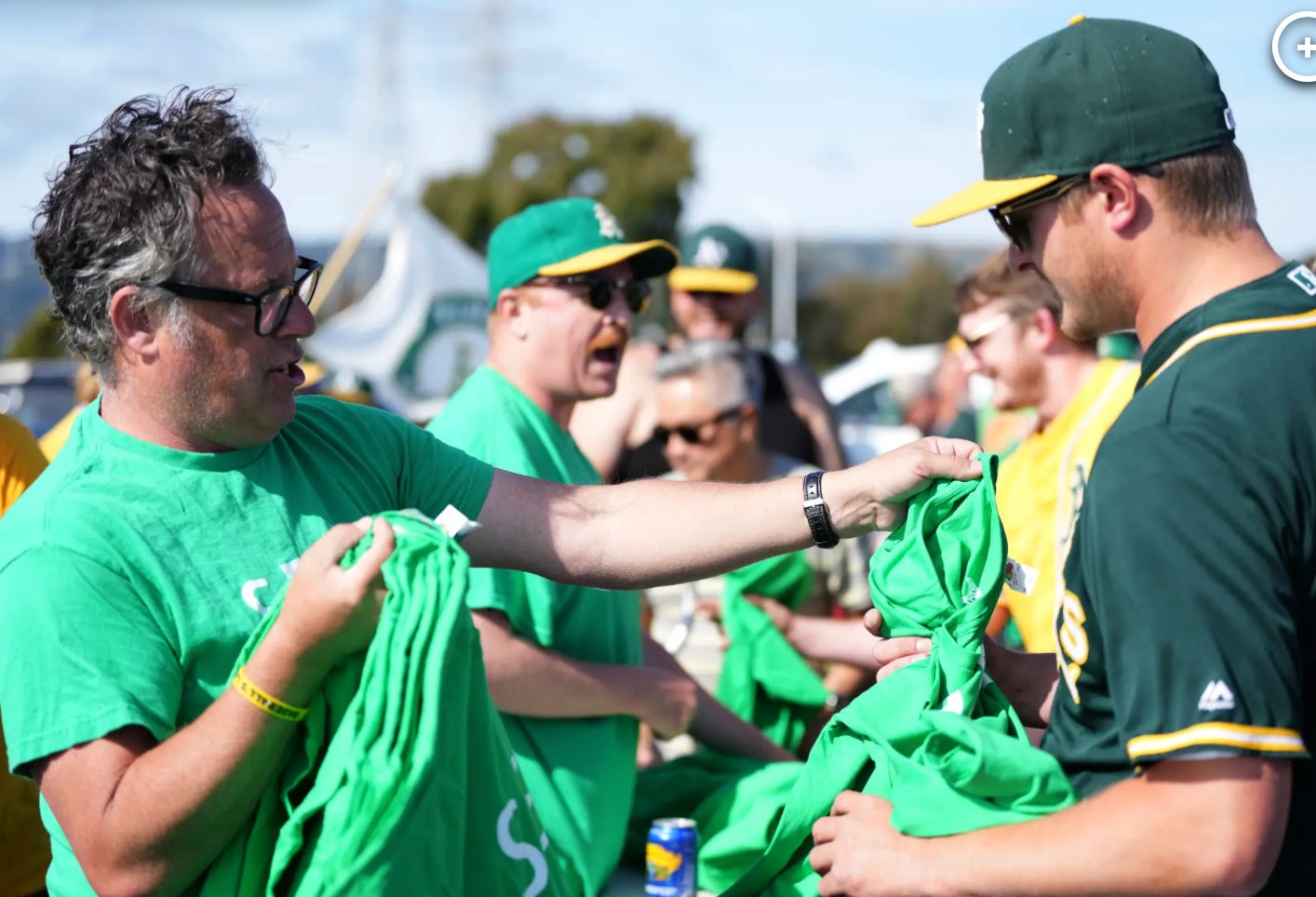
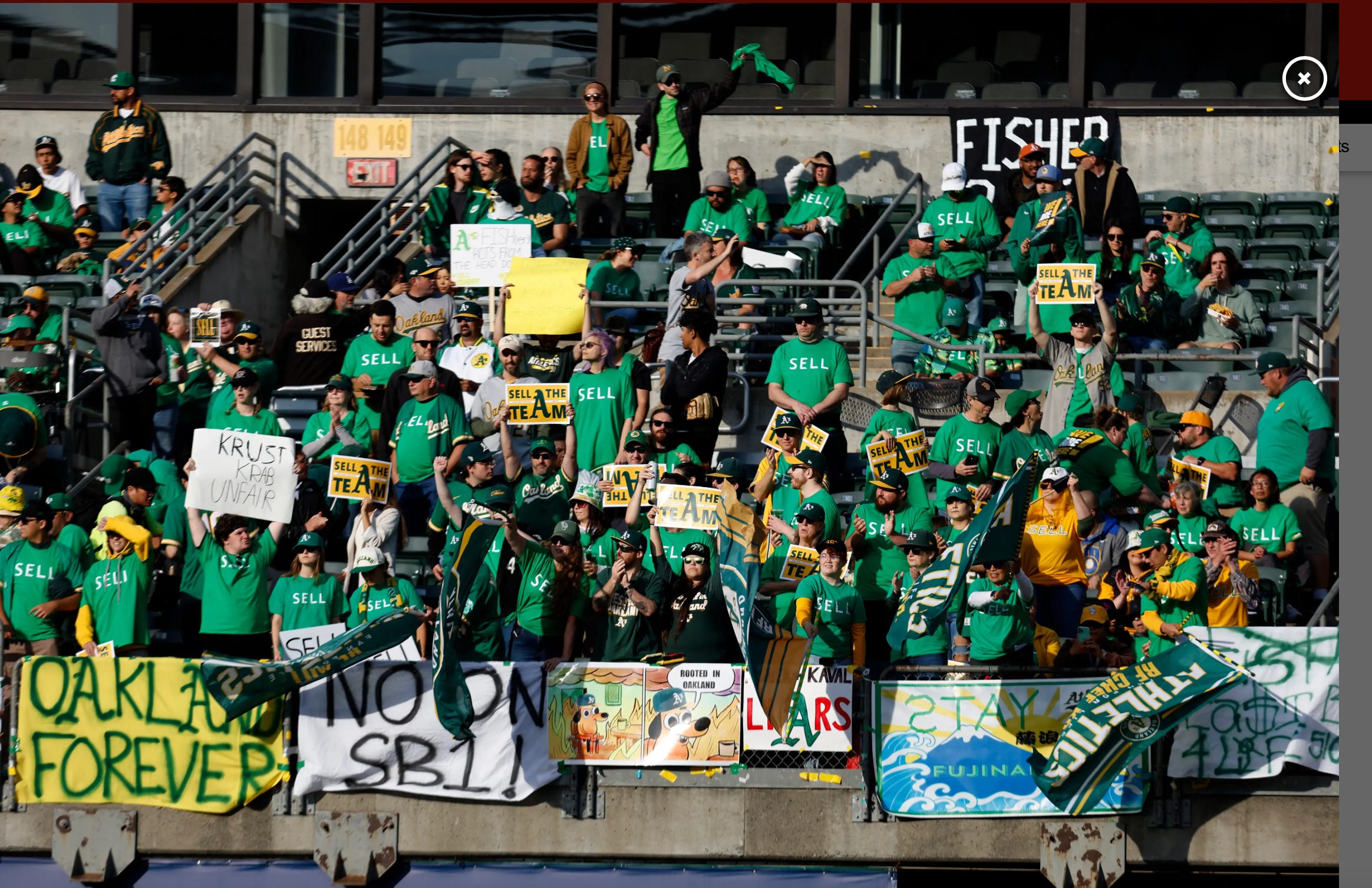
Then came a one man group known as Rooted in Oakland. He tweeted that he thought A’s fans should form a reverse boycott: pick a day and all fans show up, show MLB and Fisher what the fan base looks like if you treated them well. More die-hard fans joined him, they raised $25,000 on Crowd Funding to make T-shirts that would say SELL on them. They picked a weekday night for the boycott. The game couldn’t be against one of the Big Four that have large fan bases everywhere: Yankees, Red Sox, Dodgers, Giants. They picked June 13, 2023. As the day drew closer, the A’s started winning. They no longer have the worse record in baseball history. I wish I could have been there. Over 27,000 fans came out. They stopped at various places in the parking lot and picked up their free Tshirts, put them on and entered the park. They roared for their team. I heard that, at one point, the catcher turned around and had a huge smile on his face. The A’s won 2-1 over the Tampa Bay Rays. The A’s have won seven games in a row.

“Mother and son Leslie and Justin Lopez walked together in their SELL T-shirts reflecting on how much the A’s have meant in their lives — 27-year-old Justin has been coming to games since he was 8 months old. He is devastated every year watching All-Stars depart to bigger markets in free agency or all the other stars get traded away.

“It’s been so sad to witness. We feel like the historically disenfranchised,” Justin Lopez said, embracing his mom.”—Janie McCauley, AP

When I volunteered in the Mayor’s Office and truly believed that my love of baseball could make a difference, could initiate some kind of change, and would help to keep the A’s in Oakland, someone much wiser than me said: “Sara, baseball is a business. They don’t care about the fans. It’s sad but it’s true. If you don’t remember that, you will have your heart broken over and over.” I heard him. It didn’t slow me down initially. When I decided to stay in Paris, people would ask me “What about your A’s?” Yeah, what about them? When you keep getting your heart broken, it’s a good idea to step out of the ring. Apple TV shows a daily baseball wrap-up over here in Paris. Today, I watched the highlights of Tuesday’s game. I saw the massive amount of kelly green T-shirts that said SELL. Fans were standing behind the batter’s box and every T-shirt said SELL. Not one word was said in explanation. Can you imagine if Trump went somewhere and not one word was said by the media. How MLB pulled off silencing everyone……., well I did say at the beginning of this blog that it’s all about politics.

A bientôt,

Sara

Thanks for reading Out My Window! Subscribe for free to receive new posts and support my work.
Roland Garros

When I was in my early teens, my mother signed me up for tennis lessons. She loved tennis; had played it all her life, and couldn’t image a growing girl not including tennis in her daily routines (along with French and poetry). She also probably didn’t imagine a slightly overweight girl who, at that point in her life, lumbered along like a limping bull in a china shop, as her eldest daughter. I had no interest in anything my mother suggested and exercise of any sort scared me as I was no good at it.

So tennis has never been much on my radar. Those who know me know I love baseball. Living in France, I’ve come to appreciate, enjoy, and want to learn more about futbol/soccer. And not just from Ted Lasso. Of course, one can’t live in Paris without being hyper aware of the French Open known in France as Roland Garros. My friend, Barbara, bought tickets for my birthday in 2020. Ah, 2020 when all life was cancelled.

Court Philippe-Chatrier

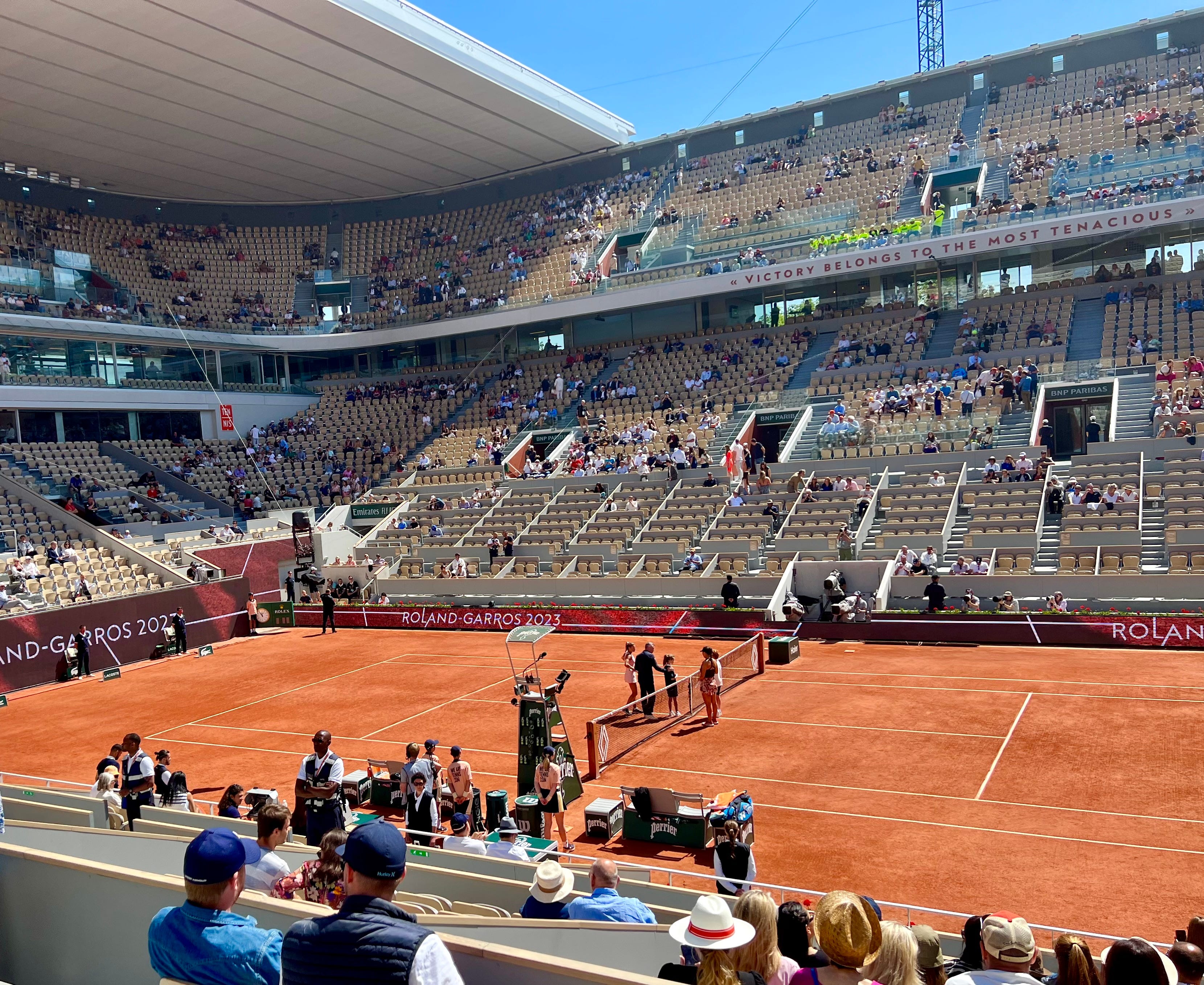
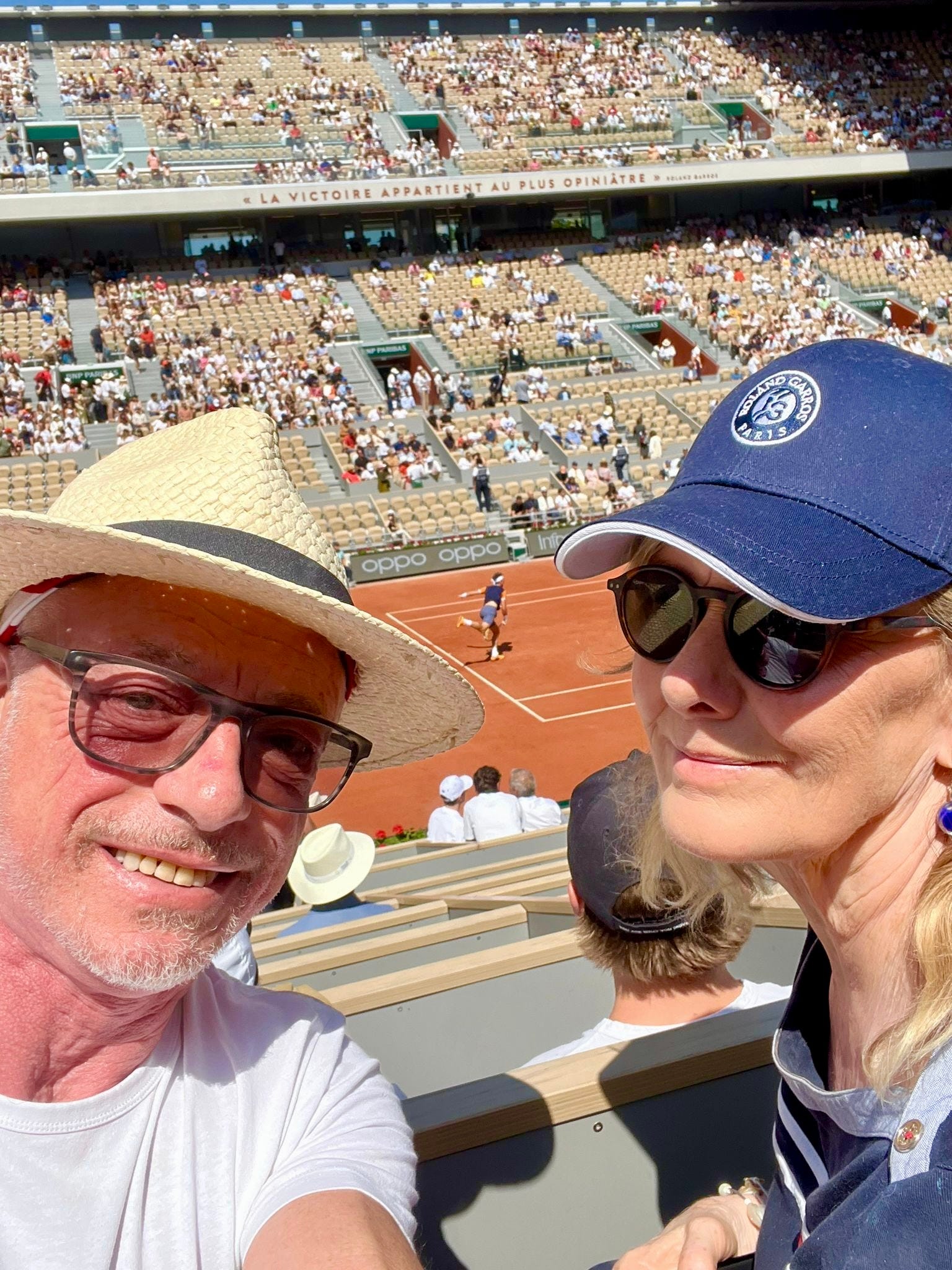
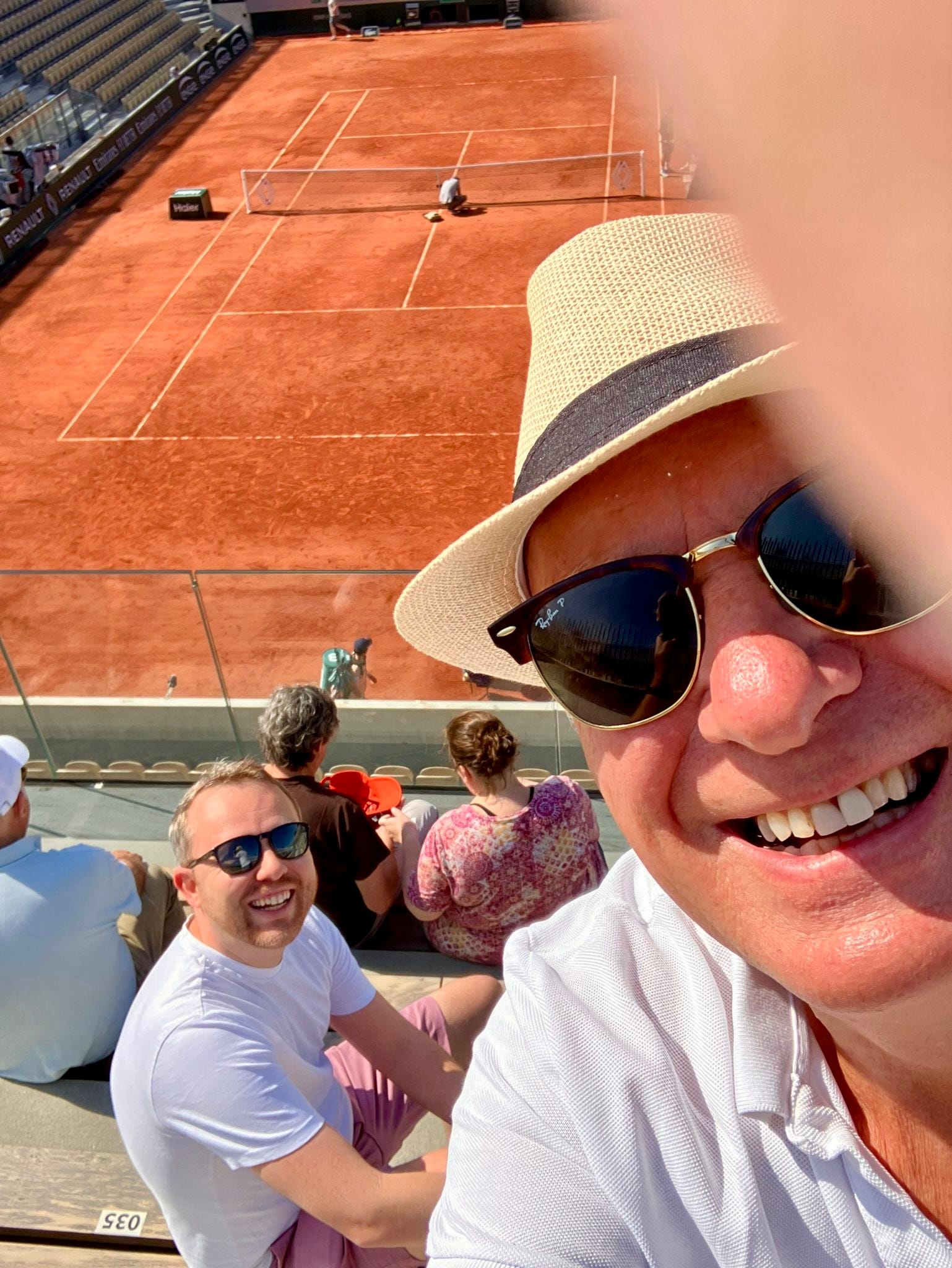
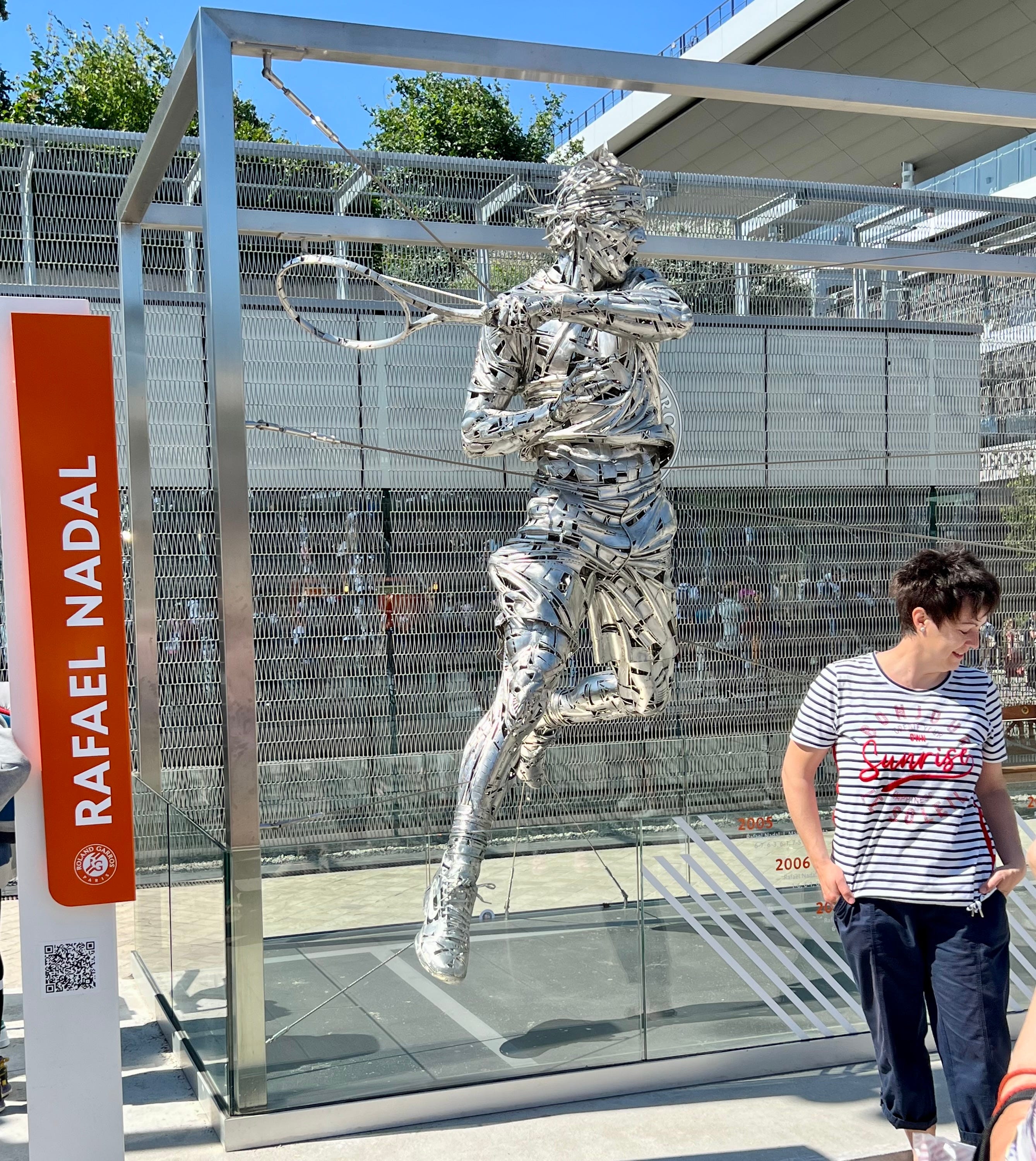
Yesterday, after living in Paris for 9.5 years, I went to my first Roland Garros experience. You can have a ticket to a match but that is only part of the fun. And it is FUN! I went with three friends. They’d bought two tickets to the day matches at Court Phillippe-Chatrier and two tickets to the day matches at Court Suzanne-Lenglen. We agreed that we would switch back and forth seeing as many of the matches as possible. The four of us met up at a café at Auteuil. We walked into the Roland Garros complex at 11 am. I’m not sure how one can live so close to RG (I live a 20-minute walk away) and not realize how large and grand it is. “The 13.5-hectare (34-acre) complex contains twenty courts, including three large-capacity stadiums; Les Jardins de Roland Garros, a large restaurant and bar complex; Le Village, the press and VIP area; France’s National Training Centre (CNE); and the Tenniseum, a bilingual, multimedia museum of the history of tennis.”-Wikipedia.

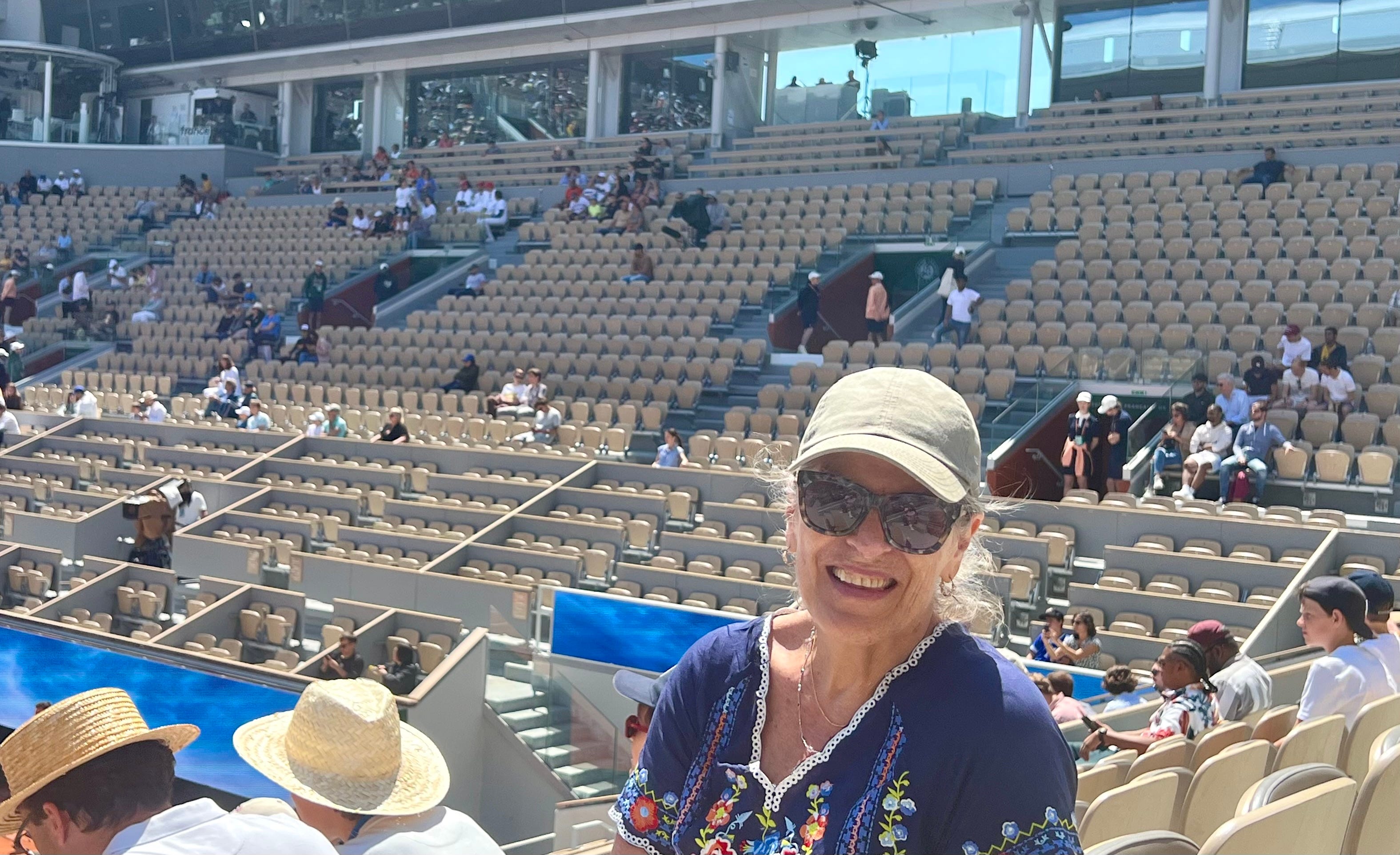
Sara at Philippe-Chatrier before it filled up.

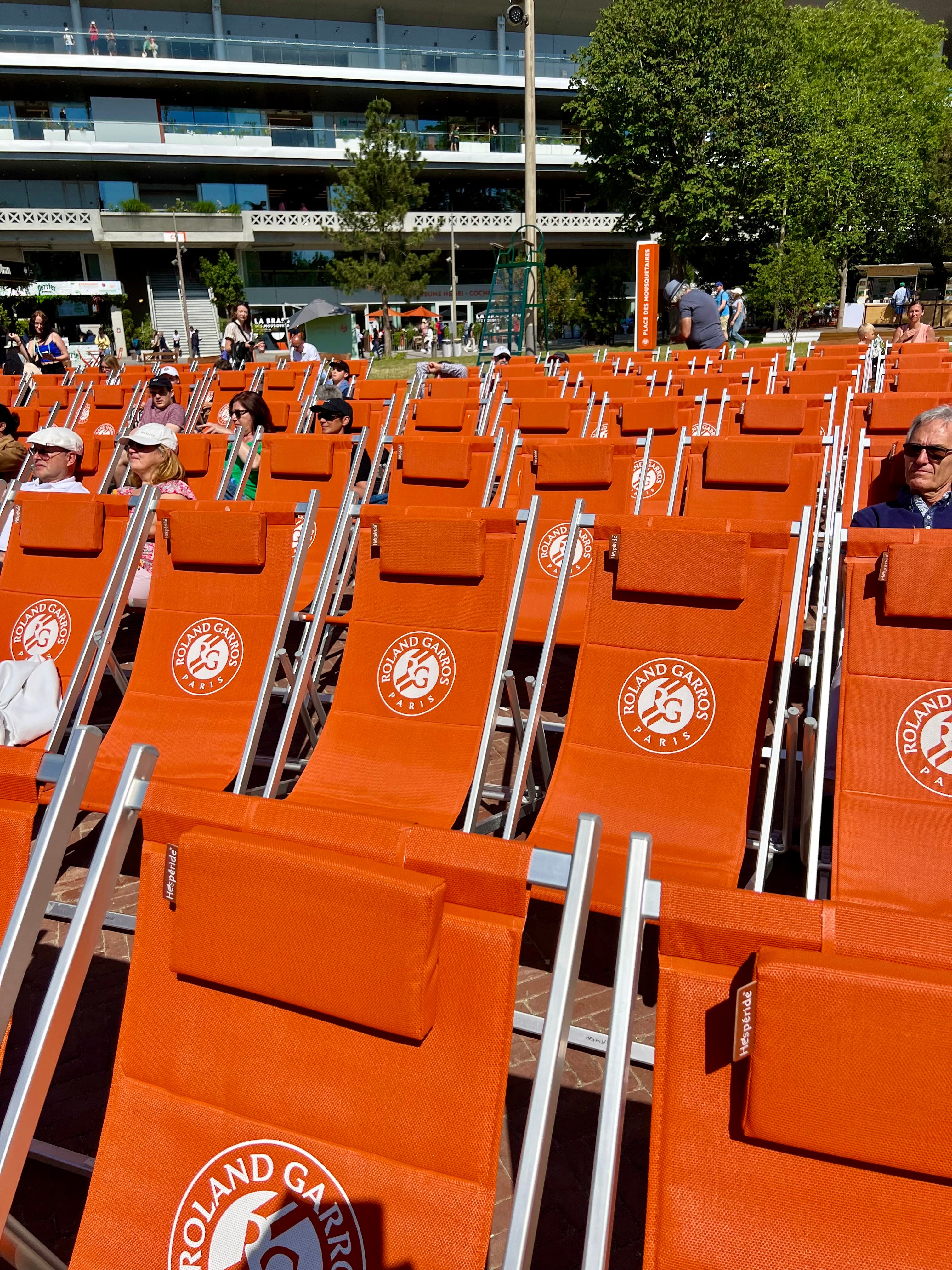
Pete and Mike headed for the match at S. Lenglen. Meg and I walked around. Meg knows the complex like the back of her hand. She showed me everything including where we were going to go sit, Philippe-Chatrier, to watch the match between fan favorite, Caroline Garcia and no.56 seeded Anna Blinkova (whose country wasn’t listed. This is the only way the Russian and Belarus players are allowed to play). Before we went in, we sat on the green watching a match between Greek Tsitsipas and Spaniard Baena. Large orange folding chairs were set up for comfort.

These games were the second round for both the men and the women. It was only four days into Roland Garros with another week and a half to go. But the atmosphere was electric. It reminded me of Play-off games in baseball. Plus, Paris was experiencing glorious weather. Not a cloud in the sky. 78o/24C. Even though I didn’t play tennis, it would have been impossible to get through my childhood without learning something. I knew most of the rules; game, set, match. Best of three for the women, best of five for the men. For singles games, outside the inner white line was out. For doubles, outside the outer white line was out. What I didn’t know was that there are three line judges at each end for the vertical lines, two line judges in the middle for the horizontal lines, and the judge who sits up above just like a lifeguard who rules over everything. I turned to Mike at one point and asked “Is this like baseball? Whatever the judge says is what it is? Whether it is or isn’t?” Yes,…however starting next year, it will all be digitalized. No more human judges, no more human error. Human error is part of baseball. I was once told by another baseball fan when I was outraged by an umpire’s bad call that lost a pitcher a ‘perfect game’, that it isn’t just perfect for the pitcher. It also has to also be perfect for the umpires. Oh! (and just for the record, I wasn’t satisfied. That explanation did not make up for the dramatic letdown for both pitcher and fans).

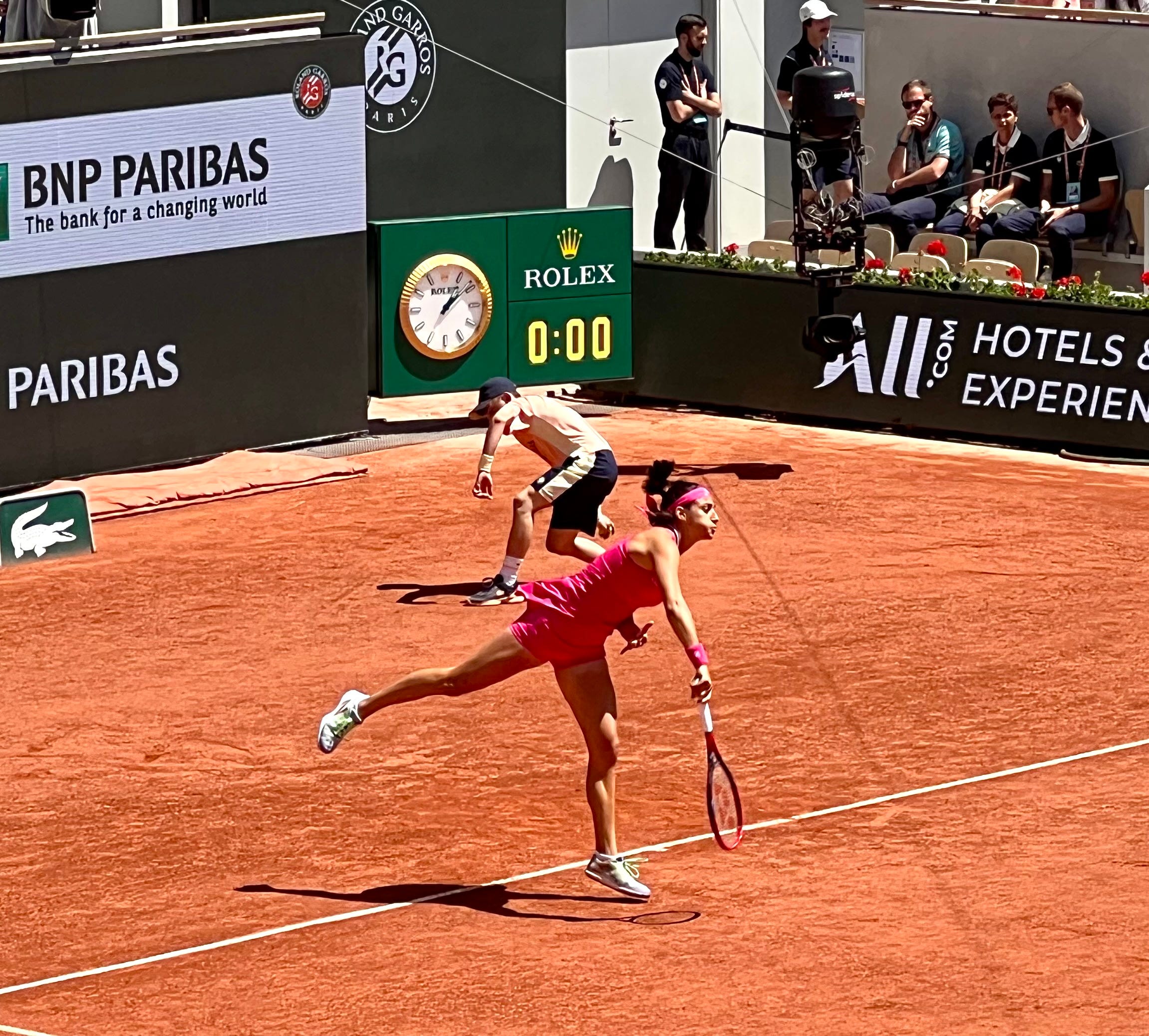
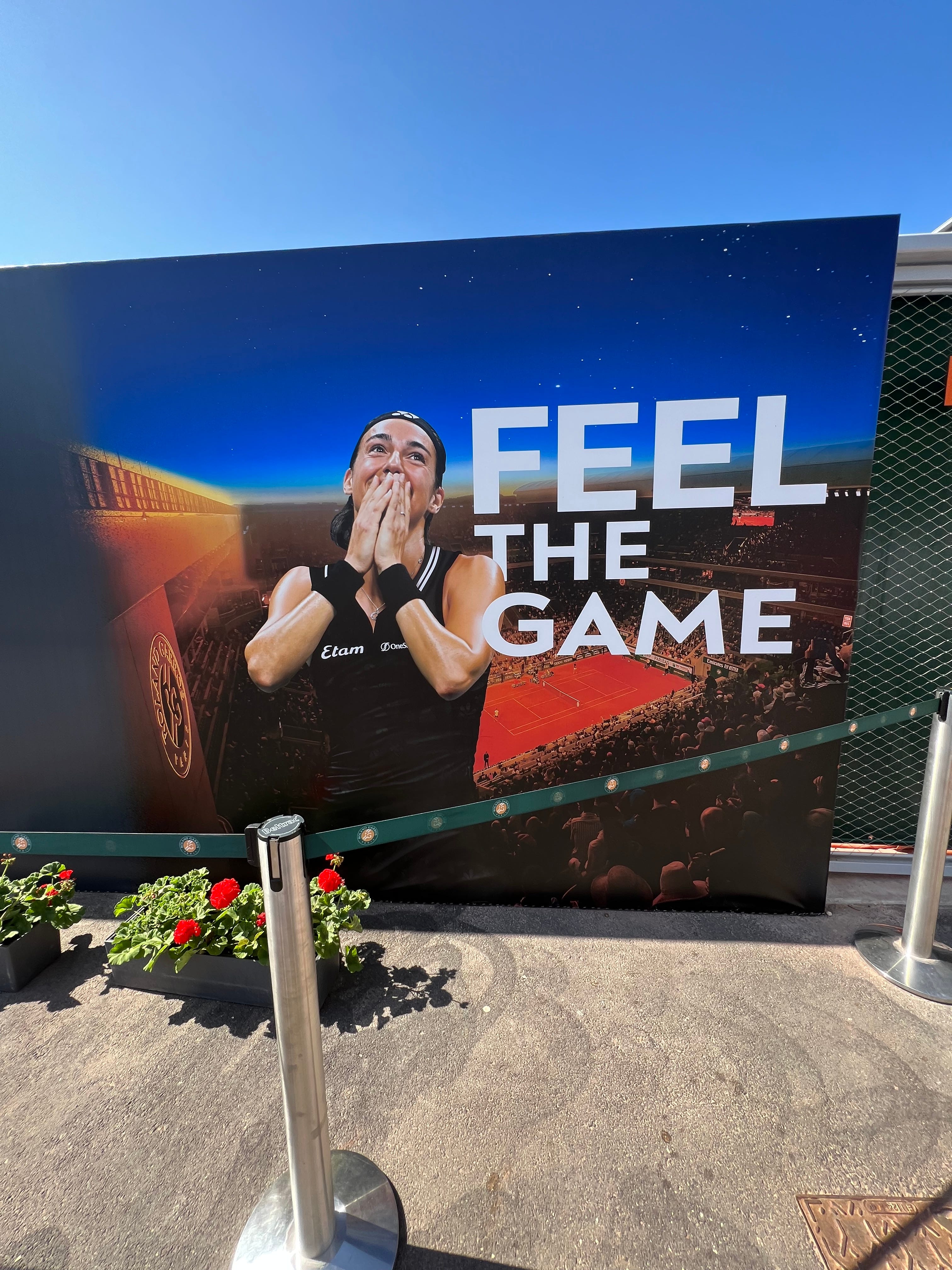
Fan favorite, French player Caroline Garcia who lost in the second round.

Another surprise was the noise. I had always been told that tennis games were played in absolute silence. If you talked to your neighbor, it was a whisper. Not so at Roland Garros. the fans cheered their favorite. They clapped loudly when they wanted to encourage a player. Musical instruments appeared in the crowds like whales jumping out of the sea and played the Marseillaise or something that the fans could smile at, rout with, and encouraged the players. Mike, who is British, assured me this was not done at Wimbledon. 

Pete and Meg

Truthfully, I thought that since I didn’t know most of the players and wasn’t a tennis fan, I would want to leave after a couple of hours. Wrong. Oh, how wrong! Tennis is a wonderful game. Do you hear that Mom? I’m so sorry I didn’t listen to you. I watched every hit. Both Mike and Meg told me that if you didn’t have a favorite in the game, one cheers for the underdog. My father always said the same. Garcia, the French fan favorite seeded at #5, lost to the underdog. The fans weren’t happy. But other than a French player losing, it was the underdog all the way!

Mike and his son who came over from the UK.
Caroline Garcia

I guess I’m now a tennis fan! The next day I watched and listened to a couple of matches—one between the Italian Sinner and the German Altmaier which lasted five hours and twenty-nine minutes!! Both were exhausted. When the German won, he started to cry. The entire stadium stood up and cheered him on.

Thanks for reading Out My Window! Subscribe for free to receive new posts and support my work.
A bientôt,

Sara

An Evening with Jami Attenberg

When I was in Oakland this winter, I had a computer crash. Not a real computer. The one in my brain that, on a daily basis works just fine, usually brings up the right things at the right time, shuts down to ‘sleep’ at night, wakes up at the appointed time ready to hit the day running. In January, it just burned to a crisp—nothing left to make it work. Sissssssssssssss! It’s called Burn Out. I don’t remember how I stumbled onto Jami Attenberg’s Substack newsletter. I had first discovered Substack when my sister wrote me about George Saunders’ Story Club with George Saunders. I immediately became a paying member. Comments were invited and I loved reading them. Wanting to know what that person read on Substack, I soon realized how many writers I respected had Substacks, and found ones that I didn’t know who wrote about the craft of writing. I found Jami and her #1000 Words of Summer Challenge.
https://www.pw.org/content/1000_words_of_summer_how_an_accountability_project_opened_up_my_writing_life

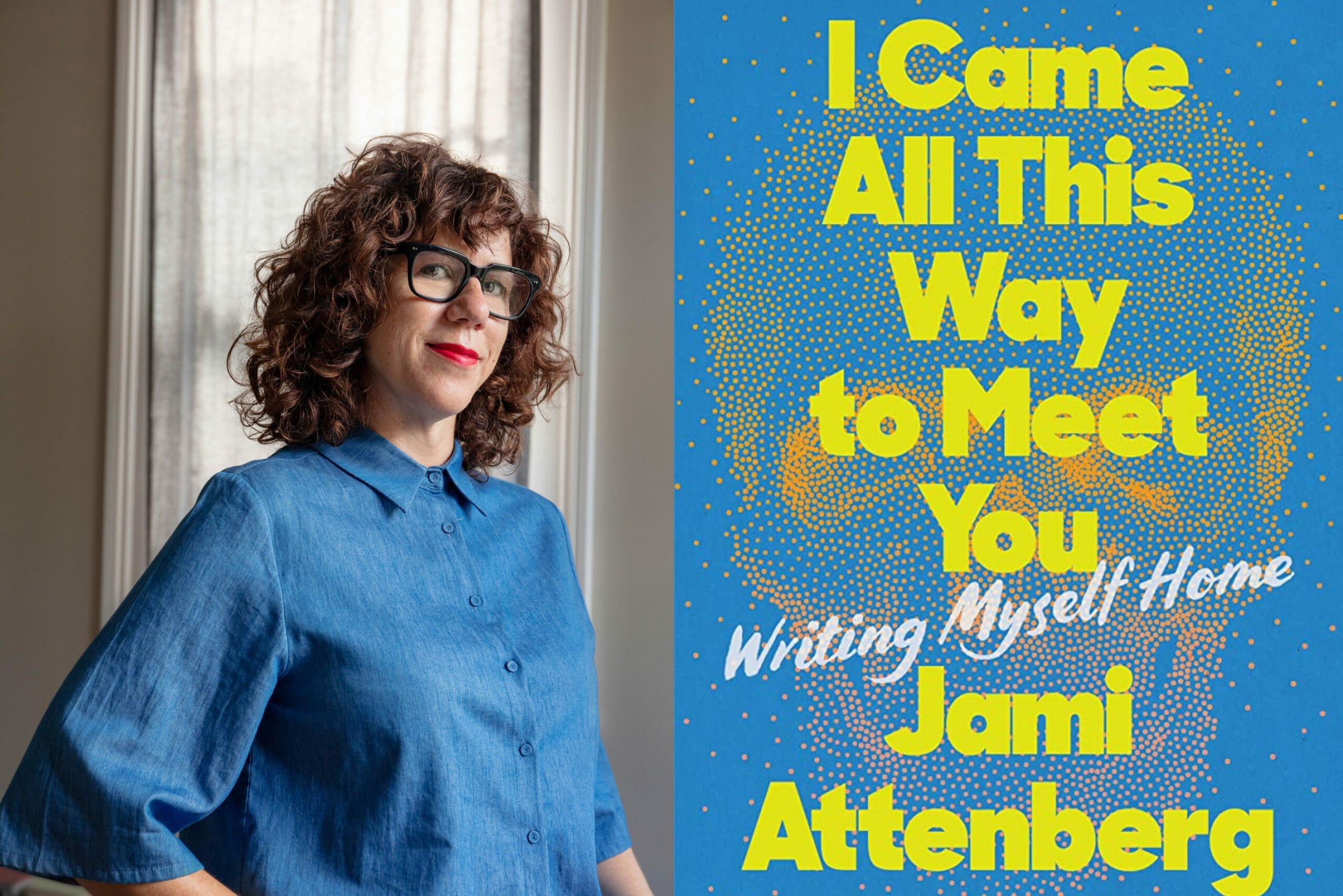
At the bottom of her Substack, she mentioned she’d written a memoir. I took the memoir, I Came all this way to meet you- Writing Myself Home, out of the library. First I read it. To say I loved it would be an understatement. I felt like she had me in mind when she wrote it. I, then, got the audio version and listened. Feeling exactly the same way as I had after the first reading, I bought the book and added All Grown Up (2017 First Mariner Books). What spoke to me? Jami writes in an intimate, conversationally (is that a word?) way that feels as if she is talking to ME. Writer to writer. She throws in comments about writing, about the craft of writing, about the love of writing, and how to grapple with certain problems, and many things that authors think about and only other writers and authors really relate to. This all while she is telling us about her life in often funny, self-deprecating ways. She is wise and knows herself well. She said eloquently what I felt but had not yet found words for. Writers, both ones she knows and ones she has yet to meet, are her friends. She roots for us. The memoir is one of those books that expands your world, makes you want to create because you can, and she is your cheerleader.

Jami Attenberg, American writer, Milano, Italy, 8th September 2016. (Photo by Leonardo Cendamo/Getty Images)

Recently, her weekly newsletter led off with dates that she would be reading or would be interviewed in various cities. There was the word PARIS. She was going to speak at the American Library. I immediately wrote her (you can do that on Substack. Write a comment). Jami responds to almost every comment. I told her I’d bring as many of my writer friends and book club friends as possible. She was up against some big competition. The American Library has had a pledge that would probably bring in quite a bit of money. For the first time, they can have two events on the same night. So, the next day, I learned that the second event was the San Francisco Theatre group, Word for Word, putting on George Saunders’ play HOME. This did not feel at all fair. I wanted to complain (I think I did). But the dates were set and I really really wanted to support Jami. So I put the play out of my mind.
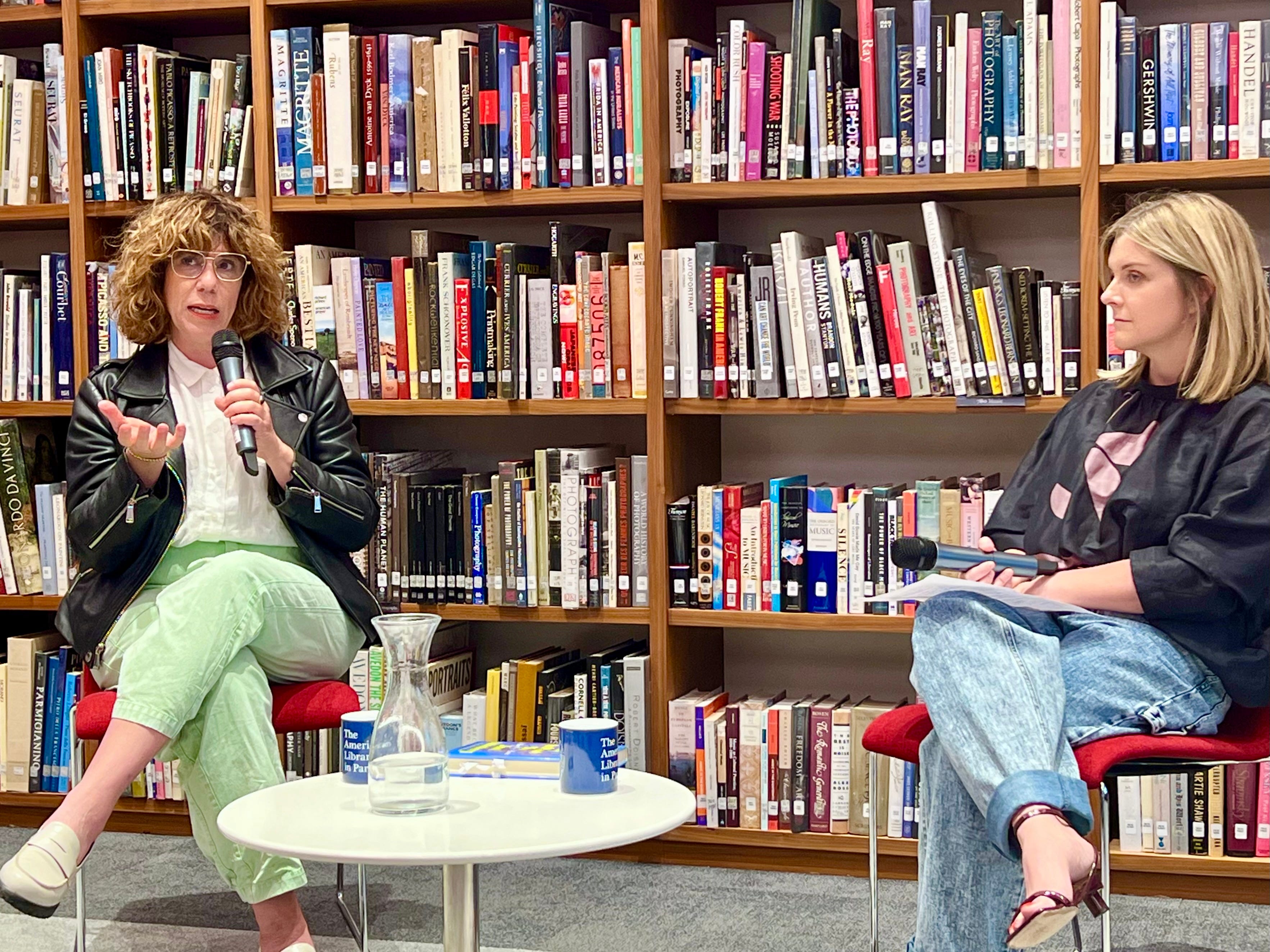
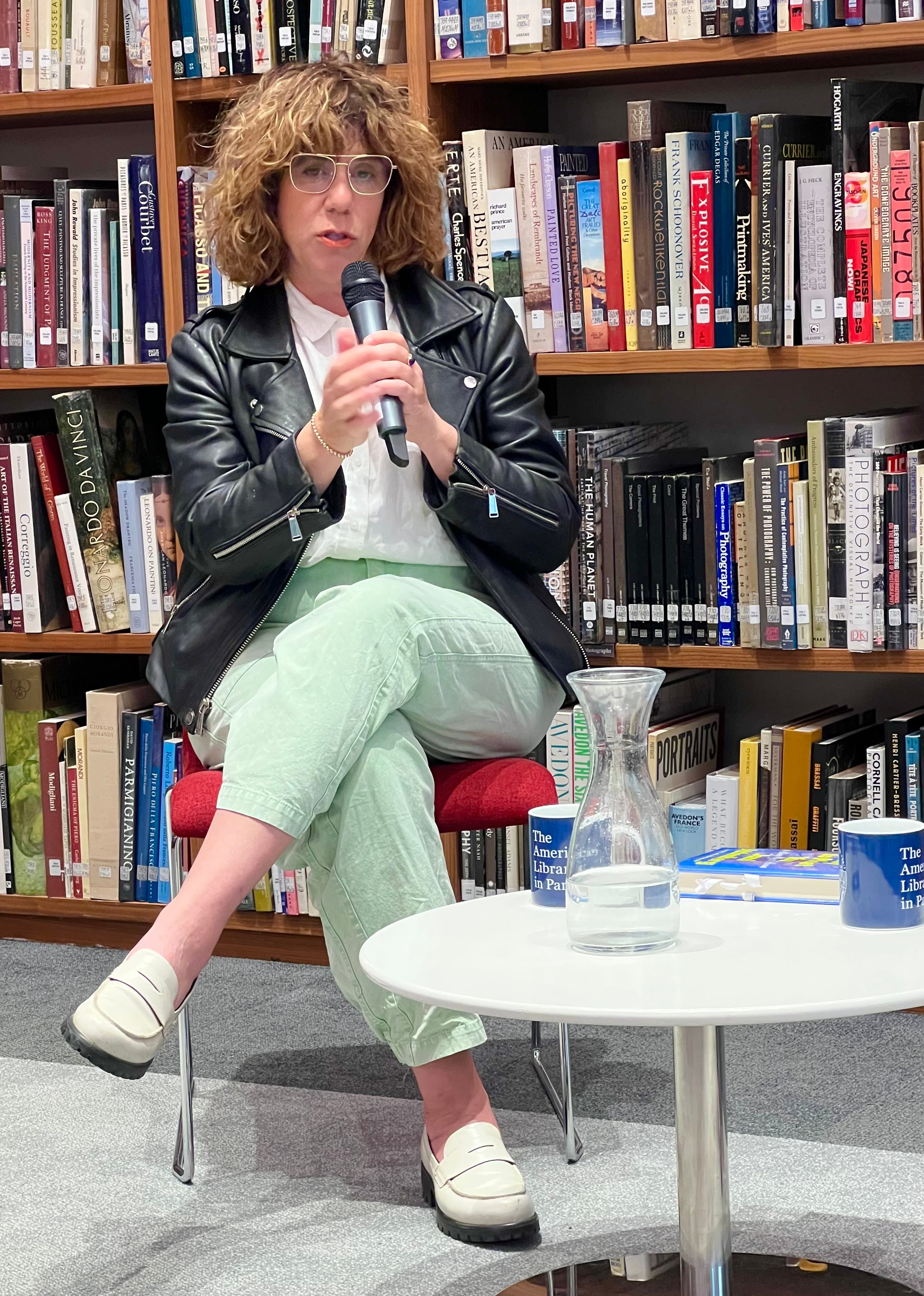
Tuesday evening, I went early to the Library to listen to Jami being interviewed by the wonderful Lauren Collins (staff writer, New Yorker). I brought both of her books hoping to get them autographed. The reading room in the library was packed and it was on Zoom. She told us that she was far enough away from the memoir – it was published January 2022 – that she could discuss it without too much emotion. She told us how she wrote and wrote until she knew what her focus was: being a writer. She explained how she structured the chapters in the book.

Jami and Lauren, reading room of the American Library in Paris

Structure is something that is often a stumbling block for me. It feels like the AP class in creative writing. Jami chose ten of the most important periods of her life for chapters. These events didn’t necessarily happen consecutively. So she didn’t write them that way. In my stories, I’m still learning the architecture of a really good story. What do you say when? When do you bring in backstory? What do you start with? And those last two sentences where in a short story, as my Stanford professor told us, they’d better be a knock-out punch.

I’m not the only one grateful to her and the way she writes, the way she tells us about her writing life. She manages to be be inclusive, her challenges are so often our challenges. Her #1000 Words of Summer, in its sixth year, has almost 30,000 subscribers. Most of these people she’ll never meet. Yet, she has had the experience of finding herself mentioned in the acknowledgments of a book as both the inspiration and the kick in the pants push the author needed to get going. I can just barely imagine what that must be like—a thought, an idea she has had and put into action, growing to such a degree that authors around the world express their gratitude in black and white on the acknowedgment page for getting them to the finish line.

Part of my writing group: Gwen, Sara, Pamela, Kit, Lori, out for drinks after listening to Jami at the American Library

Thank you, Jami Attenberg. May you enjoy your Italian vacation!!

For more information on #1000 Words of Summer, go to Jami’s substack Craft Talk

A bientôt,

Sara

Thanks for reading Out My Window! Subscribe for free to receive new posts and support my work.