To the women who write with skin unzipped

How could I, someone who loves to read, loves poetry, reach the age of seventy-seven and know so little about the life of Sylvia Plath? I knew “The Story”. That she struggled with suicide, moved to the UK and married Ted Hughes. She suceeded in killing herself when she was thirty. The underlying, always hinted at, current was that she was crazy and brilliant. 
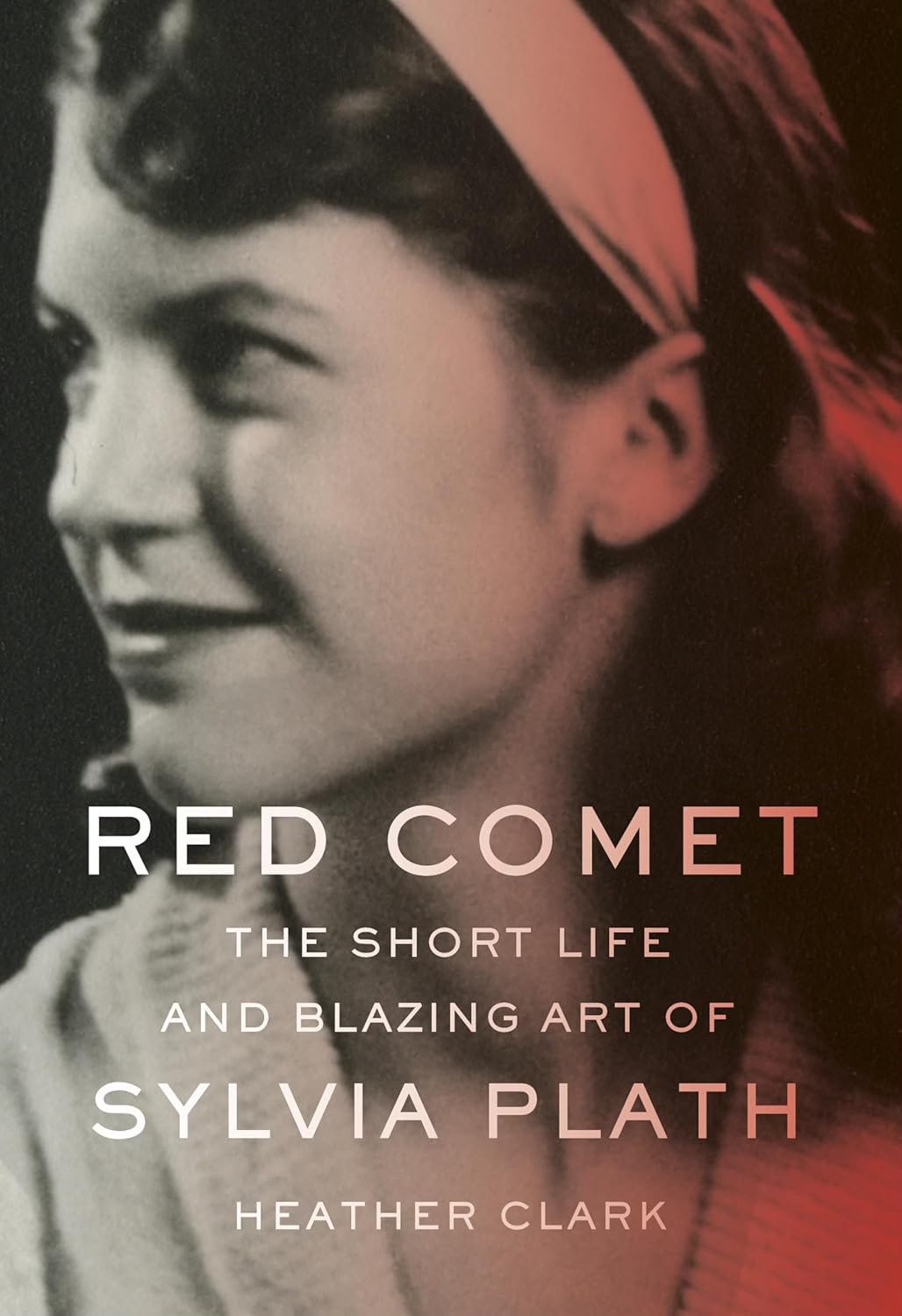
When I picked up the Red Comet: The Short Life and Blazing Art of Sylvia Plath by Heather Clark, I’m fairly certain I hadn’t read a single one of her poems. Would I have picked it up (I listened to the audio) if I’d known it was just over 1100 pages? I’ll never know. A friend, a poet, had mentioned her love and admiration for Plath’s poetry in mid-June. I was about to leave on my self-imposed Writing Residency in Saint Jean de Luz (southwest France) and looking for something to accompany me on my train ride, I found Red Comet on Libby and started listening. In reviews that I read while I was listening to the book, it was unanimous that Ms. Clark was presenting the most objective, thorough, story of Plath’s life. Not the dramatic circumstances of her death. In the years since her death, “she has become a protean figure, an emblem of different things to different people, depending upon their viewpoint — a visionary, a victim, a martyr, a feminist icon, a schizophrenic, a virago, a prisoner of gender — or, perhaps, a genius, as both Plath and Hughes maintained during her lifetime.” —Daphne Merkin, New York Times.

Her life, her love of her father, the relationship with her mother who possibly projected all her desires and ambitions onto Plath, her teen years, her internship at Seventeen, and college years at Smith were a revelation to me. 

I loved every minute of listening to this audiobook. I found reasons to take long walks just so I could listen to more. The Sylvia Plath of this book was a determined, focused student then young woman who excelled at almost everything she did. She suffered depressive episodes as I did, as so many teens do, yet she remained true to her north star. I was stunned at her singlemindedness of purpose, write and get published. I paused at one point and listened to The Bell Jar.  If you ask me why I had never read that book, I couldn’t tell you. But I had avoided it. I found the writing to be lovely, simple, easy to enter into the story and root for the protagonist, Esther. I wanted to know how much was based on her real life. Red Comet told me.
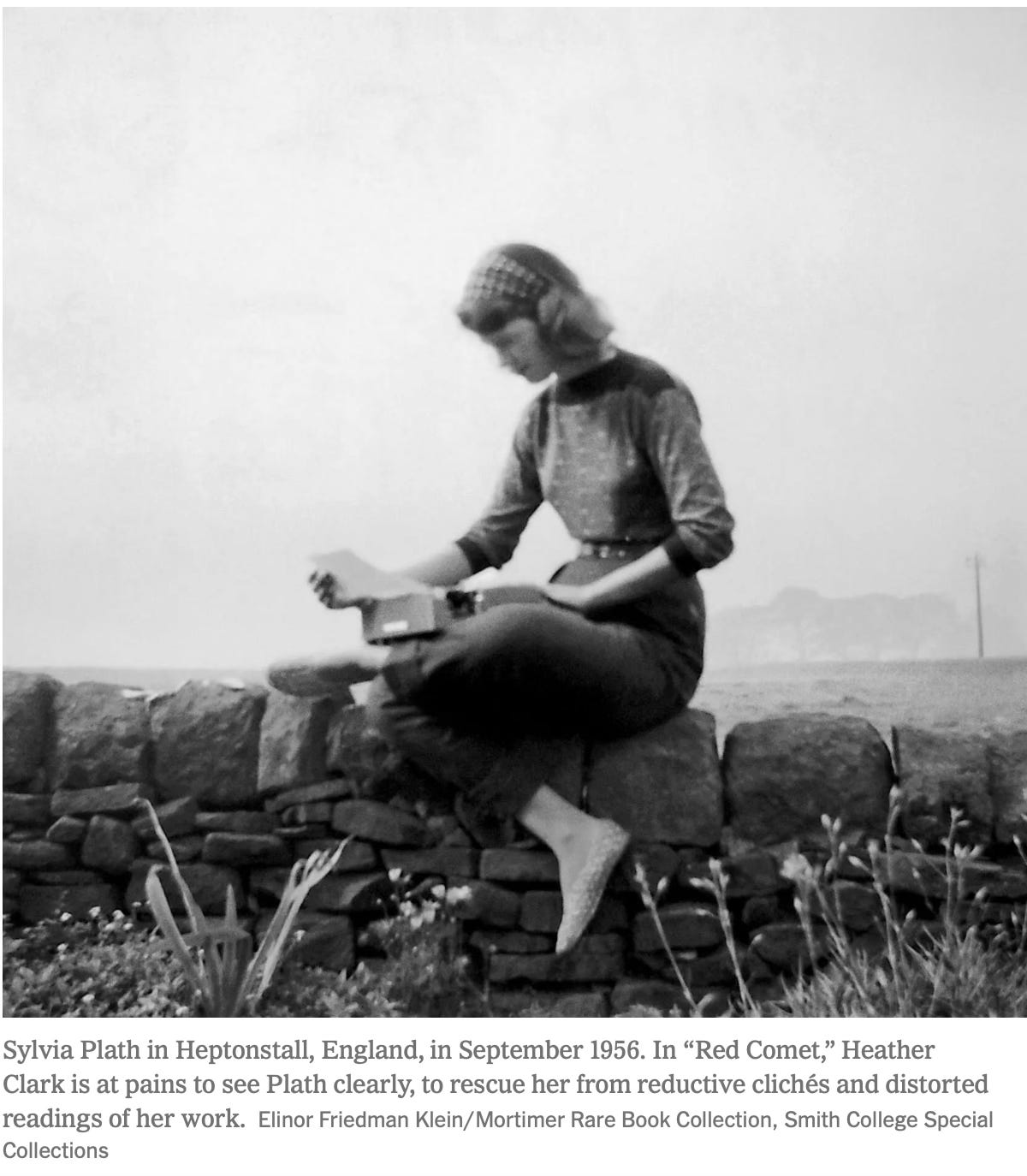
Sitting at my computer in 2025, having lived through the Feminist revolution, the #metoo uprising, all the years where, because of leaders like Gloria Steinham and Betty Friedan, women have come a long way since the 1950s when Plath was writing and advocating for herself, it’s stunning to me how she was able to stand up for herself in the only way she knew how. Her sense of competition was so strong, it drove her forward, but also may have led to her death. She had few female inspirations to look up to. 

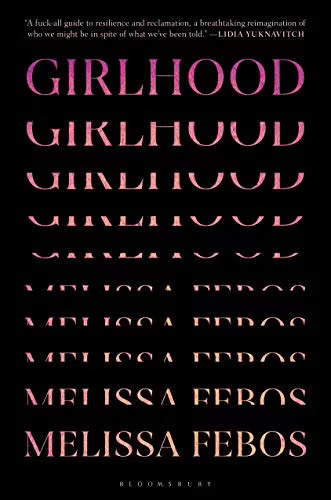
I hadn’t planned to make it a summer of reading feminist powerhouses. For various reasons: wanting to read more essays written by women in order to emulate them; meeting Melissa Febos at the American Library in Paris and getting some positive and encouraging feedback from her, I also read Leslie Jamison’s The Recovering: Intoxication and Its Aftermath (I read Splintering last summer) and Febos’ Girlhood and Abandon Me.  Like Plath, both these women take huge risks in their writing, exposing their vulnerabilities, writing from a deeply personal place. Jamison writes about tremendous pain. Febos writes about sex and loving women and her awful childhood of being teased and ridiculed because of her large breasts. Girlhood“dissembles many of the myths women are told throughout their lives: that we ourselves are not masters of our own domains, that we exist for the pleasure of others, and so our own pleasure is secondary and negligible.”—Melissa Hart, OprahDaily.com. Jamison writes about her alcoholism, her lousy choice of lovers and in Splintering, the demise of her marriage.

All three women became professors. Plath at her alma mater, Smith College; Febos currently works as a Full Professor at the University of Iowa, where she teaches in the Nonfiction Writing Program; and Jamison at the Columbia University MFA program, where she directs the nonfiction concentration. In other words, all three women, writing as they do, leave themselves very exposed, unzipped in the world. 
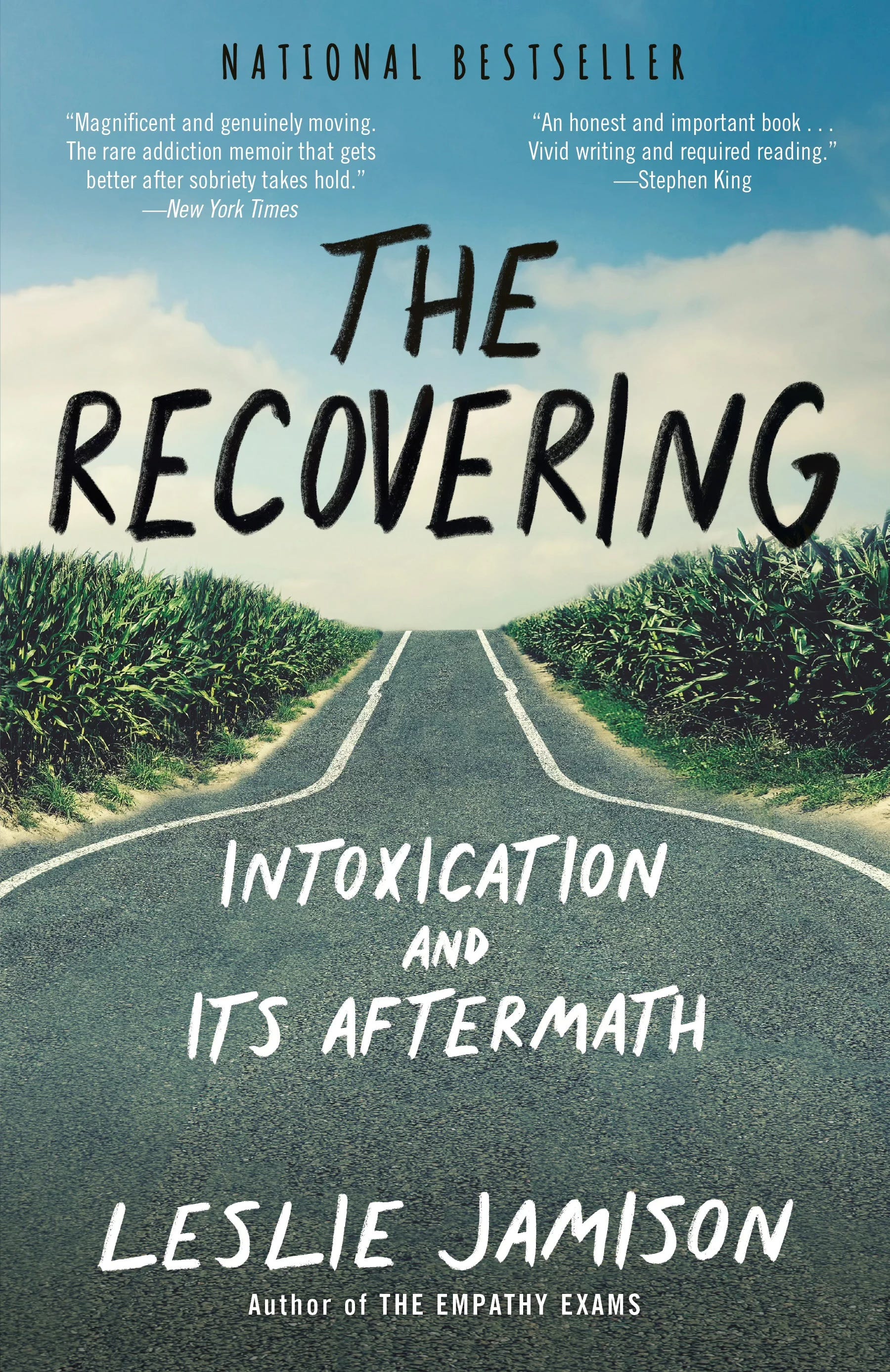
As a writer myself, I love knowing these women in depth. Febos and Jamison are alive, young, and headed towards higher accolades than they have already earned. I admire their style of writing. I am in awe of their willingess to expose such vulnerabilities. Jamison is in a twelve step program which encourages self-examination and, therefore, deep shovelling below the surface to face and admit why we do what we do and the consequences. Febos’s work asks us to question every single ‘myth’ we were raised with, every story we were told about who we are and should be, who holds the power in our world and do we, inadvertently, support that world while secretly wanting to have our own personal power. 
In the August 4th issue of the New Yorker, Jamison writes about the Pain of Perfectionism. I was struck by so much information, the kind where you smack yourself on the forehead and say “yes, that’s exactly it!”, that I was scrambling to locate on old therapist of mine from California to talk about my personal revelations. 

“To Flett and Hewitt (two psychologists she interviewed at length for the New Yorker article), the idea of perfectionism as a form of admirable striving is a dangerous misconception, one they have devoted three books and hundreds of peer-reviewed papers to overturning. “I can’t stand it when people talk about perfectionism as something positive,” Flett told me, as we sat at his kitchen table in Mississauga, a Toronto suburb where he has spent most of his life. “They don’t realize the deep human toll.” Hewitt, a clinical psychologist, has seen with his therapy patients how perfectionism can be “personally terrorizing for people, a debilitating state.” It’s driven not by aspiration but by fear, and by the conviction that perfection is the only “way of being secure and safe in the world.”—Leslie Jamison, The New Yorker August 4, 2025

Read the article.

This summer was an interesting digression for me, someone who loves to escape into mysteries and thrillers. I was revising three chapters of my forthcoming book to submit to a Writing Retreat. I was deep in an attempt to express myself without self-pity, with honesty, with self-reflection, and a desire to show my growth from one period of my life to another. I found inspiration from all three (four if you count Heather Clark, a remarkable writer and researcher) women. They guided me in going deeper, get to the real truth, the truth under what I thought was the truth, the truth that makes me squirm.

To all four of you, I say Thank You.

Thanks for reading Out My Window! Subscribe for free to receive new posts and support my work.

Please remember to go to sarasomers.substack.com and subscribe to Out My Window. I will be shutting down this WordPress blog by the end of the year.

A bientôt,

Sara
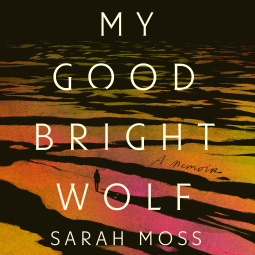
My Good Bright Wolf

by Sarah Moss

Sarah Moss writes novels. I haven’t read any of them but have read The Immortal Life of Henrietta Lacks for which she wrote the Introduction. I don’t think that really counts. So I’m not sure why I picked up her memoir My Good Bright Wolf, which came out yesterday, knowing nothing about her. Except I loved the title. 

There are people who say there are no coincidences. Sarah Moss is anorexic. She has written a memoir that brings the illness of anorexia so intimately to the reader that I felt myself catch my breath several times. When I wrote my book Saving Sara A Memoir of Food Addiction, I wanted to do what I had never read in all the literature of eating disorders. Bring the reader into the mind, insanity, and horror of binging. Until I read My Good Bright Wolf, I never comprehended anorexia. I thought it a completely different animal than binging or bulimia. After reading this memoir, I don’t feel very different from Sarah with an ‘h’. 

Thanks for reading Out My Window! This post is public so feel free to share it.

At the end of the memoir, Ms. Moss tells us how hard the book was to write, not just because it is so intimate but because she comes from a good background, had a great education, has a successful profession, and owns real estate. Which, to my mind, only confirms that eating disorders have no bias. Rich, poor, black, white, American, European, these diseases don’t discriminate.

This memoir is beautifully written, courageously written. She is able to convey the dialogue that goes on in our minds when “under the influence.” The part of her that convinces herself that she isn’t really sick, and even as she is inches away from death, she tried to convince a doctor that there are really sick people in the hospital and he should be attending to them.

She writes about the cult, the politics of being Thin. I related to everything she said: the judgments that thin people were better people. I hated my body because I was fat. She hated her body because she wasn’t thin enough. Her last chapter is entitled “My body, my home.” Just those four words gave me a severe jolt. I’ve always been looking for home. What if home is the shelter we carry with us all the time. Like a turtle, we can go to safety by pulling into our homes.

I listened to My Good Bright Wolf. It was narrated by Morven Christie. “”Morven Christie’s limpid, Scottish-inflected voice and gentle, enticing tone combine to lure listeners into Sarah Moss’s astonishing (memoir) as effectively as mermaids tempt sailors into the sea” —AudioFile on Summerwater (Earphones Award winner). Morven’s voice is strong and she enunciates with beauty. It is as if she had written the book, she knew just when to inflect, when to emphasize, when to talk to herself (as Moss) with contempt. 

There is an emerging breed of memoir writer: Sarah Moss, Maggie Smith, Leslie Jameson who write poetically, lyrically. Who bring us into their worlds in a soft rocking manner but the subject matter is so serious, the self-talk so vicious and this style makes everything much easier to bare and also to relate to.

I’m not great at book reviews. And wish I could do this memoir justice. If you are at all interested in disordered eating, at the insanity behind the disease, and how one anorexic describes it and dealt/deals with it, I urge you to read this book. 

Thanks for reading Out My Window! Subscribe for free to receive new posts and support my work.

A bientôt,

Sara

Big Magic

Do you believe in magic……???

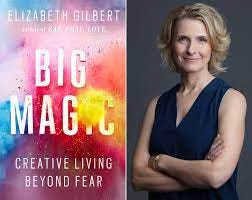
Big Magic: Creative Living Beyond Fear, an inspirational book by Elizabeth Gilbert, was published in 2015 and instantly became a bestseller. This was nine years after her breakout bestseller Eat, Pray, Love. After hearing writing group friends talk about it in my presence, I broke down and bought a copy in 2021. I think I read two chapters. Since I have just finished reading the entire thing today (July 2024), I cannot tell you why I wasn’t interested back in the pandemic years when being able to read for long periods of time wasn’t such a luxury. Maybe I considered it airy-fairy and that approach wasn’t going to improve my writing. Whatever the reason, I put it in the Living Room closet next to some books on the Writing of Memoir, and there it has sat ever since. In fact, it is still sitting there. I listened to Elizabeth Gilbert read the audiobook while I walked the trails and beaches of Saint Jean de Luz in the Pays Basque region of southwest France.

The book can be summed up as EG taking every possible fear and rationale we writers have to not write and shows us why it is poppycock. She claims she was the most fearful of children, scared of everything, scared of waves, scared of snow. She lists at least two pages of fears to not write. “I’m too old”, “I’m not old enough”. I found myself laughing as I remembered almost each and every fear she mentioned.

Thank you for reading Out My Window. This post is public so feel free to share it.

She says something very interesting. Something that goes against one of the blurbs of her book: which said something to the effect ‘how to learn to have a creative life.’ My words. Gilbert says we don’t learn anything. We already are creative. We either use our creativity in living or we don’t. But it’s always there. 

I enjoyed listening to the book. I enjoyed it because I’m on the other side of a lot of the fears she’s talking about. So I was nodding my head as she talked, agreeing with her on many points. I’m pretty sure if I hadn’t been writing for eight years, hadn’t had a book published, hadn’t talked about some of my fears with my coach and editor, I would have had a hard time groking what she was saying. It was a bit like the huge Nike poster I had scotch taped to the back of my toilet door years ago. JUST DO IT!

Gilbert seems to think if she could do it, anyone can. So she talks about courage, persistence, trust, enchantment and how she met each one head on. What she doesn’t say is that, in fact, she is an exceptional person. She has a huge personality, she’s probably impulsive and when she gets into something, she jumps in 110%. She takes risks—introducing herself to Ann Patchett at a conference by telling her how much she loved her. I recognise this. In my 70s, I have much the same personality. But it took sixty-five years to be born. I think I might have cried reading this book in my 30s. Of course, I have no way of knowing. Looking at that Nike poster every day actually drove home the sentiment – forget all your excuses, Sara, just do it! And sometimes I did!

I think my take away from the book and one I want to pass on is: love what you do. If you love to write, write. Don’t think about the end result. Will it get published? Do I need an agent? etc, etc, etc. Just write because you love it. I need to say that I’m in a very lucky and enviable situation. I am retired from my first profession, have savings, and am in a position that many writers are not. I don’t have to depend on my writing for income, to make ends meet. I get to write because I love to write. I am discovering that more and more. I find on-line challenges and things like Jamie Attenberg’s #1000 Words of Summer that encourage me to write every day and account to someone, even in the virtual world. Writing every day makes it easier to write every day. Yes, that’s English and it’s true. And getting prompts from people like mary g.’s substack What Now? has led to interesting stories—ones I wouldn’t have thought up just sitting on my butt at the dining room table hoping for inspiration.

I have a hard time getting through any book on writing. Some craft books are written by smart and wiley people. They give you a teaching then two or three short stories that use the very thing the writer hopes you will learn. For instance: Tell It Slant (Miller and Paola, 3rd edition 2019). I was finished the book before I had time to give up on it. There were fascinating stories, most I hadn’t read. I may have learned something also. My writing teacher, Jennifer Lauck, refers to it often.

So if you, like me, like to listen to audio books while you walk, and you want some inspiration to take a next step or do a high five because you’ve already figured out something Elizabeth Gilbert writes about, then you will probably enjoy this book. EG’s voice is extremely pleasant to listen to. Since she wrote the book, she can emphasize words and points she wants emphasized. 

Thanks for reading Out My Window! Subscribe for free to receive new posts and support my work.

A bientôt,

Sara

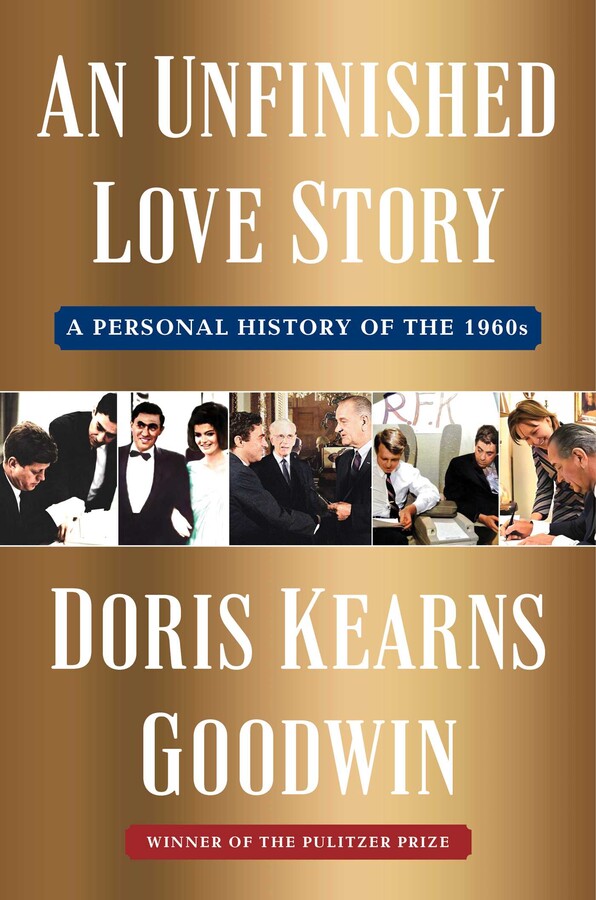
An Unfinished Love Story: A Personal History of the 1960s–Doris Kearns Goodwin.

I was thirteen years old the year, 1960, that John F. Kennedy ran against Richard Nixon for President of the United States. My family lived on the Main Line west of Philadelphia which was republican country. At that point in my life, I had no interest in politics. One of the main reasons being that I had to compete with the goings on in the world for attention from both my parents. I wanted to be seen and to be heard and hated the competition.

In the summer and fall of 1960, a lot of that changed. JFK was stirring up passionate feelings in his supporters who were doubling and tripling with each of his planned campaign stops. When he came to Philadelphia, I don’t remember where, my father took me with him to stand in the glow of this 43 year old man who had captured the attention of a nation with his movie star good looks and his fresh opinions. This may be a faulty memory, but I remember being in a large parking lot. He was standing higher than us, his adoring fans-probably in a car or makeshift stand of some sort. My father and I made it to the front of the crowd and JFK shook my hand. I don’t remember anything else.

I have another memory of bicycling from Haverford, where we lived, to Ardmore the next town over. We, my friends and I, usually went there to buy 45s (If you remember those, you are as ancient as I am!). Across the street, an enterprising person was selling Democrat buttons and trinkets. With my own money, I bought a gold donkey. Of course, it was rubbish stuff but it was my rubbish stuff! I pinned it on whatever blouse I was wearing and sensed my parents would approve.

I have thought a lot of that time during the past week as I’ve been reading Doris Kearns Goodwin’s latest book: An Unfinished Love Story: A personal history of the 1960s (2024). Goodwin was married to Dick Goodwin for forty-two years and “married to American History” even longer. Doris worked under President Johnson, helped him with writing his memoirs, and wrote a biography of him after he died. Dick Goodwin was a speech writer for JFK and Johnson and then became very close friends with Robert Kennedy as he contemplated and then decided to run for President. 

DKG is such an engaging writer that I felt yanked back to the 60s but witnessing it as an adult as well as through the eyes of the two Goodwins. Anyone who lived through the 60s knows what an amazing decade it was. One of such hope and possibility then tragedy after tragedy. I have tended to look back on that decade as one that failed us. That my generation somehow screwed up. By the end of reading An Unfinished Love Story, I was willing and happy to view it from DKG’s eyes—much more positively.

This book came to exist because Dick collected every piece of paper that he ever held. He carted around 300 boxes of his letters, journals, speeches, and memorabilia but would never open them. On his 80th birthday, he told Doris that he was ready to see what was there. It took them two and a half years to get through all the boxes. By then, Dick was ill and eventually died. It took her several years of grief and moving her home, to take up their project again. She felt she had to write the book as she watched what was going on in the country. 

The two met in 1973 after most of the events in the book had taken place. She takes us through the boxes, through those years before they met, and tells us how they discussed each event, their reminiscences. I listened to the audio version of the book and was treated to a number of speeches made by JFK, RFK, and Johnson. What a jolt hearing those voices again. 

What makes this book so interesting for me, aside from the fact that it is so well-written and engaging, is that it fills in details that I didn’t know about because I wasn’t especially political. I began to appreciate why Goodwin is so interested in leadership (She has also written a book entitled Leadership). She lays out the qualities of these men that were trying to guide our country to live as a democracy. The decisions they made and how they made them. It is such a contrast to much of what is going on today. The two of them would often argue the traits of JFK and Johnson.

When I finished the book, I wondered about President Biden. How would they describe his leadership qualities? I am now a person who reads a lot about politics in the US. There is a different perspective watching and listening when living in France. We don’t get the 24 hour loop on TV that people in the States get – if they watch TV. Most of my information comes from reading and I am choosy about what publications I read. I have wondered out loud why Biden’s ratings are so low when he has done so much for the citizens of the United States—all citizens. In fact, I believe he is on record as getting passed more laws that help the ordinary man and woman of the US than any president since FDR. I’ve watched his State of the Union speeches and chuckled out loud as he cleverly led MAGA Republicans into traps that were hard to get out of. Famous for his gaffs, I’ve noticed very few in his years as President. He works hard at being a leader for everyone. 

In general, leadership qualities are not valued in the US anymore. The media rarely reports an event where Biden has spoken with skill and compassion (I was amazed at how often Bobby Kennedy used that word in all his speeches while running for President) when referencing us as a population or an event that needed interpretation by the President. The media believes that the US population is far more interested in all the hate speeches, all the threats of violence, and the fascist ramblings of the other candidate.

These are my thoughts only. I ponder while I walk around Paris and the Parc de Bagatelle. To me, Biden has grown into a leader. He is a leader in a world that no longer wants his kind of leadership. More and more, the world seems to want Fascist leadership, authoritarian leadership. A Big Brother who tells us what to do and will punish severely if we trespass. So is Biden a leader? Has he taken the temperature of the whole country and finessed how to lead us through this ‘valley of the shadow of death’? I don’t know. I don’t read the polls, which are usually wrong, anymore. I have no way of predicting since so many Americans have very short-term memories and vote passionately.

I would be very interested if you, my readers, would put your thoughts in the comments below. And then go get yourself a copy of An Unfinished Love Story by Doris Kearns Goodwin. You’ll thank me.

Thanks for reading Out My Window! Subscribe for free to receive new posts and support my work.

A bientôt,

Sara

My story: The Perfect Game

“We are excited to invite you to our annual AWP reading + celebration on Friday, Feb.9 at 7PM at Sinkers Lounge, in Kansas City.     (Sinkers is just 2.5 blocks from the KC Convention Center.)”

I received this e-mail two days ago. Many of you will remember how excited I was to have a story I wrote be accepted to the Under Review. The on-line digital version of the journal is out (click here). Issue 9. And many of us writers of Issues 8 and 9 have been invited to read our stories at AWP 24 (Association of Writers and Writing Programs) next month in Kansas City.

I sent the invite to my writing group to see if they would come support me and the responses ranged from “Wait, what, the Journal is out and you didn’t tell us?” “Heck yeah!” “How come you aren’t telling everyone they can see your story in print?” That brought me up short. I hadn’t even thought of telling people. Why not? I’d sent the link to a number of people I was sure hadn’t seen it and that was it. We writers have to be brazen about publicising ourselves as no one else will do it. Even for a book, the cost of having publicity done by a company is prohibitive to most people. I’m told that even traditional publishers don’t do publicity unless you are Stephen King or John Grisham. No matter how shy we are or how difficult it feels to tout one’s own horn, no one else is going to do it.

So to those of you who gave me high fives when my story was accepted and all the rest of you who may have missed that blog, now you can see it digitally in print here

If you are going to AWP 24 this year, please come to Sinkers Lounge on Friday evening, Feb 9th. If the weather keeps going in the direction it’s going, which is to say it’s getting warmer, it could well be in the low or high 40s by the time we all get there. So no excuse.

Last year, three people, that includes me, in my writing group went together to AWP 23. We’d only met on Zoom for eight months or so. It was like we’d known each other forever, we got along so well. This year five of us in the group are going. I rented a five-bedroom house that looks as quirky as we feel when we all get together. We may even get a dog staying with us this time around.

I’ll be taking flyers to AWP to advertise the Paris Writers Workshop in Paris, June 2-7, 2024. Which, btw, I have more information about. I wrote my story of Writing in Paris three weeks ago and how honored I am to be part of this year’s planning committee. At the time I published, I didn’t know some exact details. Here they are. This is the landing page telling you exact dates and about the faculty. The entire website will be up and ready for registrations on January 31.

Registration: Early Bird—975€ till March 15, 2024       

    Full price —1,100€ March 16 onwards 

Agent consultations: For an additional fee, you can register for one, or two, agent consultations. More information to come.

Cancellation Policy:

 Full refund through 15 April 2024 minus 100€ admin fee

Half refund through 30 April 2024 minus 100€ admin fee

I hope to see lots of blog writers and readers at the Paris Writers Workshop. I’ve gone twice now. It is excellent and so reasonably priced. Paris will be dressed up in preparation for the summer Olympics. It will be a good time to see all the decorations without having to deal with the crowds.

A bientôt,

Sara

Thanks for reading Out My Window! Subscribe for free to receive new posts and support my work.

Writing in Paris…….Paris Writers Workshop June 2-7, 2024

If you have ever dreamed of writing a memoir, a short story, a novel, and doing it in the City of Light: Paris, you can do it this summer. My writing story follows.

I discovered reading for fun the summer I turned 14. During summer camp in Vermont, we were bussed down to Tanglewood in Western Massachusetts to picnic and listen to the Boston Symphony who summered there (Back then it was known as the Boston Pops).  Wandering off by myself, I found a gift shop. A plethora of paperback books on three racks greeted me as I walked in the door.  I’d never bought a book on my own.  Going into a shop and browsing, having a title leap out at me and paying for it with my own money, this was new and foreign territory for me. I spun one of the book racks and the title A Separate Peace (John Knowles, 1958) jumped out at me. I bought it.

I devoured A Separate Peace. Every afternoon rest period, I read. At night, in my sleeping bag, flashlight on, I read. The book, about two teenage boys at Exeter Academy, spoke to me.  Before I’d finished, I knew I wanted to write. It wasn’t a crystalized thought. I had so many pent-up teenage emotions with no idea how to express them other than screaming at members of my family. I just knew that getting what was in my head out on paper had to have some kind of transformational impact.

From then on, reading became my way of not feeling so alone. I wasn’t great at talking. I had an A+ in complaining. And, like so many teenagers who feel unfocused creative thoughts, I soon started writing awful poetry.

Over the next 20 or so years, I tried to write stories. I’d start out fine but could never find a way to end them. In my thirties, it dawned on me that I had nothing to say. My life experience was limited, and I had little self-awareness to make sense of the experience I did have. As years passed, I began telling myself that I was Going To Write A Book when I was 55 instead of 30.

Fifty-two years after that Tanglewood experience, I moved to Paris.  I was retired. I had more curiosity than I could contain. Writing courses were plentiful, almost on every street corner! After signing up for the requisite immersion French class, I decided NOW was the time to learn the craft of writing. I joined WICE (Where Internationals Connect in English), an organization that teaches language, creative writing, and photography courses among other offerings. It was mid-October and the only writing course that wasn’t full was a memoir class.

I am eternally grateful that the teacher loved my writing. I signed up for another of her classes in the Spring. I learned that WICE hosts a biannual Paris Writers Workshop (PWW). Unlike many workshops that take place year round in France, this one was reasonably priced. I didn’t hesitate.  Those nasty voices that tell us ‘we’re no good’, ‘Who do you think you are?’, and the zinger, ‘You’re too old to do this’, hadn’t yet taken up residence in my brain. I signed up.  I even met with one of the agents at the conference. She wanted to see more of my writing.

Four years later, I published my first book, Saving Sara: A Memoir of Food Addiction (SheWritesPress, 2020).

I became aware that in my adopted country of France, there are thousands of offerings for the writer and the would-be writer: in-person writing courses, video writing courses, workshops in gorgeous chateaux in the French countryside. But the Paris Writers Workshop stayed my first love. It was the place that had given me the confidence to call myself a writer.

This year, I’m excited to be on the planning committee of the new Paris Writers Workshop, which will be held June 2-7, 2024.

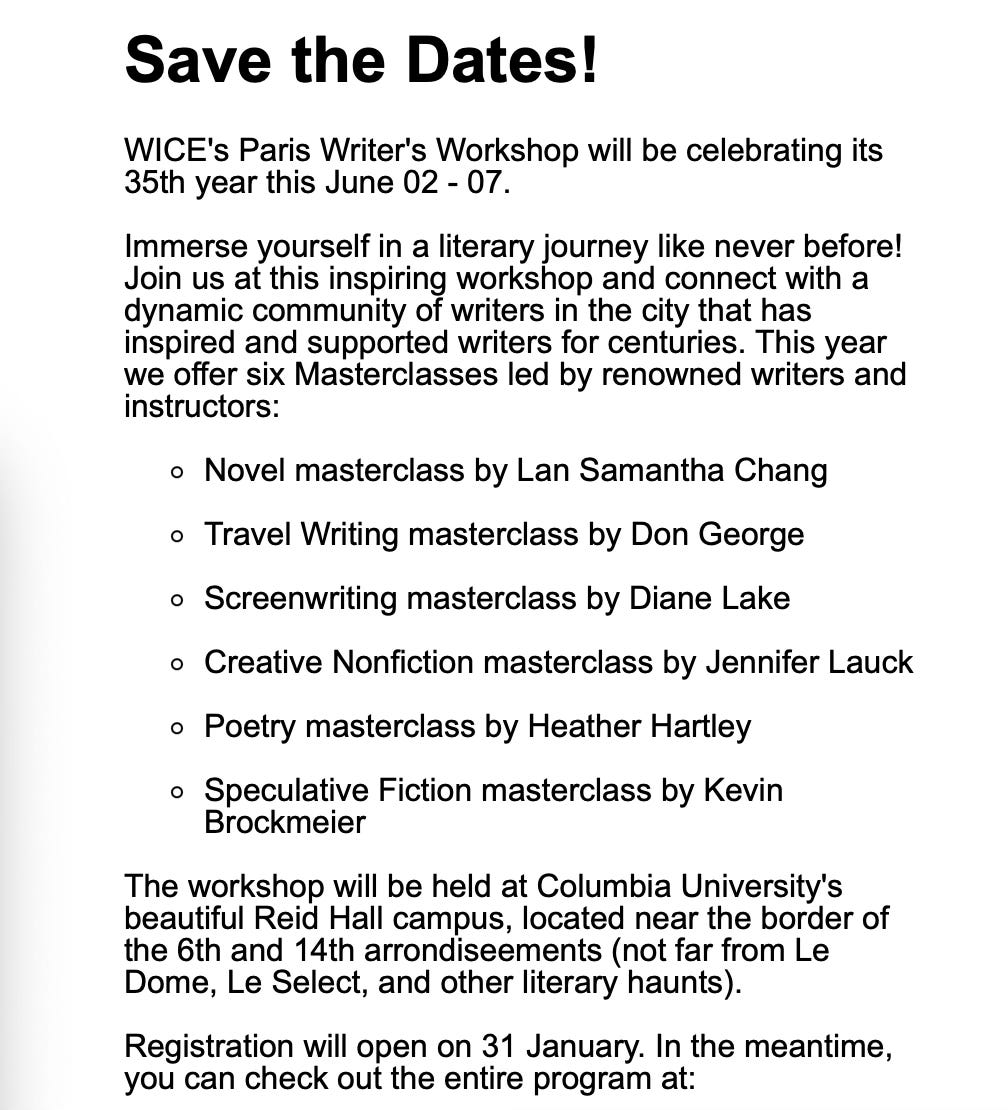
PWW began in 1988. It is the oldest continuous writing workshop in Paris. The 2024 workshop promises to be one of the best so far. The Writing Workshop includes six tracks—Fiction, Speculative Fiction, Memoir/Creative Non-Fiction, Travel Writing, Poetry, and Screenwriting — with an amazing faculty lineup. The wonderful Jennifer Lauck whose Substack Flight School with Jennifer Lauck was one of Sarah Mays top 10 writing Substacks last November will be teaching the Memoir/Creative Non-Fiction track. For the first time, we will be partially sponsored by the Columbia Global Centers and will meet in CGC’s beautiful Reid Hall, in the center of the literary Montparnasse neighborhood. 

Reid Hall at the Columbia Global Center in Paris, 6th arrondissement.

The PWW website goes live January 31, 2024. You can go to the landing page now. Click here to see it. There you will find information on each track and a bio of the teacher.

Registration starts on January 31, 2024. There is an Early Bird registration which gives the writer 100 euros off the 1200 euros price. 

And if the unexpected happens, one can get a full refund. Those dates will be up on the website.

You can also write pww@wice-paris.org for specific information. If you are sure of a track before registration opens, you can claim a spot at pww@wice-paris.org.

A bientôt,

Sara

A different version of this blog appears in the Jan/Feb issue of the AAWE News Paris

Thanks for reading Out My Window! Subscribe for free to receive new posts and support my work.