A Touristic Pilgrimage to Notre Dame de Paris


There are a lot of substacks about Paris and France. Little Lights on Rosa Happiness Street is worth your investigation. Lorie is a great writer and journalist. 

Here is her post this week on Cathedrale de Notre Dame:

“You could spend a day, a year, even a lifetime exploring this hallowed place. You could also learn from my mistakes.

LORIE TEETER LICHTLEN

DEC 12, 2025


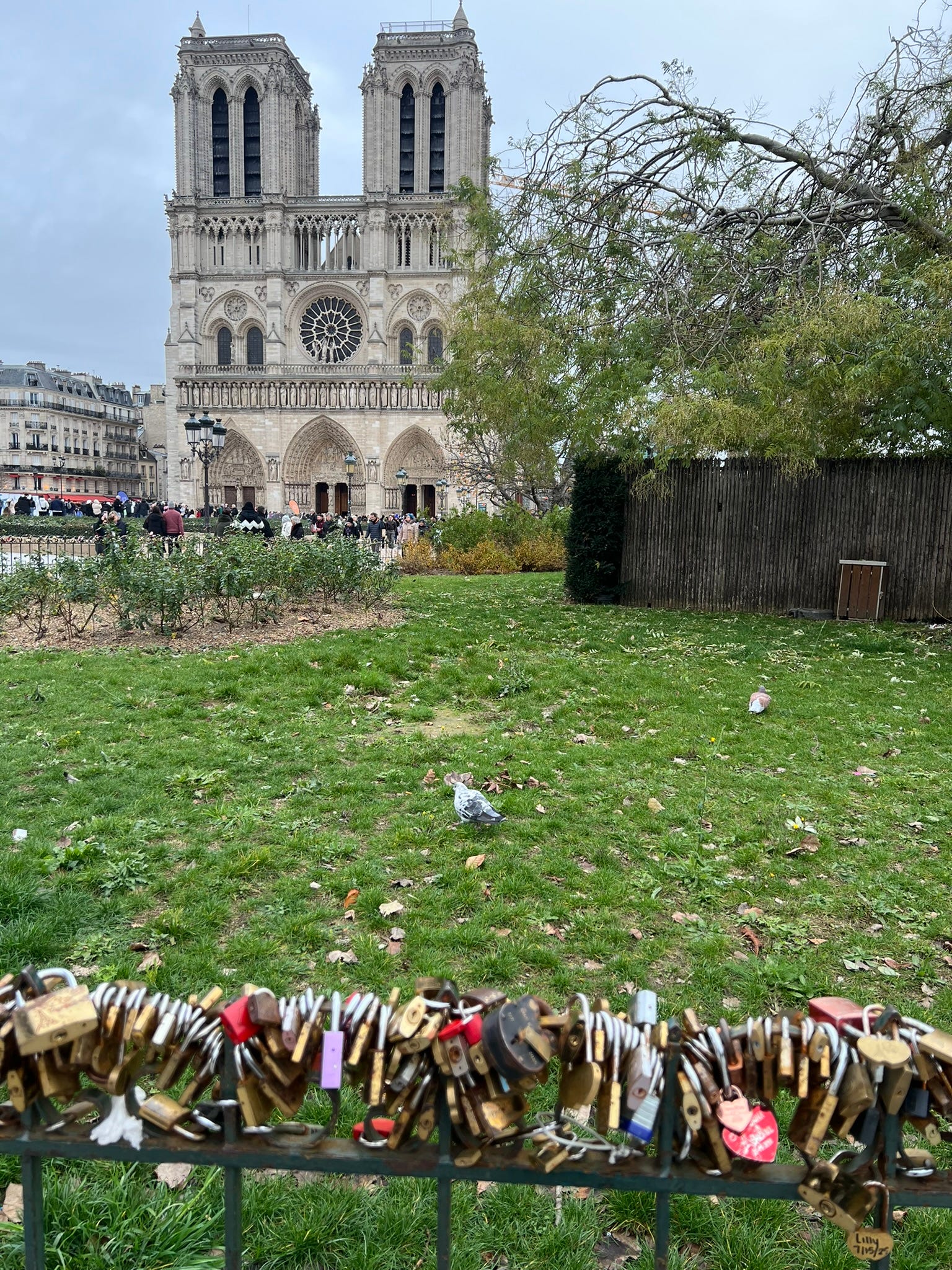
Notre Dame Cathedral on a blustery December day. Photo credit: Lorie Teeter Lichtlen

This week marks the first anniversary of the resurrection of Notre Dame Cathedral.

After the mass for heads of state, which was broadcast around the world, on December 8, 2024, the masses were allowed to visit. They flocked in numbers as monumental as the cathedral itself.

Over the past year, Notre Dame has hosted:

  • 11 million visitors – or more than 30,000 per day, every day, for a year
  • 1600 celebrations – for Lent, Easter, the death of Pope Francis, election of Pope Leo XIV, Advent, Christmas, etc.
  • more than 650 pilgrimages – of which one-third from outside of France
  • 600 official delegations, and
  • 44 groups of “vulnerable, isolated or disabled” people

Meanwhile, the renovations have continued apace. It’s now possible to climb to the towers, visit the crypt and admire the treasures in the sacristy. Thirty priests take turns staffing the two new confession chapels.

Much remains to be done. Designs for new stained-glass windows went on display in Paris this week; the windows themselves will be installed in Notre Dame in 2026. Other projects – notably involving the gargoyles and flying buttresses – will reportedly keep skilled artisans busy until 2030.

With all this exciting activity underway, why did it take me a year to finally visit the “new” Notre Dame?

Well, it took me that long to wait for the crowds to wane or, rather, to work up the courage to face them. I have walked by the cathedral many times over the past year and seen huge lines of people along the concrete forecourt. I have seen them drenched in the rainy spring and fall, and fried in the summer sun. I imagined them travelling from around the world for their dream vacation in Paris, only to find themselves in a very long line, kids whining, and cowering under the makeshift shelter of a scarf. The well-prepared will have brought umbrellas or bought plastic ponchos from the nearby shops.

Admission is free but advance reservations are recommended (there is direct access for the cathedral’s worship services). I tried for months to book and found few slots that would allow me to go in with family or friends, so finally decided to go alone. The evening of Sunday, November 30th, I booked a slot for one person the next afternoon.

Those who haven’t yet made the journey may benefit from my experience.

On this blustery December day, the lines were the shortest I had ever seen. My “reserved” line had about 20 people in it when I joined. After our QR code reservations were scanned, we were all allowed in at precisely 2:45pm. The “no-reservation” line was moving briskly, too.

We passed through the central doors under the 13th century Portal of the Last Judgment, hardly noticing its sculpted scenes of heaven and hell. Pristine statues of the 12 apostles watched quietly as we filed by.

Inside, as my eyes adjusted to the dimmer light, I was struck by the scent of wood smoke. Was it a remainder or a reminder of the tragic fire that nearly destroyed this hallowed place on April 15, 2019?

Many visitors did not heed the request to come without bulky backpacks. There are no lockers or coat check desks at Notre Dame. (No cafeterias or drinking-water fountains either.) Add in throngs in winter coats and it can get congested. At least no one seemed to be lugging luggage when I visited.

A year ago, some said the “new” Notre Dame seemed too new: too bright and shiny for its 860 years. Today’s lighting bathes the cathedral in a gentle golden glow. The result underscores the grandeur of the interior while allowing visitors to marvel at the artistry on display.

The visit is organized clockwise, starting with a welcome desk offering free headsets for guided tours via a mobile app and ending with a small gift shop area. Throughout the cathedral, votive candles can be purchased via credit card and vending machines offer commemorative medals. Proceeds from these and the shop help finance the restoration efforts.

Along the left (north) aisle, a series of chapels represent the stages in the history of Christian revelation, from Adam, Noah and Moses to Solomon and Elijah. Each has its own distinctive style, and each is more stunning or elaborate than the next. The chapels are adorned with precious paintings and frescoes, hand-woven tapestries, decorative tiles, and sculptures in wood, marble and other materials. Some are equipped with mini elevators to allow wheelchair access.
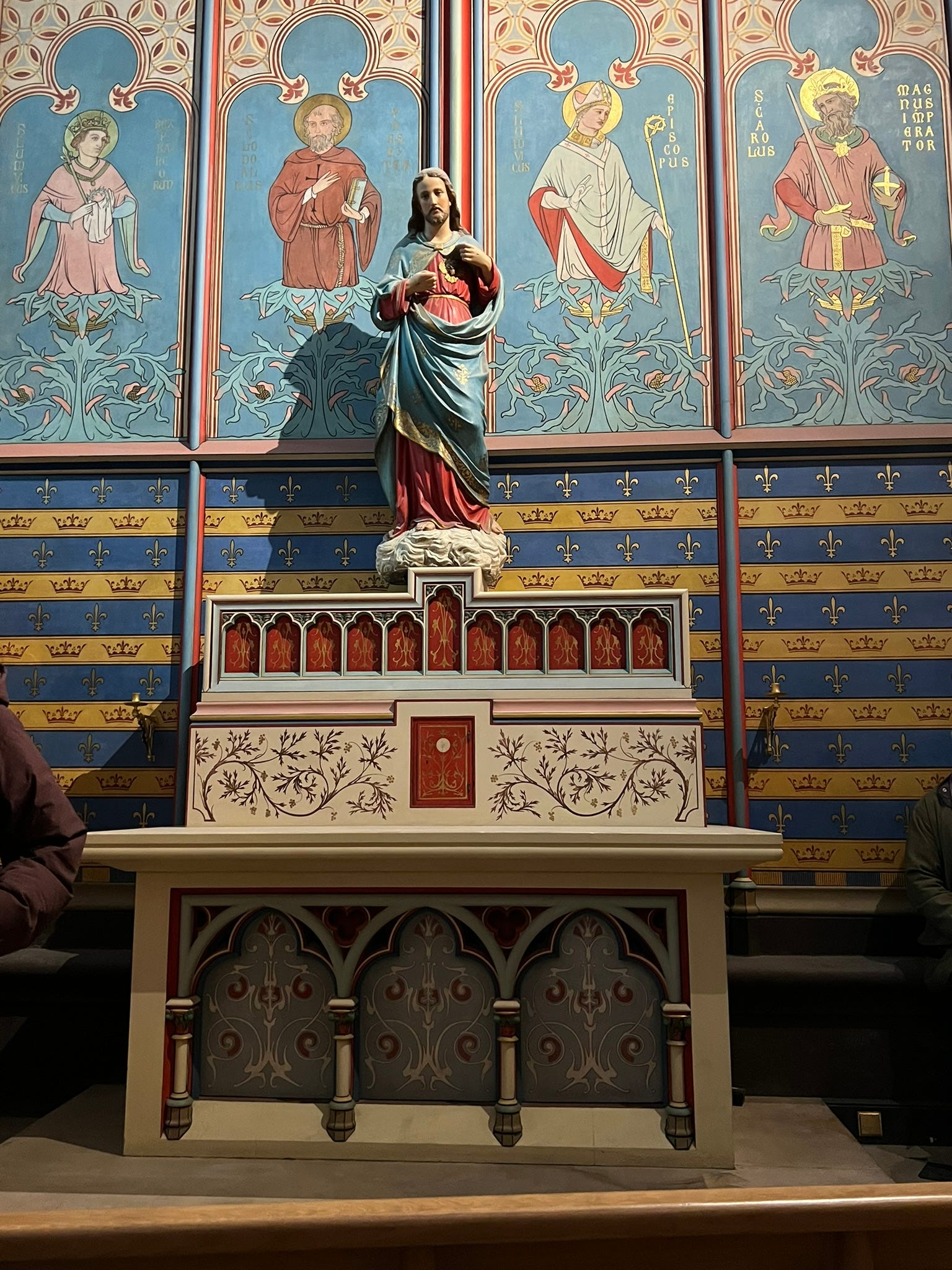
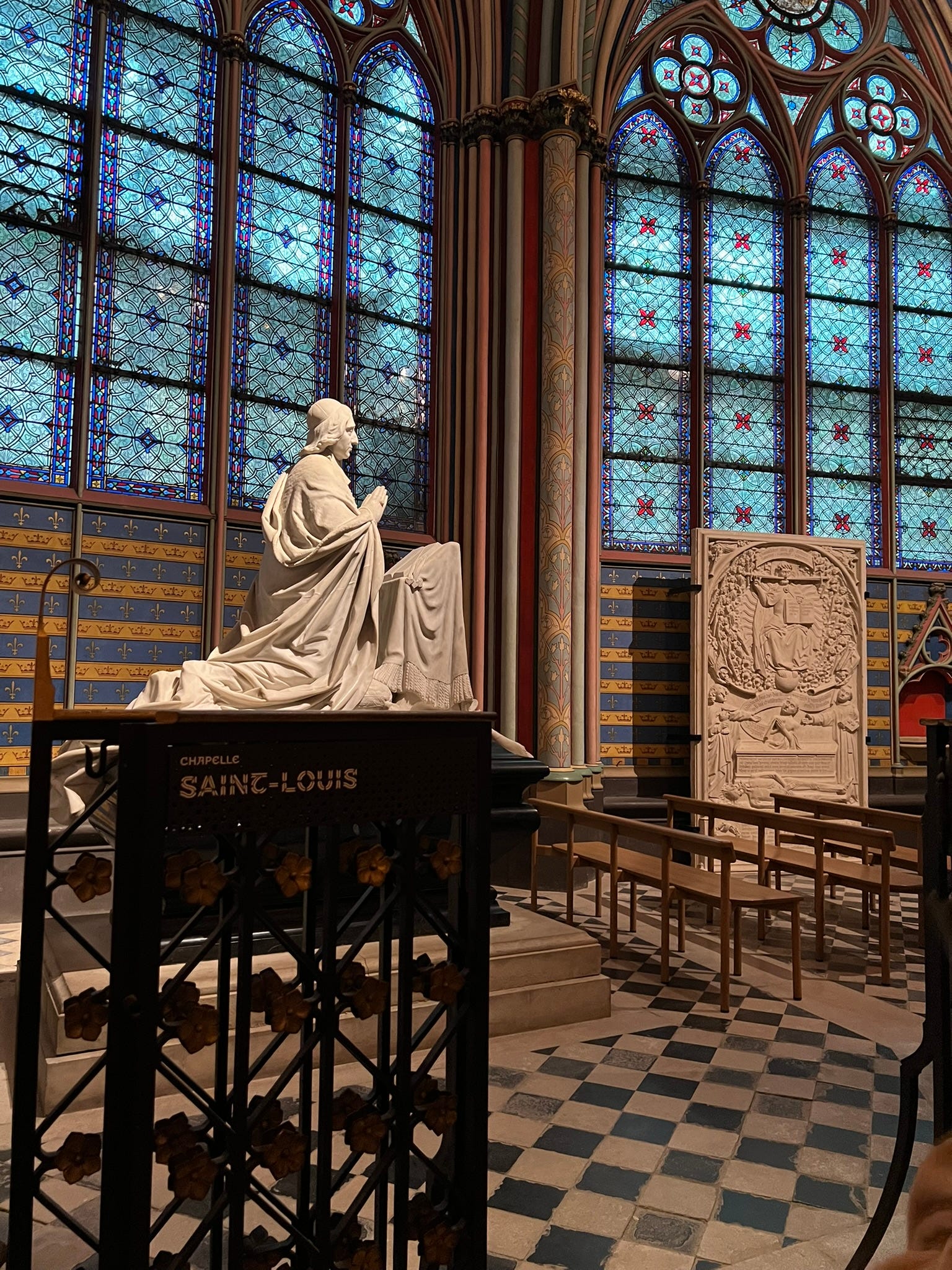
My favorite among the chapels is dedicated to Saint Louis: a beautifully simple space, twice the size of the others, with wooden benches that invite contemplation. Photo credits: Lorie Teeter Lichtlen

Across the aisle from the chapels, the north wall of the choir enclosure is lined with scenes from the life of Christ in polychrome stone. For this Christmas season (until February 2), this area also features a large “crèche” or nativity scene, with traditional Provençal figures and a terracotta village.
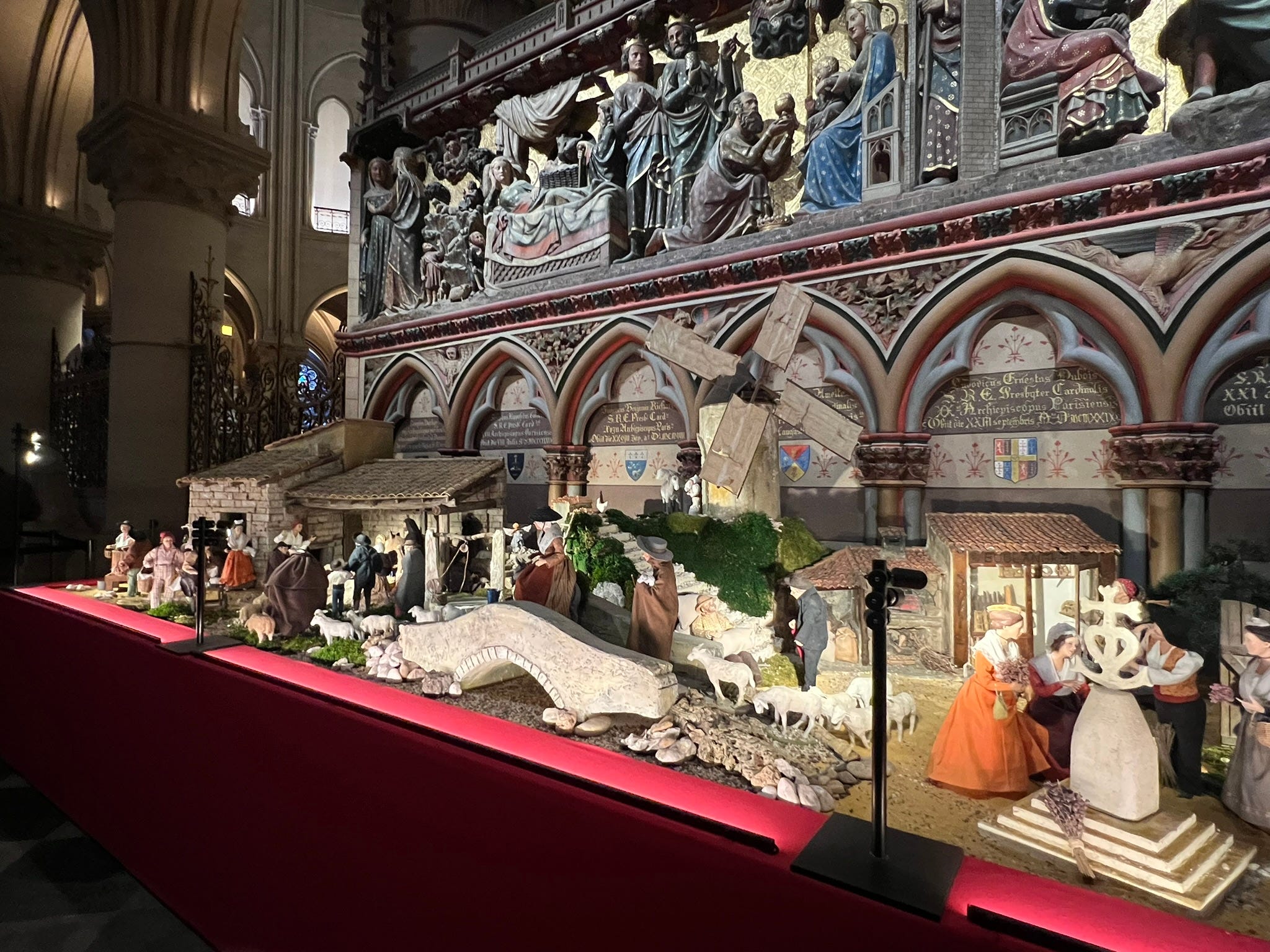
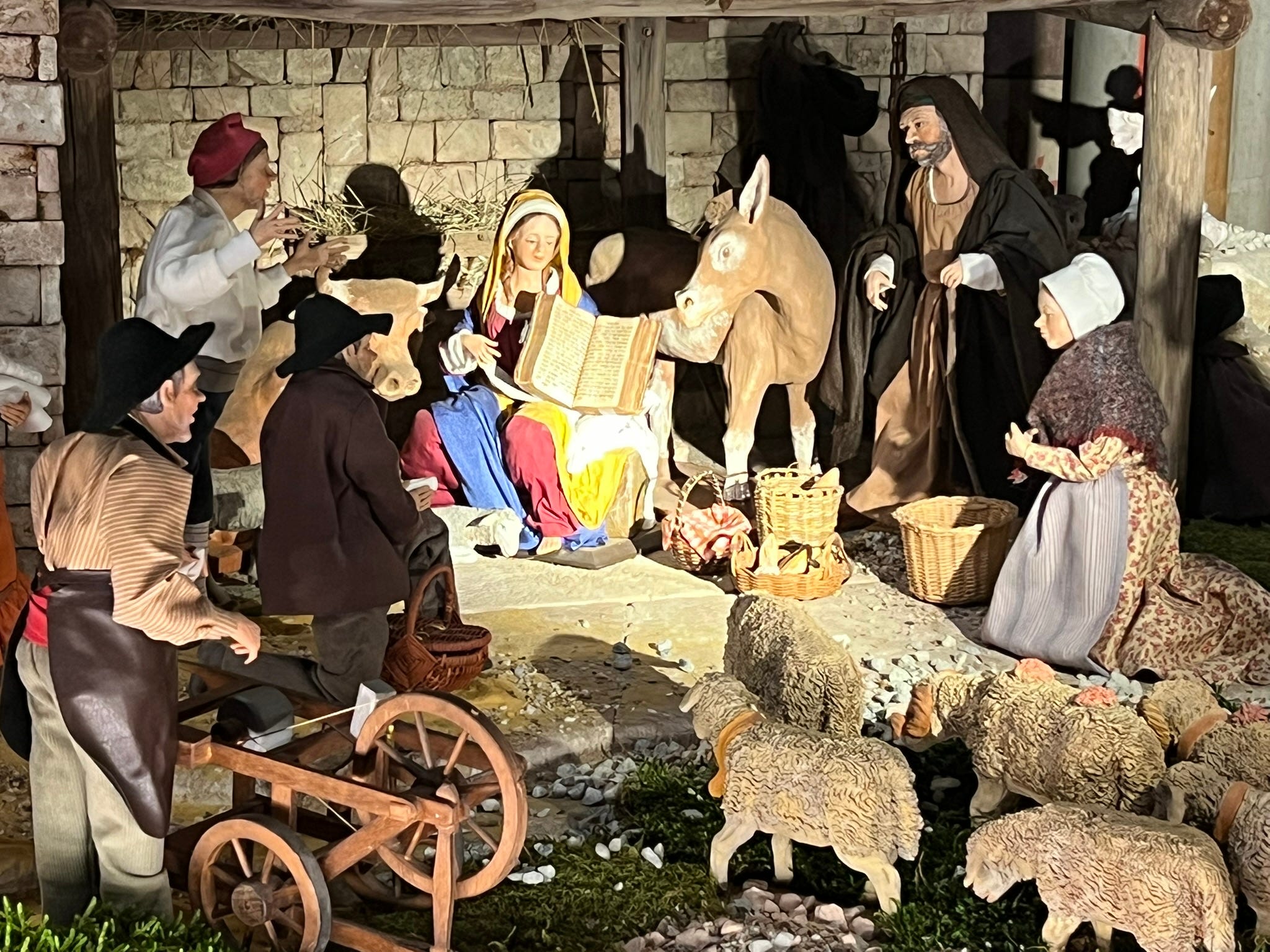
The north choir enclosure and Provençal “crèche” for Christmas. Photo credits: Lorie Teeter Lichtlen

Traffic jams formed near the north and south transepts – ie, the perpendicular arms that constitute the cathedral’s cruciform shape. Mobile phones aloft, hundreds of tourist pilgrims like me turned in circles, attempting to capture the reverential atmosphere distilled by the vaulted ceilings and famous rose windows.

Traffic jam at the north transept. Credit: Lorie Teeter Lichtlen

When the hum of collective admiration grew too loud, an ethereal “shhhhhhhhhhhhhhh … silence, please” floated from invisible speakers. This message played several times during my visit, once followed by an invitation to attend mass by heading to the reserved seating area. (Notre Dame celebrates three masses per day on weekdays and four on weekends.)

“The Cathedral of Notre-Dame de Paris is delighted to welcome you: pilgrims, believers or not, Christians, visitors from around the world, all men and women of goodwill!” – from the Notre Dame de Paris web site

I’m not Catholic but could have attended the mass. Instead, I continued to meander around the cathedral with the other tourists.

Another traffic jam soon formed, this time around the holy relics.

Who knew that Notre Dame houses what are believed to be relics from the Crucifixion of Jesus Christ? The Crown of Thorns, a Nail and a fragment of the Cross were purchased in 1238 by King Louis IX – later canonized as Saint Louis — from the Latin Emperor of Constantinople. Had I known, I might have been prepared to sit in thoughtful meditation before the holy crown in its crystal case within a large golden circle. Many others did so. Instead, I suddenly felt unworthy of occupying precious space there and just took pictures from a respectful distance.
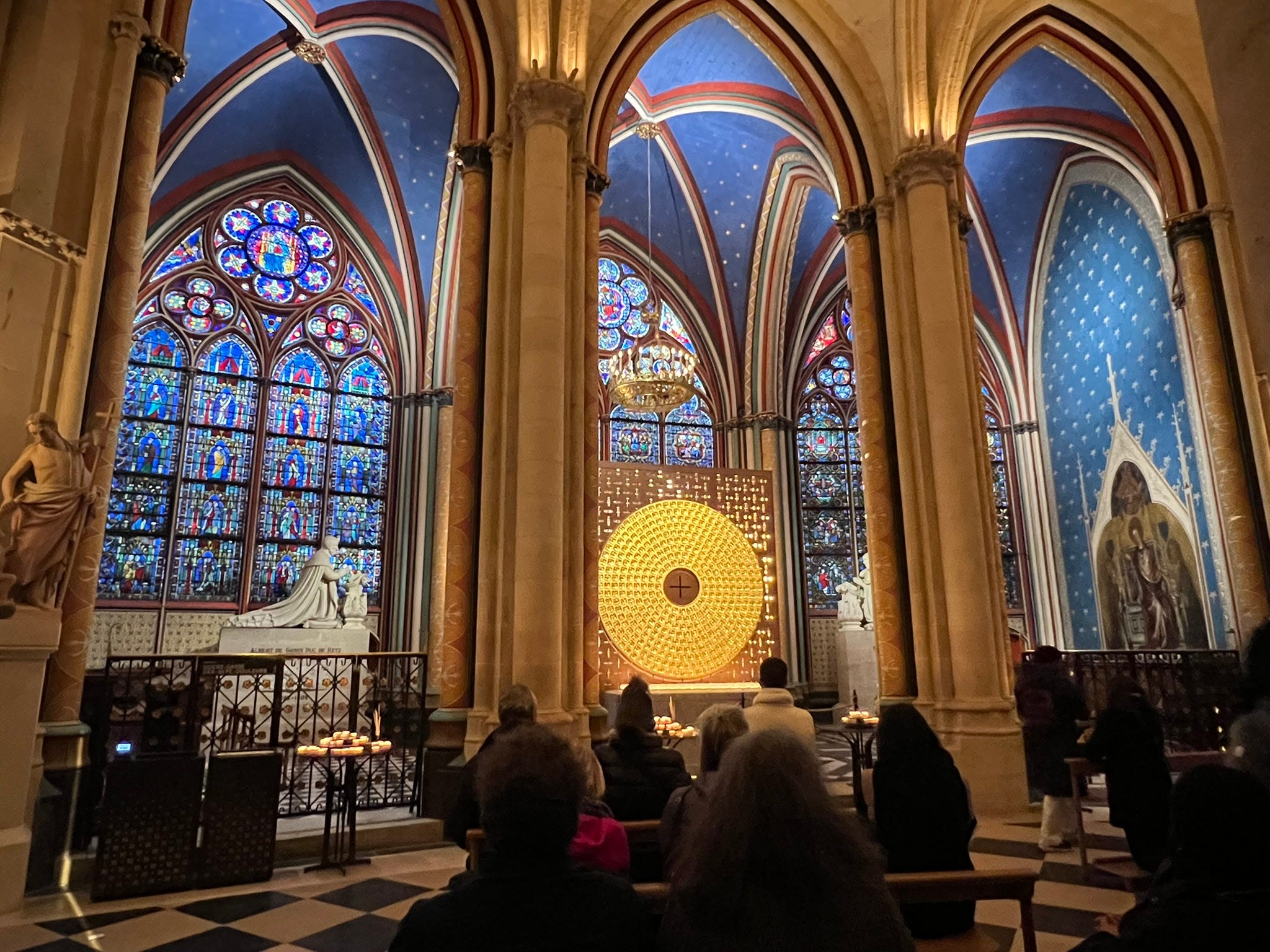
The Crown of Thorns in one of the holy relics housed at Notre Dame. It is displayed on Friday afternoons, in a crystal case within a golden circle. Photo credit: Lorie Teeter Lichtlen

My qualms turned out to be unfounded: the crown wasn’t on display the day of my visit. As I learned later, it was traditionally visible on the first Friday of each month; as of last week, it can be seen every Friday starting at 3:00pm.

Had I pored over the official Notre Dame web site and downloaded the mobile app, I would have been less clueless. As it was, I read every available description — and there are many!

The south aisle of the cathedral is lined with more chapels, including a new one devoted to Eastern Christians. The choir enclosure on this side offers another series of polychrome sculptures illustrating the apparitions of Christ. While the south enclosure is more recent than the north one, both were created by master sculptors in the 14thcentury.

By this time, I had been walking, studying and admiring the countless artistic and architectural masterpieces for over two hours. I wasn’t overwhelmed by all the beauty to the point of fainting, as the French author Stendahl was during a visit to Florence, Italy. I did need to sit down and process everything I was seeing and feeling, however.
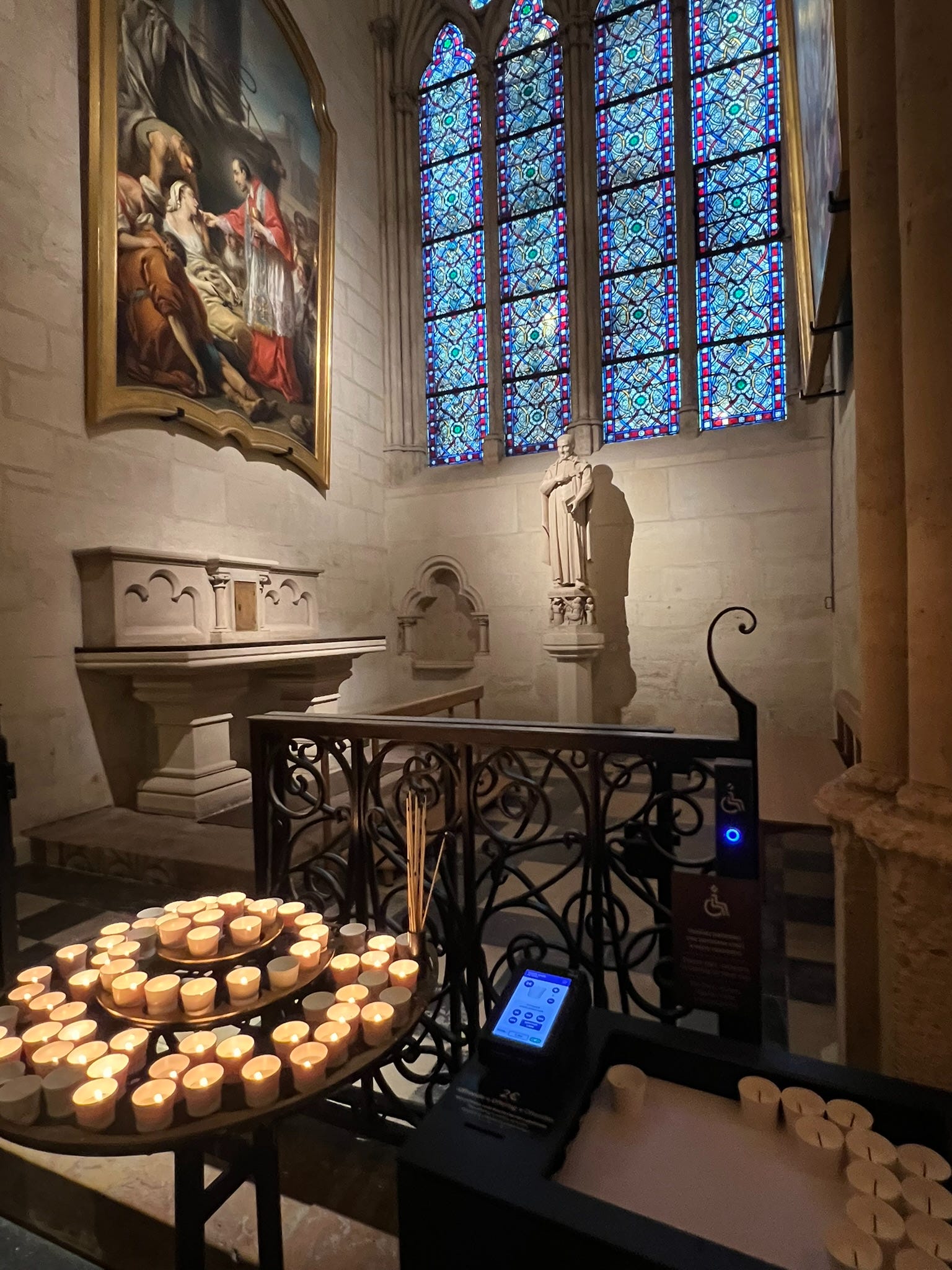
Mini lifts for wheelchair access and card payments for votive candles are among the enhancements at the “new” Notre Dame Cathedral. Photo credit: Lorie Teeter Lichtlen

I chose a seat in an empty section of the pews for the general public (as opposed to those reserved for worshippers) and started scribbling notes in my iPhone. Inspired by the atmosphere of Notre Dame, I was absorbed in poetic thoughts — until a group of tourists sat behind me and started happily chatting with each other.

I moved to another empty section but, within minutes, another chatty group arrived. I turned around a few times but, like the first group, they were oblivious to my frown. Should I have floated a “shhhh” of my own?

Instead, I saved the notes on my phone, put it in my pocket and went to the gift shops. The “shops” are actually four curved display cases forming a circle around the salesclerks; each case has its own cash register. Three of the counters sold similar items: a slim guide to the restoration works, notebooks, bookmarks, medals, necklaces, rosary beads, a Christmas music CD and decorations, etc. The fourth sold books, sculptures and more decorative items. I stood in line for two different cash registers to buy a few gifts. Had the line been shorter, I might have inspected that fourth counter’s wares. (Those items and many more are available at Notre Dame’s online boutique.)

I put on my coat and went outside, the fresh air feeling good after the crowds and hours indoors. The sun was low and the cathedral’s 21 bells were ringing. I love bells and it was great to hear them ringing, especially knowing they had been silenced for five years.

I was happy with my visit but wished I had focused less on getting through the front doors and more on studying all that the “new” cathedral has to offer. I’m determined to go back, once I have done my homework, to appreciate even more the miracle that is Notre Dame de Paris.

The bells of Notre Dame de Paris. Credit: Lorie Teeter Lichtlen

Those wishing to contribute to the continuing restoration of Notre Dame can find a way to do so at https://www.friendsofnotredamedeparis.org/

Thanks for reading Out My Window! Subscribe for free to receive new posts and support my work.

TIPS for getting the most out of your visit:

  • Read up on the history, art and architecture of Notre Dame before going!
  • Download the mobile app for tour guidance on-site in English, French and Spanish
  • Try to book your visit in advance through the official reservation site or attend a mass to avoid the long “no-reservation” lines
  • Check the practical information site for the opening hours, dress code, free guided tours, etc.
  • If you want to see the Crown of Thorns, aim to go on a Friday afternoon
  • Food and drink are not allowed on-site so have a bite before your visit
  • Bring a small umbrella for the wait in line, even on sunny days; small bottles of water are also a good idea
  • If you must bring a backpack, make it a small one; don’t bring bulky items
  • Ask for headphones at the welcome desk and use the app to better appreciate what you see
  • If you have to talk with others inside the cathedral, keep it short and whisper
  • The gift-shop counters offer a few items but can require standing in line multiple times; the official e-shop has a wider selection and you don’t have to carry heavy items or worry about breaking fragile ones. All proceeds go to the restoration effort.
  • Resist the temptation to head to the closest café or restaurant before or after your visit. A few blocks away in any direction, the fare and prices are less touristy. One exception: go for Berthillon ice cream on the Ile Saint Louis, behind Notre Dame. It’s a classic part of any visit to Paris!Let me know how it goes!
Little Lights on Rosa Happiness Street

A bientôt,

Sara

For the love of the metro

Because of an Australian, le Bulletin 🇫🇷by Judy MacMahon, who loves all things French and writes a wonderful Substack, many of us who live and write about Paris and France have come to know and read each others’ Substacks. One of the newest writers I’ve learned about is Jenn Bragg who writes For The Love of France. Under her heading, she says “My life’s work is observing the nuances of different cultures that you may not otherwise notice. I write mostly about French culture.”

I tend to write emotionally, how what I see and do hits me where I live. Jenn does her homework. When she writes about something that has caught her interest, she researches it and the reader, me, gets a history lesson about the city I love so much. 

Thanks for reading Out My Window! This post is public so feel free to share it.

We all ride the metro almost every day (unless we can walk but recently it has been raining every day so the metro is it!!!). This week, Jenn wrote about the metro line #6 – one that goes from Etoile at the Arc de Triomphe in the 16th to Nation in the east of Paris, the 12th arrondissement. I’ve never thought about it much as I haven’t had to take it very often. I asked Jenn if I could share her wonderful writing with you:

One of my favorite Paris Metro lines

Line 6 delivers people to destinations and happiness to moi

JENN BRAGG

OCT 06, 2024

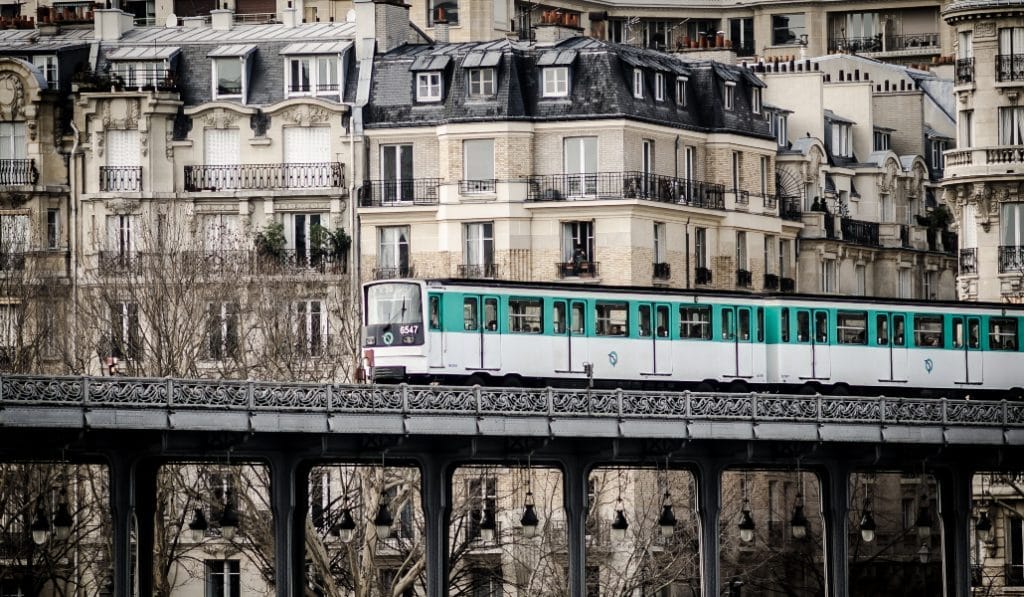
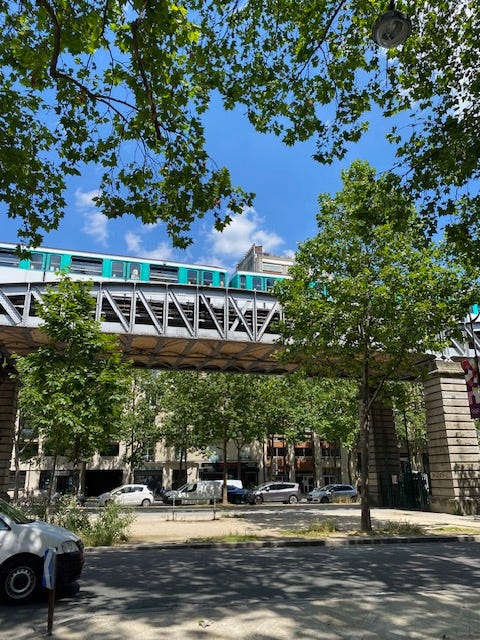
the glorious above-ground metro Line 6. Source: parissecret.com

How do I love thee, Paris metro line 6? Let me count the ways.

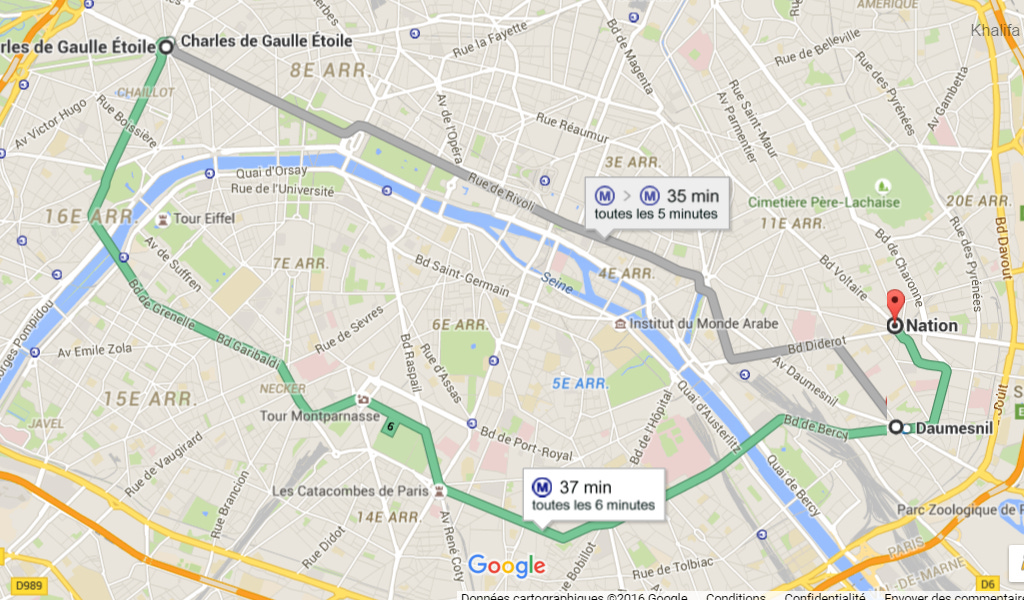
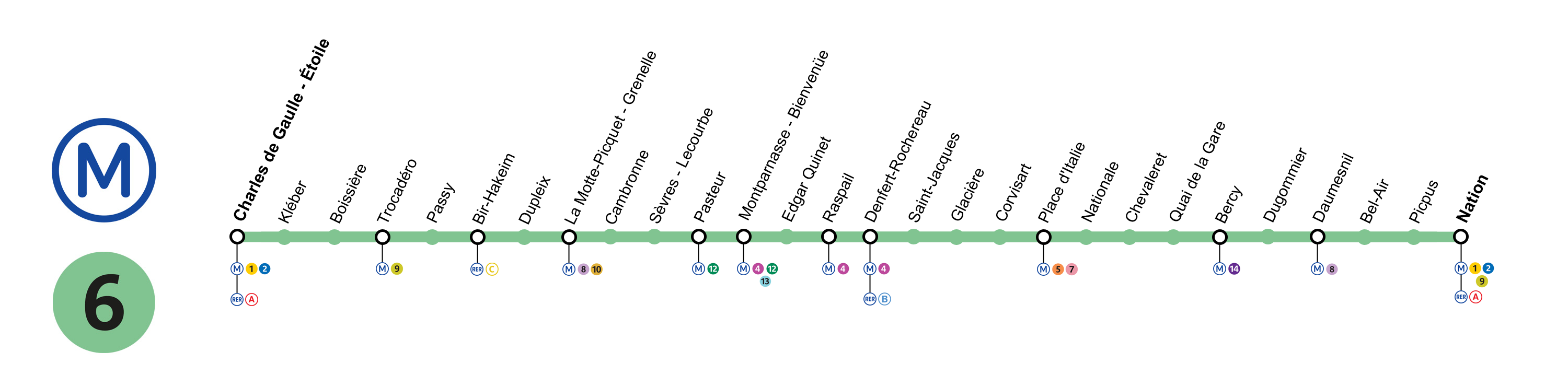
In Paris, each metro line has its own ‘vibe’, but Line 6 is one I really appreciate. It traverses the southern side of Paris, connecting Nation in the east to the Charles de Gaulle – Etoile station in the west, shown as a green line in the image below:

My favorite stretch of Line 6 is between Corvisart and Denfert-Rochereau. Those stops mostly cover above-ground views of Boulevard Saint-Jacques which turns into Boulevard Auguste Blanqui and ends at Denfert-Rochereau, known as the stop for the Paris catacombs.

I went out on Line 6 last week and recorded this video just to give you an idea of its loveliness:

Jenn’s video wouldn’t transfer so I encourage you to go to her Substack For The Love of France and watch it.

Now let’s just do a round-up of some of the interesting things about Line 6:

Open-air stations

Much of Line 6 features above-ground stations. When the track was built, it traced along an old city wall that was demolished in 1860. By building stations above ground, it reduced the need to dig tunnels for the trains. As a result, nearly half the 28 stations along Line 6 are raised platforms and feature glass canopy ceilings.

It’s old

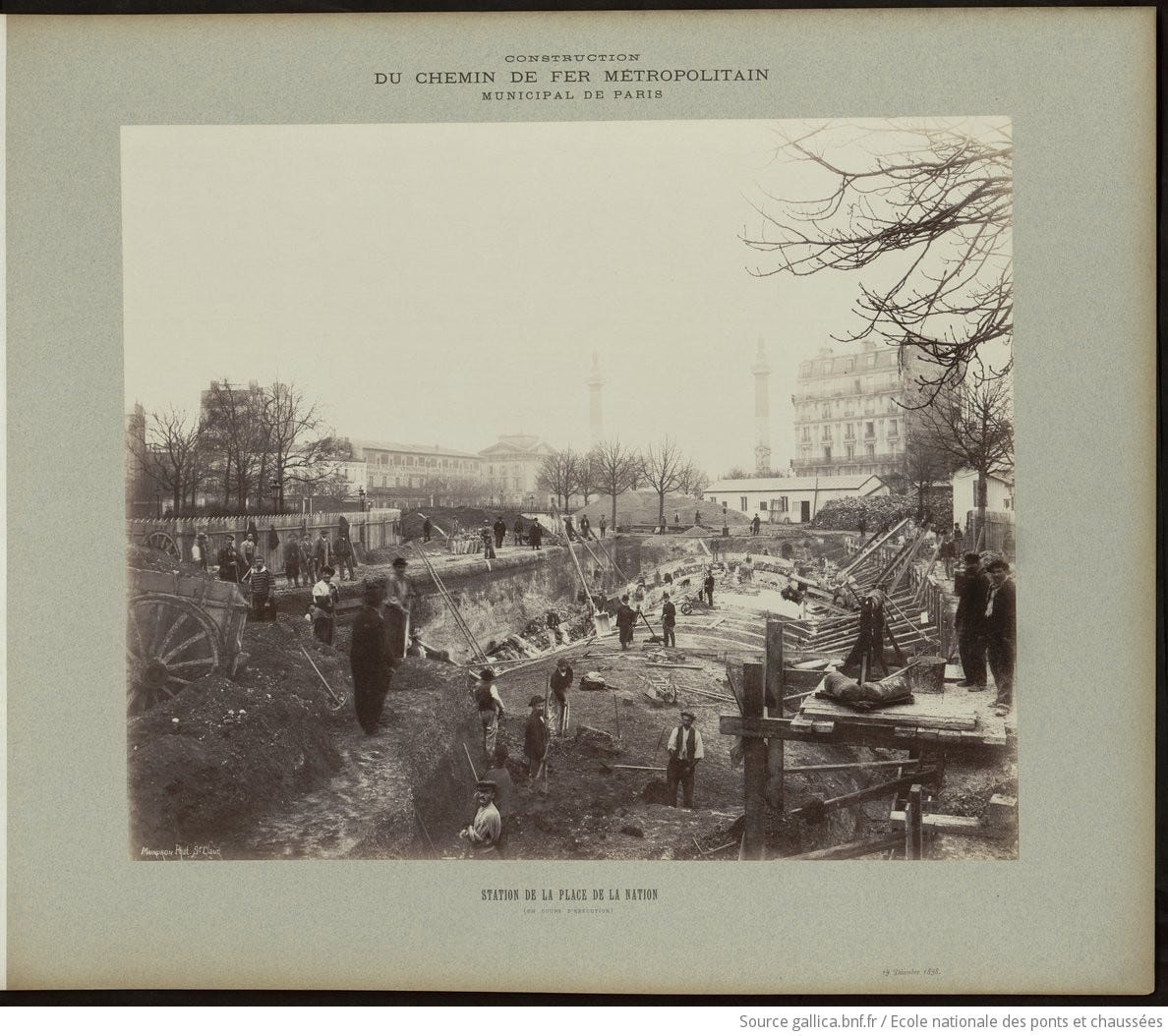
The first iteration of Line 6 was completed in 1900. It was one of the main ways of reaching the area around the Eiffel Tower when Paris hosted the world’s fair that year. Later, more track and stations were added to expand the line so that it became the far-reaching, city-crossing stretch we know today.

Left: construction of the metro/right: and old metro train

Interesting WW2 history

Line 6 even has an interesting connection to the Second World War: a number of station names were used as code names for prominent members of the French Resistance. These code names were designated for several agents under the military leadership of General Charles de Gaulle to help with efforts against the Nazis to retake control of France.

Here are the code names that were assigned:

  • Passy – Andre Dewavrin was known as ‘Colonel Passy’ – he had a leading role in military intelligence and helped organize the French Resistance under the stewardship of Charles de Gaulle.
  • Saint-Jacques – the man who took this code name was Maurice Duclos, who also helped found the French Resistance. He created several Paris-based intelligence networks.
  • Corvisart – Alexandre Beresnikoff was born in Russia but was given the name by de Gaulle from his base in London to help with secret missions for the French Resistance.
  • Bienvenüe – this moniker was given to Ramond Lagier, who joined de Gaulle’s secret service in 1940.

Bir Hakeim Bridge

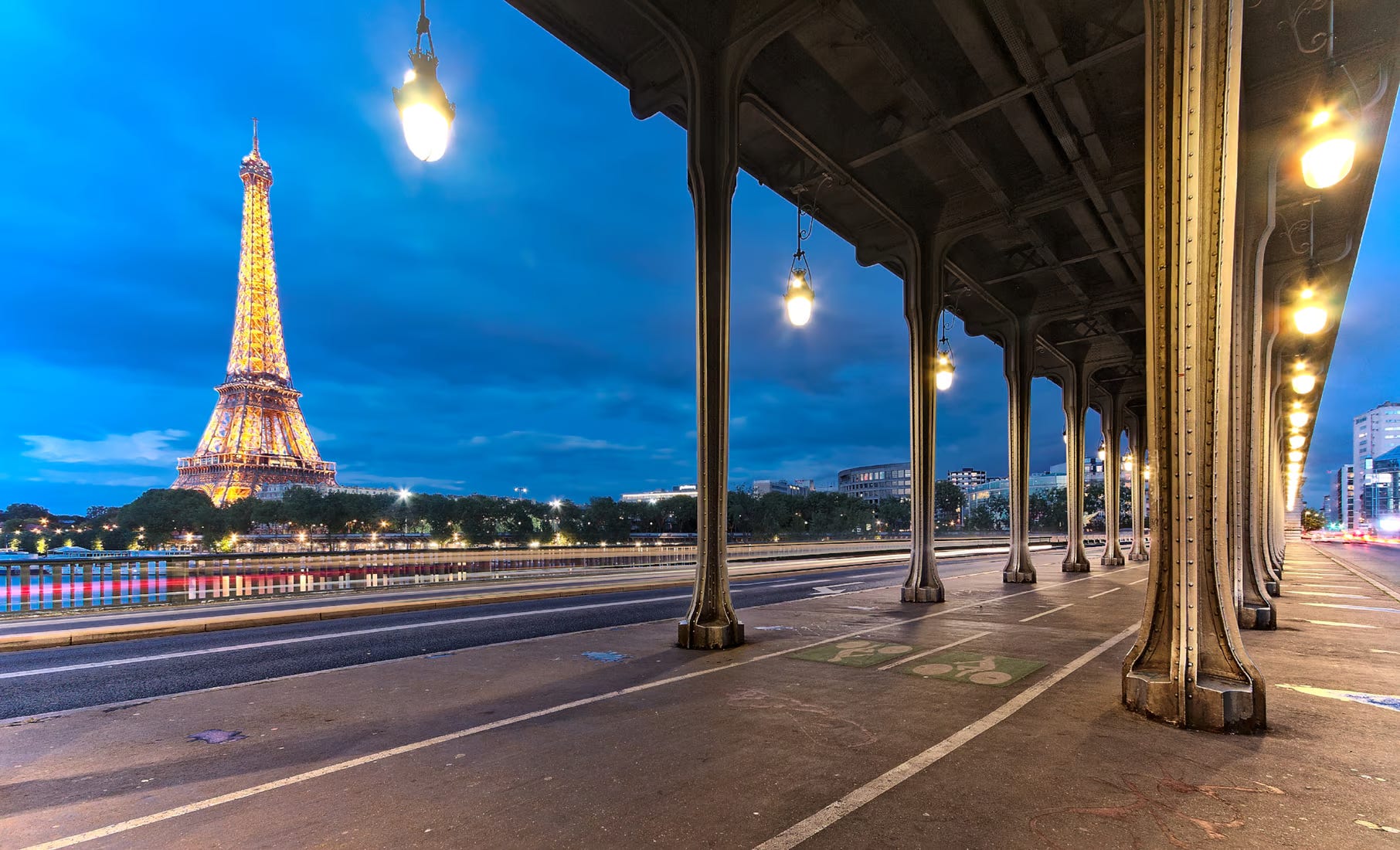
If you are heading west on Line 6, you will ride on top the Bir Hakeim Bridge – made famous by that horrible movie, Last Tango in Paris. I went there for the first time (!!) last December and it really is a gloriously beautiful bridge, with an unparalleled view of the Eiffel Tower. The best way to access the bridge is to get off at the Passy stop.

Bir Hakeim Bridge: I told you it was pretty!

So, if you’re coming to Paris with an open agenda (the way I recommend to travel), grab line 6 and ride it through the southern side of Paris. If you go from one side to the other, you’ll see:

  • Great street art on the buildings in the eastern end of the line
  • The Eiffel Tower on the Western end of the line approaching Passy station, which is absolutely breathtaking
  • Gorgeous leafy neighborhoods between Corvisart and Denfeert-Rochereau

Yes, what I’m suggesting is that the next time you come to Paris, add ‘riding the metro’ as one of your activities. You won’t regret it!


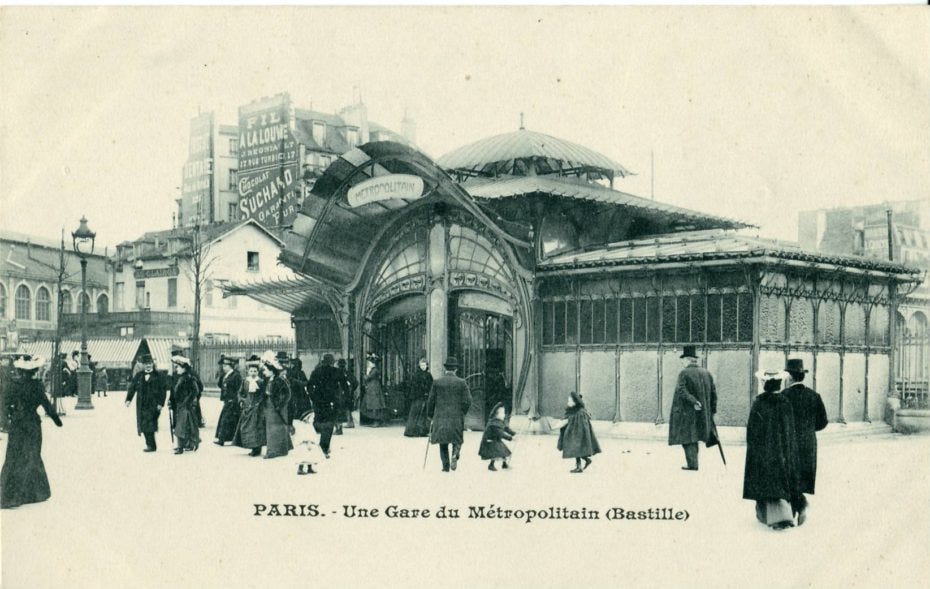
Before I really leave you, in doing my research I stumbled on an old photo of this gorgeous Art Nouveau station at the Bastille metro stop. (Bastille is not on Line 6 but I love this pic so much, I’d be remiss not to share it.)

Beautiful, non?

Sources: Metro line 6: a line and its history | Culture (ratp.fr)

Betty Carlson: I watched the video, which I rarely do on Substack, and definitely recognized some of the buildings going by.

Something you might be interested in: when I was teaching high school French in the States, I used a book called “Le Monstre dans le Métro” for my second-year classes as a supplement to our textbook. I looked it up this evening, and it appears to have been written in 1977, which means it was quite modern when I started teaching in 1982. The action takes place on Line 6, and that is where I learned the names of many of the stations.

I later led two trips to France with students, and we rode line 6 the way you suggest, as an activity in and of itself. My students loved seeing the actual stations referred to in the book. I’m quite sure it contains a line something like “Corvisart! Glacière! Saint-Jacques! Le monstre se dirige vers la station Denfert-Rochereau!”

Lindsey Johnstone: Such a gorgeous post! I haven’t been on the 6 for years and you’ve inspired me to take it just for the ride.

7 more comments…

Thanks for reading Out My Window! Subscribe for free to receive new posts and support my work.

If you are interested in other Substacks about Paris and France, check out Judy’s FranceStack. She has listed each of us who wish to be included in her list of Substack’s on all the many wonderful aspects of France. “Savvy Francophiles read ‘le Bulletin’ newsletter: a luscious immersive weekend of Francophilia, including recently published articles from MyFrenchLife.org by me, Judy MacMahon, Fondatrice, MyFrenchLife™ Magazine”

A bientôt,

Sara

Discussion about this post

Comments

Restacks

Jenn BraggFor Love of France19 mins agoSara, thank you so much for your very kind review of my work. I’m honored to be able to share this platform (and a love of France) with you and Judy and all the others who write about France! 🇫🇷 LIKEREPLYSHARE

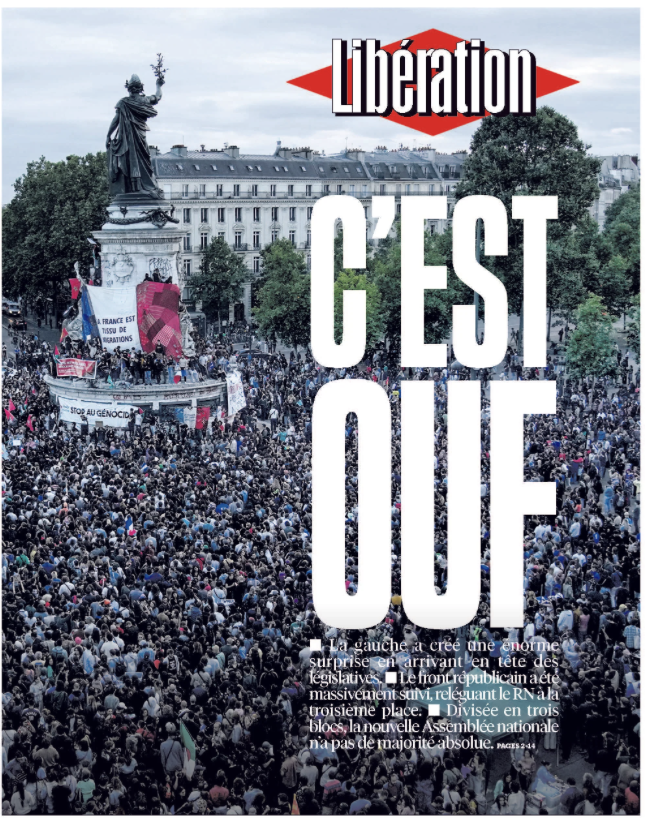
C’est Ouf or What the heck happened in France

Four weeks ago, June 6-9, there was a parliamentary election in Europe, the tenth since the formation of the EU, the first since Brexit. The Far Right won the most delegates in France. Marine Le Pen and Jordan Bardella, her handpicked ersatz leader of RN (Rassemblement National), began to crow. Within one hour of getting the results, without any warning to his deputies or his “friends”, President Macron dissolved the standing Parliament and called for new elections. They would be held on Sundays: June 30 and July 7. 

The country went into a tailspin. Journalists tried to guess why he did this. Most thought it was suicidal. In France, there are many parties from the Far Left to Center Left to Center Right to the Far Right. Macron first ran as Center neither left nor right but has turned out to be far more Right. He won his second election by a hair, many French voting against Marine Le Pen than voting for Macron. His newly formed party, Ensemble (Together) did not win a majority in the Parliament in 2022 so Macron has had difficulty passing many of his reforms. In many cases, the government has used the Article 49 of the French Constitution, paragraph 3 (Article 49.3) which allows the government (essentially Macron) to pass a law without a vote. Some journalists think that he knew he’d reach his limit of doing that. People were angry. He seemed to be favouring the wealthy. If he hadn’t dissolved the parliament, there could have been a call to pass a motion of No Confidence.

My friend, Fatiha, has been explaining to me what has happened day by day. The voters of France were galvinized. For many, the goal became ‘keep the Far Right from getting power.’ The same night as the dissolution, spurred on by François Ruffin, four parties on the left banded together and called themselves Nouveau Front Populaire. These parties do not agree on many things but they do agree that letting the Far Right get power would be disastrous for the country. They put aside any disagreements they had and campaigned as one party They agreed on a social program determining how much each piece of the program would cost. They worked on this for four days. They were the only party to think out and present a detailed plan. Fatiha and her friends were out on the street every day passing out flyers. They went door to door (mostly apartments, they would start at the top floor and work their way down) and talk to people. I asked Fatiha if people slammed doors on her. No, she told me. Some didn’t want to talk but many did. She would send me a photo of the campaigners at the end of the day all happy and exhausted.

Then came the first vote on Sunday, June 30. The outcome was 33% for the RN (Marine Le Pen), 28% for NFP (the Left), and 21% for Macron’s party. All the rest had under 12%. If a delegate received over 50% of the votes AND 25% of the constituency had voted, they were in. Marine Le Pen was in on the first vote. On July 7, all the delegates that had received over 12.5% would run against each other. This meant a triangle. There was real fear that votes would split between Ensemble and the Left giving the Far Right the majority. The left suggested and then followed through with the idea that if their delegate was in third place and RN had a chance of winning, they would drop out making it a two way run off. Macron’s party wasn’t so good. Many did drop out but many stayed. Historically, the Left has helped Macron against Le Pen probably giving him the presidency in both years 2017 and 2022. The favour has not been reciprocated or acknowledged according to Fatiha. I was now caught up in the breathtaking drama of this election. At the first election, 66.7% of France showed up to vote. “63% of French voters turned out to vote for the second round of the country’s snap parliamentary elections on Sunday, July 7, slightly less than for the first round (65%). It is the highest turnout since 1981. These figures confirm intense interest in the vote.” Le Monde

We all know the outcome. Nouveau Front Populaire won 182 seats. Macron’s Ensemble won 168 seats. Marine Le Pen’s Rassemblement National won 143 seats. A hung parliament. “A hung parliament with a large eurosceptic, anti-immigration contingent could weaken France’s international standing and threaten Western unity in the face of Russia’s invasion of Ukraine. European Union officials, already learning to deal with far-right parties in power in Italy and the Netherlands, are watching France closely. And in Rome, Pope Francis chose the day of the French vote to warn against “ideological temptations and populists”, adding: “Democracy is not in good health in the world today.” Le Monde—July 8.

The last time this kind of thing happened was in Mitterand’s Presidency. He honoured the French vote by choosing a prime minister from the party that got the most seats even though it wasn’t a majority. Fatiha has no faith that Macron will do the same. She is ready for anything sneaky, egotistical, and anti the French people. A majority of people now feel as she does. I asked her if she thought anything would happen before or during the Olympics. My common sense says it all should wait. The Olympics are fraught enough. No one knows. The French want a Parliament. Macron may try and stall. So far, he has not made an appearance on television. So far, he has not talked to the French people.

My sister wrote to me and wanted France to send NFP to the US to galvanise them. I wrote her back that there is a fatigue in the US. Much as I detest Marine Le Pen and her beliefs, she is not a criminal, she hasn’t stirred up the kind of violence that Trump has, she seems to keep her language in check. Americans seem inured to the most detestable way of speaking, they expect lies on a daily basis. We, in France, have watched stunned as all the news after the Biden-Trump debate has been about Biden and his age. Nothing about Trump’s criminal acts, his inflammatory speeches and actions, and he seems much more deficient in brain cells than Biden. WTF is going on? (Read my friend Pamela Drake’s Substack for an opinion: 

https://pameladrake.substack.com/p/the-ice-floe-or-the-endtimes

And what the heck does “C’est Ouf” mean? It’s a wonderful expression!

C’est ouf – roughly pronounced say oof – is a colloquial French expression to express shock or surprise. 

It is the rough equivalent of ‘it’s wild’ or ‘it’s crazy/mad’ in English or just ‘wow’. (From Fatiha: ‘ouf’ also means “What a relief!” This is what made the front cover of Liberation so brilliant)

C’est ouf can be either positive or negative, depending on the context. 

The word ouf is the verlan, or backwards slang, of ‘fou’ which means crazy. While ouf is colloquial, you can still hear it used by people of different generations – not just young people.”—the local.fr

More excitement (and I’m afraid not the good kind) coming up.

Thanks for reading Out My Window! Subscribe for free to receive new posts and support my work.

A bientôt,

Sara

France’s snap elections

Dear Francophiles and Friends

The following is a reprint from an on-line journal that I subscribe to. All my friends in the US seem very confused by what is going on. I hope this helps.

“5-minute guide to the latest on France’s snap elections

written by Emma Pearson – emma.pearson@thelocal.com

Election news: 5-minute guide to the latest on France's snap elections

Protesters gather to demonstrate against the far-right in Paris. Photo by Zakaria ABDELKAFI / AFP

From party alliances to shock announcements and the emerging key figures, here’s your essential roundup of all the latest from France’s snap parliamentary elections.

France will head back to the polls at the end of this month for snap parliamentary elections – called by Emmanuel Macron on Sunday in the wake of his party’s humiliating European election defeat at the hands of Marine Le Pen’s far-right Rassemblement National.

The president’s announcement caught everyone off guard – even key members of his own party – so three days later, political groups are scrambling to get ready and fight the very short election campaign.

READ ALSO What do snap parliamentary elections mean for France?

Here’s a roundup of the latest election news:

Republican front

The most widely-heard call in France over the last three days has been for a Front républicain.

The concept of a ‘republican front’ is not a new one, it essentially means that when necessary mainstream parties put aside their differences in order to combat the extremists in the far-right movement.

Most recently it’s been seen in the second round of the presidential elections of 2017 and 2022 – the final two candidates were far-right leader Marine Le Pen and Emmanuel Macron and in that context plenty of people who detest Macron and all that he stands for cast their vote for him because they considered that the alternative – a far-right president of France – was much worse.

In the context of these parliamentary elections, the Front Républicain is more to do with political parties and essentially involves parties making agreements not to run candidates against each other in certain constituencies, in avoid to avoid splitting the vote and allowing in the Rassemblement National candidate.

Talks on these potential agreements are mostly still ongoing but it would involve, for example, the four left-wing parties who made up the Nupes group agreeing to run a single Nupes candidate in each seat – rather than diving the leftist vote by fielding one candidate from the far-left La France Insoumise, one from the centre-left Parti Socialiste, one from the Green and one from the Communist party.

It’s early days, but most of these agreements are far from being done deals, despite pleas for unity.

Eric effect

One politician who appears to be swimming against the republican tide is Eric Ciotti, leader of the right-wing Les Républicains who has announced that he would be open to an alliance with Le Pen’s party.

Les Républicains is one of the two parties that dominated French politics in the post-war period – the party of presidents Jacques Chirac and Nicolas Sarkozy.

Badly weakened since 2017 and at risk of fading into irrelevance, the party has been steadily drifting to the right for several years, electing in 2022 the very right-wing Ciotti as party leader. 

An alliance with Le Pen would not come as a surprise to anyone who had read his most recent manifestos and policies, but the thought of the political heirs of Charles de Gaulle getting into bed with the far-right has caused shockwaves in France and within the party itself.

Protests

There have been several protests, especially in Paris, this week but unions and left-wing parties have called for mass demos across France this weekend.

Intended as a show of solidarity against the far-right, the protests are intended to echo 2002 when million of people took to the streets after Jean-Marie Le Pen progressed to the second round of the presidential election.

READ ALSO What would a victory for Le Pen’s party mean for France?

Key figures

It’s not only opposition parties and the media who were taken by surprise by Macron’s election call, it also caught senior members of his own party off guard, with several saying privately (or less privately in the ear of friendly journalists) that they think Macron’s ‘grand pari‘ (big gamble) is a bad idea.

This number appears to include prime minister Gabriel Attal who was conspicuous by his absence for 48 hours after the announcement (even failing to post on his usually active Instagram account). However he’s now back and saying that he will do whatever it takes to “avoid the worst”.

Those of Macron’s ministers who are members of parliament – and in France it is not necessary to be an MP in order to be a minister – are also declaring their candidacy in these elections and so far there are no surprises . . .  

Key dates

Candidates have until Friday to confirm that they are standing. The formal campaign period begins on Monday, which is when election posters will start to go up and TV debates will be organised.

Voting takes place in two rounds; Sunday, June 30th and Sunday, July 7th.”

Thanks for reading Out My Window! Subscribe for free to receive new posts and support my work.

Please leave comments below with thoughts and questions and I will do my best to answer as the elections move closer

A bientôt,

Sara

Coming to you from Paris in four short months: The Summer Olympics

If you ask a Parisian, any Parisian, French or exPat, if they are excited about the Olympics coming to Paris in late July, they will probably roll their eyes, get dark around the gills, and tell you they are leaving town—until the end of August. The newspapers say it will be a ghost town. With 10,000 tourists landing like locusts in every part of Paris, willing to pay up to 1000 euros a night for a place to stay, it will hardly be a ghost town. But likely a town of mostly tourists.

The problem for Parisians is that the majority of them cannot afford the prices of the events. We were led to believe that there would be special days where we would be privy to advance sales before they went public. Even then, the most reasonable ticket prices were gone, it was next to impossible to click through to purchasing a ticket, and it became so frustrating we gave up. I wanted the equestrian games which are to take place in Versailles, the tennis which is right around the corner from me at Roland Garros, gymnastics which I knew would be hard to get. Every time I went into the “special” site for residents, every single ticket was gone for all three events. In the end, I recently bought two tickets to a Rugby placement game the night before the Opening Ceremonies. I invited a friend who played Rugby for 20 years to join me. I have been wanting to learn the rules of Rugby so this in many ways would be perfect.

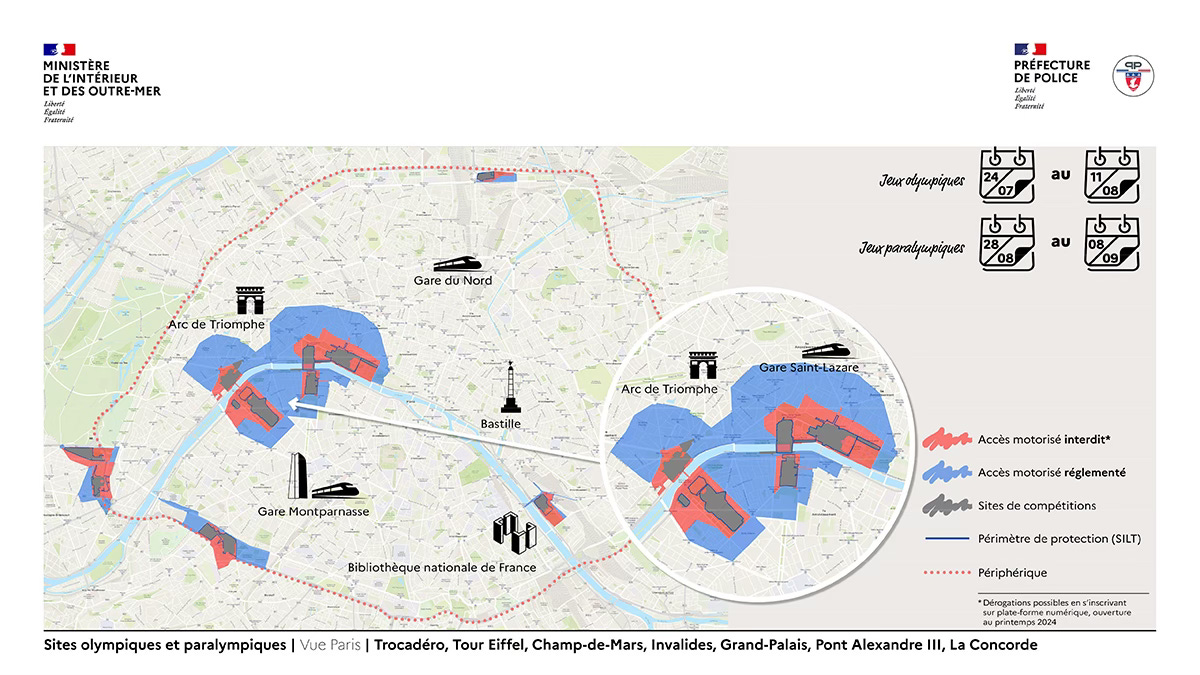
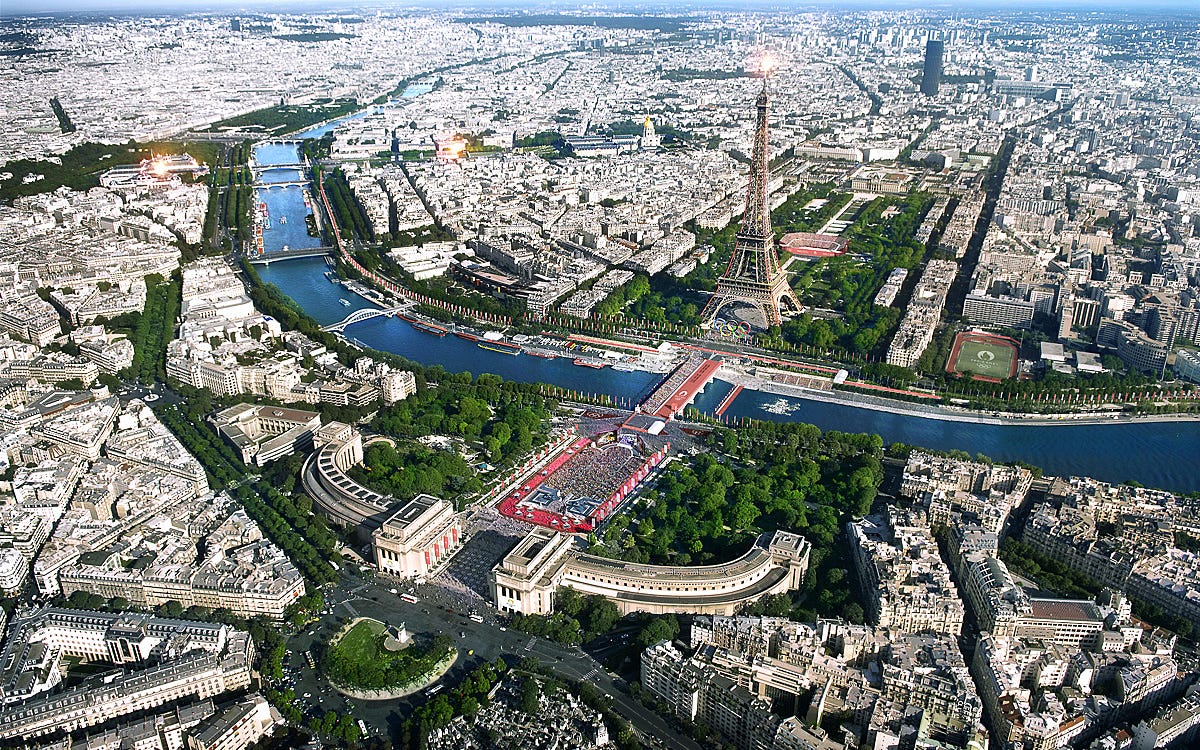
Then there is the roadworks, the renovations, the cleaning up of historic landmarks, putting in elevators and escalators in metro and RER stops. It has been inconvenient to say the least for at least 3 years, now it is getting unbearable. Places like Concorde will close to everything but metro traffic from now until the end of the summer. They are building a stadium at the foot of the Pont d’lena where the Trocadero gardens now are. Cars used to driving along the quai there will be diverted to…..I can’t even imagine where. Anywhere would be a nightmare of snarling traffic. The above map, taken from the French Government site, gives an idea of where construction is happening and who/what is not allowed there. 

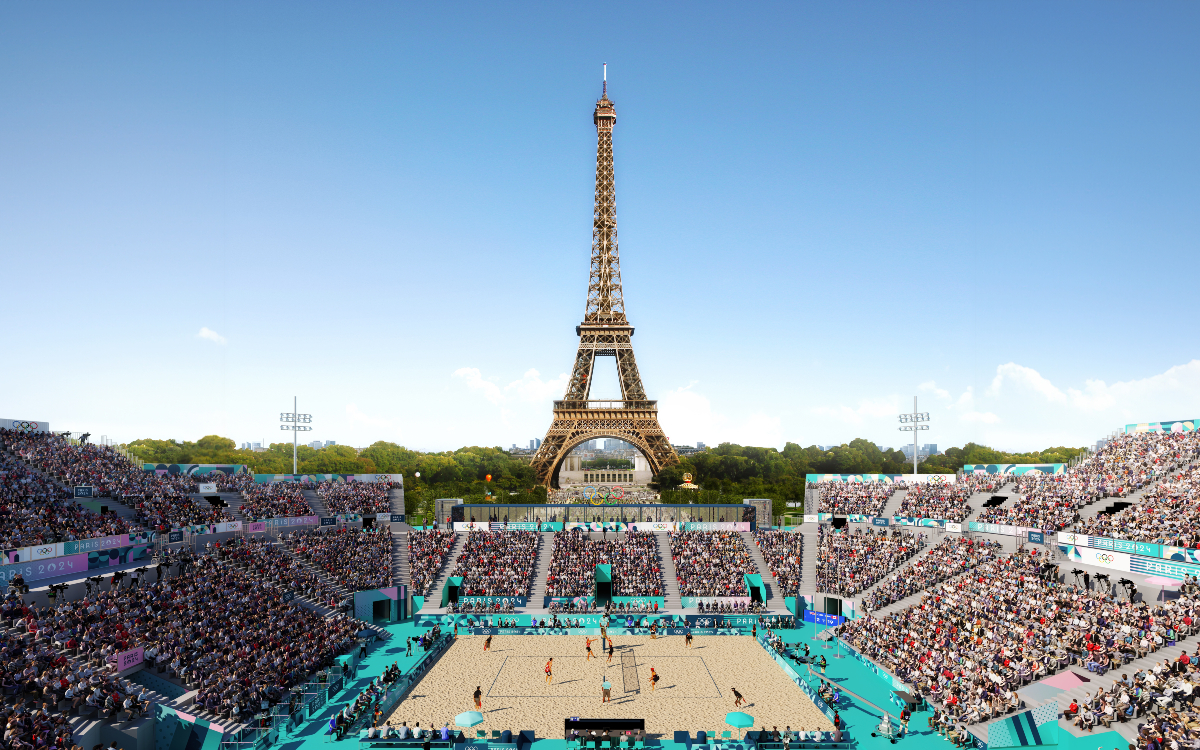
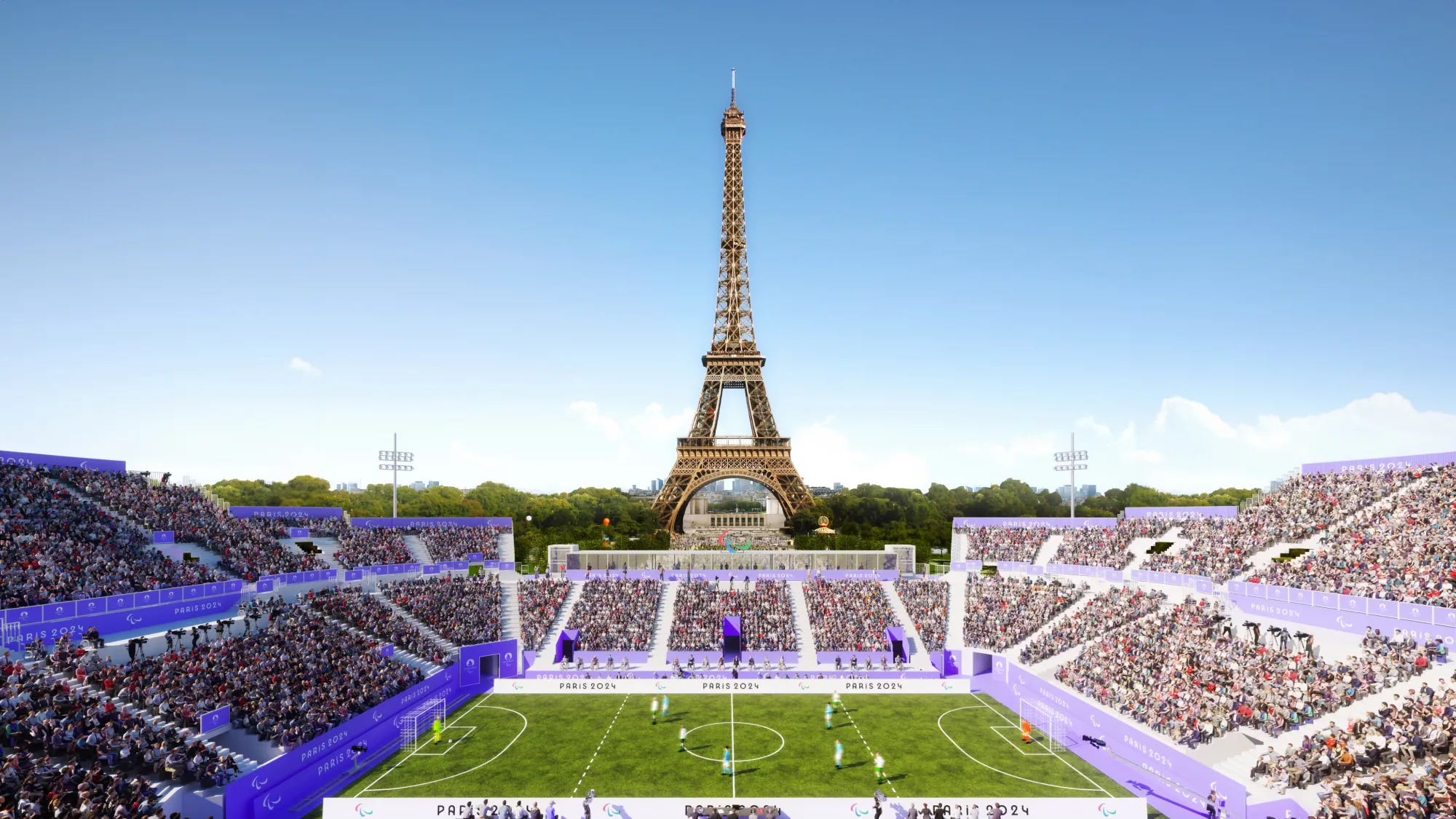
There is no doubt that these renditions of the stadium with the Tour Eiffel looking over it are beautiful. For people living in other parts of the world, there is undoubtably a sigh of “how beautiful Paris manages to stay beautiful even for the Games.” The Games are for tourists. They will come maybe a couple of days before the Opening Ceremonies to get over jetlag and exclaim at the beauty, the wonder that is Paris with it’s light, it’s sky, and it’s history. They will not know and never know what Parisians had to put up with to get to the Opening Ceremonies. Which about sums up the Olympics for Parisians: all the inconvenience and the events are all unaffordable. ““We’ve been suffering since the Games were declared,” grumbles Nico, a law professor who lives across the street from the Louvre with his wife, Marianne, the owner of a P.R. firm. “Permanent road works, shit everywhere, and obviously the hassle during the Games themselves.”—Alexander Marshall in AirMail

“Today, as the clock ticks down to the opening ceremony on July 26, even as an 82 percent completion rate of building construction has been announced, mostly on schedule, and with a carbon footprint projected to be half that of the previous Games’ average, the city is far from having caught Olympic fever. Instead, it’s on the verge of a nervous breakdown.”—A. M. in AirMail

From the site Paris.fr:

Quel calendrier pour le montage et le démontage des sites ?

Zone Concorde

1er mars : Début de montage par l’est de la place

Extension progressive du chantier sur l’ensemble de la place de la Concorde du 1er mars au 1er juin

  • 1er avril : quart sud-ouest de la place
  • 26 avril : fermeture de la circulation : (piétons/vélos/véhicules) sur le Cours de la Reine entre l’avenue Winston-Churchill et l’avenue Franklin-D-Roosevelt
  • 17 mai : fermeture axe nord-sud à la circulation (piétons/vélos/véhicules)
  • 1er juin : fermeture de la circulation véhicule, piétonne et cycliste sur l’ensemble de la place de la Concorde
  • 1er juillet : fermeture à la circulation (véhicules) du Pont du Carrousel
  • 15 juillet : fermeture à la circulation (véhicules) du Pont Royal

Libération progressive du site à compter du 19 septembre :

  • 7 octobre : libération de la majorité du site, sauf autour de la place Jacques-Rueff
  • 4 novembre : libération totale du site

Zone Champ-de-Mars

4 mars : Début de montage par la place Jacques-Rueff et avenue Joseph-Boulard (fermeture aux véhicules et piétons)

Extension progressive du chantier sur l’ensemble des jardins du Champ-de-Mars du 4 mars au 1er juillet

  • 12 avril : fermeture de la place Gouraud et extension dans le jardin
  • 3 juin : fermeture quasi complète des jardins du Champ-de-Mars
  • 1er juillet : fermeture à la circulation (véhicules) du Pont d’Iéna
  • 24 juillet : fermeture à la circulation (véhicules en surface) du quai Jacques-Chirac

Libération progressive du site à compter du 19 septembre :

  • 7 octobre : libération de la majorité du site, sauf autour de la place Jacques-Rueff
  • 4 novembre : libération totale du site

And Finally:

Zone Trocadéro

20 mars : début du montage par la place de Varsovie et fermeture à la circulation de la partie nord de la place, mise à sens unique de l’avenue des Nations-Unies et fermeture aux piétons des abords de la fontaine

Fermeture progressive des jardins du Trocadéro du 20 mars au 1er juillet

  • 1er mai : Circulation réduite à une file dans chaque sens sur l’avenue du Président-Wilson et fermeture de la chaussée Sud de la place du Trocadéro
  • 10 juin : fermeture de l’avenue des Nations-Unies à la circulation (piétons compris)
  • 1er juillet : fermeture des jardins du Trocadéro et fermeture à la circulation (véhicules, piétons et vélos) de l’avenue Albert-de-Mun et du sud de l’avenue Wilson (entre Albert-de-Mun et place d’Iéna)
  • 16 juillet : fermeture de la place du Trocadéro et du pont d’Iéna (véhicules motorisés, piétons et vélos)
  • 21 juillet : fermeture aux voitures du quai Jacques-Chirac (entre les avenues Suffren et Bourdonnais), le souterrain reste ouvert à la circulation

Du 27 juillet au 8 octobre : libération progressive de l’emprise

  • 27 juillet : place du Trocadéro
  • 12 août : pont d’Iéna et quai Jacques-Chirac
  • 7 septembre : place de Varsovie et avenue des Nations-Unies
  • 15 septembre : avenue Wilson
  • 19 septembre : majorité des jardins du Trocadéro
  • 8 octobre : libération totale du site

Here is the schedule, in French, for the above sites. For a good translation app, use DeepL. It is the best of all available.

Pour voir les cartes en plus grand :  Click here to see bigger maps: both of sites and of the different events.

As is quite clear, and even those of you who don’t read French can probably suss out, that from the middle of March until the 4th of November, these sites will be a nightmare for those of us who live in Paris, have to work in Paris, have doctors’ appointmentts and other important appointments. People are being told to work from home. But perhaps their work won’t let them.

There are far too many questions floating around which only adds to the stress. It is impossible to get excited about the Olympics. This is the very first year that I haven’t been excited. I’m going to make an attempt, with friends, to try and see the Opening Ceremonies but I don’t have high hopes.

I plan to write more about the plans, growing furor, and possible excitement about the Parisian Summer Olympics—-which is followed immediately by ParaOlympics.

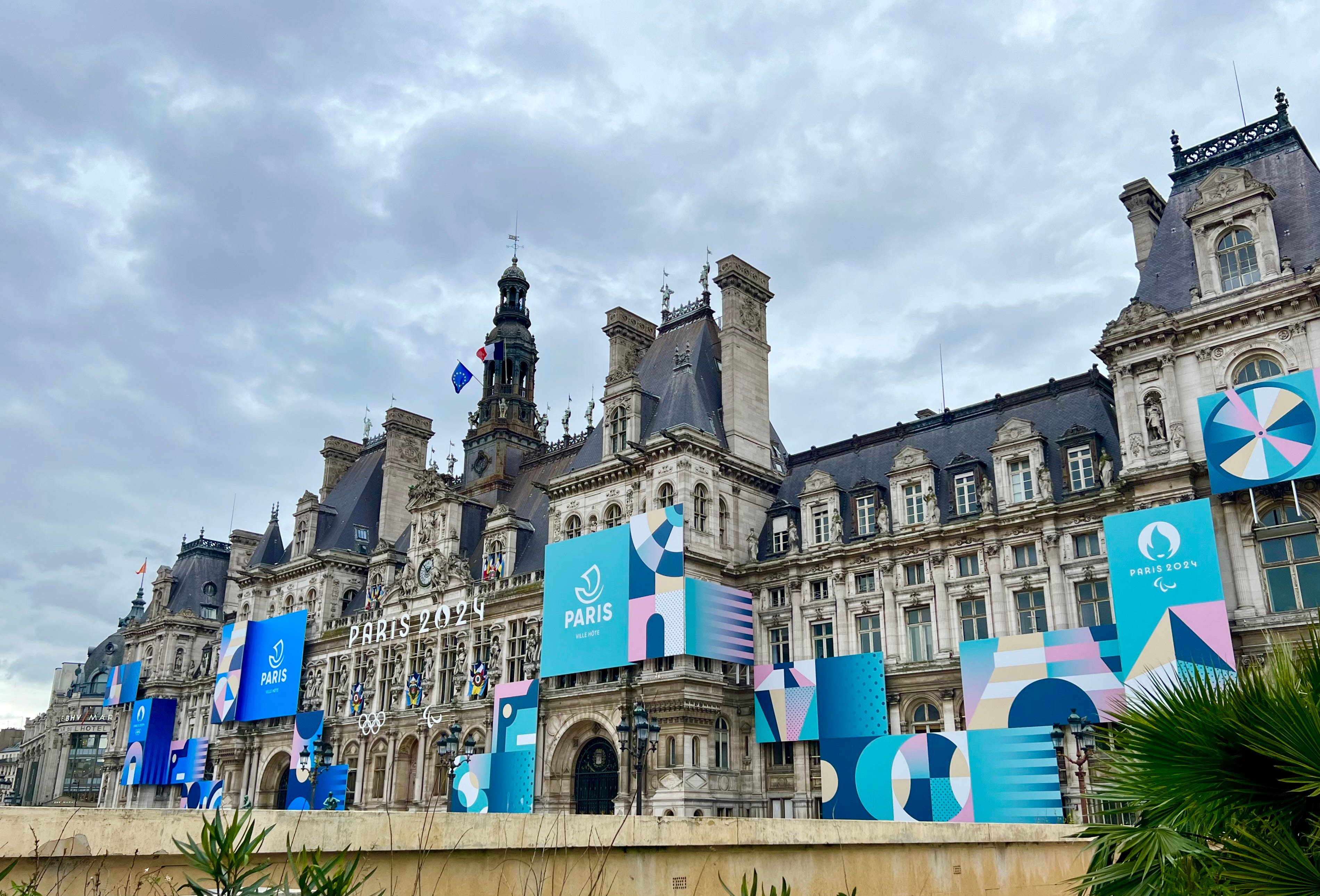
Hotel de Ville decked out in Olympic flags

A bientôt,

Sara

Thanks for reading Out My Window! Subscribe for free to receive new posts and support my work.

Back in Paris….

I flew back home last week, a smooth-as-ice plane ride with no hiccups, just nice people in the air. No flat tires, no holes blown out in the side of a plane. It was a United flight and United is getting bashed but this was a great flight. People smarter than I am say that it takes one day of jet lag for each time zone one crosses. I crossed nine and it took me about two weeks to feel solidly on French soil.

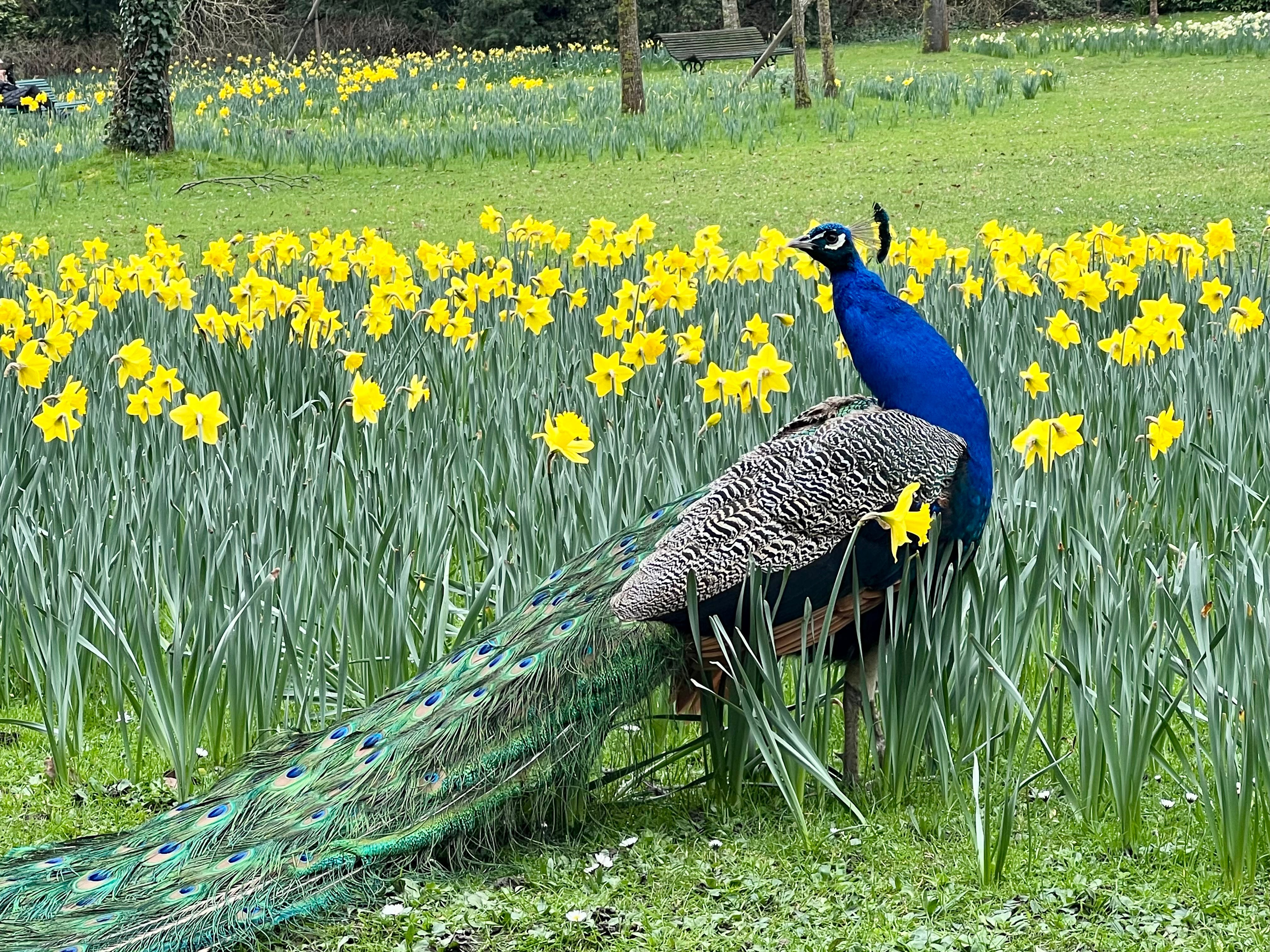
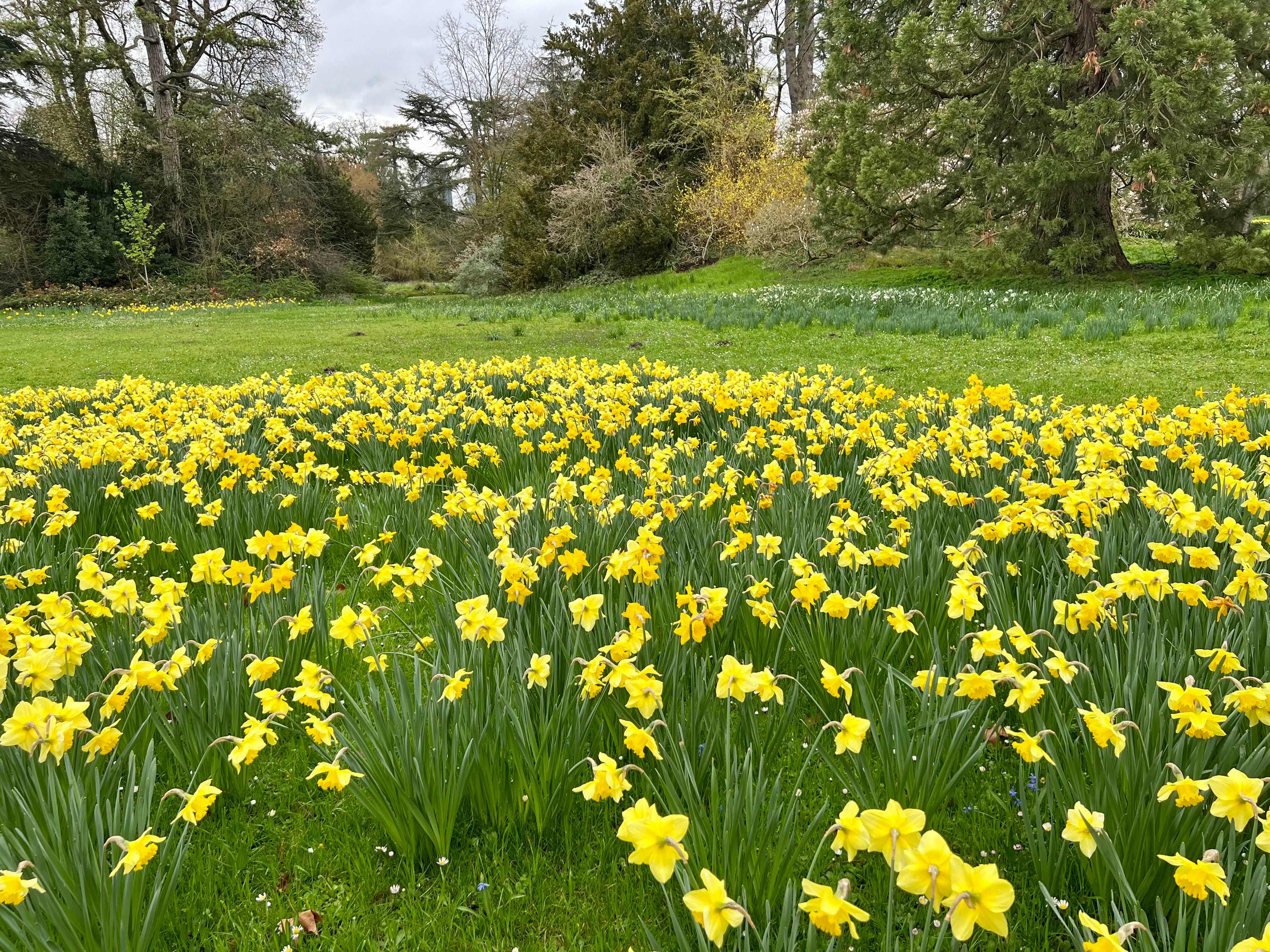
The day after I arrived, I walked to Parc de Bagatelle to check on my cats and peacocks. I was also crossing my fingers that I had not missed the daffodils which bloom in February and March. It is a sight to behold. Fields and fields of daffodils, yellow, white, cream, and even cream with yellow centers. Daffodils have long been one of my favorite flowers, and to see the Wordsworth poem laid out like a carpet in front of me is un émerveillement. I was not too late. I think that the entire month of March will be Daffodil Heaven!!

I also saw something else that in all my years of going to Bagatelle I’ve never seen. A male peacock courting a female peacock. Mating season starts now and goes through June or July. Female peacocks make themselves scarce while the males prance all over the parc. They are real show-offs. They will spread their beautiful tail feathers into a peacock fan if there are enough people to watch. They will walk right up to you, and, if you keep your hand open and flat, like one does with a horse, they will eat kibble out of your palm. What I saw was fascinating. A female was up on the stump of a tree cleaning herself and ignoring the male. The male had his fan unfolded. He would literally shake a tail feather and the entire fan would vibrate for about 30 seconds. If you watch the video, you can see him start the vibrations. The feathers shake like leaves blowing on a tree. It’s as if with the shaking of the tail feathers, he is winding up his motor for the fan vibration. He slowly takes little steps towards her. But before he gets close, she takes off.

Peacock courting
dance

Many European cities have Parks, Gardens, and Squares for the public and, probably Paris is not #1 but only because many European cities share the best public gardens with Paris. One cannot go walking for more than ten minutes without stumbling on a green space where Parisians are sitting on benches reading books, or eating a meal, or taking longs walks as is true with Bagatelle. Parc de Bagatelle is in the northeast corner of Bois de Boulogne. North, in the 17th arrondissement, is the beautiful Parc Monceau which combines the best of manicured gardens with wild grasses and trees, and the feel of walking in a forest. In the 20th is the Parc des Buttes-Chaumont. It is large but not on the scale of Boulogne or Vincennes, the two Bois that sandwich Paris between them. Buttes-Chaumont has many walking paths, a playground for children, marionettes, and food stands. East of the 20th arrondissement is Bois de Vincennes, slightly larger than Bois de Boulogne. There is a Chateau that is open to the public, two lakes, a tennis club, riding club and a sports arena. Among other things.

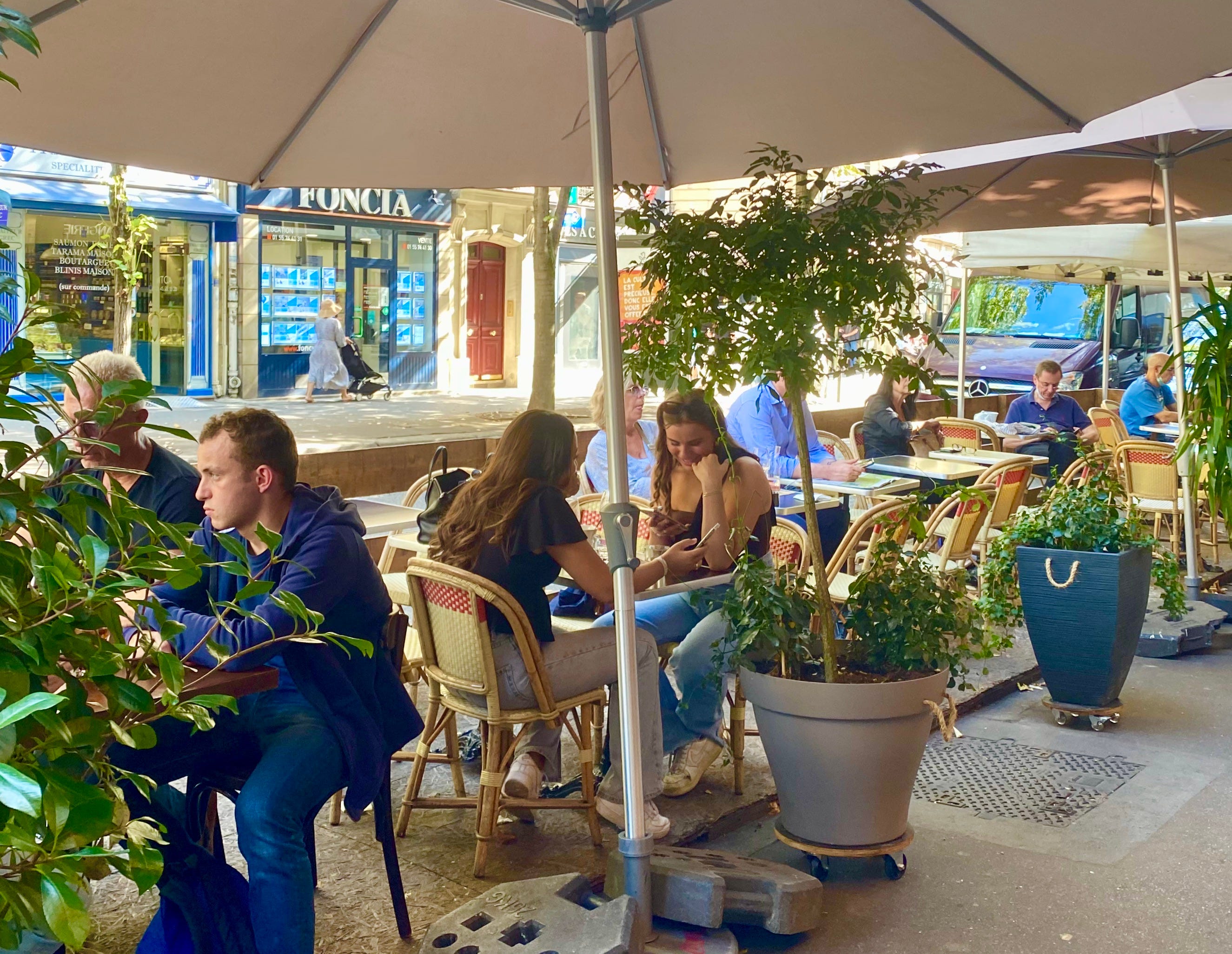
I have long theorised that the majority of Parisians have small apartments. With no front or back lawns to enjoy the sunshine, Parisians use the closest park as their outdoor home. The same is true for meeting for a coffee or a drink. Apartments for the most part are small and few of us have a kitchen table to hang out at with a friend. So we meet in cafés where no one will urge you to leave. As we exPats learn to do that, we join the wonderful sidewalk society that Paris is so famous for.

Avenue Mozart

I will end with one of my quibbles of living here and having a lot of communication with the US. The US changed their clocks and sprung forward on March 9/10. Europe and the UK do not change their clocks until Easter. Three weeks of having to remember that the time difference is one hour less than normal. I missed an important meeting last night, came an hour late to my writing class and my writing group. I usually am very good at remember this difference, and I’m blaming it all on still being sleepy from jet lag. I can’t get away with that much longer. So I wish those readers in the US: “Enjoy your late evenings” We will catch up with you!

A bientôt,

Sara

Thanks for reading Out My Window! Subscribe for free to receive new posts and support my work.