Please Keep your Hands in my Food: Why this butter made people mad by Anna Muckerman

I have mentioned before that the indefatigable Judy MacMahon, who writes “le bulletin” substack has pulled as many of us that write about France or Paris together into FranceStack (click to see all the substacks).
She encourages us to repost each other’s writings 1—because they are often on different subjects and 2—to bring attention to other blogs and Substacks that might interest readers. I urge you to go visit Judy’s Substack ‘le bulletin.’ Unlike me, she consistently writes every week, does amazing research on fascinating subjects of French life, and is a wonderful, encouraging supporter of all of us that write here in France.

The following is an article from last week’s ‘le bulletin’ written for her magazine MyFrenchLife.org. She also has a book club that meets on Zoom about 4 times a year. Before the Zoom meeting, readers have a chance to discuss the book as they are reading it. Presently, the book club is reading The Postcard by Anne Berest.
beure - Butter
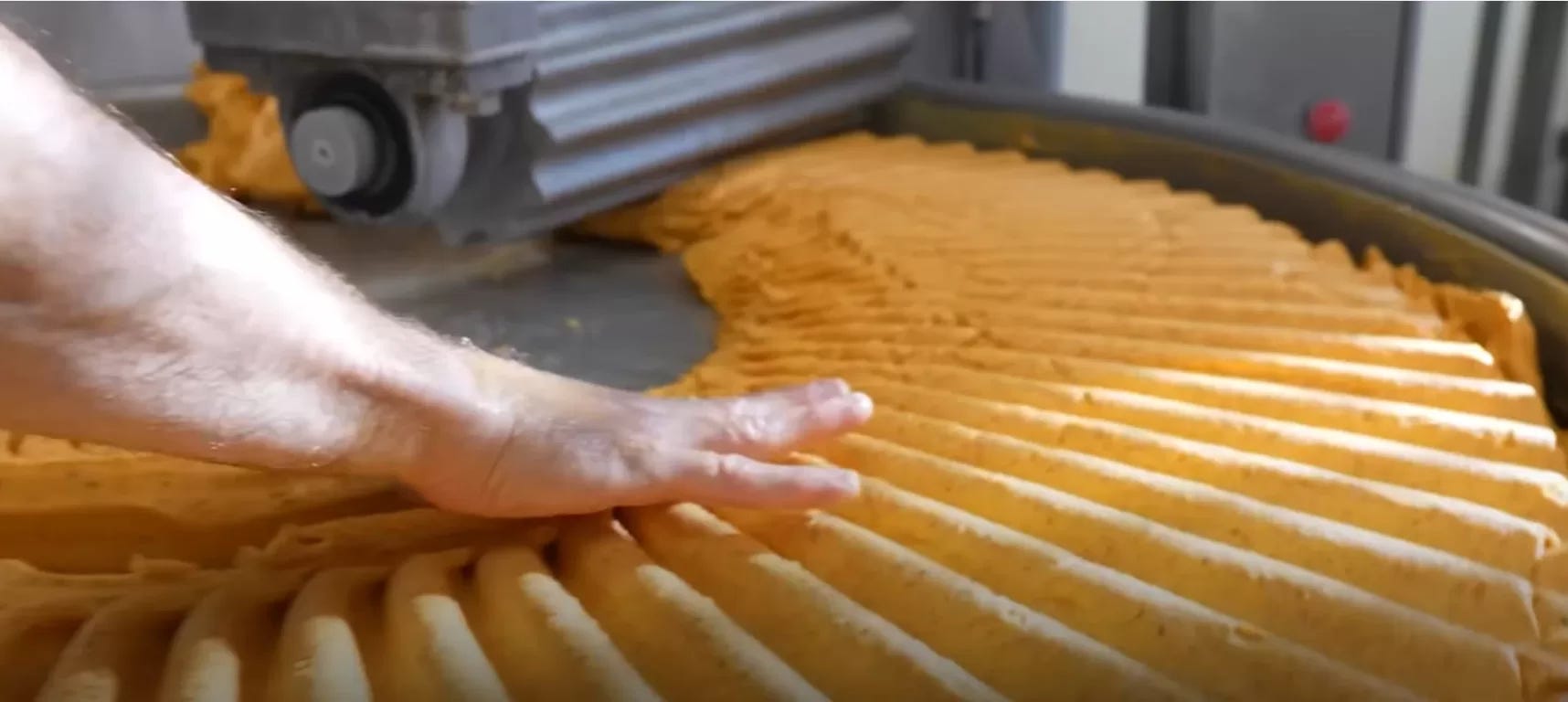
Kneading butter at the Beurre Bordier atelier in Brittany. Image from the Eater video found below

And now to the article by Anna Muckerman…….

Thanks for reading Out My Window! Subscribe for free to receive new posts and support my work

“In July 2022, I was filming a video about Dijon mustard in a village restaurant in Burgundy when the chef said to me,

You should really do a story about Beurre Bordier up in Saint-Malo. That’s what all the big French chefs use.”

Beurre Bordier

I had never heard of Beurre Bordier, but I soon discovered that it was almost like never having heard of Ben & Jerry’s — it was the butter, renowned both in France and worldwide, a gem, but hardly a hidden one.

Four months later, Eater sent me to Beurre Bordier’s atelier in Brittany to see the magic for myself. The company was founded by Jean-Yves Bordier, who in the 1980s revived the historical technique of remalaxage – or re-kneading – and developed a roster of flavored butter including the signature Brittany seaweed butter that the company is known for today.
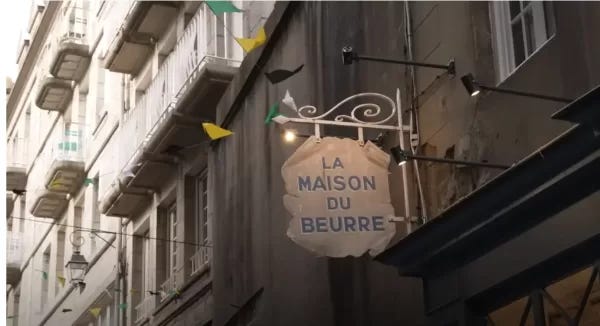
La Maison Du Beurre
Bordier’s flagship store La Maison Du Beurre in Saint-Malo

Monsieur Bordier had recently retired, but the company’s oldest employee Vincent Philippe graciously walked us through the process. I learned that Beurre Bordier does not produce butter from cream. They buy high-quality, organic churned butter in giant blocks and rework it on a giant wooden kneading machine by adding salt and removing water until the flavors become more developed (read: delicious).

Then they add exciting flavors like wild garlic, Madagascan vanilla, buckwheat, or yuzu, to name a few, and form it into custom sizes and shapes for customers around the world.

A few months later, I spotted Beurre Bordier for sale in a swanky Bangkok shopping mall. I excitedly told the young woman behind the counter that I had just been to the place where the butter was made. Understandably, she pointed at the butter as if to say Cool story, and would you like to buy some?

You can see the whole process here:
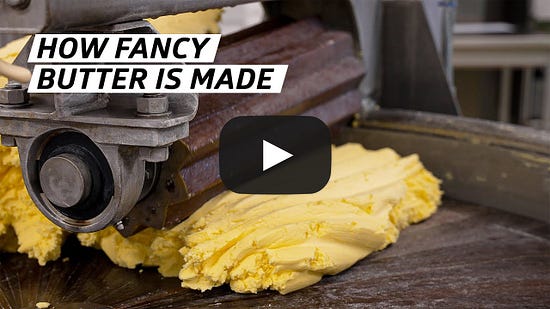
Butter and YouTube

To date, 6.6 million people have watched this video, making it my most-viewed work (full disclosure: anything about butter performs well on YouTube). Nearly 2,000 people also took the time to leave a comment. Here is a selection of them:

 – “i really like the amount of hand hair that went to making of this butter”

– “love how they wear a Hairnet but his Hairy arms are wide open”

– “Love the taste of finger prints in slice of butter..!!” (This one really cracks me up: What do fingerprints taste like? Imagine slicing butter and finding one inside!)

– “While I’m sure this is quality butter I don’t want employees working gloveless with hairy ass arms kneading my butter.”

– “Hand sweat adds flavor.”

Now, if you’re going to work with YouTube in any capacity, you can’t get bent out of shape about the comments. In fact, it’s wise not to read them at all, except in specific cases like Eater videos because there are often a lot of lovely comments from people who have nice things to say.

However, these particular comments are emblematic of a wider societal problem: We can’t stand hands touching our food. I’ve noticed it in other places, too – like this Instagram Reel and this one where people are wearing gloves while cooking for no apparent reason.

Sure, some people may wear gloves to avoid the squishy texture of raw meat (although in the first video, he doesn’t even touch the ground beef!) but what purpose do gloves serve when slicing an onion or an avocado?

It seems that somewhere along the line, we got the idea that hands = contamination and that we should use gloves when preparing everything, as if the kitchen were a hospital. We forgot that cheese is made of mold and yogurt formed by bacteria. Food should be clean, but it was never sterile to begin with.

No longer a germaphobe

Ironically, I grew up quite the germaphobe. Even as a kid, I couldn’t stand to see people make food while wearing rings and so much as an eyelash hair on my plate would ruin my whole meal. Over time though, as I’ve traveled more and eaten in other people’s homes, I’ve come to realize that hands are precisely what elevates food from a simple means of sustenance to one of life’s greatest pleasures.

Food safety is important, but cleanliness should not mean avoiding human involvement.

In many places worldwide, food is now something that comes in a brightly colored package with lab-derived ingredients. Cheese is wrapped in plastic with a picture of an idealistic-looking farm that hardly resembles modern, industrial dairies. In the U.S., I recently saw flawless, elongated bell peppers, bagged and branded with a cutesy name as if they were produced in a candy factory instead of a field.

This isn’t a rant against mass-scale food production, which has allowed us to more efficiently feed ourselves, and refocus our energy on other areas. I’m simply pointing out that the more detached we become from what food is, the more we develop a warped view of how it should be produced. We’d rather a machine pop out perfectly uniform, brightly dyed pieces of cereal than eat butter molded with care by clean, washed hands.

At Beurre Bordier, Vincent explained that bare hands allow the workers to understand; if the butter has been mixed correctly, and if the temperature and consistency are right. In other words, whether it’s safe and delicious.

To be clear, not all cultures seem to suffer from the fear of hands touching food – some embrace it wholeheartedly. After all, isn’t this the way it’s been done since the literal beginning of mankind?

I, for one, would like to say:

please keep your hands in my food. “

As Vincent told me on the day I visited Beurre Bordier, clean hands are much preferable to dirty gloves.


What’s your view on cooking with your hands? Share in the comments below.


Further reading:
French Butter why is it so delicious?
Butter: Exploring the French Paradox

Thank you for reading Out My Window. This post is public so feel free to share it.

Thank you for being such an important part of my week. This blog wouldn’t exist without you: someone who wants to know more about this wonderful country.

A bientôt,

Sara
Back in Paris….

I flew back home last week, a smooth-as-ice plane ride with no hiccups, just nice people in the air. No flat tires, no holes blown out in the side of a plane. It was a United flight and United is getting bashed but this was a great flight. People smarter than I am say that it takes one day of jet lag for each time zone one crosses. I crossed nine and it took me about two weeks to feel solidly on French soil.

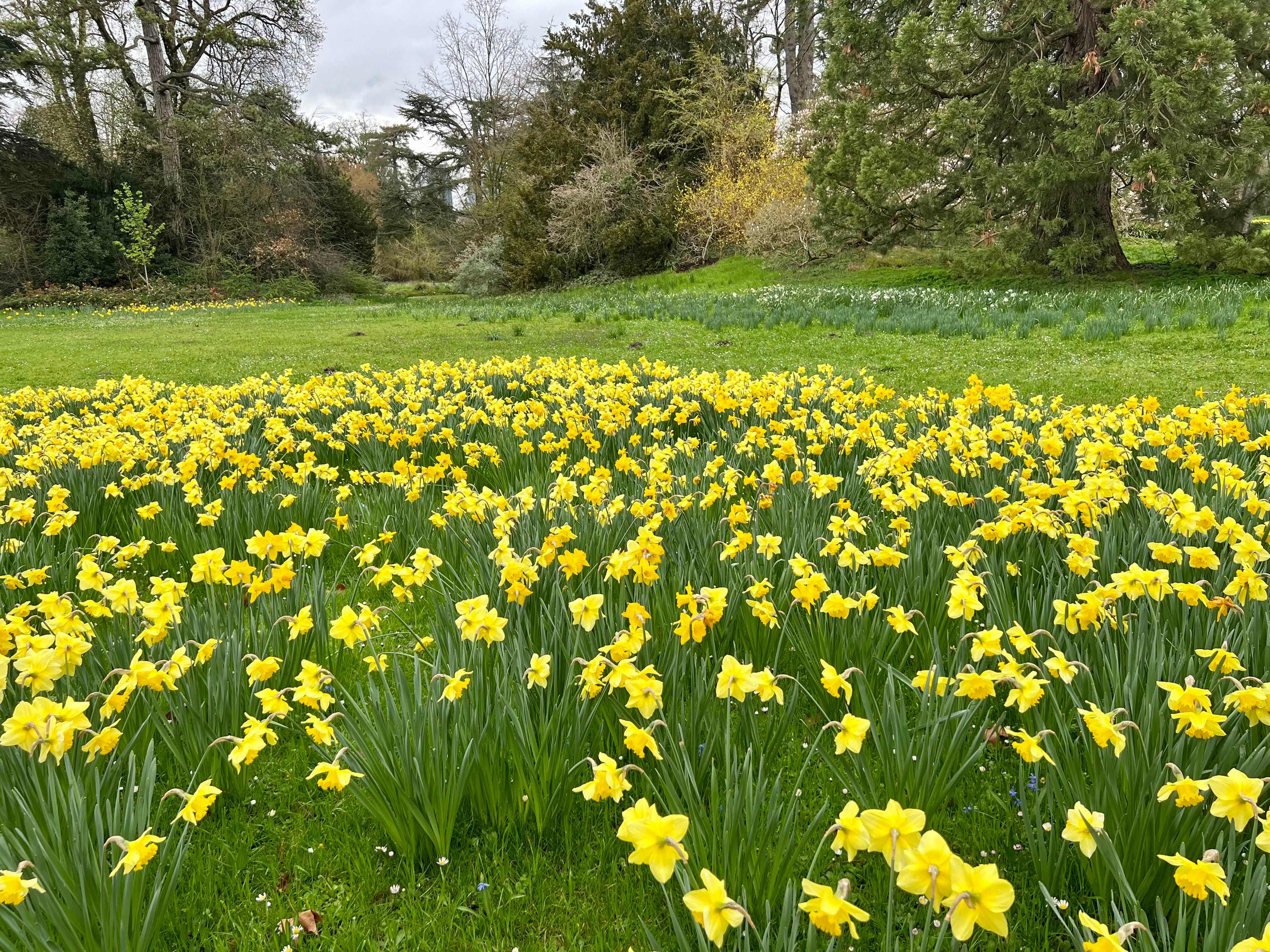
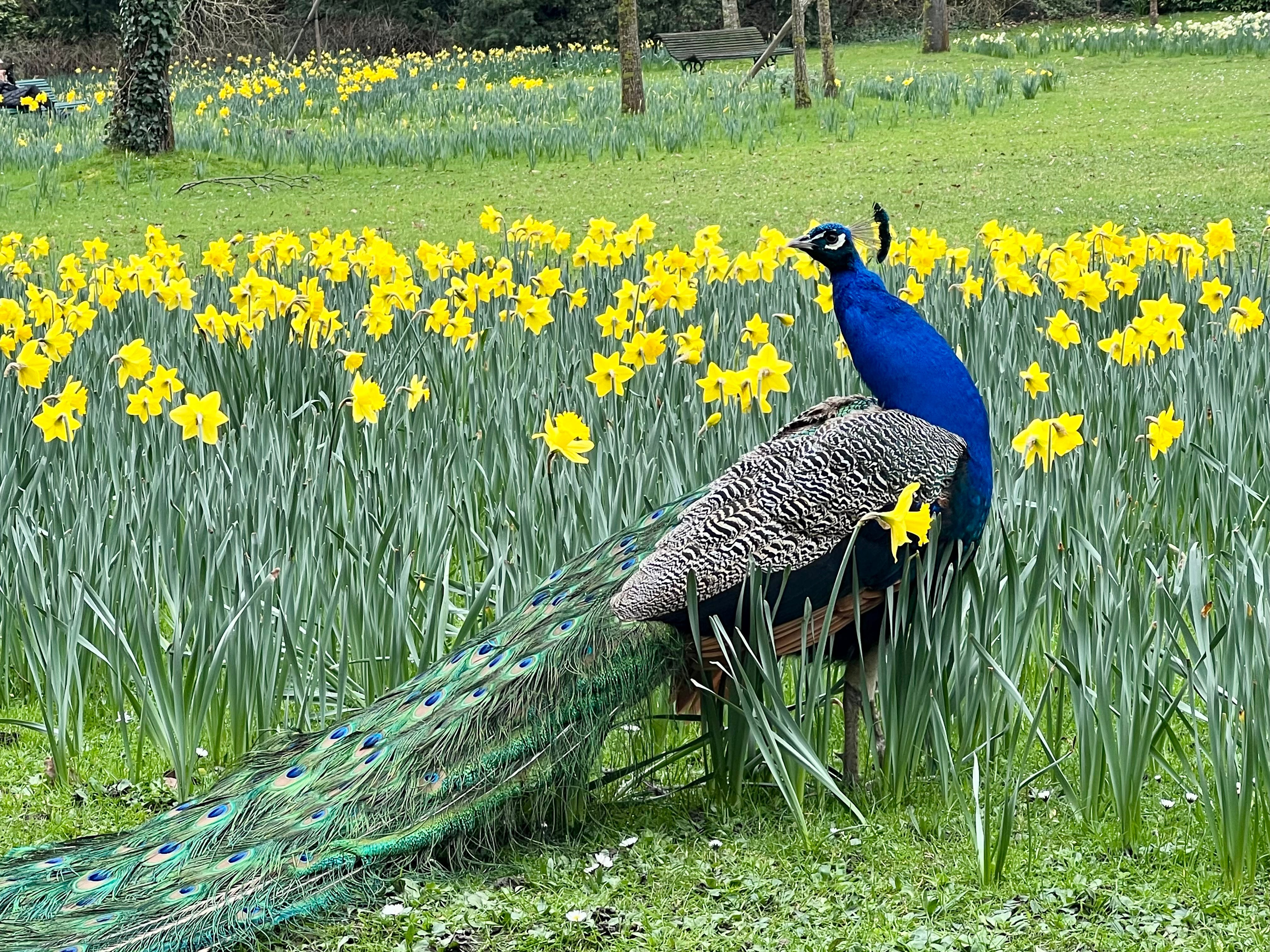
The day after I arrived, I walked to Parc de Bagatelle to check on my cats and peacocks. I was also crossing my fingers that I had not missed the daffodils which bloom in February and March. It is a sight to behold. Fields and fields of daffodils, yellow, white, cream, and even cream with yellow centers. Daffodils have long been one of my favorite flowers, and to see the Wordsworth poem laid out like a carpet in front of me is un émerveillement. I was not too late. I think that the entire month of March will be Daffodil Heaven!!

I also saw something else that in all my years of going to Bagatelle I’ve never seen. A male peacock courting a female peacock. Mating season starts now and goes through June or July. Female peacocks make themselves scarce while the males prance all over the parc. They are real show-offs. They will spread their beautiful tail feathers into a peacock fan if there are enough people to watch. They will walk right up to you, and, if you keep your hand open and flat, like one does with a horse, they will eat kibble out of your palm. What I saw was fascinating. A female was up on the stump of a tree cleaning herself and ignoring the male. The male had his fan unfolded. He would literally shake a tail feather and the entire fan would vibrate for about 30 seconds. If you watch the video, you can see him start the vibrations. The feathers shake like leaves blowing on a tree. It’s as if with the shaking of the tail feathers, he is winding up his motor for the fan vibration. He slowly takes little steps towards her. But before he gets close, she takes off.

Peacock courting
dance

Many European cities have Parks, Gardens, and Squares for the public and, probably Paris is not #1 but only because many European cities share the best public gardens with Paris. One cannot go walking for more than ten minutes without stumbling on a green space where Parisians are sitting on benches reading books, or eating a meal, or taking longs walks as is true with Bagatelle. Parc de Bagatelle is in the northeast corner of Bois de Boulogne. North, in the 17th arrondissement, is the beautiful Parc Monceau which combines the best of manicured gardens with wild grasses and trees, and the feel of walking in a forest. In the 20th is the Parc des Buttes-Chaumont. It is large but not on the scale of Boulogne or Vincennes, the two Bois that sandwich Paris between them. Buttes-Chaumont has many walking paths, a playground for children, marionettes, and food stands. East of the 20th arrondissement is Bois de Vincennes, slightly larger than Bois de Boulogne. There is a Chateau that is open to the public, two lakes, a tennis club, riding club and a sports arena. Among other things.

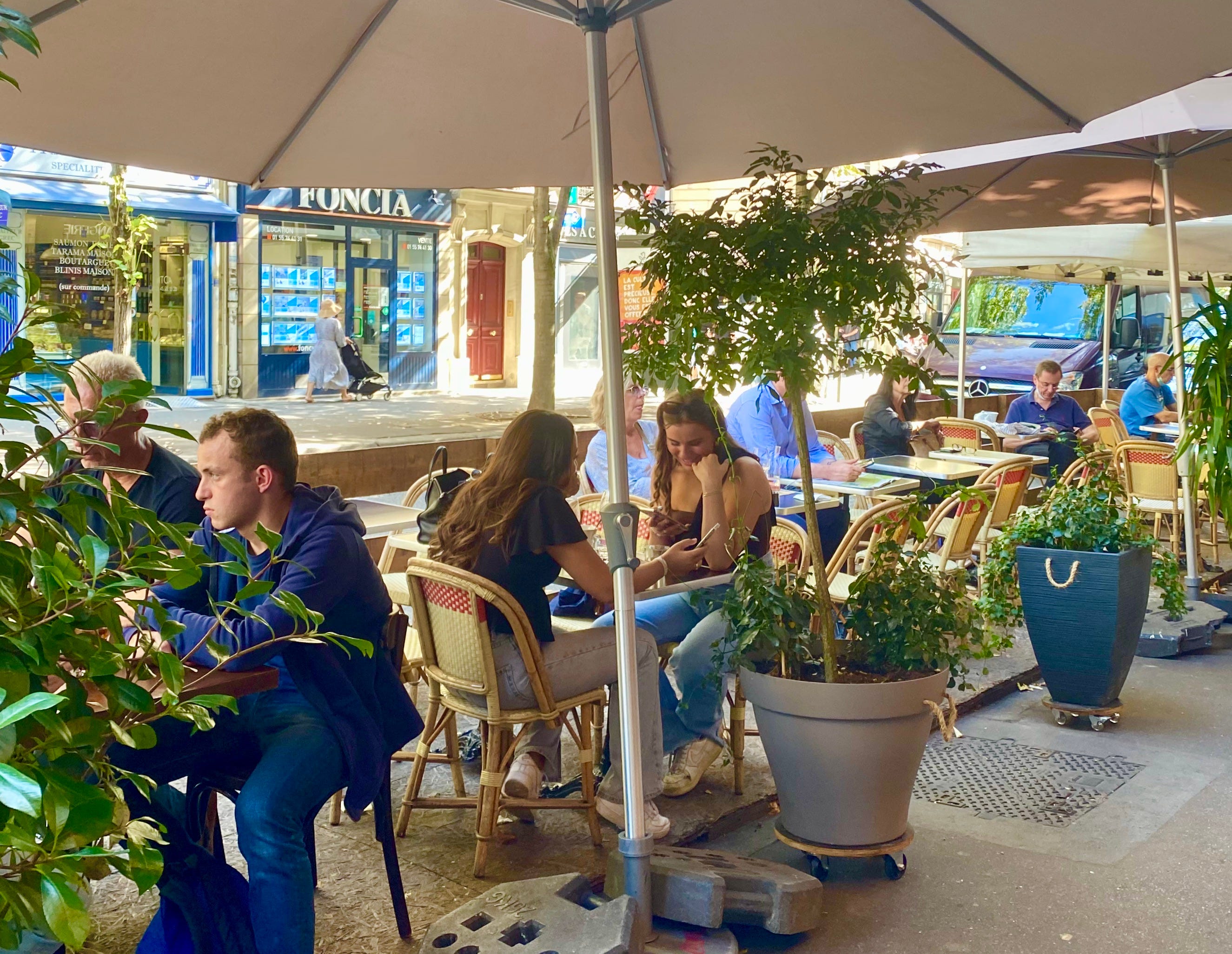
I have long theorised that the majority of Parisians have small apartments. With no front or back lawns to enjoy the sunshine, Parisians use the closest park as their outdoor home. The same is true for meeting for a coffee or a drink. Apartments for the most part are small and few of us have a kitchen table to hang out at with a friend. So we meet in cafés where no one will urge you to leave. As we exPats learn to do that, we join the wonderful sidewalk society that Paris is so famous for.

Avenue Mozart

I will end with one of my quibbles of living here and having a lot of communication with the US. The US changed their clocks and sprung forward on March 9/10. Europe and the UK do not change their clocks until Easter. Three weeks of having to remember that the time difference is one hour less than normal. I missed an important meeting last night, came an hour late to my writing class and my writing group. I usually am very good at remember this difference, and I’m blaming it all on still being sleepy from jet lag. I can’t get away with that much longer. So I wish those readers in the US: “Enjoy your late evenings” We will catch up with you!

A bientôt,

Sara

Thanks for reading Out My Window! Subscribe for free to receive new posts and support my work.

Writing in Paris – Part 2

The Paris Writers Workshop

In January, I wrote about the first workshop I ever participated in and why it was so valuable to me. And because of the Workshop, I went on to write and publish a book, and call myself an author.  Now that the Paris Writers Workshop is open for registration and only three months away, I wanted to describe specifics. As dry as this writing might be, every word is written with gratitude for the opportunity granted to me.  As my mother used to say to me constantly: “There is no such thing as luck. It’s grabbing at an opportunity when it presents itself.”

Why would Paris residents want to register for PWW? For one, it is so accessible–a metro ride away. It’s affordable—as in the past, there is an early bird registration which I took advantage of each year that I registered. And as WICE is a nonprofit, the price is very reasonable.

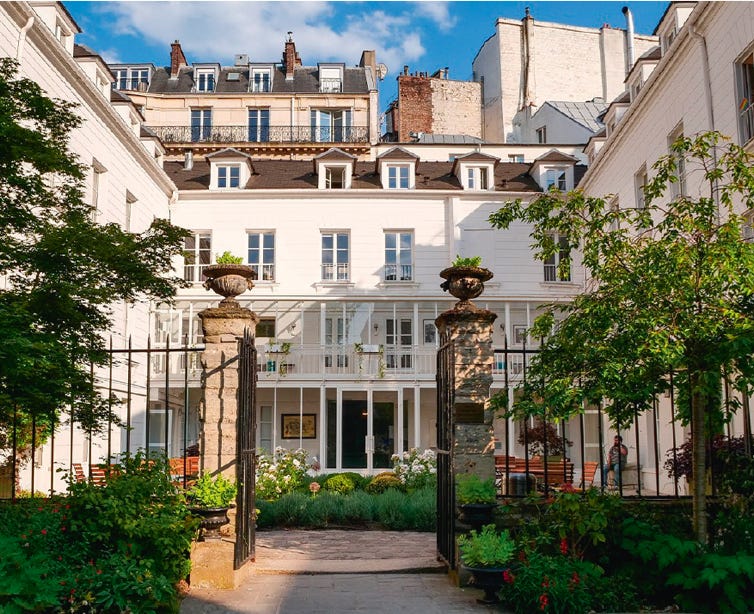
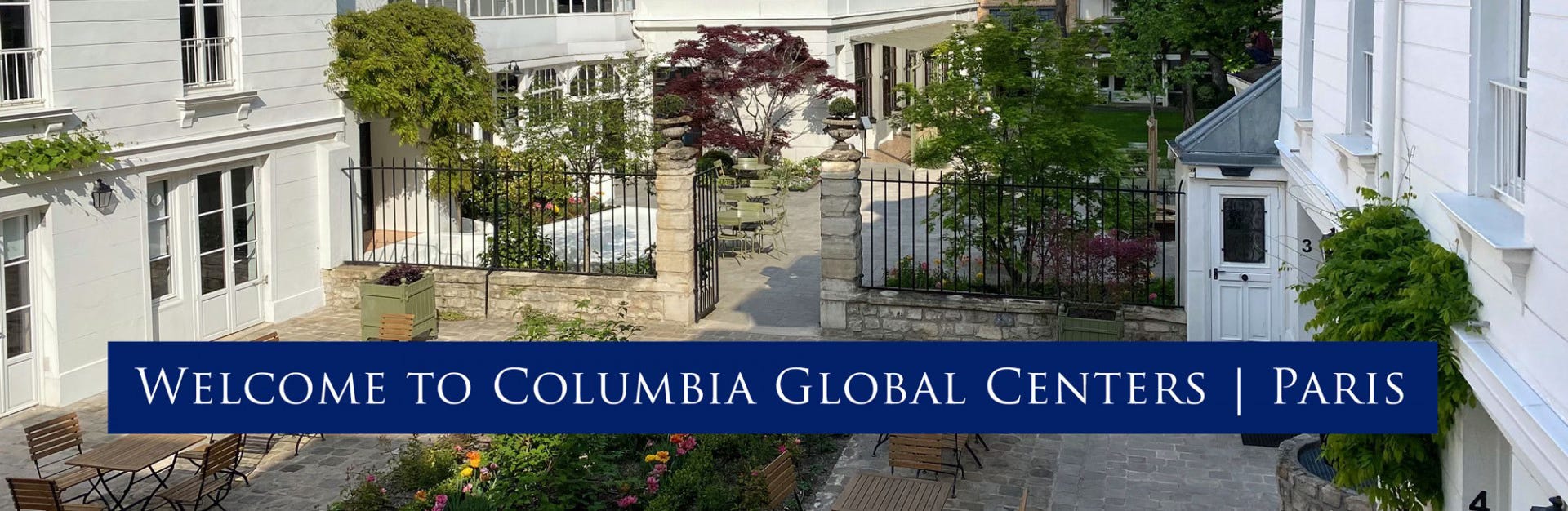
PWW will be held at the beautiful Reid Hall in the Columbia Global Centers in the literary Montparnasse neighborhood. There is a large beautiful garden area with plenty of seating. One can write at one of the many tables or bring a bag lunch to enjoy with your cohorts surrounded by trees and summer flowers. Le SelectLa CoupoleLe Dome, and Le Closerie de Lilas (one of Hemingway’s hangouts) are in walking distance.

Reid Hall

And non-Paris residents? Who would turn down a chance to visit Paris in the early summer before the craziness of the Olympics starts? We will happily make suggestions for reasonable accommodations (but I’m told you need to make those reservations now as Paris is raising prices in anticipation of the Summer Olympics), and you will have a new literary home away from home.

Now to the really good part:

We have an amazing lineup of teachers for six tracks.

The Novel master class will be taught by Samantha Chang. I know her as Sam.

Sam is the Director of the famous Iowa Writers’ Workshop. She is the author of The Family Chao (she spoke at the American Library Summer 2022), Inheritance and other titles.

The Memoir/ Creative Nonfiction class will be taught by Jennifer Lauck.

Jennifer is the Founder of the Blackbird Studio for Writers. She is the author of Blackbird,a Memoir of her childhood, and 3 more memoirs that followed. Oprah said that everyone should read Blackbird. She also writes a wonderful Substack: Flight School with Jennifer Lauck

Poetry will be taught by Heather Hartley.

Heather, a resident of Paris, teaches Creative Writing at the University of Kent (UK) Paris School of Arts and Culture.  She is the author of the poetry collections Adult Swim and Knock Knock.

This year, we are offering three new tracks:

Speculative Fiction will be taught by Kevin Brockmeier.

Kevin is the author of The Brief History of the DeadThe Truth about Celia and other titles. He frequently teaches at the Iowa Writers’ Workshop.

Screenwriting will be taught by Diane Lake.

Diane has written many screenplays for major studios including the Academy Award winning Frida. She is the author of The Screenwriter’s Path: From Idea to Script to Sale.

Travel Writing will be taught by Don George.

Don is Editor-at-Large for National Geographic Travel. He is the author of How to Be a Travel Writer: the best selling travel writing guide in the world.

Go to our website, https://wice-paris.org/paris-writers-workshop for more details about our amazing faculty. Each track has its own registration page. Click on the photo of the teacher to get to that registration.

Once you register, you will receive an acceptance e-mail unless the course is full. Each Masterclass will have a maximum of twelve students.  You will be given some choices if that is the case.

Your masterclass package includes:

·       Daily small group masterclasses in your selected genre

·       Individual meetings with your faculty instructor

·       Inspirational and practical guidance for your work in progress

·       Panel discussions focused on tools of writing and paths to publishing

·       Readings by your fellow writers and faculty

·       Social gatherings with an amazing community of writers from all over the world

Students and faculty will meet together Sunday, June 2 from 2 PM to 4 PM at Reid Hall.

The masterclasses will meet each weekday from 2 to 5 PM Monday through Friday. There will be literary events each evening.

Monday morning there will be a LITERARY walking tour of the Montparnasse area for anyone who is interested. The whole week will be topped off on Friday evening June 7 with readings by the faculty and students.

And on Wednesday and Thursday, we will have two well-known British agents here. You can pre-send a writing sample to one or both and pitch your project face-to-face.

Registration is now open. The earlybird registration fee is €975.

After March 15, the fee for the workshop will be €1100.

This is a wonderful opportunity to write, to meet other writers and authors, to organize writing groups at the end of the week, and to pick the brains of published authors.

If you know anyone who is a writer who wants to write as I did or is a secret writer please pass on this information.

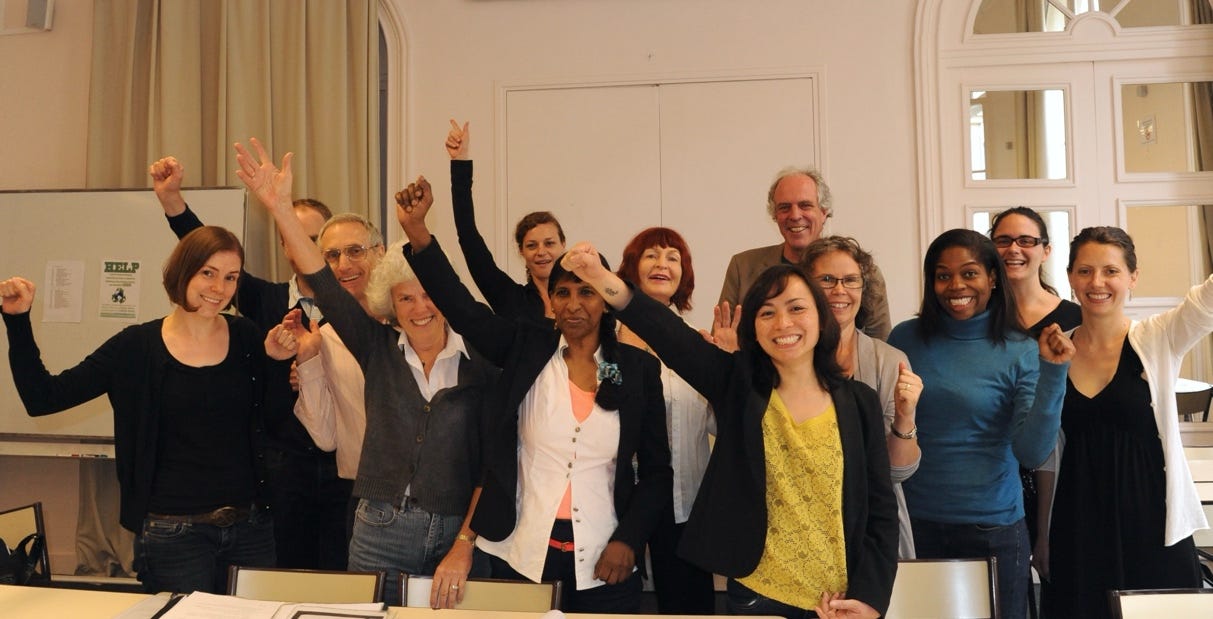
A group of people raising their hands

Description automatically generated

Participants of the Short Story track at a PWW.

Thanks for reading Out My Window! Subscribe for free to receive new posts and support my work.

A bientôt,

Sara
Writing in Paris…….Paris Writers Workshop June 2-7, 2024

If you have ever dreamed of writing a memoir, a short story, a novel, and doing it in the City of Light: Paris, you can do it this summer. My writing story follows.

I discovered reading for fun the summer I turned 14. During summer camp in Vermont, we were bussed down to Tanglewood in Western Massachusetts to picnic and listen to the Boston Symphony who summered there (Back then it was known as the Boston Pops).  Wandering off by myself, I found a gift shop. A plethora of paperback books on three racks greeted me as I walked in the door.  I’d never bought a book on my own.  Going into a shop and browsing, having a title leap out at me and paying for it with my own money, this was new and foreign territory for me. I spun one of the book racks and the title A Separate Peace (John Knowles, 1958) jumped out at me. I bought it.

I devoured A Separate Peace. Every afternoon rest period, I read. At night, in my sleeping bag, flashlight on, I read. The book, about two teenage boys at Exeter Academy, spoke to me.  Before I’d finished, I knew I wanted to write. It wasn’t a crystalized thought. I had so many pent-up teenage emotions with no idea how to express them other than screaming at members of my family. I just knew that getting what was in my head out on paper had to have some kind of transformational impact.

From then on, reading became my way of not feeling so alone. I wasn’t great at talking. I had an A+ in complaining. And, like so many teenagers who feel unfocused creative thoughts, I soon started writing awful poetry.

Over the next 20 or so years, I tried to write stories. I’d start out fine but could never find a way to end them. In my thirties, it dawned on me that I had nothing to say. My life experience was limited, and I had little self-awareness to make sense of the experience I did have. As years passed, I began telling myself that I was Going To Write A Book when I was 55 instead of 30.

Fifty-two years after that Tanglewood experience, I moved to Paris.  I was retired. I had more curiosity than I could contain. Writing courses were plentiful, almost on every street corner! After signing up for the requisite immersion French class, I decided NOW was the time to learn the craft of writing. I joined WICE (Where Internationals Connect in English), an organization that teaches language, creative writing, and photography courses among other offerings. It was mid-October and the only writing course that wasn’t full was a memoir class.

I am eternally grateful that the teacher loved my writing. I signed up for another of her classes in the Spring. I learned that WICE hosts a biannual Paris Writers Workshop (PWW). Unlike many workshops that take place year round in France, this one was reasonably priced. I didn’t hesitate.  Those nasty voices that tell us ‘we’re no good’, ‘Who do you think you are?’, and the zinger, ‘You’re too old to do this’, hadn’t yet taken up residence in my brain. I signed up.  I even met with one of the agents at the conference. She wanted to see more of my writing.

Four years later, I published my first book, Saving Sara: A Memoir of Food Addiction (SheWritesPress, 2020).

I became aware that in my adopted country of France, there are thousands of offerings for the writer and the would-be writer: in-person writing courses, video writing courses, workshops in gorgeous chateaux in the French countryside. But the Paris Writers Workshop stayed my first love. It was the place that had given me the confidence to call myself a writer.

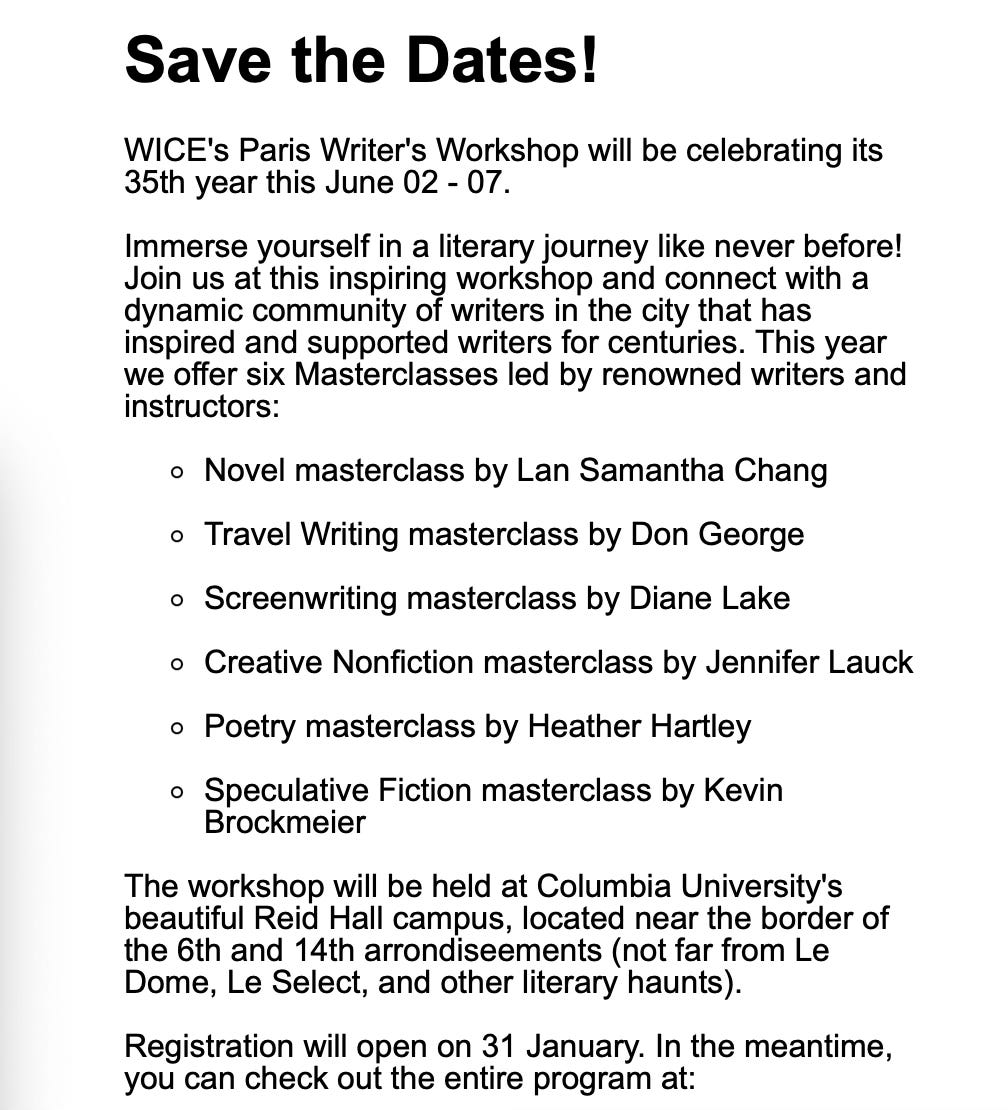
This year, I’m excited to be on the planning committee of the new Paris Writers Workshop, which will be held June 2-7, 2024.

PWW began in 1988. It is the oldest continuous writing workshop in Paris. The 2024 workshop promises to be one of the best so far. The Writing Workshop includes six tracks—Fiction, Speculative Fiction, Memoir/Creative Non-Fiction, Travel Writing, Poetry, and Screenwriting — with an amazing faculty lineup. The wonderful Jennifer Lauck whose Substack Flight School with Jennifer Lauck was one of Sarah Mays top 10 writing Substacks last November will be teaching the Memoir/Creative Non-Fiction track. For the first time, we will be partially sponsored by the Columbia Global Centers and will meet in CGC’s beautiful Reid Hall, in the center of the literary Montparnasse neighborhood. 

Reid Hall at the Columbia Global Center in Paris, 6th arrondissement.

The PWW website goes live January 31, 2024. You can go to the landing page now. Click here to see it. There you will find information on each track and a bio of the teacher.

Registration starts on January 31, 2024. There is an Early Bird registration which gives the writer 100 euros off the 1200 euros price. 

And if the unexpected happens, one can get a full refund. Those dates will be up on the website.

You can also write pww@wice-paris.org for specific information. If you are sure of a track before registration opens, you can claim a spot at pww@wice-paris.org.

A bientôt,

Sara
A different version of this blog appears in the Jan/Feb issue of the AAWE News Paris

Thanks for reading Out My Window! Subscribe for free to receive new posts and support my work.

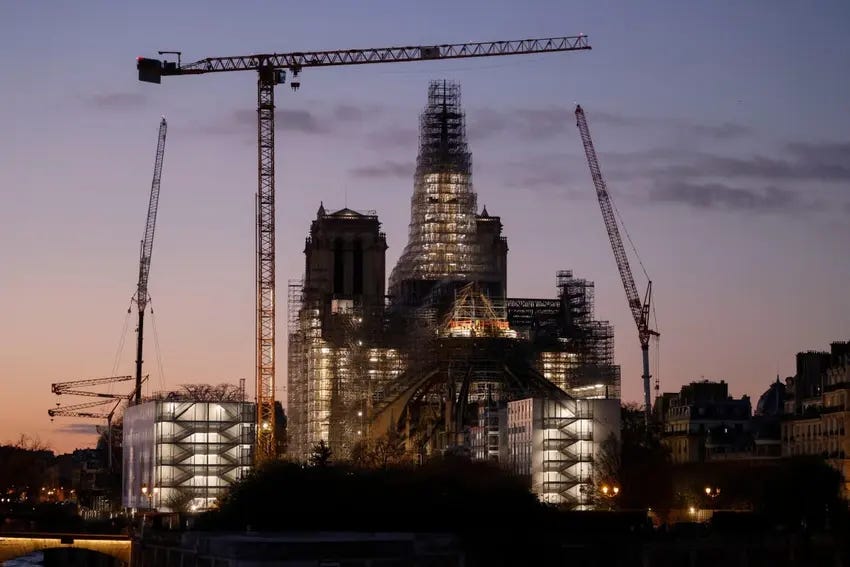
New Notre-Dame spire takes shape on Paris skyline

Reposting from The Local-Nov. 29, 2023

This photograph taken on November 28, 2023 in Paris shows the wooden structure of the new spire in place at Notre-Dame de Paris Cathedral on the Ile de la Cité in Paris during reconstruction work. Photo by Ludovic MARIN / AFP

Scaffolding still surrounded the new spire, captured by an AFP photographer, and officials did not wish to comment while they await the finishing touches.

The authority overseeing the rebuilding told AFP last Friday that the oak structure of the spire, which reaches 96 metres (315 feet) high, would be visible “before Christmas”.

It is identical to the previous one, designed by the 19th century architect Viollet-Le-Duc, which collapsed in the fire of April 15th, 2019.

The scaffolding will remain to allow the installation of its cover and lead ornaments early next year, the authorities said.

The cathedral is due to reopen on December 8th, 2024, President Emmanuel Macron announced in August.

The frames of the nave and the choir of the cathedral, which were also destroyed, are due for completion in 2024, after which the construction of the roof can begin.

The final stages include cleaning the interior – an area that covers some 42,000 square metres – and installing new furniture.

—published in The Local/France Nov. 29, 2023

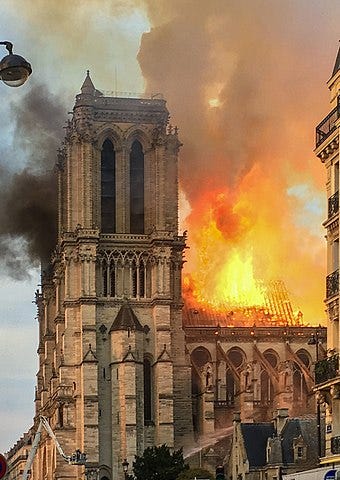
April 15, 2019, a long ago time before the pandemic, I was at the American Library in Paris waiting to meet Edouard Louis, a well-known young French author. He would be speaking on his latest book: Who Killed My Father. It wasn’t like in the movies when suddenly everyone is looking at their mobile phones and you know Something Bad Has Happened. Someone mentioned that they thought Notre Dame was on fire. No one believed it so we were checking all our respective news sources. It was true, as we all now know. It was 6:50pm CEST. I went outside and down to the corner of Rue du Général Camou and Avenue Rapp. I couldn’t see anything, not a wiff of smoke in the sky. Notre Dame is 5.2 kilometres east of the American Library. A drive of 20-25 minutes or a metro ride of the same amount of time. The fire began at 6:20pm CEST, but alarms didn’t go off until the same time that I was searching the sky.

In no time, I was caught up in the Drama of Notre Dame in Flames (there is a fairly good thriller/documentary out called Notre Dame Brûle*). I watched on my iPhone as crowds began to gather, many people weeping, all being kept at a safe distance by the gendarmes. Slowly word spread around the world and scenes of Paris were interrupted by reporters in US or UK announcing that the heart of France, the literal and metaphorical center of the country, was burning. The big question was: Could any part of the beautiful centuries old cathedral be saved? All the structure was wood, some wood over 600 years old. At the time of the fire, renovations were being done on the roofing. It’s never been clear how the fire started but guesses were that one of the workmen had thrown down a cigarette that wasn’t completely out. It is and was illegal to smoke there.

I wanted to meet with Edouard Louis. I had heard him speak a year earlier and told him about the book I was writing on my history with food addiction. He was fascinated and asked me to keep him posted. At the time of the fire, I had finished writing the book and a publication date had been set for May 2020. I wanted to talk to him. At the same time, like many people, the draw of a Drama happening on my turf, a reason for everyone to be on the same side of an issue, to feel the universality of something pulling the city together, a crowd reacting as one person, crying together, hugging strangers, I found the pull almost irresistable.

I did resist and stayed at ALP to meet Edouard and to listen to his talk. I went home after and watched the news, glued to every word, every picture. Just like the day Kennedy was shot, and RFK was shot, and the Towers came down. Fascinated by the drama, fascinated by public grief when everyone is given permission to cry and wail. This wasn’t just a tragedy, it was my tragedy as a citizen of Paris.

I was never much of a Princess Diana fan so, until the actual day of her funeral and the famous walk of the sons and Charles, I hadn’t watched much TV. I had lost a cat that I’d had many years and, after much searching, I decided he must have been caught by a coyote. But when I watched the royal procession, I cried and cried. I knew I was crying for Yaz, my lost cat, but this permission to cry all day long, in public, with everyone else, it is something that doesn’t often happen.

Before midnight, Paris learned that the cathedral would be saved. Firefighters and gendarmes had formed a long line and, hand over hand, taken everything out of the ground floor. “Shortly before the spire fell, the fire had spread to the wooden framework inside the north tower, which supported eight very large bells. Had the bells fallen, it was thought that the damage done as they fell could have collapsed the towers, and with them the entire cathedral.”-Wikipedia As far as I know, no artifacts were lost though many were damaged. I walked to Notre Dame a couple of days later. People were still gathering. We weren’t allowed anywhere within spitting distance of the Cathedral. The damage was visible from anywhere that one stood.

Over the next days and months, a contest was held for the best design for the new roof and spire. In the end, the decision was to keep it the same. President Macron swore that it would be finished and open by the Summer Olympics of 2024. No one saw Covid coming. Plywood walls were built to surround the cathedral both to keep people away from the construction but also to exhibit extraordinary photos that had been taken the evening of the fire, the rescue of the artifacts, and the progress of the renovation. One month, there were children’s drawings on the wall in front of the facade depicting Notre Dame on Fire. 

Now the end of the construction is closer than the evening of the tragedy. It’s hard to believe that it was almost five years ago. Edouard Louis has written three more books, developed Who Killed My Father into a play on Broadway, and continues his rise in French Literature. The summer Olympics are seven months away. It feels as if the entire city has been under construction getting ready for the Olympics. Some people are excited and many are terrified that the city will be unliveable for four weeks. 

And this week, we have been told that the spire might be visible by Christmas. I haven’t read of citizen reactions to that news. Not because there haven’t been any but because I still read English language newspapers and am lax about keeping up with French news publications. But something will happen I’m sure of that. Though the rebuilding of Notre Dame hasn’t been front page news for much of the last five years, it is still the ‘heart’ of Paris and France. If the Cathedral does open to the public in December 2024, I expect much festivity.

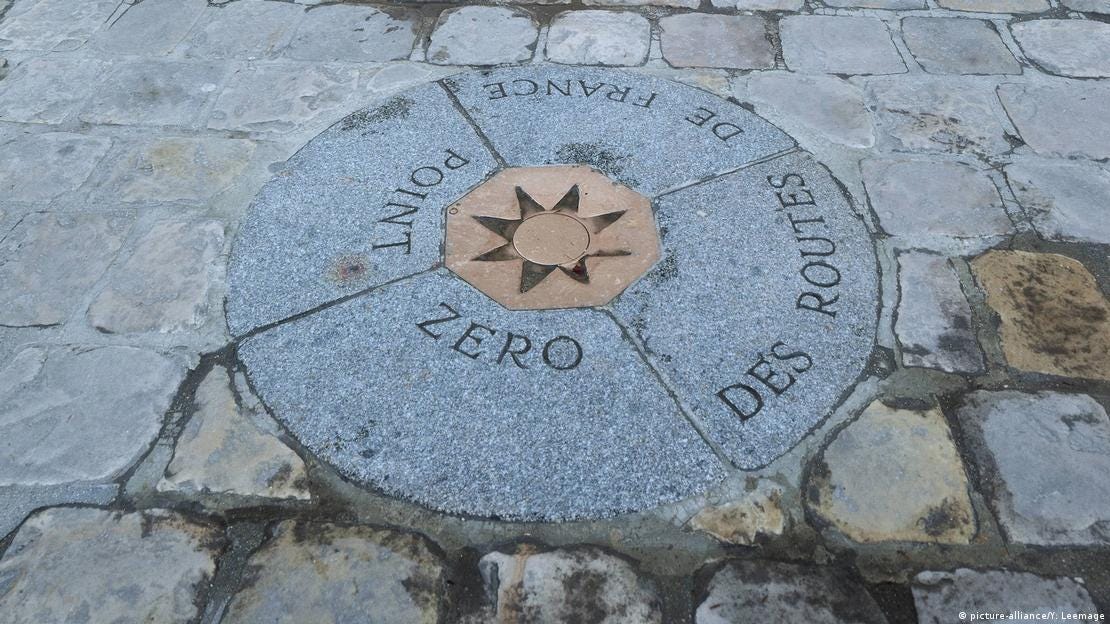
The cathedral also serves the heart of the city in a literal sense: The plaza facing the cathedral’s entrance is France’s “kilometer zero” — the precise location from which all distances to other cities along French highways are measured…

For more very interesting information of Notre Dame and the Fire, Wikipedia has a wonderful page with many specifics that weren’t known during the first months after the Fire.  You’ll find it here

A bientôt,

Sara
*The feature film by Jean-Jacques Annaud, reconstructs hour by hour the incredible reality of the events of April 15, 2019 when the cathedral suffered the most important disaster in its history. And how women and men will put their lives at risk in an incredible and heroic rescue.

Thanks for reading Out My Window! Subscribe for free to receive new posts and support my work.

Out on the Town in Paris

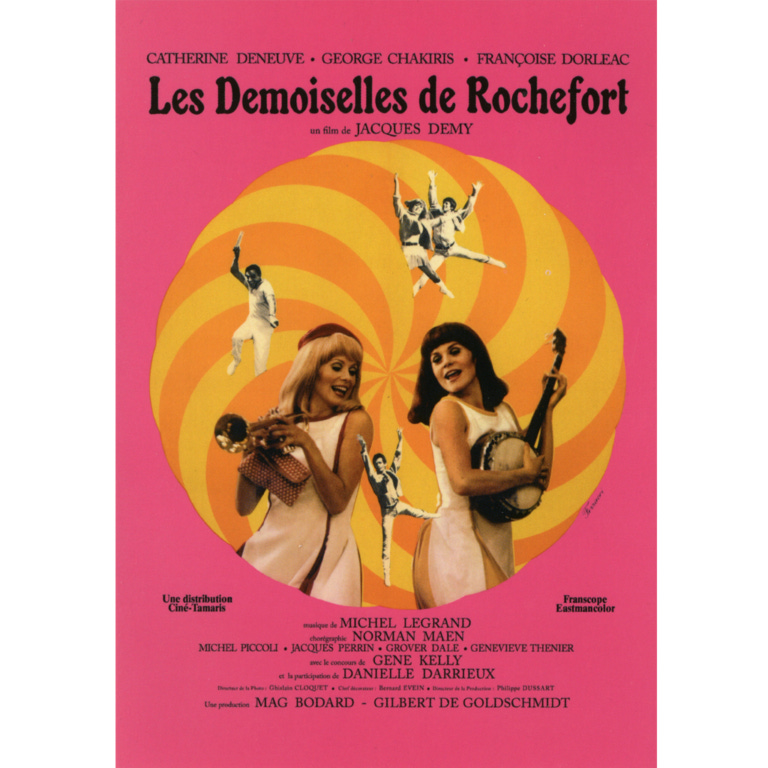
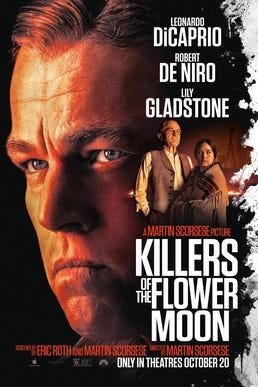
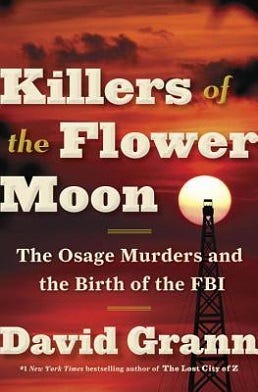
In the space of one week, I saw the movie Les Demoiselles de Rochefort on Catherine Deneuve’s birthday, Sunday, Oct. 22; Killers of the Flower Moon, a masterpiece by Martin Scorcese, which will probably net a plethora of Oscar nominations; and West Side Story, an American production that has been traveling around Europe and the UK to rave reviews. Not only is that more evenings out than I normally do in even a month but each one was A+ Excellent.

Les Demoiselles de Rochefort was Jacques Demy’s attempt to replicate the American musicals of Gene Kelly and Fred Astaire. He had produced The Umbrellas of Cherbourg two years earlier, a huge success, and made an immediate star of Catherine Deneuve. I went to the film knowing nothing about it except that it starred CD. It also starred her real-life sister, Françoise Dorléac, George Chakiris (post West Side Story), and, as the beginning credits rolled, “with the participation of Gene Kelly.” By the time of the opening credits, it was clearly a song and dance musical comedy. I jumped to the conclusion (a favorite sport of mine) that Kelly had been instrumental in the choreography. Nope, he had a starring role, speaking French which was partly dubbed. I grew up on Kelly and Astaire musicals, mostly on TV. The first time I saw Gene Kelly’s face on a big screen was at an early TCM Classic Film Festival showing of Singing in the Rain. His face with that knock-dead gorgeous smile filled the entire screen and I understood why some people never want to see films on a TV screen. No small screen could possibly do justice to the impact of seeing Kelly’s face looking down at me. 

Les Demoiselles, with it’s various love story plots, was cotton candy of the best variety. It was fun, everyone was beautiful, all the stories got wrapped up with a lovely bow at the end. If you can find it, go to see it. My iPhone says you can rent it on Prime Video. You will be smiling and feeling upbeat when the final credits rolls.

The next day, I took the metro to UGC Montparnasse to see Killers of the Flower Moon, a true story of terrifying evil perpetrated on the Osage Nation of Oklahoma when oil was discovered on Osage-owned land. It made millionaires of the Osage and put them right in the eye of white greed. I read the book seven years ago and had forgotten many details. The film brought this horrific chapter of American History to life. I knew that I could see it soon streaming on Apple TV+ as it was an Apple production. I wanted to see it on the big screen.

It is beyond my comprehension why I am constantly surprised at the evil man can do. Scorcese has been quoted as saying that he wanted to show the extent of White Male Entitlement in the US. Robert DeNiro is so slimy, so evil, that my skin crawled every time he was on screen. He is such a great actor that I found myself wanting to yell out and warn whoever was in the same room with him.

Leonardo DiCaprio plays his nephew, Ernest, a not very bright young man, who had just deployed from the Army after WWI and moved to Oklahoma. A friend of mine asked “how he could keep the turned-down mouth frown for so long?” I tried it but couldn’t hold it for more than thirty seconds. He falls under the spell of his uncle and becomes the accomplice for the crimes. Will this be Oscar number two? Lily Gladstone is a revelation. She is beautiful and her acting is subtly deeply moving as the wife of Ernest. Ms Gladstone was raised on the Blackfeet Indian Reservation and has won many awards for her accomplished acting. This is the first time I’ve seen her but I’m sure it won’t be the last.

The murders taking place on Osage land was the first case handled by what became the FBI. At the time, it was simply the Bureau of Investigation run by a young J. Edgar Hoover. Jesse Plemons (The Power of the Dog) plays the agent sent to Oklahoma to solve the mystery of the many deaths. 

This film has to be the best film Scorcese has made. Even at three and a half hours, the time flies. This is history every American should see. Yes, it is shocking. When the lights went on last Monday, the woman next to me was staring at the screen with her mouth open in stunned silence.

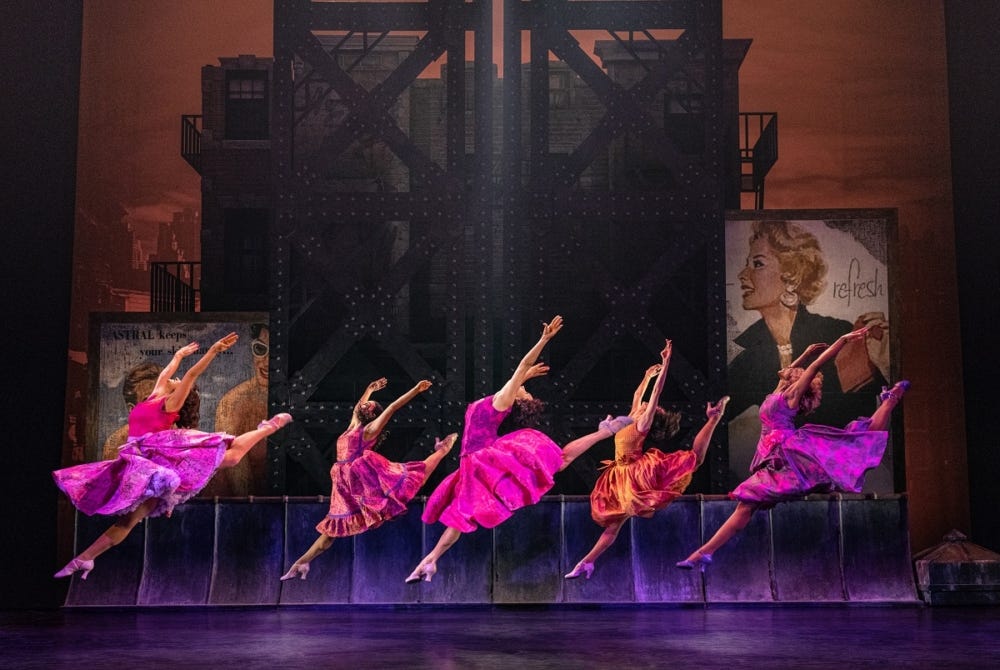
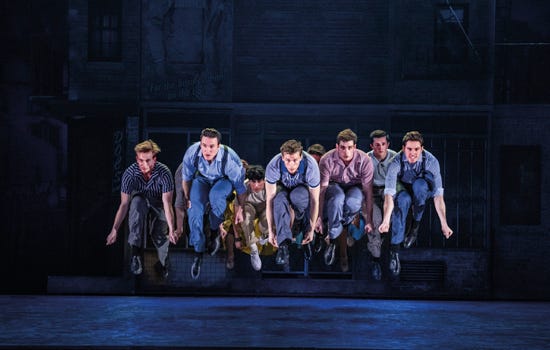
I bought tickets to West Side Story last July, the minute I saw it was coming to Paris. Until I sat down in my seat at the beautifully restored Théâtre du Châtelet, I never thought to ask if it was in English or in French. I didn’t ask a number of questions one should probably ask when a favorite show is in a country that speaks another language. Fortunately, it not only was in English, but the director, Lonny Price, a close friend of Alexander Bernstein, son of the great Leonard Bernstein who wrote the musical score for WSS, wanted to replicate the original 1957 production. And what a production it is (if you live in Paris, it is playing until December 31 )! I’m told that if a French audience gives a show a standing ovation, it is the highest honor a stage show can achieve. The last standing ovation I saw was in 2015 for An American in Paris.

There probably isn’t a person alive who doesn’t know the story of the two teenage gangs in the dilapidated streets of the upper West Side of 1950s Manhattan. Though it is sixty years old, the message of fear and hate, of ostracism of “other” is as potent today as it was then. The Jets are the poor white second generation delinquents led by Riff, a terrific performance by Taylor Harley . The Sharks, the Puerto Rican boys led by Bernardo-Antony Sanchez, are first generation. These two gangs are fighting for the right to “own” the streets of this neighbourhood. 

The stage set is astounding. There is a main tenement building, two stories high, that opens up like a magic box. Both the inside and the outside of Doc’s Drug store, Maria’s bedroom, Anita’s bedroom, the dressmaking shop of the Puerto Rican women, and the fire escape where Tony (Jadon Webster) and Maria (Melanie Sierra) sing “Tonight”, were all tucked into this building. On each side of the stage, two other “buildings” sandwiched the streets and the area under the bridge where the rumble takes place. They each could turn 360o to show someone entering one door and leaving by another. 

As a writer, what I find impressive and inspirational (not sure if that is the right word) is the ability of Martin Scorcese and the team of Bernstein, Sondheim, and Robbins, to create a piece of art that is not only a good story but also has a strong message, in both cases a message about living with others, a message of hate and fear leading only to death — in both of these masterpieces, many deaths. Yet, the message doesn’t overpower the story. One can go to both the film and the show and be tone deaf to the message and love the story. It’s a fine line of creativity that a writer like me can only aspire to.

Europe is getting cold. Stay warm and cozy. And remember, if you are in the US, Europe and the UK changed their clocks one hour back yesterday. The US will do the same next weekend. Meanwhile, for one week chaos ensues!!!!

A bientôt,

Sara

Thanks for reading Out My Window! Subscribe for free to receive new posts and support my work.

The Wallace Fountains

I had a thought of writing about the beautiful Wallace Fountains that are scattered all over Paris and parts of France. It would make a wonderful post. Then I woke up to another blogger who had already written up something and posted it over the weekend. This isn’t just any blogger. Her name is Judy MacMahon. She is Australian and is a Francophile. She authors MyFrenchLife.org and ‘le Bulletin’-another Substack. This summer she had the brilliant idea of pulling together all of us who write about Paris and France (whether we live here or not) and calling it #FrenchStack! I have been looking for an opportunity to share with you Judy’s #FrenchStack.

First I’m going to repost Judy’s write-up about the Wallace Fountains. Then give you #FrenchStack. Some of these you may already know quite well. Others you may never have heard of. Just because they are listed does not mean that Judy or I endorse them. Just that they are available and everyone’s taste is not the same. In the future, I will repost some of these wonderful stories that are included in #FrenchStack.

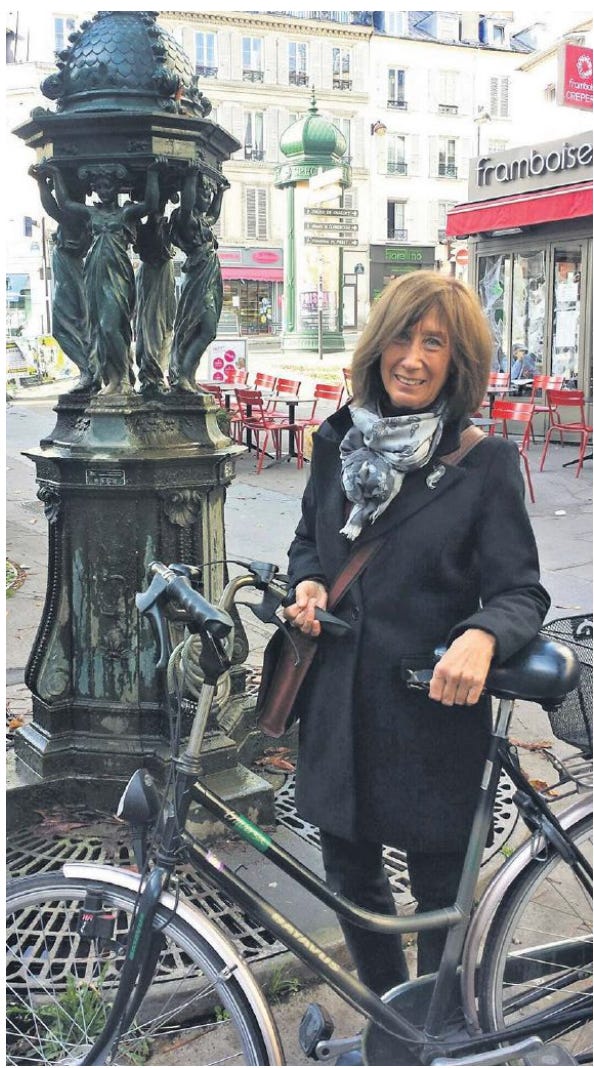
“1. How much do you know about these forest green icons in Paris? The Wallace Fountains

One year ago, this September, the Wallace Fountains were part of a month-long celebration commemorating the 150th anniversary of the Wallace Fountains—Sir Richard Wallace—an English philanthropist—and his project to bring clean drinking water to 19th-century Paris and beyond.

What are Wallace Fountains?

We’ve all seen them… these ornate cast-iron green fountains scattered throughout Paris, but I’ve never known their history. Ornate structures that are named after an Englishman. Why? My curiosity got the better of me, once again, and I was off on a mission to find out more.

  • Wallace Fountains are public drinking water sources primarily located throughout Paris, although replicas exist at various locations worldwide.
  • The grand model fountain stands almost nine feet tall and weighs more than 1,300 pounds!
  • There are now more than 100 fountains from an original 50 in 1872.
  • No, they are not all green… You will perhaps spot some in more avant-garde colors in bold red, pink, blue, and yellow, located in the 13th district in the southwest of Paris.
  • How much water do the French really drink?

In 1872, British philanthropist Sir Richard Wallace set off to provide safe drinking water for all in  Paris. 

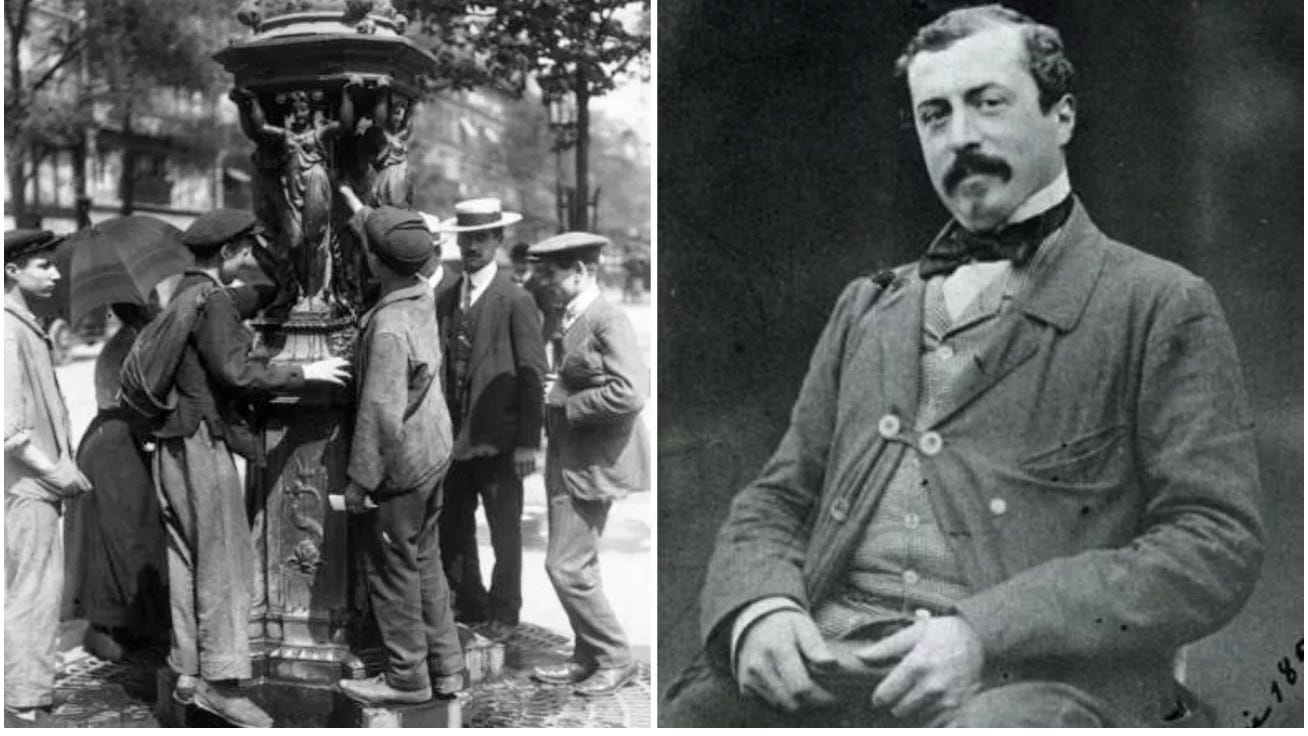
People drinking from a Wallace Fountain during Bastille Day celebrations in 1911 (L) and a photograph of Sir Richard Wallace (R)The Wallace Collection

He established a network of drinking fountains across Paris and every day millions of people pass them without knowing how they came into being.

In the late 19th century, following the siege and bombings during the Franco-Prussian War and the collapse of the Paris commune, clean drinking water in Paris was scarce. Many communities relied on water that was transported from the Seine, which was often unsafe to drink.

The price of potable water became very expensive. As a result, most poor people had difficulty obtaining and paying for water that was safe to consume. Moreover, most of the water sold by vendors and distributed on carts to the poor was drawn from the Seine River. That water was certainly contaminated because at the time all the wastewater from the streets and many of the sewers drained directly into the river. It seemed less risky to drink alcoholic beverages, which were often cheaper than the price of unsafe water. Given the choice, the lower classes were most apt to hydrate with beer or wine.

Barbara Lambesis, President of the Society of the Wallace Fountains says many Parisians turned to beer and wine, a more sanitary – and often cheaper – alternative to water, which drove a large portion of the city into alcoholism.

There were health consequences… lots of alcoholism, which of course tears away the social fabric of community,” Lambesis explained. “Richard Wallace decided he was going to make clean drinking water free and available and easy to access for everyone, regardless of whether they’re a visitor or a resident and regardless of their social status.”

Who was philanthropist Sir Richard Wallace?

Little is known for certain about the early life of Richard Wallace, who was born in 1818 in the UK, although it’s believed that he was the illegitimate son of Richard Seymour-Conway, the 4th Marquess of Hertford, an English aristocrat and art collector. When he passed away in 1870, most of his wealth was unexpectedly left to Wallace.

The Wallace Collection – art

Sir Richard Wallace is best known in the UK for his extraordinary art collection donated to the British people. The Wallace Collection is available for public viewing at his former residence in London. In Paris, he is remembered for aiding the poor and for his generous, steadfast commitment to the common good as symbolized by the iconic drinking fountains that carry his name in Paris.

In 1871, Queen Victoria knighted Wallace for his:

splendid munificence during the difficult period of the siege of Paris,” and he was later made a baron.

He died on July 20, 1890, in Paris at his home—the Château Bagatelle, in the Bois de Boulogne—and was later buried in the Père Lachaise cemetery. But his legacy lives on.

The Wallace donation of 50 fountains to Paris

In 1876, after inheriting a large fortune, Wallace donated 50 fountains to the city of Paris to be installed throughout the capital. Beyond functionality, Wallace put a lot of consideration into the aesthetic and practical elements of the fountains, sketching out the first designs himself before handing them off to Charles-Auguste Lebourg—a sculpture from Nantes—to deliver the final product.

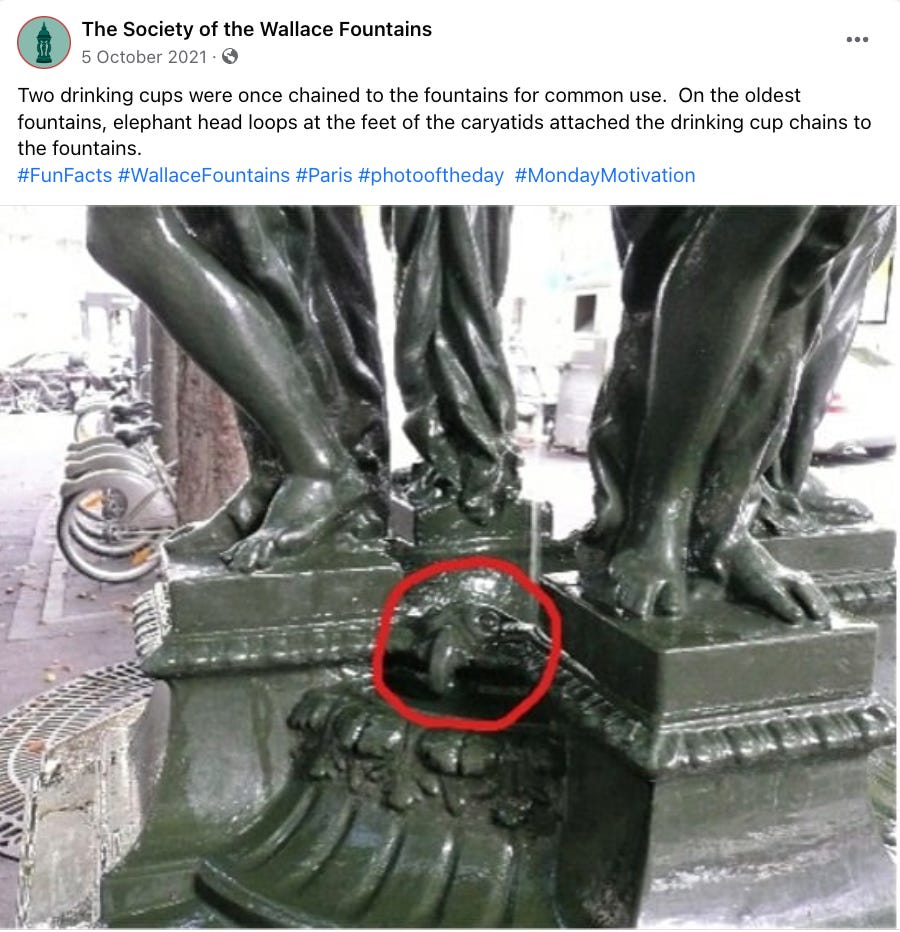
They were made of cast iron because they were durable and easier to replicate; and they were almost three metres tall so that they could be easily seen and recognized,” Lambesis explained. “They’re full of symbolism; the four figures, featured in the fountains, represent human virtues that Richard Wallace wanted people to adopt when they drank from them. Those virtues are simplicity, sobriety, charity, and kindness.”

Formation of The Society of the Wallace Fountains

Barbara Lambesis, rue de Rivoli, devant l’objet de sa passion. DR

A few years ago, Barbara Lambesis – an American, who lives in Paris part-time – was strolling through the city when one of the fountains caught her eye.

“I became very intrigued with it, and that was the beginning of a long journey; I researched it a great deal, studied it a great deal, and decided that I was going to put a purpose to my wandering,” she said.

The first is to promote, preserve, and protect the fountains throughout Paris.

“The second part of the mission is to recognize and encourage philanthropy in the spirit of Richard Wallace,” she explained. “Richard Wallace was an Englishman who was born in London, lived most of his life in Paris and loved Paris… and suddenly inherited a great deal of money during the terrible siege in Paris in 1870. He immediately took that money and went out and distributed it to the poor, to the people who were suffering the most.”

The third part of the mission, Lambesis explained, is to “position the Wallace Fountains as the global symbol of international universal equal access to clean drinking water for everyone on the planet, because that’s really what those fountains stand for.”

As a part of the 150-year anniversary, Lionel and Ariane Sauvage – French philanthropists working particularly with the Louvre Museum in Paris— received the new Wallace Fountain award to celebrate their 30+ years of philanthropy. 

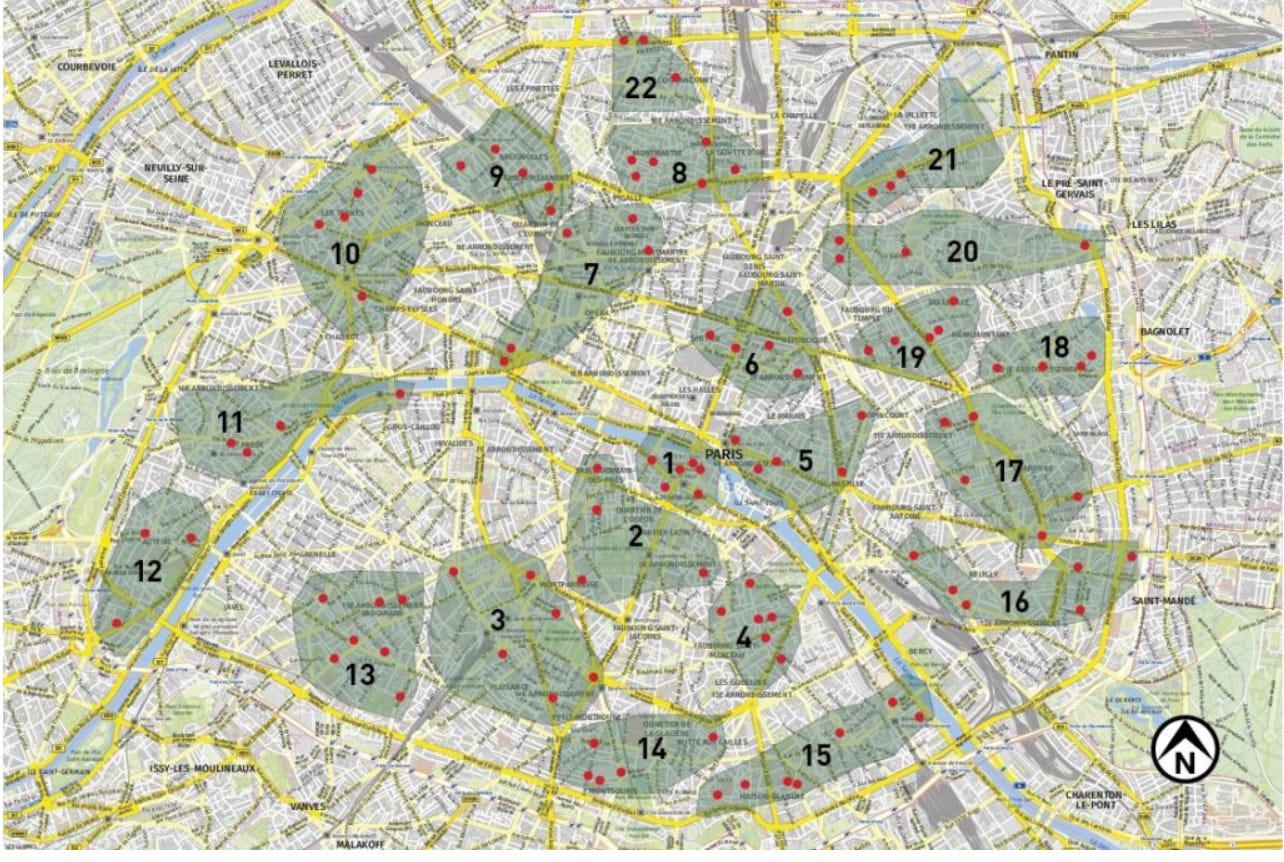
22 Self-Guided Walks

The 22 self-guided walks take you to different parts of ParisUse the map to view the area of Paris for each numbered walk. Each guided walk includes a map and a narrative that gives directions and often mentions points of interest along the route. Use the guided walks to find the fountains and the wonders of Paris.

Download – To download a self-guided walk, click on Get Started Now (← here) The downloads are formatted for mobile devices and are free of charge. 
”But, we hope you will donate a very small amount to help fund the development and maintenance of this website and the work of the Society of the Wallace Fountains. You also will have the option to register to receive updates and information about the fountains.” from the Wallace Fountains Society website.”—Judy MacMahon ‘le bulletin’

Look for the #FrenchStack tomorrow. Judy MacMahon has put together all the Substacks that write about France and called it #FrenchStack!

A bientôt,

Sara

Thanks for reading Out My Window! Subscribe for free to receive new posts and support my work.

La Rentrée/The End of Summer

After two months of “blog vacation”, I’m back to start telling you about the interesting things I see and do in France. I had such a wonderful time in Saint Jean de Luz that I had to share with you the beauty of that place.

Except for that trip, I remained in Paris for the entire month of August. At least half, and probably much more, of Paris went on vacation. In the outer arrondissements (I’m in the 16th), Paris was quiet. No tourists, most stores were closed, hardly any traffic. Sometimes I’d walk out of my apartment building and wonder if pandemic limitations had restarted. It was SO quiet and there were plenty of parking spaces on the street. During the rest of the year, a driver might sell their next of kin to have a parking space so close to home. Two out of three of my veggie markets were closed; the Boucherie was closed; both bakeries/Boulangeries were closed. The lovely restaurant #41 – closed. In fact, the only thing open on my block of Av. Mozart was the Fromagerie with a big sign that said “We are staying open all of August” and the wine store.

This week starts the fifth season in France: La Rentrée. I write about it every year. I don’t know of any other country that has something like this. It’s not just the beginning of school but, since most people go somewhere else in August, everyone is returning home and getting ready for the new year. People say “Bonne Rentrée” to each other. Stores have sales on office supplies, school needs, anything that might make the end of summer more palatable. It’s September. Today, the temperature is in the high 90s F/30/31oC. Summer weather Store windows have Fall clothing, cozy snuggle up on the couch and stay warm clothing.

The Local gives some definitions of La Rentrée:

“Schools restart 

La rentrée scolaire is when schools begin again for the new academic year. There is a tradition that this cannot happen until September, so this year schools go back on Monday, September 4th. 

A side-effect of la rentrée scolaire is the appearance in shops of huge collections of stationery as stressed-out parents head out to buy the dozens of items on the official lists that schools send out, all of which are deemed essential to educational life.

Return to work

Of course key workers continue to work throughout the summer but many offices close completely for some or all of August as it’s not at all uncommon to receive out-of-office replies simply telling you that the person will be back in September and will deal with your query then.

Many smaller independent businesses including boulangeries, florists, pharmacies, clothes shops and bars also close for some or all of August as their staff and owners enjoy a break.

If you work in an office, the first few days after la rentrée is often a time for chatting to colleagues, hearing other people’s holiday stories and generally easing yourself back into work gently so it’s not too much of a shock to the system.

Return to parliament 

The French parliament takes a break over the summer and resumes sessions in September, while ministers too generally take a few weeks off. Traditionally the president goes to the presidential holiday home – a villa in Bregançon on the Riviera and enjoys a few weeks of sun, outdoor activities and rest.”

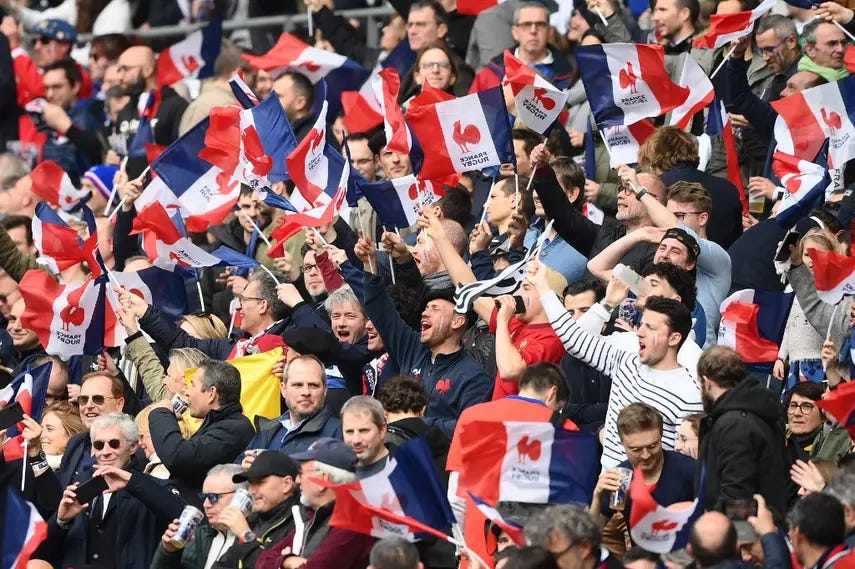
This year, the World Cup of Rugby is being held in France from September 8—October 28, 2023 . Americans always think that Futbol is the definition of sports in Europe. It turns out that Rugby is a huge deal. My first French teacher in my immersion classes many years ago was a die-hard rugby fan. The games in the Stade de France, Paris are all sold out. The opening ceremony will start at 8pm Friday at the Stade, outside Paris, then the first match (France v New Zealand) will kick off at 9.15pm. The Oscar-winner and celebrity French rugby fan, Jean Dujardin, will host the opening ceremony at Stade de France before kick-off of the opening match on September 8th. 

Again from The Local: “If you’re not lucky enough to be among the 80,000-plus crowd at Stade de France, the good news is that the whole shebang will be on TV. In France, the opening ceremony and the France v New Zealand match is on free-to-air channel TF1.

Through the tournament, every match in the tournament is available free to air on TF1, as well as France Televisions and M6.

Rights holder TF1 will show 20 matches, including all matches involving France, while France Télévisions has 10 matches and M6 will show 18 games.”

In the US, the games will be on Peacock or some form of NBCSports.

As for the weather, we will have summer weather for the next two weeks. Which makes me very happy. 

Thanks for reading Out My Window! Subscribe for free to receive new posts and support my work.

A Bientôt,

Sara 
RACISM | POLICE BRUTALITY | WILL PROTESTS ACHIEVE THE DESIRED RESULTS

A post by Kit Desjacques

A number of you have written to make sure I was okay since there is so much rioting, violence, and arrests here in France. Yes, I am fine. Inconvenience is the biggest issue for people like me. Transportation stops at 9 pm in an effort to discourage the rioters from going places.

My friend, Kit Desjacques, has written a column for Medium. I would like to share it with it. Kit is in my Paris writing group and writes regularly for Medium so please check her out.

A Traffic Stop Ended in a Police Shooting That Provoked Violent Protests in France

The headline ‘tension between rioters and law enforcement’ doesn’t quite capture what’s going on

Kit Desjacques

Kit Desjacques

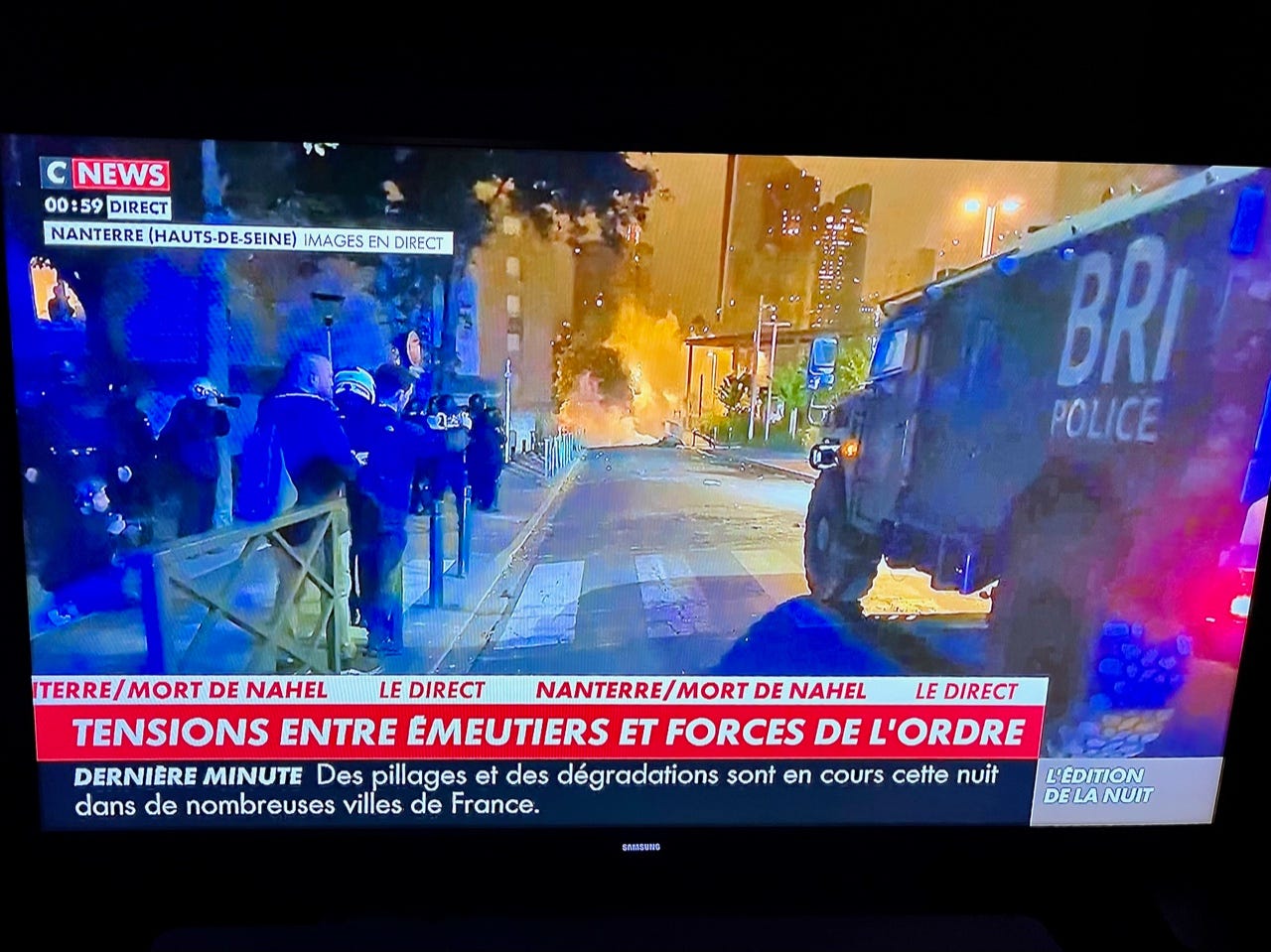
Photo of television coverage on Canal News France June 30, 2023 (Author’s photo)

At 12:15 am on Friday, we’re in bed but we can’t sleep.

“What’s that noise? Shh. Listen.”

It sounds like thunder, but there’s no storm. An explosion? A bomb? There’s a big sucking sound followed by a boom. Someone is shooting off giant commercial-grade fireworks, but there’s nothing visible in the sky.

The rockets are being launched at the police. On the ground.

Helicopters have been circling since nightfall. Despite the 9:00 pm curfew in Ile de France, the ring of suburbs that surround Paris, gangs of young French protesters are roaming the streets, launching rockets, and starting fires.

There’s a war going on, and it’s right next door.

It started on Tuesday with the shooting of a 17-year old boy from Nanterre, “Nahel M.” He and a couple of friends were stopped by police for driving in a bus lane. Witnesses say that the police got off their motorcycles and approached the car.

At that moment, Nahel hit the gas, apparently intending to escape.

An unidentified policeman fired his gun through the driver’s window hitting Nahel’s arm and chest. He died an hour later in a nearby hospital. The officer involved claimed Nahel was driving the car toward him.

An amateur video suggests otherwise.

It’s hard to maintain you were acting in self-defense if the other guy was fleeing. According to the lawyer for the officer who shot Nahel, his client was aiming for the driver’s legs but got bumped.

The lawyer said his (unidentified) client was “devastated” by Nahel’s death and didn’t mean to kill him.

Nahel’s mother disputes this version.

Appearing in TV interviews she was quoted as saying, “The policeman saw an Arab face, a little kid, and he wanted to take his life.” She asked residents of Nanterre to hold “a peaceful march” on Thursday afternoon.

By Thursday night, it had turned ugly.

Nahel was of Moroccan and Algerian descent. Protesters claim this is another case of police brutality and racial profiling. Are there policemen who are racist? Likely so.

Whether that was a factor, in this case, is unknown.

France prides itself on being colorblind, and the government goes to what seems (to my American perspective) extreme lengths to treat all citizens as “French,” prohibiting the collection of data on the racial or ethnic composition of its citizens.

The last time that kind of data was collected was when the Nazis occupied France.

It’s too early to know what happened. No one has any answers, but everyone has an opinion.

A number of public figures, including President Macron, have weighed in on the event. Macron was initially quoted as saying the shooting was “inexplicable and inexcusable,” but he later condemned the protests as “absolutely unjustifiable.”

He may be right on both counts.

French actor, Omar Sy, (star of the popular Lupin series), said, “May a justice system worthy of its name honor the memory of this child.” Popular Paris Saint-Germain soccer player Kylian Mbappe tweeted, “I am hurting for my France. An unacceptable situation.”

Meanwhile, we’re in our fourth day of violent protests—all over France.

Last night, 40,000 police, gendarmes, and the Anti-Gang Brigade were dispatched all over France to try and maintain order. Despite their efforts and the arrests of over 800 people, there was enough burning, looting, and destruction to leave everyone feeling skittish.

It feels like there is a civil war going on in France.

Earlier in the evening I had gone to a friend’s house with a few of her journalist friends for cold drinks and to admire her rooftop view of the Eiffel Tower. A journalist friend was on call to meet an incoming news team from London.

She had her phone nearby, awaiting developments. Everyone shared information—and misinformation—about the incident. The cop was a veteran who had served in Afghanistan, “not a hothead,” someone ventured.

“That’s true,” said another person. “There were no prior complaints about him. In fact, he got a couple of commendations as a policeman.”

We know that at age 17, Nahel M. didn’t have a driver’s license since the minimum age for one in France is 18. Further unconfirmed reports suggest that Nahel M. was known to police, but his record was clean.

Just then, my phone buzzed. It was my husband letting me know to come home early because public transportation was shutting down. It was only 7:30 pm, but we don’t live in central Paris.

We’re in a small suburban town that adjoins Nanterre, where the shooting occurred.

The Metro was still running, but all surface transportation was shutting down by 8:00 pm because of the curfew.

I was lucky to find a train that got me within walking distance of home.

We live in a white-bread bedroom community that was built as an affordable alternative to expensive Paris real estate when the car factories that previously occupied this bank of the river shut down.

It’s a slice of petite bourgeoisie that borders the working-class town of Nanterre.

Nanterre, a town of 100,000 people, is home to a large university and a sizeable immigrant population. It is where Nahel and his mother lived, and where the shooting took place.

My husband and I gave up trying to sleep and got up to watch the TV news.

The protesters have put up barricades and are shooting off fireworks from behind them. There are armored vehicles and troops in riot gear and fires everywhere.

The news resembles war footage with armed soldiers stepping over the burned skeletons of what used to be cars. There are buses on fire. A tram. A school. A community center. A bank.

Our neighborhood usually quiets down around midnight, but everyone is awake. Up and down the courtyard, building lights and TVs are on. People silently watch the war unfold on TV, less than three miles from our apartment.

The police officer has been charged with homicide intentional.

As the only lawyer at the party earlier, I was asked to translate the term for one of my reporter friends and the American network she works for.

“Voluntary manslaughter, I think.”

It was a guess. I know very little about American criminal law and even less about its French counterpart. I saw later that the New York Times called it “voluntary murder,” and wondered if I’d given her bum information.

Is there a such thing as involuntary murder? Sounds like an oxymoron.

Tension continues to build. There is a curfew again tonight. We canceled our weekend plans. Everyone is watching and waiting to see what will happen.

On the one hand, violent protests get important issues like racial profiling and police brutality on the table for people to discuss.

Will these discussions have the desired effect or will they just push more people into Marine Le Pen’s anti-immigrant camp in the next presidential election?

It remains to be seen.

Please consider Following me by clicking Follow above. You will be supporting my work and my weekly blogs will come right to your mailbox. Thank you.

A bientôt

Sara

Paris..1..2..3

Today, I want to show you photos I’ve taken over the past couple of weeks, tell you some of the highlights of coming events in Paris, and for those of you traveling to Paris and France, how to find out about any strikes involving airports and trains.

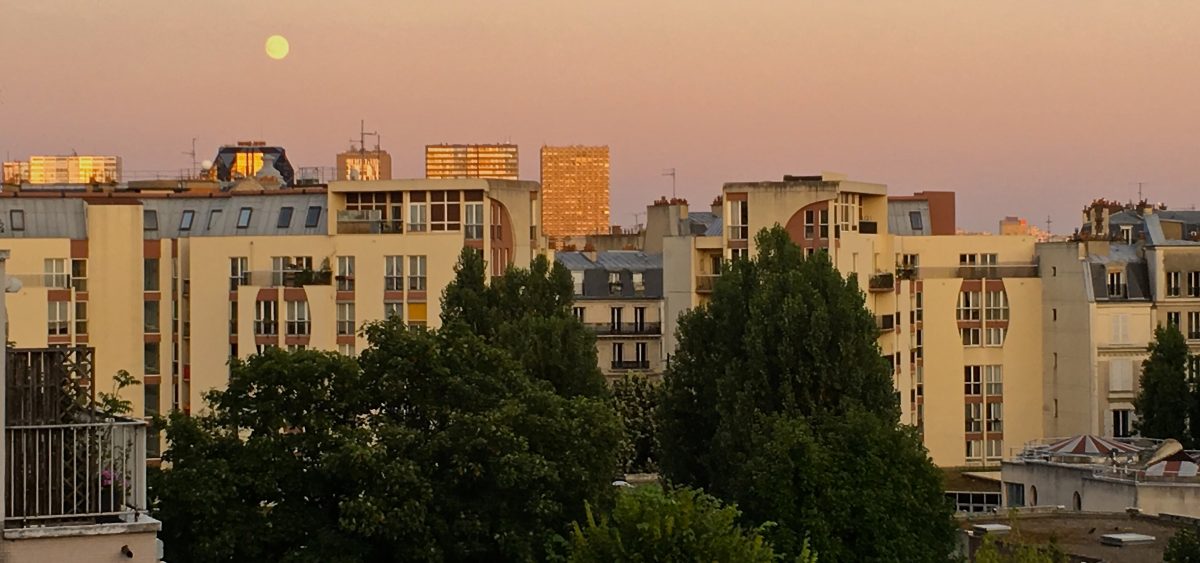
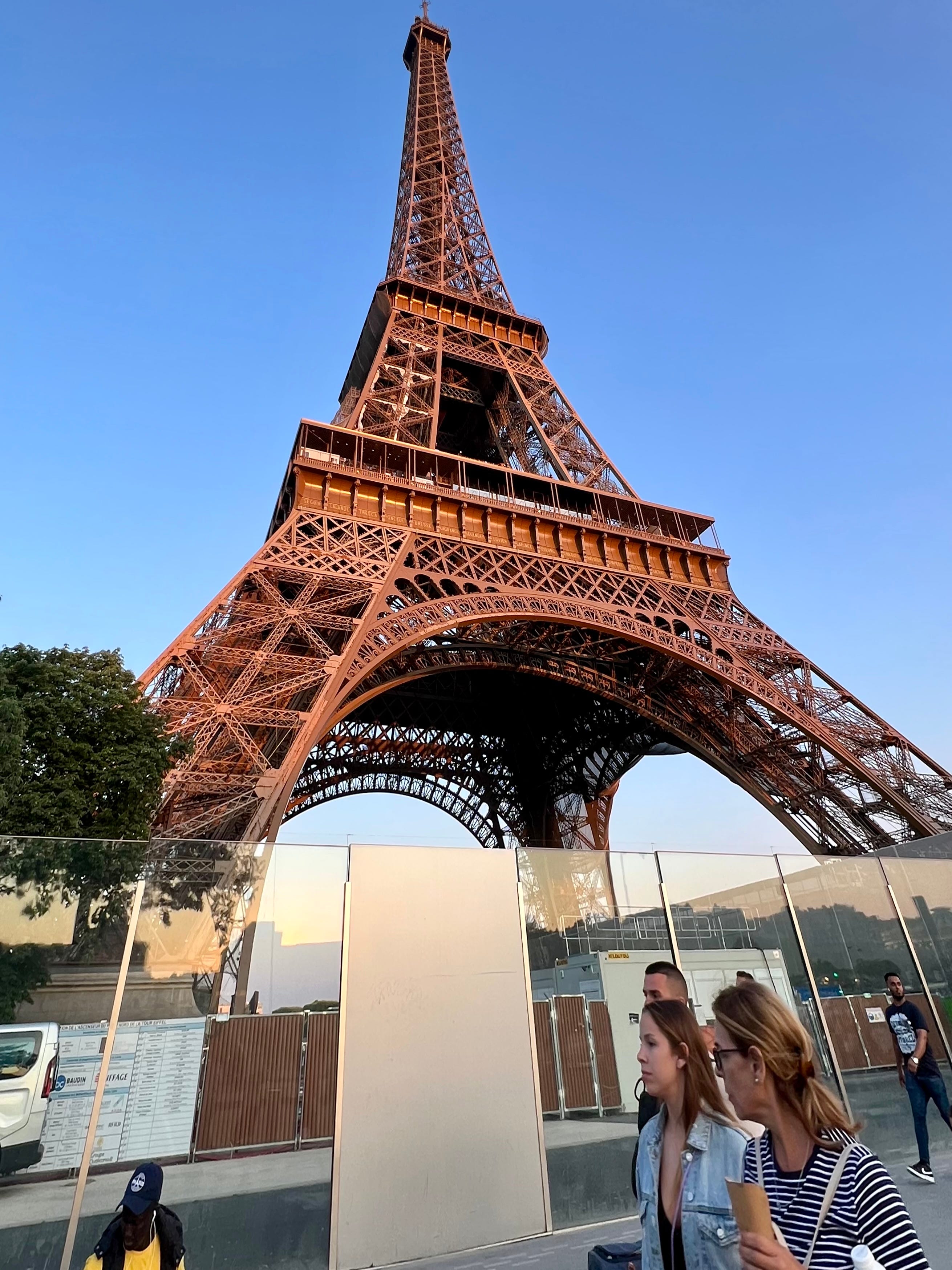
Eiffel Tower in the setting sun

1—For three weeks, we have had glorious weather: anywhere between 75o to 84o. Yes, that’s hot, but it’s not canicule (heatwave) weather. Most homes and apartments in Paris do not have air conditioning. We buy up all the fans during the winter and have them going all summer! Most apartments also have window and door shutters that can be closed during the highest temperatures of the day. That brilliant invention keeps the room dark and cool. In California, where I am from, the temperature climbs until about 2/2:30 pm when it reaches its peak. Then comes down and, before climate change got so bad, evenings in Northern California were cool. Mark Twain famously said: “The coldest winter I’ve ever spent was a summer in San Francisco.” That’s about right. I always envied people who lived in places where they could eat outdoors and stay long into the evening and not have to put on a coat or sweater. Now, one of those people is me!

Walking home Saturday evening

Here in France, the mornings are cool. The temperature climbs and reaches its peak around 6 pm, staying there for awhile, then slowly goes back down.  Unless there is a thunder storm ahead. Summer evenings in France are heavenly. So many of the districts have music festivals all summer long and one can lie in the grass, with a picnic dinner, and just enjoy!

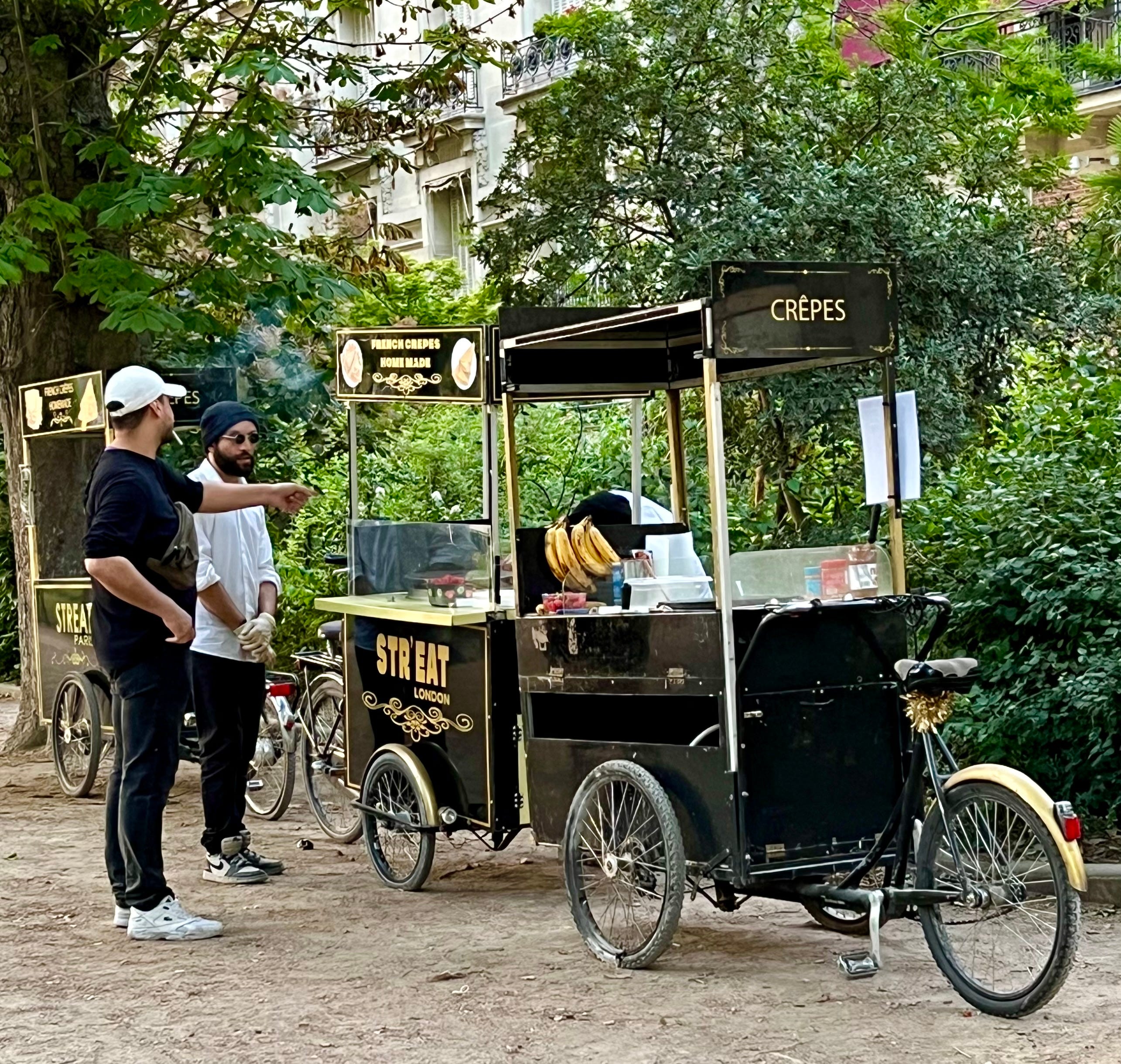
US has pop-up food vans, Paris has Crepes by Bicycle

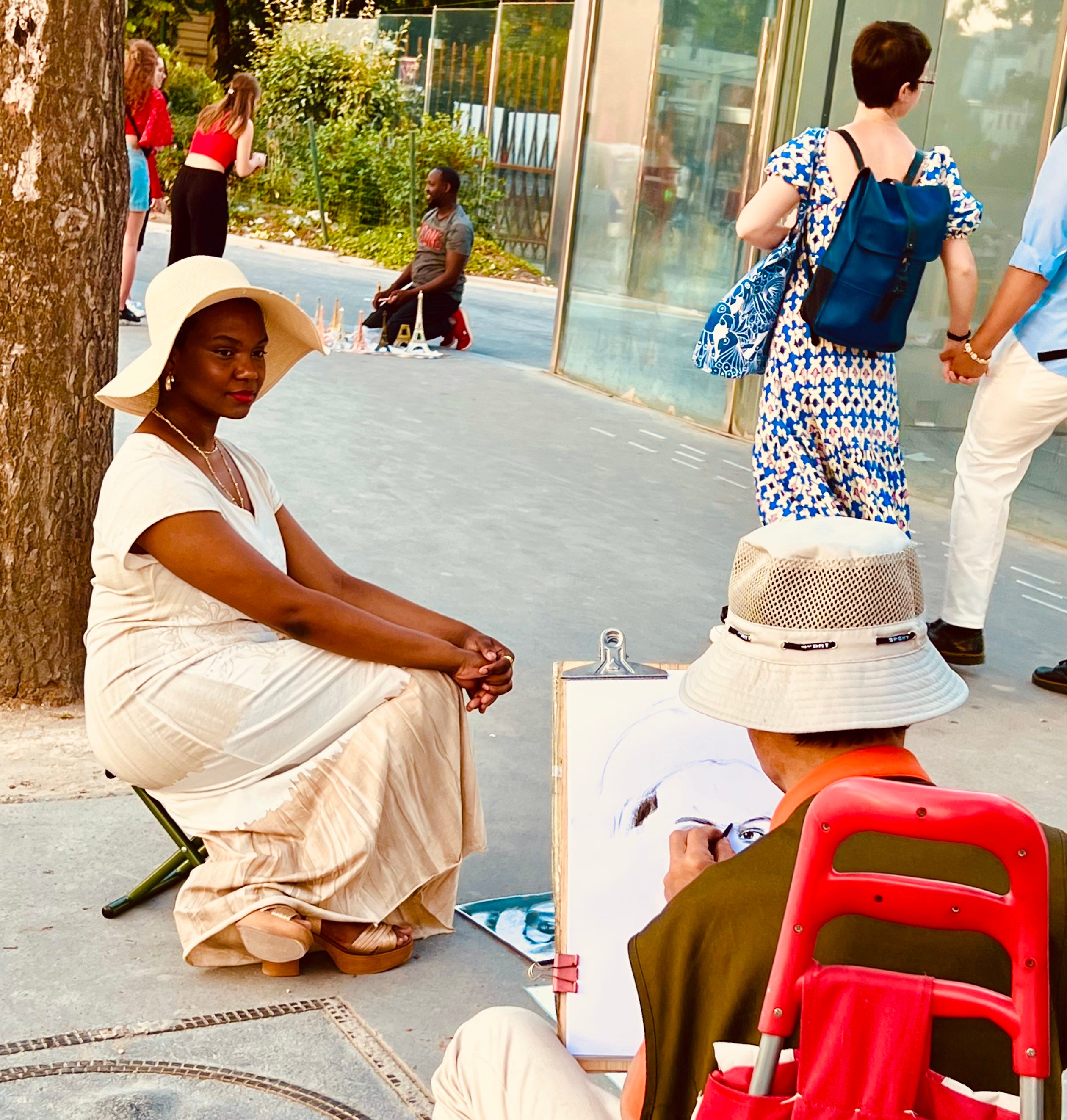
One of the thousands of artists who will draw your facial image. They are usually pretty good.

Saturday, Paris had a surprise thunder storm. I was with a friend and we were going out. She told me to bring my umbrella and a collapsable raincoat I could stick in my backpack. I checked my iPhone which said ‘no rain’. To appease her, I grabbed my umbrella. We got on the metro #9 and got off at Alma-Marceau. We could barely get past all the people huddled in the walkways leading to the exists. It was raining. No. It was pouring. We climbed the stairs, opened our umbrellas, and within a minute, both of us were soaked completely-head to toe. Umbrellas basically non-functional as the wind blew them the wrong way. I ran back down into the station and she followed me. After about 8 minutes when it didn’t look like it would slow down, I told her I was going to take a bus. We had planned on walking because it is such a short distance. Lucky me, I got to the #63 bus stop and the bus was there!!! She walked. Can I defend myself by saying she is a decade younger and walking in the rain is still fun?! This morning, the news said the winds were so high, the rains so bad, that trees were blown over, the coastal town of Dieppe flooded, and there was much damage. There are still storm warnings out. My iPhone now says: “moderate thunderstorm warning until 00.00 Wednesday, June 21.

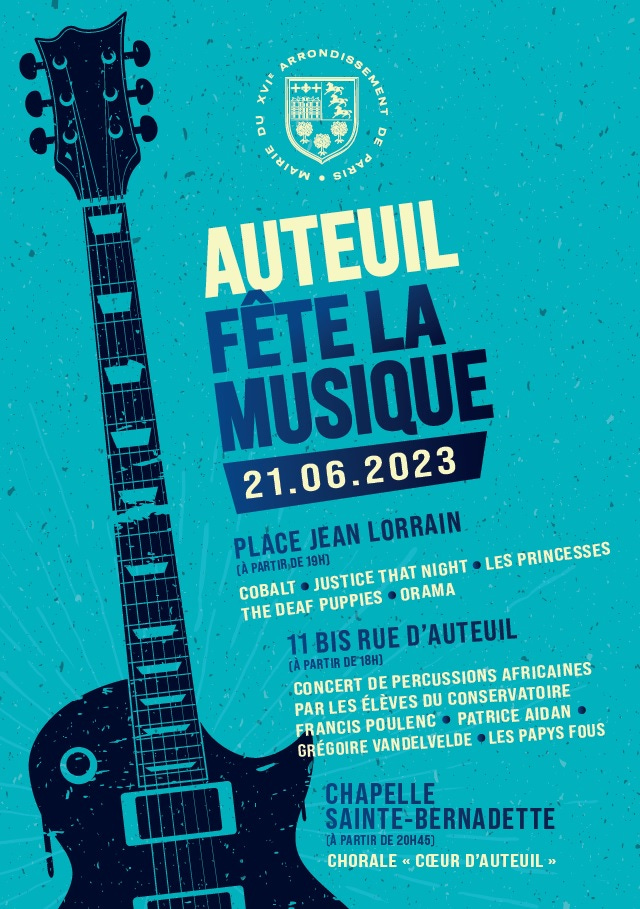
2—My iPhone (with the untrustworthy weather predictions) says that there will not be rain on Wednesday. No sun either. Cloudy and warm. Wednesday is La nuit de la Musique. All over Paris, street musicians will be out playing till midnight, some arrondissements are planning actual concerts. All public and private venues will be open and are free. My arrondissement is doing something in-between. There is one concert in the chapel of a church, another at Place Jean Lorrain in front of the Monoprix which will have music and story telling, and near the street of Rue d’Auteuil—African musique by students of the Francis Poulenc Conservatory and more, much more.

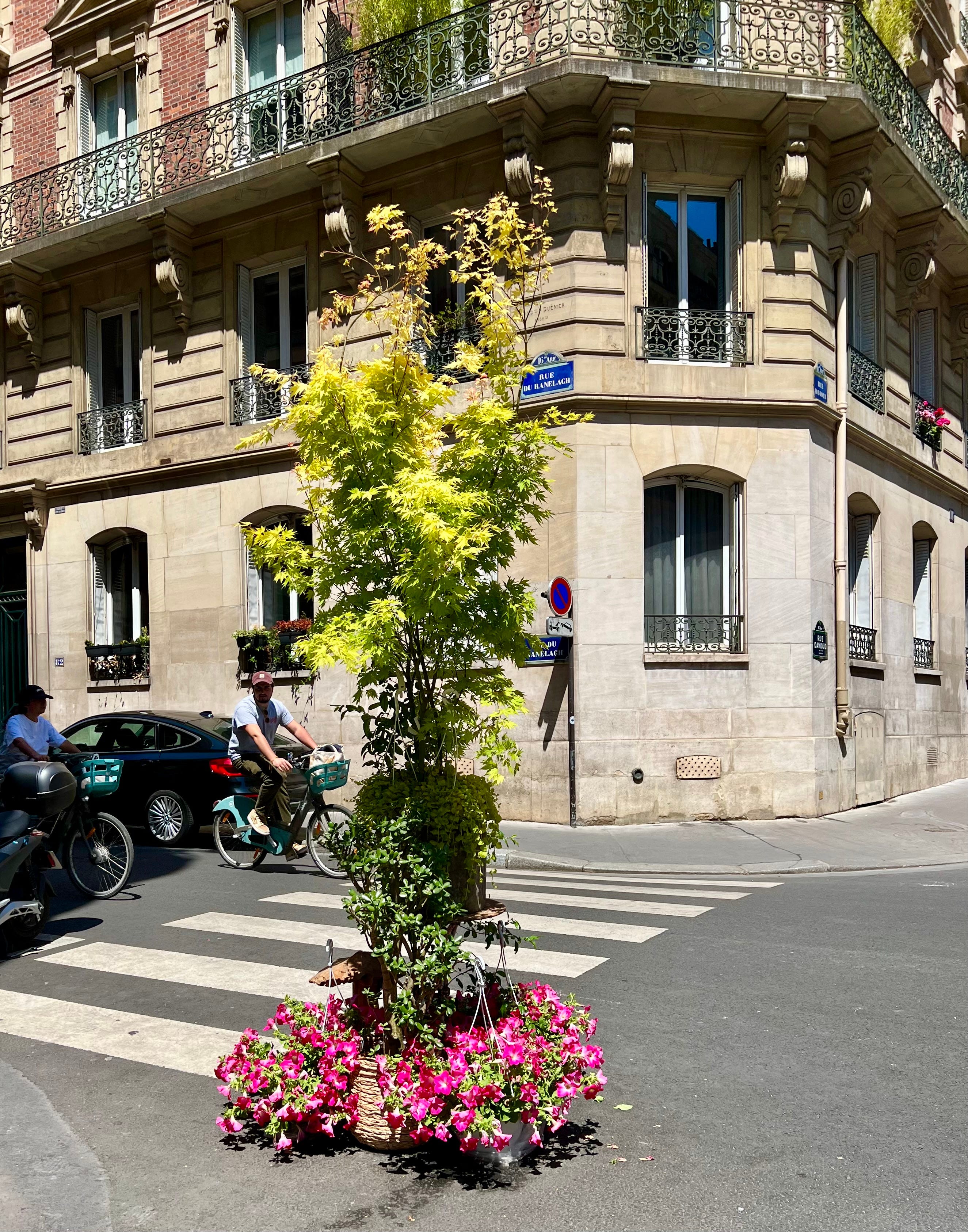
On rue de Ranelagh, a flower store put this up in the middle of the street!

June 21st is also the first day of summer. Parisians and tourists alike are happy. School vacations aren’t far away. A large percentage of Paris leaves for the summer. August is so quiet that about 50% of stores, that aren’t in the very center of Paris, close for the month. So, there is dancing in the street, big smiles everywhere, and a fleeting sense that all is good in the world. Oh those precious moments when we can forget.  La Nuit de la Musique started in Paris, quickly spread thoughout France, then to Europe, and I’m told is celebrated in most countries in the world.

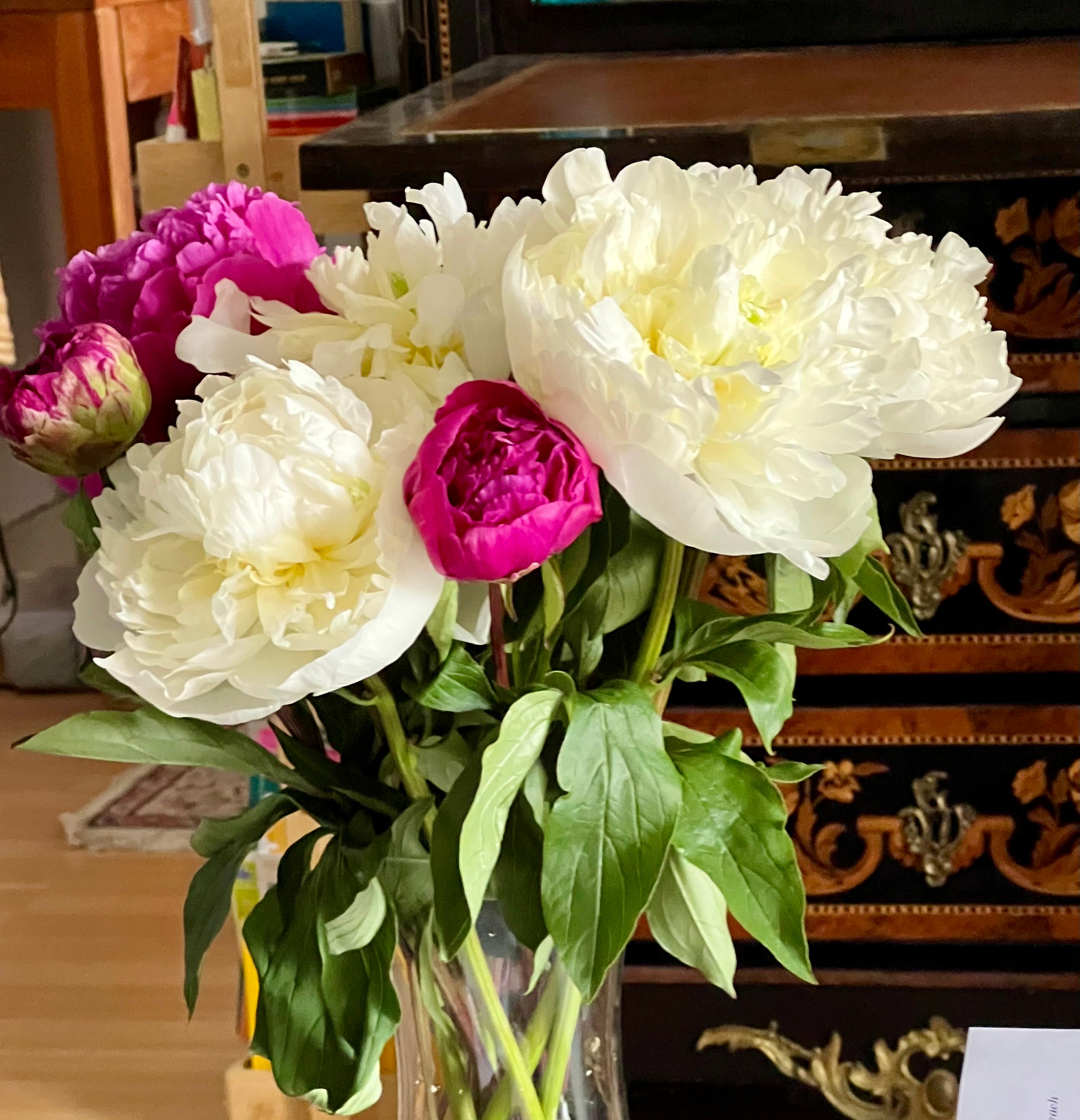
I’ve fallen in love with peonies over here—-but the seasong is far too short.

3—If you are traveling to France this summer, keep an eye out for possible transport strikes. One source to read is Euronews.travel or thelocal.fr. No strikes have been announced for France by the French. But…“travellers to and from France from the UK should be aware of the security staff strikes at Heathrow Airport which will affect British Airlines flights to Paris, Toulouse, Nice, and Mulhouse airports on some dates. There is also potential for a strike at Edinburgh Airport, which could affect flights to France run by several airlines, including Air France.”—TheLocal.fr

I will not be writing this blog on a regular schedule from now until the beginning of September. Just thought I’d give you a heads up. I’m not sick or playing hookey just trying to enjoy as much of the summer weather as I can. Thanks for reading this newsletter. It means a lot.

A bientöt,

Sara
Thanks for reading Out My Window! Subscribe for free to receive new posts and support my work.