My story: The Perfect Game

“We are excited to invite you to our annual AWP reading + celebration on Friday, Feb.9 at 7PM at Sinkers Lounge, in Kansas City.     (Sinkers is just 2.5 blocks from the KC Convention Center.)”

I received this e-mail two days ago. Many of you will remember how excited I was to have a story I wrote be accepted to the Under Review. The on-line digital version of the journal is out (click here). Issue 9. And many of us writers of Issues 8 and 9 have been invited to read our stories at AWP 24 (Association of Writers and Writing Programs) next month in Kansas City.
I sent the invite to my writing group to see if they would come support me and the responses ranged from “Wait, what, the Journal is out and you didn’t tell us?” “Heck yeah!” “How come you aren’t telling everyone they can see your story in print?” That brought me up short. I hadn’t even thought of telling people. Why not? I’d sent the link to a number of people I was sure hadn’t seen it and that was it. We writers have to be brazen about publicising ourselves as no one else will do it. Even for a book, the cost of having publicity done by a company is prohibitive to most people. I’m told that even traditional publishers don’t do publicity unless you are Stephen King or John Grisham. No matter how shy we are or how difficult it feels to tout one’s own horn, no one else is going to do it.

So to those of you who gave me high fives when my story was accepted and all the rest of you who may have missed that blog, now you can see it digitally in print here

If you are going to AWP 24 this year, please come to Sinkers Lounge on Friday evening, Feb 9th. If the weather keeps going in the direction it’s going, which is to say it’s getting warmer, it could well be in the low or high 40s by the time we all get there. So no excuse.

Last year, three people, that includes me, in my writing group went together to AWP 23. We’d only met on Zoom for eight months or so. It was like we’d known each other forever, we got along so well. This year five of us in the group are going. I rented a five-bedroom house that looks as quirky as we feel when we all get together. We may even get a dog staying with us this time around.

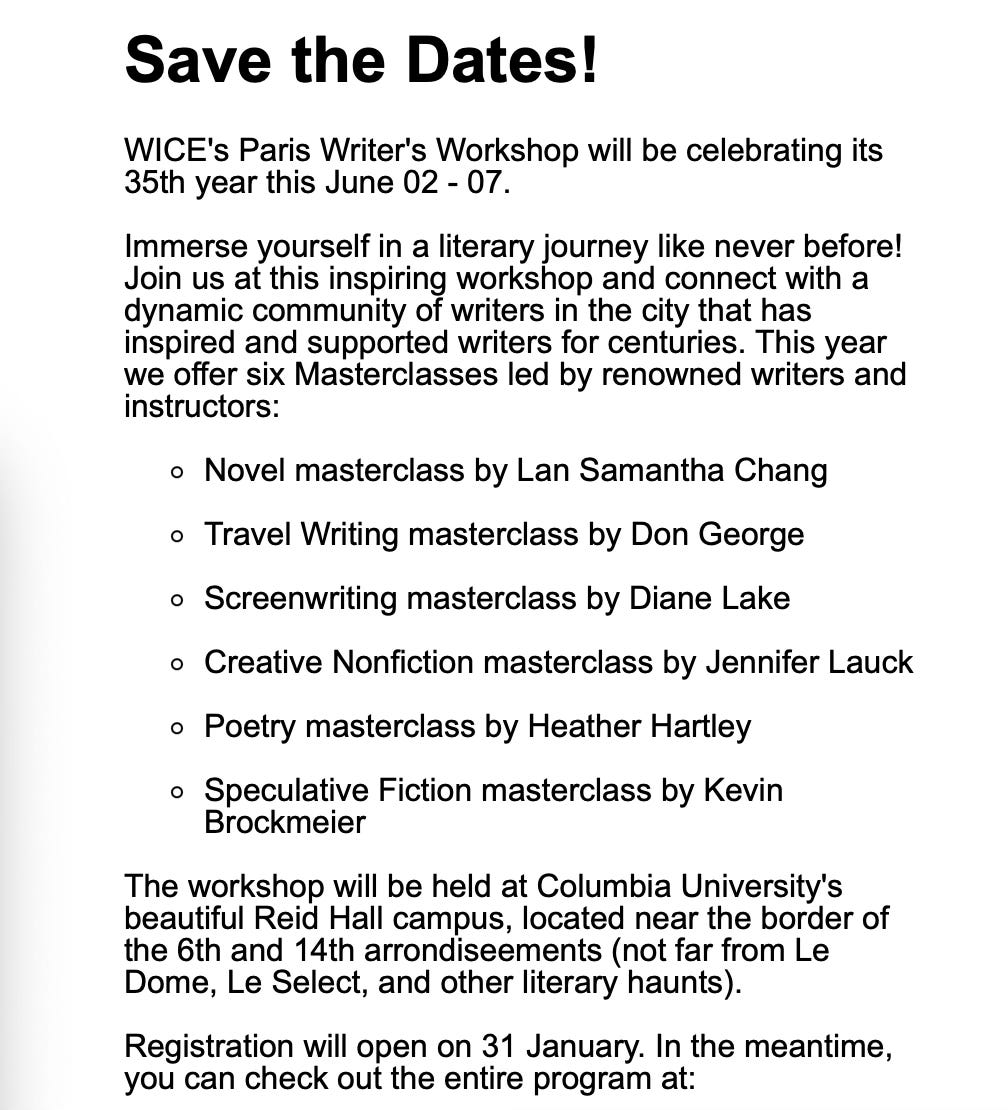
I’ll be taking flyers to AWP to advertise the Paris Writers Workshop in Paris, June 2-7, 2024. Which, btw, I have more information about. I wrote my story of Writing in Paris three weeks ago and how honored I am to be part of this year’s planning committee. At the time I published, I didn’t know some exact details. Here they are. This is the landing page telling you exact dates and about the faculty. The entire website will be up and ready for registrations on January 31.

Registration: Early Bird—975€ till March 15, 2024       

    Full price —1,100€ March 16 onwards 

Agent consultations: For an additional fee, you can register for one, or two, agent consultations. More information to come.

Cancellation Policy:

 Full refund through 15 April 2024 minus 100€ admin fee

Half refund through 30 April 2024 minus 100€ admin fee

I hope to see lots of blog writers and readers at the Paris Writers Workshop. I’ve gone twice now. It is excellent and so reasonably priced. Paris will be dressed up in preparation for the summer Olympics. It will be a good time to see all the decorations without having to deal with the crowds.

A bientôt,

Sara

Thanks for reading Out My Window! Subscribe for free to receive new posts and support my work.

Writing in Paris…….Paris Writers Workshop June 2-7, 2024

If you have ever dreamed of writing a memoir, a short story, a novel, and doing it in the City of Light: Paris, you can do it this summer. My writing story follows.

I discovered reading for fun the summer I turned 14. During summer camp in Vermont, we were bussed down to Tanglewood in Western Massachusetts to picnic and listen to the Boston Symphony who summered there (Back then it was known as the Boston Pops).  Wandering off by myself, I found a gift shop. A plethora of paperback books on three racks greeted me as I walked in the door.  I’d never bought a book on my own.  Going into a shop and browsing, having a title leap out at me and paying for it with my own money, this was new and foreign territory for me. I spun one of the book racks and the title A Separate Peace (John Knowles, 1958) jumped out at me. I bought it.

I devoured A Separate Peace. Every afternoon rest period, I read. At night, in my sleeping bag, flashlight on, I read. The book, about two teenage boys at Exeter Academy, spoke to me.  Before I’d finished, I knew I wanted to write. It wasn’t a crystalized thought. I had so many pent-up teenage emotions with no idea how to express them other than screaming at members of my family. I just knew that getting what was in my head out on paper had to have some kind of transformational impact.

From then on, reading became my way of not feeling so alone. I wasn’t great at talking. I had an A+ in complaining. And, like so many teenagers who feel unfocused creative thoughts, I soon started writing awful poetry.

Over the next 20 or so years, I tried to write stories. I’d start out fine but could never find a way to end them. In my thirties, it dawned on me that I had nothing to say. My life experience was limited, and I had little self-awareness to make sense of the experience I did have. As years passed, I began telling myself that I was Going To Write A Book when I was 55 instead of 30.

Fifty-two years after that Tanglewood experience, I moved to Paris.  I was retired. I had more curiosity than I could contain. Writing courses were plentiful, almost on every street corner! After signing up for the requisite immersion French class, I decided NOW was the time to learn the craft of writing. I joined WICE (Where Internationals Connect in English), an organization that teaches language, creative writing, and photography courses among other offerings. It was mid-October and the only writing course that wasn’t full was a memoir class.

I am eternally grateful that the teacher loved my writing. I signed up for another of her classes in the Spring. I learned that WICE hosts a biannual Paris Writers Workshop (PWW). Unlike many workshops that take place year round in France, this one was reasonably priced. I didn’t hesitate.  Those nasty voices that tell us ‘we’re no good’, ‘Who do you think you are?’, and the zinger, ‘You’re too old to do this’, hadn’t yet taken up residence in my brain. I signed up.  I even met with one of the agents at the conference. She wanted to see more of my writing.

Four years later, I published my first book, Saving Sara: A Memoir of Food Addiction (SheWritesPress, 2020).

I became aware that in my adopted country of France, there are thousands of offerings for the writer and the would-be writer: in-person writing courses, video writing courses, workshops in gorgeous chateaux in the French countryside. But the Paris Writers Workshop stayed my first love. It was the place that had given me the confidence to call myself a writer.

This year, I’m excited to be on the planning committee of the new Paris Writers Workshop, which will be held June 2-7, 2024.

PWW began in 1988. It is the oldest continuous writing workshop in Paris. The 2024 workshop promises to be one of the best so far. The Writing Workshop includes six tracks—Fiction, Speculative Fiction, Memoir/Creative Non-Fiction, Travel Writing, Poetry, and Screenwriting — with an amazing faculty lineup. The wonderful Jennifer Lauck whose Substack Flight School with Jennifer Lauck was one of Sarah Mays top 10 writing Substacks last November will be teaching the Memoir/Creative Non-Fiction track. For the first time, we will be partially sponsored by the Columbia Global Centers and will meet in CGC’s beautiful Reid Hall, in the center of the literary Montparnasse neighborhood. 

Reid Hall at the Columbia Global Center in Paris, 6th arrondissement.

The PWW website goes live January 31, 2024. You can go to the landing page now. Click here to see it. There you will find information on each track and a bio of the teacher.

Registration starts on January 31, 2024. There is an Early Bird registration which gives the writer 100 euros off the 1200 euros price. 

And if the unexpected happens, one can get a full refund. Those dates will be up on the website.

You can also write pww@wice-paris.org for specific information. If you are sure of a track before registration opens, you can claim a spot at pww@wice-paris.org.

A bientôt,

Sara

A different version of this blog appears in the Jan/Feb issue of the AAWE News Paris

Thanks for reading Out My Window! Subscribe for free to receive new posts and support my work.

We would like to publish your…..

Yesterday I received an email telling me that a story I submitted to a journal was accepted for publication. I wasn’t expecting the email. It’s been five weeks since I submitted it. That is an incredibly quick turn around for a journal.

I sat and looked at it, wanting to jump up and down, but afraid that the email might disappear if I did that. After 90 seconds or so, I threw my arms in the air and yelled “YES!!!” Then I forwarded the message to my writing group. Not good enough. The room was silent. I called Tracy, one of the members of my group. I told her that my insides were dancing around and I needed to hear a human voice. She said she had just started to write to me. She was so happy for me. I could hear excitement in her voice. 

Angela, Tracy, and Sara — members of my Writing Group

Then I emailed everyone I knew who has been supporting my writing work. And the congratulations started rolling in. I did jump up and down then, and danced, and had a big shit-eating grin on my face. I went to a Holiday Stroll in my little village of Montclair. Whenever someone, innocently, asked “How are you?” I responded with, “You really want to know?” No one is going to say no when someone with a huge smile on her face is actually willing to tell you. So I told my great news to perfect strangers.

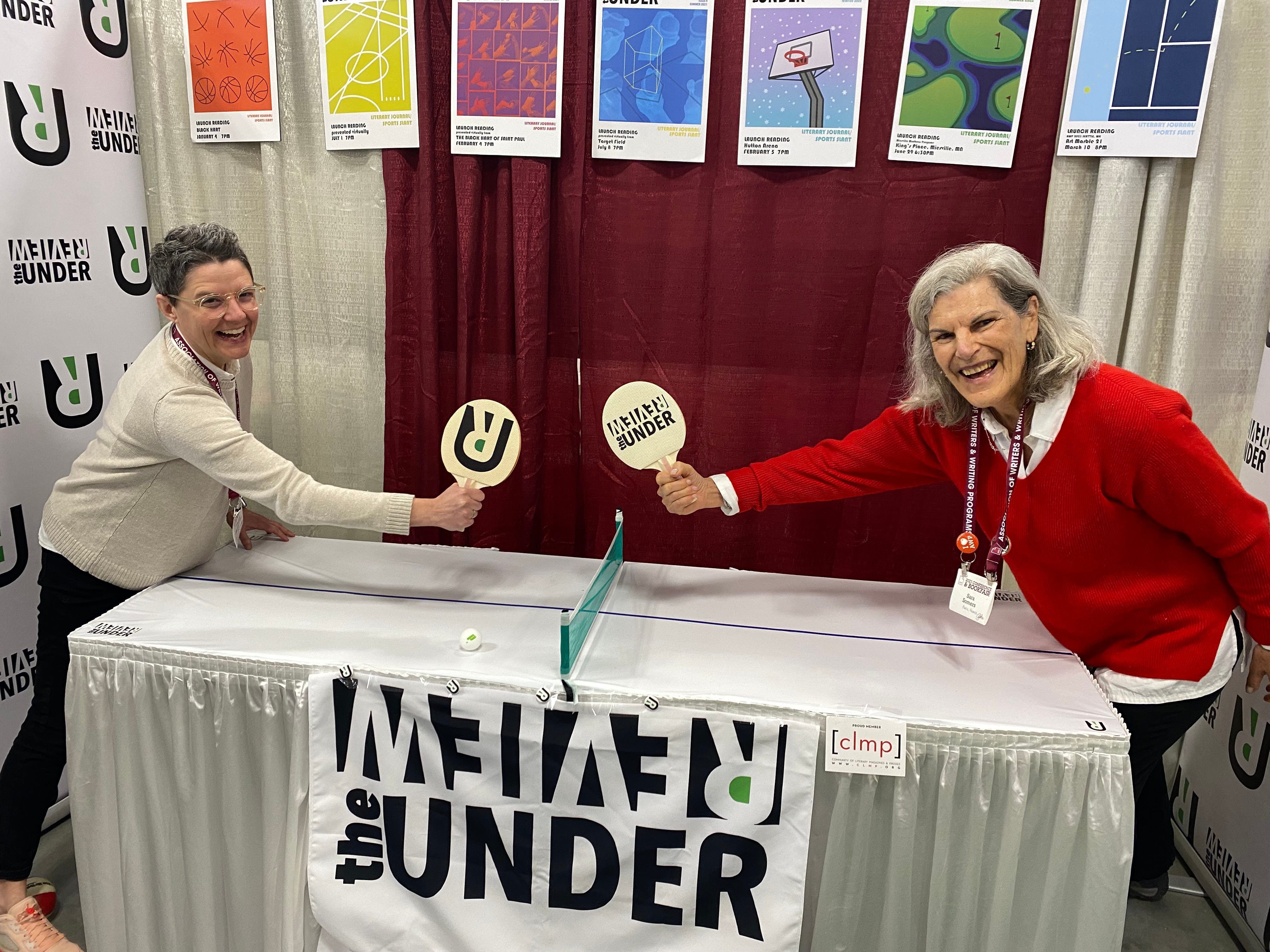
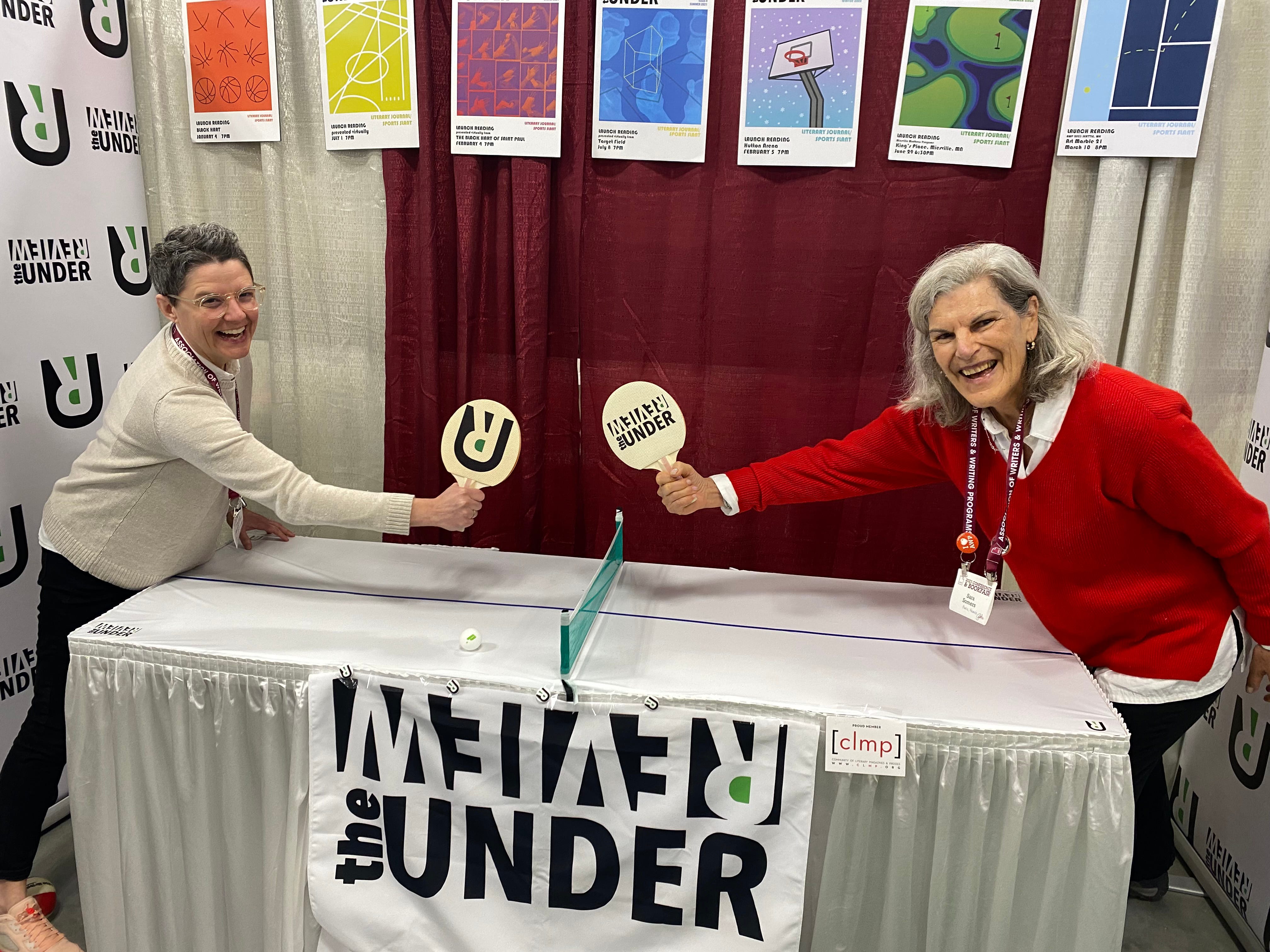
This is the thing: Writing as a profession is a second career for me. I retired from my first career after 35 years, moved to Paris, and started taking writing classes. I wrote a memoir: Saving Sara A Memoir of Food Addiction. I thought, at the time, that would be the end of it. Writing is a bug. Once it fully resides in you, that’s it, the end, you’re hooked. I started thinking of myself as an author, a writer. I’ve been taking writing classes and working with my writing group on my voice. Was I going to attempt to write fiction? or non-fiction? I’m 76 years old. Maybe if I was younger, I would spend more time on the craft of novel writing, or short stories. My imagination isn’t accustomed to going in that direction. I consistently fall short. I love writing this Substack and articles for anyone who asks. I’m comfortable with my non-fiction voice. I wrote a short story about baseball—which I also love. It was based on a true event. I knew exactly which journal I wanted to submit it to. The Under Review. I had met the editors at AWP 23 (Association of Writers and Writing Programs). I played ping pong on the smallest table I’ve seen with one of the editors. I shot a hole in one into the tiniest basket you can imagine. They gave me a coffee cup as a reward. We laughed, and high fived, and had a grand time.

Playing ping pong at AWP 23

I worked hard on my story. I revised it at least 30 times with the help of my amazing writing group: Tracy, Angela, Bob, and Christie. When I thought I was going to hate it if I saw it one more time, I decided it was finished. I submitted it five days before the deadline for the Winter Issue.

My prize for a basket in one!

Yesterday morning, I was sitting on my couch in my home in Oakland, California, missing Paris (although I’m told it is REALLY cold there). I wasn’t depressed, just blah. Everyone knows blah. No color in one’s world. Who cares what happens for the rest of the day. My little foster kittens were tearing up everything in sight and I didn’t have the energy to stop them. Then the email arrived from The Under Review. 

It was like a shot of adrenaline. Someone who counts, who publishes stories, likes my story. Now I want to write again. Ok, so what if I’m retired but working full-time. And yes, writing is a pretty lonely enterprise. I suppose it’s a bit like winning a slam, you shine under the spotlight. Then you start all over again. Maybe I’m seeded a little bit higher but considering who’s out there writing, I’m guessing I’m seeded about 10,000! And that’s ok. Because I’m seeded. I’ve written one book and I’ve started on my collection of short stories!

Now the California sunshine is calling. Gotta get this adrenaline moving around.

A bientôt,

Sara

Thanks for reading Out My Window! Subscribe for free to receive new posts and support my work.
Substack–What is it?

I remember back in 2007 (only sixteen years ago) when some people logged on to FaceBook and some went to MySpace. My memory says that MySpace was difficult to navigate and FaceBook looked nothing like it does today. No one had any idea that our privacy was being stolen away from us without permission. I think I ended up using FaceBook, not because I liked it better, but because all my buddies preferred it. If the Oakland Athletics were having an Away Game, many of us sat in front of our TVs watching the game, computers on our laps, “talking” to each other on FB. It felt exciting, and fun, and we were all together—a baseball family—chatting away and enjoying the game while sitting separately in our homes.

A similar thing seems to be happening with blogging/newsletter platforms. When I started my blog in 2016, I chose the platform WordPress. I didn’t do much research. I wasn’t sure how long I might be writing it. I just wanted something that would be fairly easy and not frustrate me. I had moved to Paris three years earlier and I wanted a way to let my friends and family know what I was up to without writing separate e-mails to everyone. A few years later, Medium appeared which attracted many different kinds of writers: health gurus, Apple computer geniuses, the best apps to download and how to use them. Periodically, there was some serious writing.

A year and a half ago, my sister, knowing I admire the writing of George Saunders, sent me a link to Story Club with George Saunders. He was writing on the brand new (new to me) platform Substack. I could choose to be a free or paid subscriber. Since George was essentially teaching a course on how to read and appreciate short stories, I immediately signed up as a paid subscriber. Generous human that he is, I’ve gotten my money’s worth many times over.

Something interesting was happening at Story Club that I hadn’t experienced at WordPress or Medium. The readers were interesting, articulate, and also very generous. The give and take amongst the highly motivated subscribers was, for me, like attending one of George’s graduate courses at Syracuse. As I read the comments, I’d check the photo or avatar of the writer and learn what other substacks that person read. I discovered Heather Cox Richardson, whom I wrote about earlier this year. Her substack is now required reading with my breakfast. As of today, I’m signed up for twenty substacks and I’m a paying subscriber to four of them.

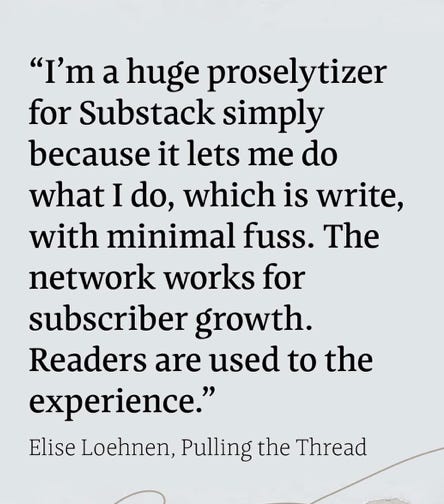
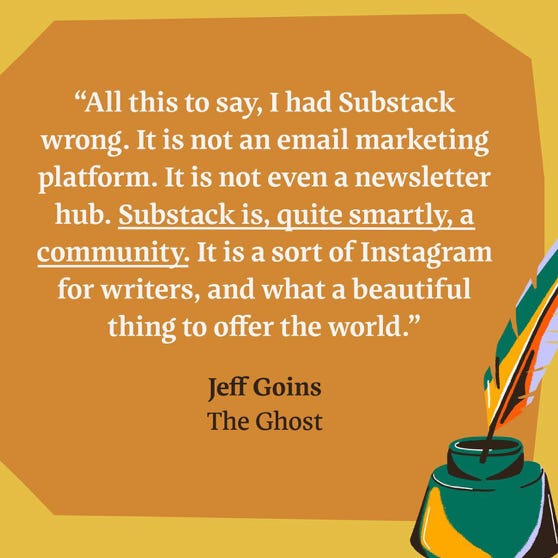
Substack attracts writers. It was founded in 2017 by Chris Best, Jairai Sethri, and Hamish McKenzie. I believe initially it was to give journalists a place to write as printed media was dying out of our world. The majority of the substacks, however, offer personal writing, opinion pieces, and research. Moderation of what is written is done by the founders. For authors, Substack is a way to make money writing. Which is VERY hard to do. A Substack is not expensive. Ten percent of the earnings goes to the founders. Initially, the founders reached out to well-known authors and provided “scholarships” to start writing on this platform. A writing community has been founded. I can read writings by some of my favorite authors: Rebecca Makkai, Jami Attenberg, Roxanne Gay, Katherine May, Joyce Carol Oates, and Matt Bell among others.

I wanted in and eighteen months ago, I started writing my own Substack: Out My Window. I also post it on my WordPress site also called Out My Window. I wasn’t sure if I was ready to get all my WordPress followers to migrate over to Substack but I was sure I wanted to be a part of this literary community. Writing about Substack this week is partly to prepare my WordPress followers to contemplate the move!

I’ve met and made friends through Substack. As I wrote last week, a new ‘friend’ I’ve not yet met, Judy MacMahon, created #FranceStack. She has collected together many of us who write about France and Paris, and created “a list” now known as a Stack! Rather than competing with each other, we can repost something that our readers would probably find interesting, AND bring attention to other writers who love and write about France.

For now, Substack is a wonderful idea that has brought well-known authors into our living rooms and made it possible for writers whose names are not Steven King or John Grisham to make a living doing what they love to do.

I did see this morning that someone has started #SobrietyStack and is charging for it which goes against all the traditions of Twelve Step programs. Recovery is free if you’re willing to do the work. 

So nothing is perfect—big surprise! For now, we have a booming literary society available to everyone. And it’s a wonderful way to support the authors you enjoy—especially if you are a library patron as I am and don’t buy that many books. If you are a WordPress follower of mine, go to SaraSomers.substack.com (click this link) and subscribe for free. Then look around Substack and find other publications that might interest you. Now is a great time to do it. Like FaceBook, like so many things in our technological world, most everything gets too big and the underbelly shows. The Internet is still the Wild, Wild, West.

A bientôt,

Sara

Thanks for reading Out My Window! Subscribe for free to receive new posts and support my work.

An Evening with Jami Attenberg

When I was in Oakland this winter, I had a computer crash. Not a real computer. The one in my brain that, on a daily basis works just fine, usually brings up the right things at the right time, shuts down to ‘sleep’ at night, wakes up at the appointed time ready to hit the day running. In January, it just burned to a crisp—nothing left to make it work. Sissssssssssssss! It’s called Burn Out. I don’t remember how I stumbled onto Jami Attenberg’s Substack newsletter. I had first discovered Substack when my sister wrote me about George Saunders’ Story Club with George Saunders. I immediately became a paying member. Comments were invited and I loved reading them. Wanting to know what that person read on Substack, I soon realized how many writers I respected had Substacks, and found ones that I didn’t know who wrote about the craft of writing. I found Jami and her #1000 Words of Summer Challenge.

https://www.pw.org/content/1000_words_of_summer_how_an_accountability_project_opened_up_my_writing_life

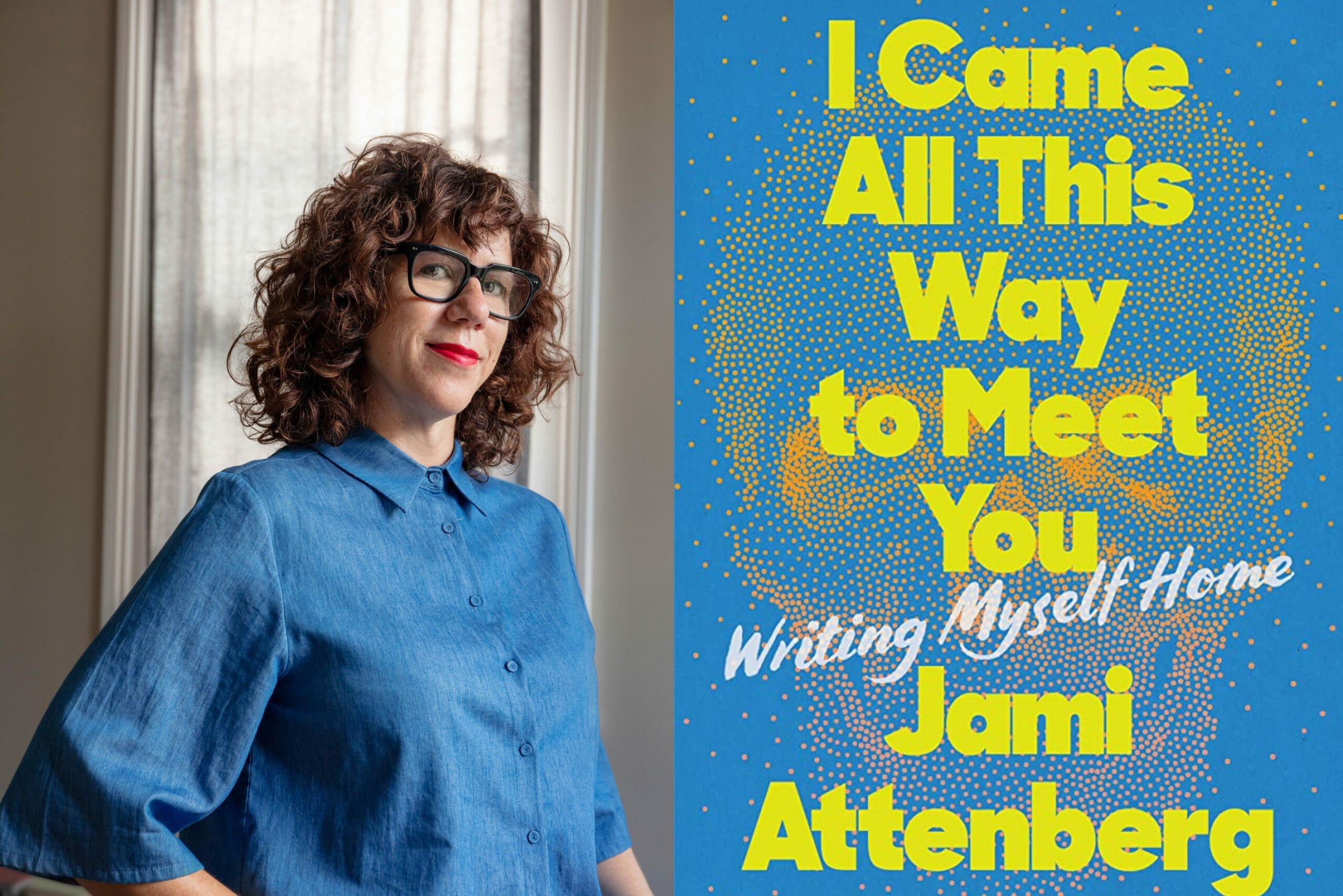
At the bottom of her Substack, she mentioned she’d written a memoir. I took the memoir, I Came all this way to meet you- Writing Myself Home, out of the library. First I read it. To say I loved it would be an understatement. I felt like she had me in mind when she wrote it. I, then, got the audio version and listened. Feeling exactly the same way as I had after the first reading, I bought the book and added All Grown Up (2017 First Mariner Books). What spoke to me? Jami writes in an intimate, conversationally (is that a word?) way that feels as if she is talking to ME. Writer to writer. She throws in comments about writing, about the craft of writing, about the love of writing, and how to grapple with certain problems, and many things that authors think about and only other writers and authors really relate to. This all while she is telling us about her life in often funny, self-deprecating ways. She is wise and knows herself well. She said eloquently what I felt but had not yet found words for. Writers, both ones she knows and ones she has yet to meet, are her friends. She roots for us. The memoir is one of those books that expands your world, makes you want to create because you can, and she is your cheerleader.

Jami Attenberg, American writer, Milano, Italy, 8th September 2016. (Photo by Leonardo Cendamo/Getty Images)

Recently, her weekly newsletter led off with dates that she would be reading or would be interviewed in various cities. There was the word PARIS. She was going to speak at the American Library. I immediately wrote her (you can do that on Substack. Write a comment). Jami responds to almost every comment. I told her I’d bring as many of my writer friends and book club friends as possible. She was up against some big competition. The American Library has had a pledge that would probably bring in quite a bit of money. For the first time, they can have two events on the same night. So, the next day, I learned that the second event was the San Francisco Theatre group, Word for Word, putting on George Saunders’ play HOME. This did not feel at all fair. I wanted to complain (I think I did). But the dates were set and I really really wanted to support Jami. So I put the play out of my mind.

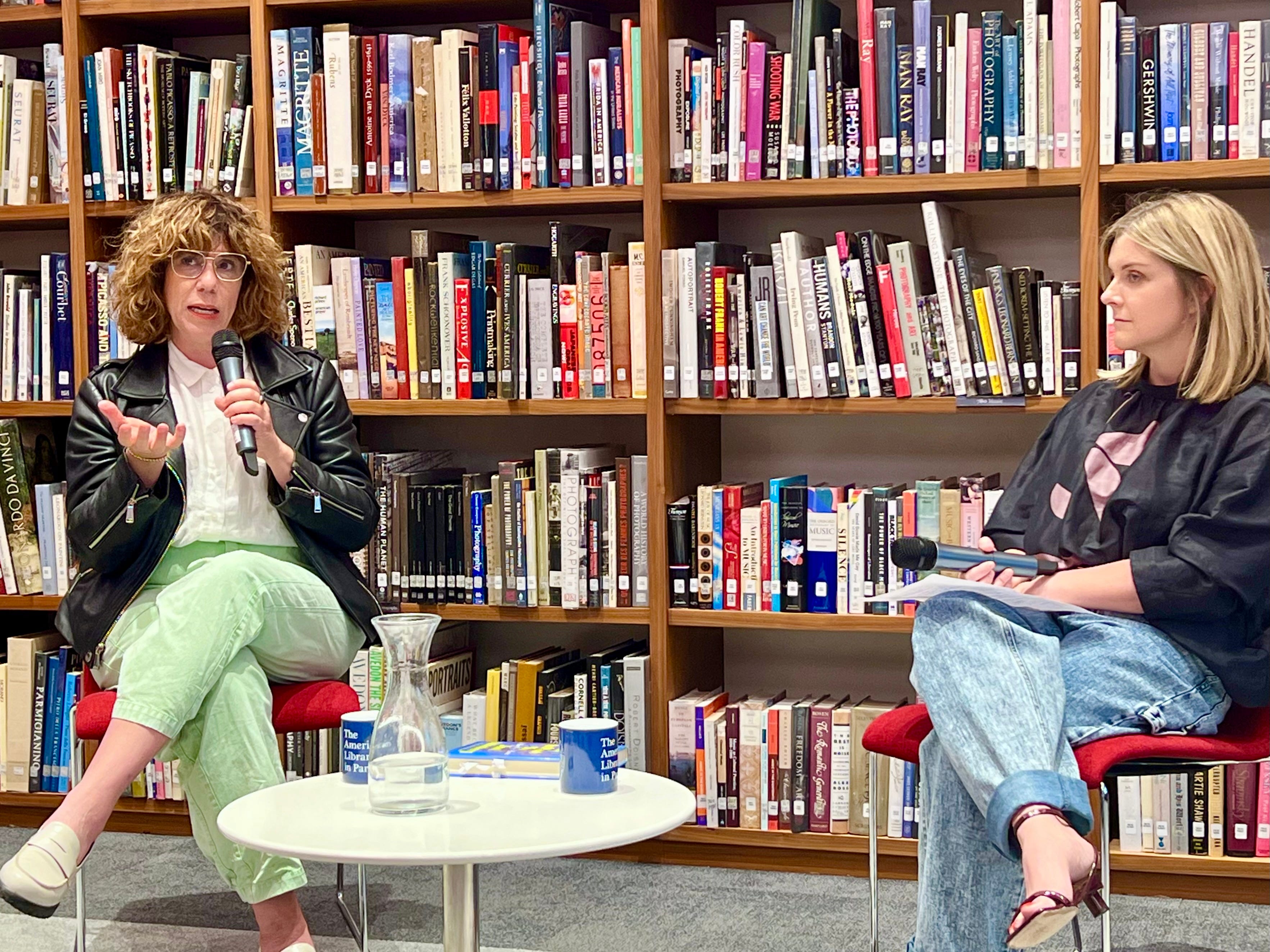
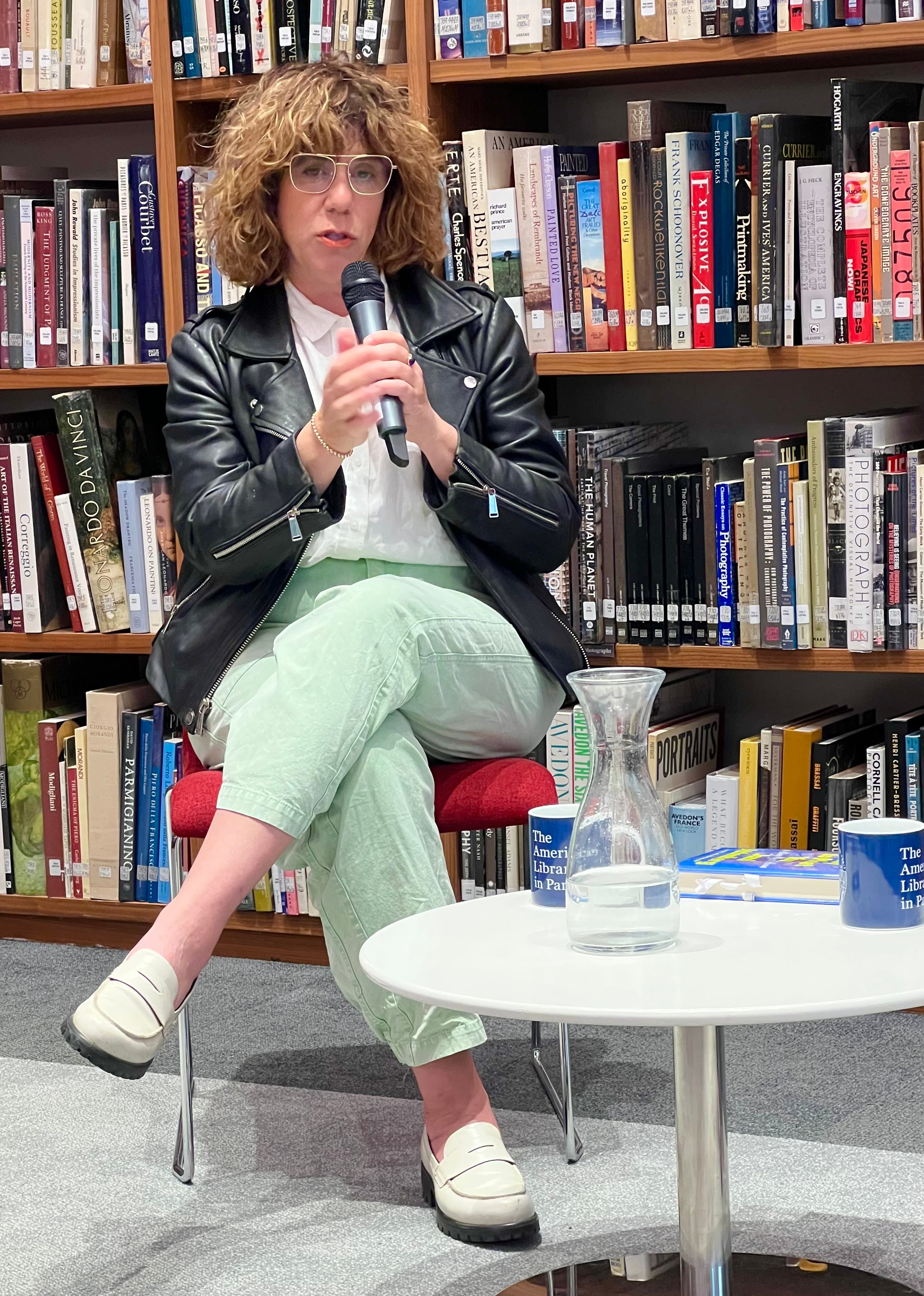
Tuesday evening, I went early to the Library to listen to Jami being interviewed by the wonderful Lauren Collins (staff writer, New Yorker). I brought both of her books hoping to get them autographed. The reading room in the library was packed and it was on Zoom. She told us that she was far enough away from the memoir – it was published January 2022 – that she could discuss it without too much emotion. She told us how she wrote and wrote until she knew what her focus was: being a writer. She explained how she structured the chapters in the book.

Jami and Lauren, reading room of the American Library in Paris

Structure is something that is often a stumbling block for me. It feels like the AP class in creative writing. Jami chose ten of the most important periods of her life for chapters. These events didn’t necessarily happen consecutively. So she didn’t write them that way. In my stories, I’m still learning the architecture of a really good story. What do you say when? When do you bring in backstory? What do you start with? And those last two sentences where in a short story, as my Stanford professor told us, they’d better be a knock-out punch.

I’m not the only one grateful to her and the way she writes, the way she tells us about her writing life. She manages to be be inclusive, her challenges are so often our challenges. Her #1000 Words of Summer, in its sixth year, has almost 30,000 subscribers. Most of these people she’ll never meet. Yet, she has had the experience of finding herself mentioned in the acknowledgments of a book as both the inspiration and the kick in the pants push the author needed to get going. I can just barely imagine what that must be like—a thought, an idea she has had and put into action, growing to such a degree that authors around the world express their gratitude in black and white on the acknowedgment page for getting them to the finish line.

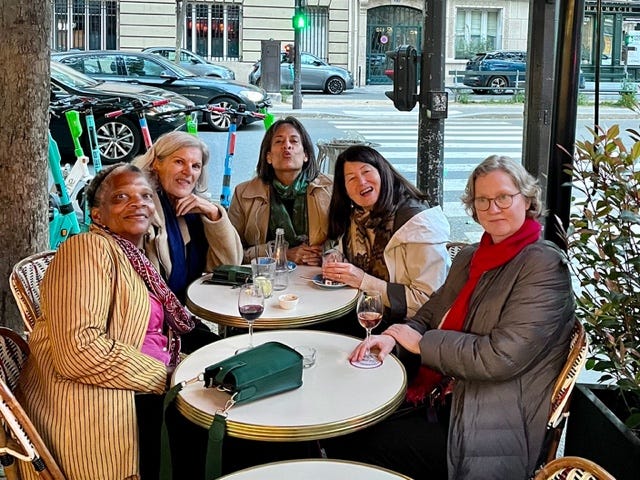
Part of my writing group: Gwen, Sara, Pamela, Kit, Lori, out for drinks after listening to Jami at the American Library

Thank you, Jami Attenberg. May you enjoy your Italian vacation!!

For more information on #1000 Words of Summer, go to Jami’s substack Craft Talk

A bientôt,

Sara

Thanks for reading Out My Window! Subscribe for free to receive new posts and support my work.
May is Mental Health month in the US

During this past week, I read two pieces of writing, a substack essay by Mary Gaitskill and a novel by Abraham Verghese.Both hit the same place in my gut for very different reasons. I finished the novel a day before I read the substack so I had time to meditate on one of the messages the book held for me. Verghese’s novel, The Covenant of Water (due May 2), spans seventy-five years, revolving around a family living in what is now Kerala, in southwestern India. The family is not poor but not wealthy by any means. Most of it takes place while India was under the rule of the British Empire. Without going into too much of the story, the family suffers a lot of death, many of the characters suffer misfortune, and there is an air of sorrow throughout the book. As I was reaching the end of the book, I was struck by the sense of “Shit Happens” and “We Move On”. How best to describe that? In my life, a child of 1950s optimism and Father Knows Best TV, I believed that if bad things were happening to me, there was something wrong with me. I almost always saw the glass half empty and found ways to escape my reality as I was hurting all the time. In Verghese’s book, ‘reality’ was that ‘bad’ things happen – to everyone. It’s normal. Those that moved forward accepted life on life’s terms. Those that didn’t, go through some very tough times. No one had to like the hand they were dealt. They mourned but they didn’t end up in therapy wondering what was wrong with ‘them’. They weren’t the center of the universe. Love wasn’t bartered on how good a person was or was not. Hardship befalling one was not a moral issue. The matriarch of this family loved everyone in her family and everyone who became part of the family. They knew they were loved. Yet shit still happened. Many of the characters found purpose in their suffering and found a way to turn their sorrow and grief into something that was of use to the larger world. This is a very simplistic summary and I recommend reading the book.

Gaitskill’s essay, entitled The Despair of the Young…. and the madness of academia, (search on the substack search engine) is a heartbreaking look, from a creative writing teacher’s experience, at the nihilism that so many between the ages of ten and thirty suffer from today. In her writing classes, students wrote about suicide, murder, serial killing, rape, and violence of the most extreme sorts. Often from the first-person point of view. She has taught long enough to see the trend get worse over the years. Political correctness, lawsuits, and lack of “safety” have seemingly tied Academia’s hands to handle this trend in a way that might actually be helpful to a student. I am in my 70s. I felt despair in my teens and early twenties. Nothing I felt compares to what I was reading in her essay. Though I often contemplated suicide, I never would have followed through. It was a way out that I always had in the back of my mind that kept me from believing I was in a prison of misery with no exit doors. And there was a revolving circle of adults (not my immediate family) who listened to me, empathized, and allowed me to be seen no matter how self-centered my despair was. 

I have little first-hand knowledge of what Gaitskill was writing about. The closest I’ve come is my reading the news of mentally unstable young people being allowed to buy guns, and taking their despair out on schoolmates and whoever was near them. I would never doubt Gaitskill. She is a brilliant writer, able to translate much of her life experience into very readable, though not always pleasant, short stories. I’ve also watched many of my friends go into therapy since White Supremacy and Hatred have crawled out from under the carpet in the years leading up to Trump’s election and the seven years since. Most of my friends are adults and know ways of trying to cope. Some have fallen sick. None that I know of have resorted to self-violence or other violence. I, myself, have chosen to distance myself from the insanity of what’s going on in the US by living much of the year in France. 

Where am I going with this writing? The contrast between the fictional story of a family that managed to convey that things do pass and there was no belief that whatever was happening was so acute that the only way to stop the pain was suicide or homocide, and in the USA of today, where violence is a reasonable option to deal with despair. It is an option supported by the very same people that say killing a fetus is a crime. 

Gaitskill further says that her students are being let down by their schools. She gave some examples of times when she, the professor, or another staff member could be available to talk to a student. She was told not to. “The only thing I can say for sure is that the young deserve better.  It has become standard to complain about how inept and spoiled the young are but—my students were in some ways pretty great.  Their stories confronted not only suicide and violence but also dilemmas of artificial intelligence, gender animus, caring for a sick parent and sibling during the pandemic, the tenderness of asexual love, the awfulness of age, the timelessness of war—they were ambitious, humorous and bright in the face of everything.”

When I finished reading The Covenant of Water, I didn’t want it to end. I felt so satisfied and full from having read about generations of people coping with life. When I finished Gaitskill’s substack, I felt so powerless over this despair that is spreading amongst young people like the black plague. Covid didn’t help but it’s not an excuse for why adults are letting young people down, why treating the mental health of our young isn’t available everywhere. It’s needed now more than ever.

According to the Suicide and Crisis Center of North Texas, suicide is the third leading cause of death of young people between the ages of 15 and 24.

  • 5,000 young people complete suicide in the U.S. each year.
  • Each year, there are approximately 10 youth suicides for every 100,000 youth.
  • Each day, there are approximately 12 youth suicides.
  • Every 2 hours and 11 minutes, a person under the age of 25 completes suicide.
  • In the past 60 years, the suicide rate has quadrupled for males 15 to 24 years old, and has doubled for females of the same age.
  • For every completed suicide by youth, it is estimated that 100 to 200 attempts are made.
  • Firearms remain the most commonly used suicide method among youth, accounting for 49% of all completed suicides.

There’s not much more to say except to hope that mental health counseling in schools, universities, and everywhere gets better and becomes more accessible. What is happening today should be unacceptable.

A bientôt

Sara

Thanks for reading Out My Window! Subscribe for free to receive new posts and support my work.
Know the warning signs

Learn the common signs of mental illness in adults and adolescents.

LEARN MORE

Mental health conditions

Learn more about common mental health conditions that affect millions.

LEARN MORE

Find Your Local NAMI — National Alliance on Mental Illness

Call the NAMI Helpline at

800-950-6264

Or text “HelpLine” to 62640

Reflections on AWP 23

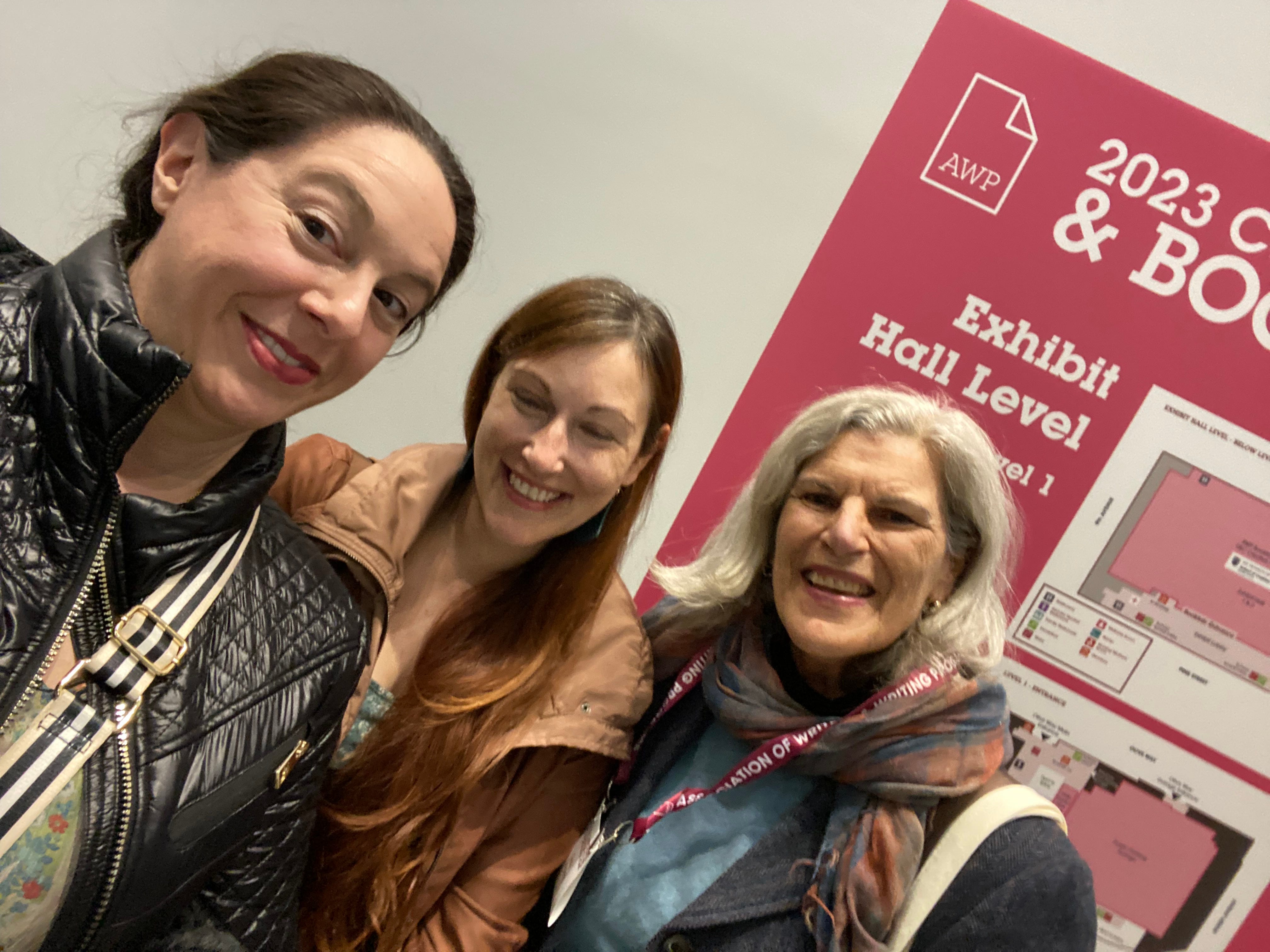
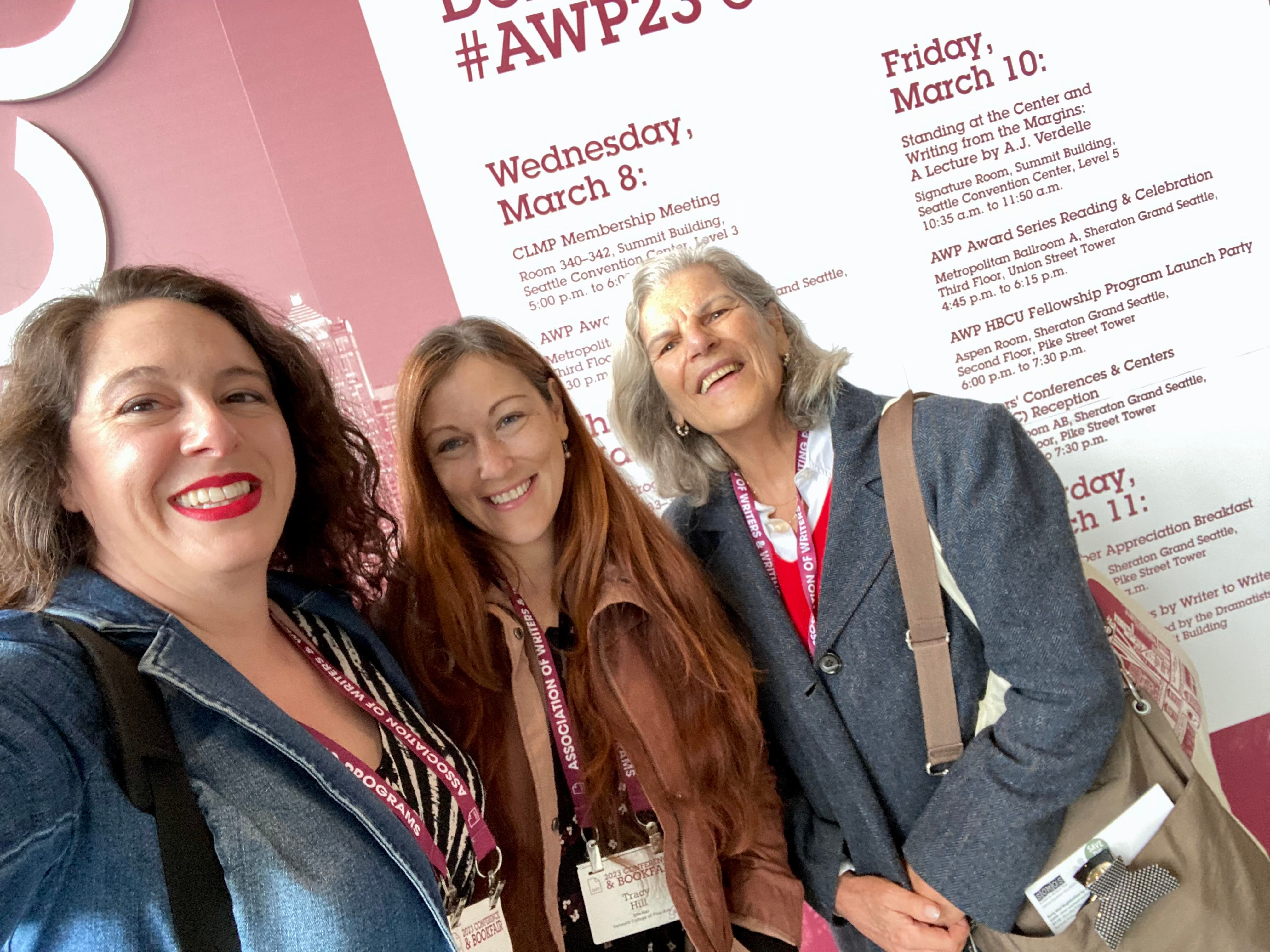
After finishing my summer Stanford course in Short Stories, five of us decided to form a writing group and continue to share our writings with each other. Until last Wednesday, none of us had met in person. That changed when three of us attended AWP 23 (Association of Writers and Writing Programs) in Seattle, Wash. Angela had been a number of times before. Tracy and I signed up based on her recommendation.

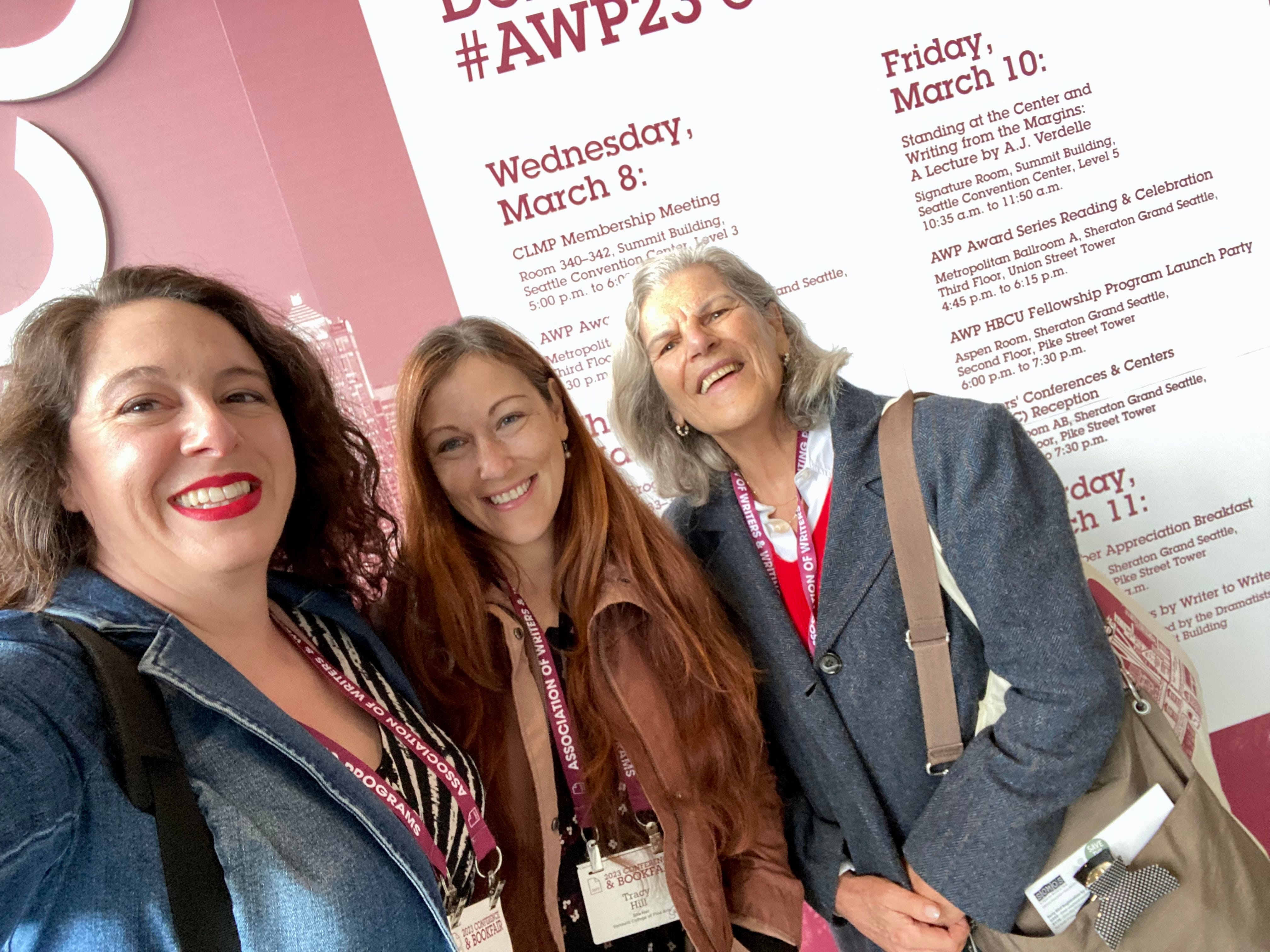
Angela, Tracy, Sara at AWP

AWP meets once a year, always in a different city. It attracts writers, poets, students in MFA programs, teachers of Creative Writing, MFA programs, small publishers, and independent bookstores.

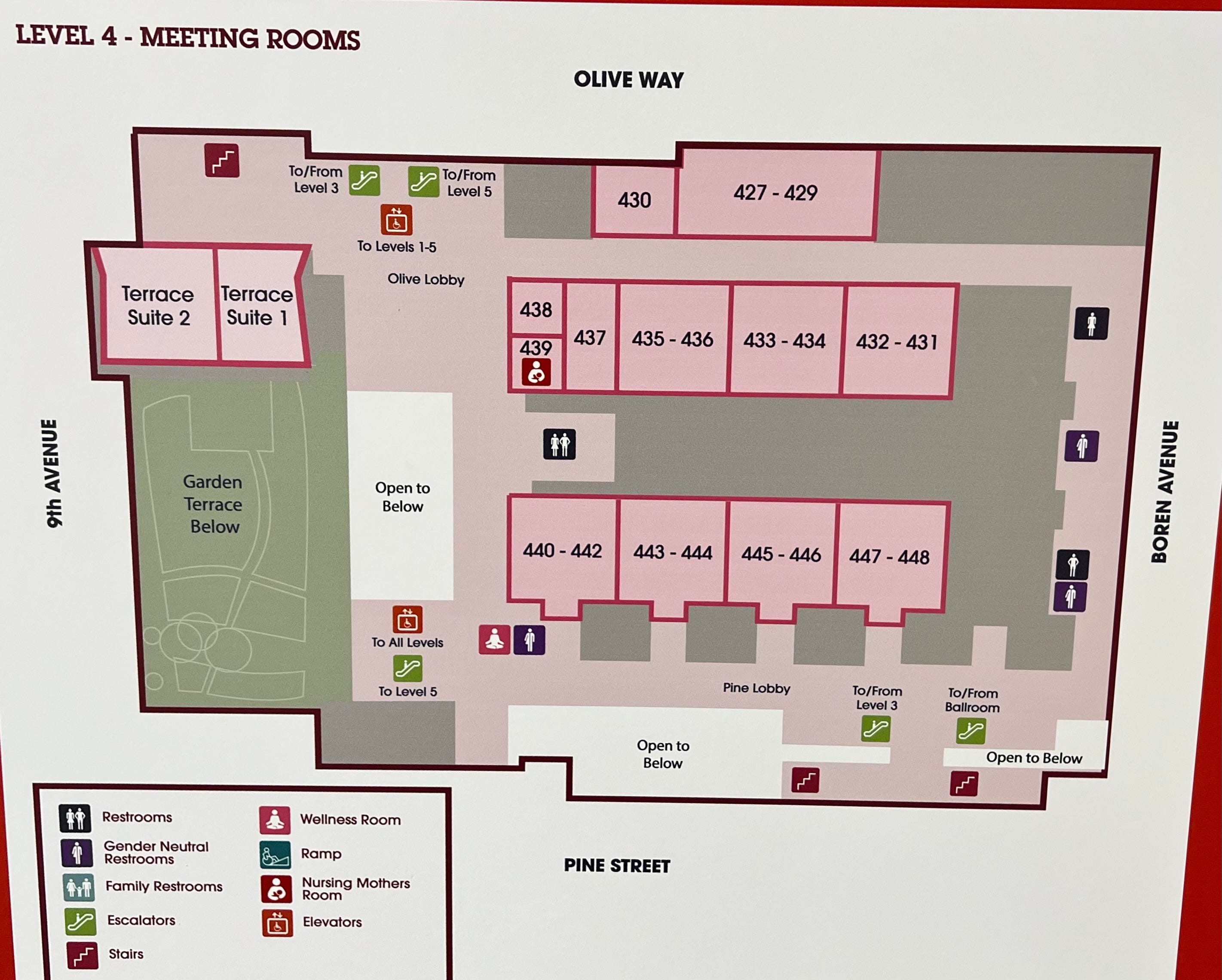
The Seattle Convention Center at Pine and Ninth St. is brand new or so I was told. There were 10,000 attendees (again so I was told.) The convention center has five floors and every meeting room and ballroom on every floor was full of presenters and an audience. The basement level was a Book Fair the size of a Costco store.

One floor, 4th, of the Seattle Convention Center

I had no expectations. It felt like an adventure. I was so glad not to be sick, to meet my Zoom writing friends, and to be surrounded by WORDS. With a few exceptions, the writers at AWP won’t be found on the NYTimes bestseller lists. These are writers pouring their hearts and passions out in manuscripts, so grateful to find a publisher and see their book in print. I’m guessing 99% of them will always need another job.

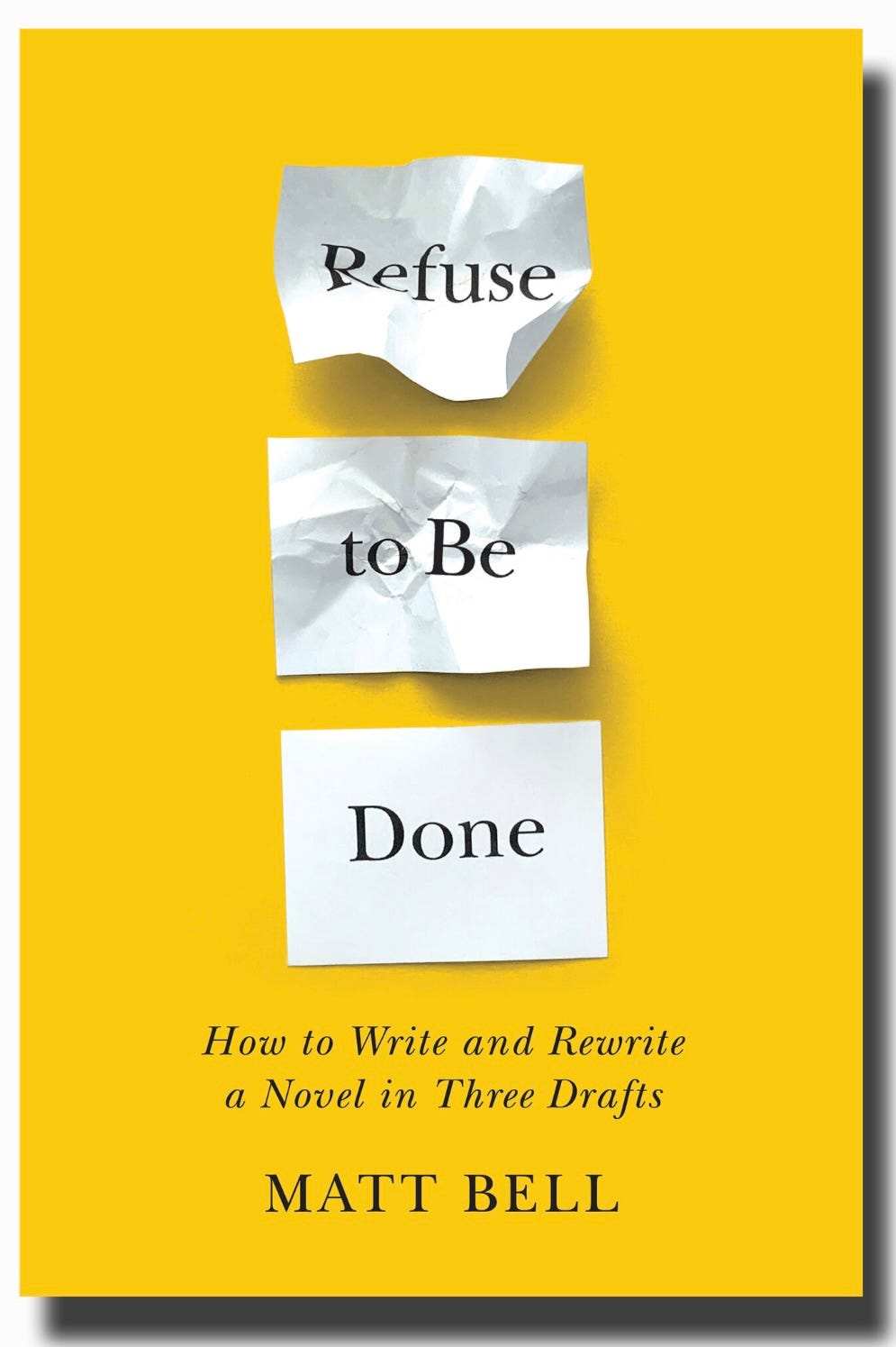
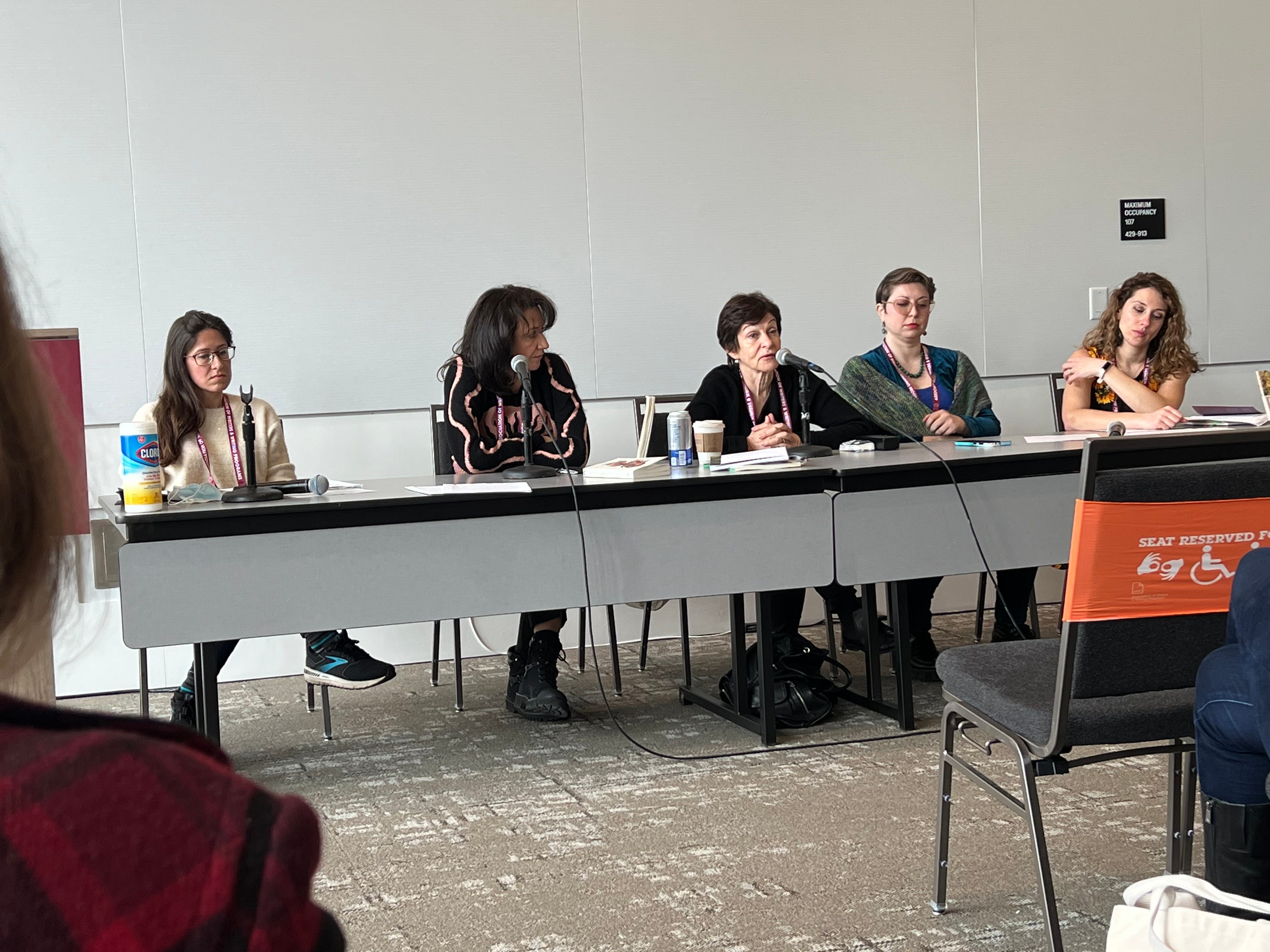
Many of these writers spoke on panels. One morning, I went to a presentation called “The Sentence is the Story” with five panelists, all teaching creative writing courses. Four panelists had fiction books published, and one, Matt Bell, has written a How-To called Refuse to be Done. My friend, Angela, had the book with her. She told me it has been so helpful and got it signed by the author who, like George Saunders, turns out to be a generous person, teacher, and colleague.

I went to another Presentation of five writers, all who had left the former Soviet Union: Totalitarian Traumas: A reading. Each woman read from published poetry or prose. Two of the women were of Ukrainian origin. I attended because my grandparents had fled Ukraine in 1909—long before the stories these women were telling but still….I found myself wanting to know more and more about Ukraine’s history. One of the women guided me to the stories of  Sholem Aleichem and his book Tevya and his Daughters. Those stories became the Broadway Show Fiddler on the Roof. The beauty and sadness of these poems and stories were deeply moving.

Five women from the former Soviet Union: Anna Fridlis, Kristina Gorcheva-Newberry, Anna Halberstadt, Sasha Vasilyuk, Julia Dasbach (not in order)

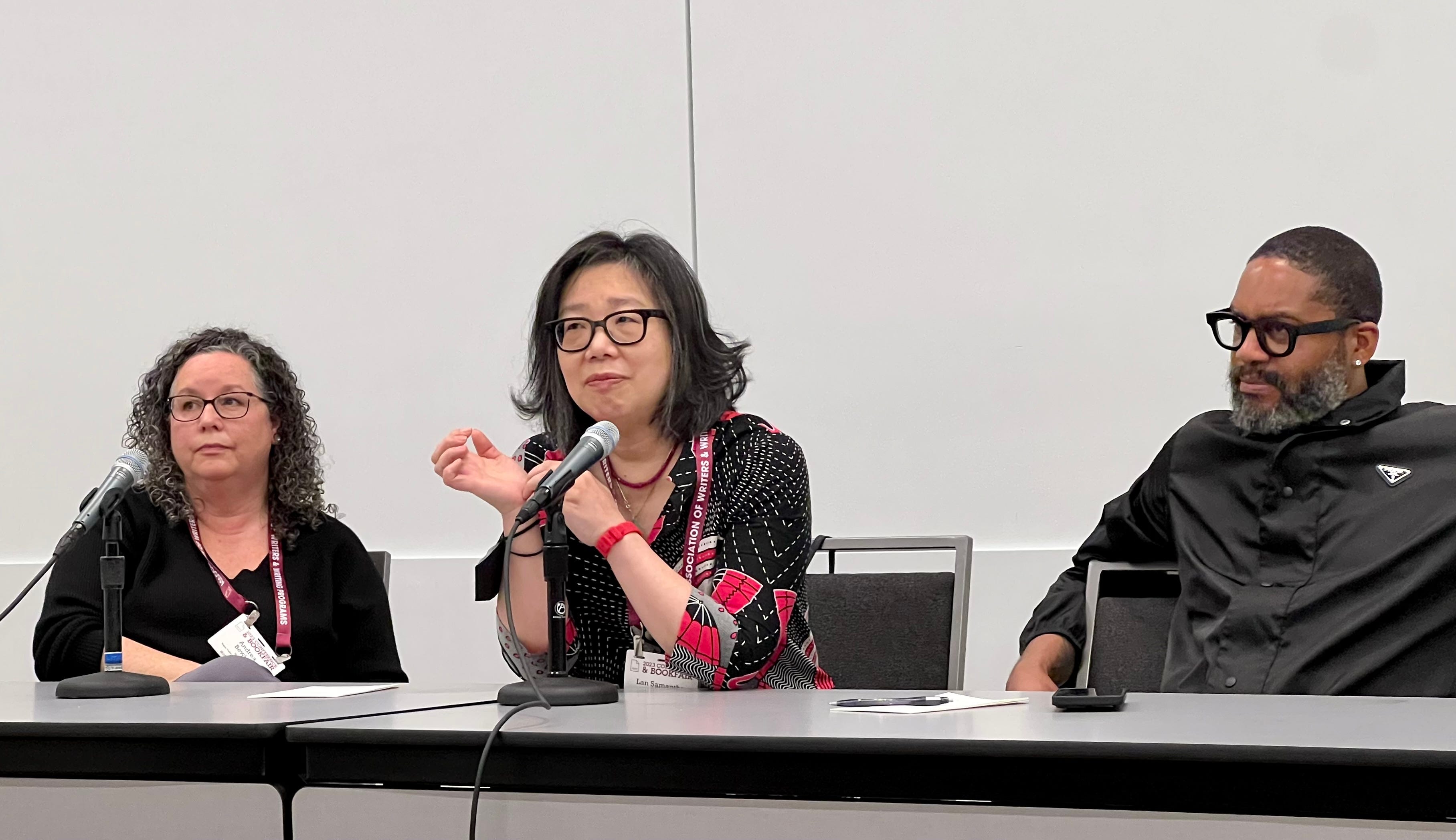
Four teachers who teach both weeklong writing workshops and semester-long courses in MFA programs were asked to list the pros and cons of each in another event. I was struck by the thoughtfulness and care with which each of them considers a student or participant’s needs. On the panel was Samantha Chang, author of the  The Family Chao(2022), who I had met in Paris last summer when she came to the American Library to talk about her book. She is director of the Iowa Writers’ Workshop.

Charlotte Wyatt, Lan Samantha Chang, Mitchell S. Johnson

Each day, I attended three presentations. I then wandered the aisles of the Book Fair talking with the editors of various Journals and Reviews to learn what kind of submissions they are each looking for. By the end of the second day, my eyes felt like those colorful spinwheely things that we used to play with on the fourth of July. Every table was giving out pens, buttons, bags, or bookmarks. All were carefully labeled so that we’d remember the name of the booth we had stopped at. Me, with my need to accept any gift that is free, was laden down with all sorts of “stuff”. I was saved from buying many books because there is only so much I can carry back to Paris with me. On the last day, I bought two slim books on baseball published by Invisible Press. They were very happy to meet a baseball fan!

Sara playing mini-Ping Pong (is there such a thing?) with one of the editors of The Under Review

Poor (rainy and windy) weather was predicted for Seattle but we lucked out. It was cold but we managed to avoid rain when we were outside. Our AirBnB, which the three of us rented, was a quick fifteen-minute walk from the Convention Center. A great way to start the day and somewhere to run to when in complete overload.

Angela, Tracy, Sara

What is the likelihood that three women, thirty-eight, forty-nine, and seventy-five, who’ve met on Zoom, shared unpublished writings and poetry, and exchanged feedback meant to encourage better writing, would get along in person for four days? Pretty good it turns out. No high-maintenance personalities, lots of laughter, and much cheerleading to be braver in our writing and in our sharing of writings. They kindly let me control the kitchen in exchange for making delicious simple meals. Angela brought a storytelling game that prompted us to remember and share stories from the past. Always a good way to get a good story going and then put on paper. I was so enamored of this game that Angela gave it to me so that I could show it to my Paris writing group.

One of the Book Fair tables—courtesy of Writers.com

And now I’m back in Oakland, California with wonderful memories of being with writing group members whom I completely trust to give me honest and critical feedback on my writing. And of being a part of a gathering of writers, would-be authors, and everything associated with getting a piece of writing from paper (or computer) to crossing the finish line – a book we can hold and cherish.

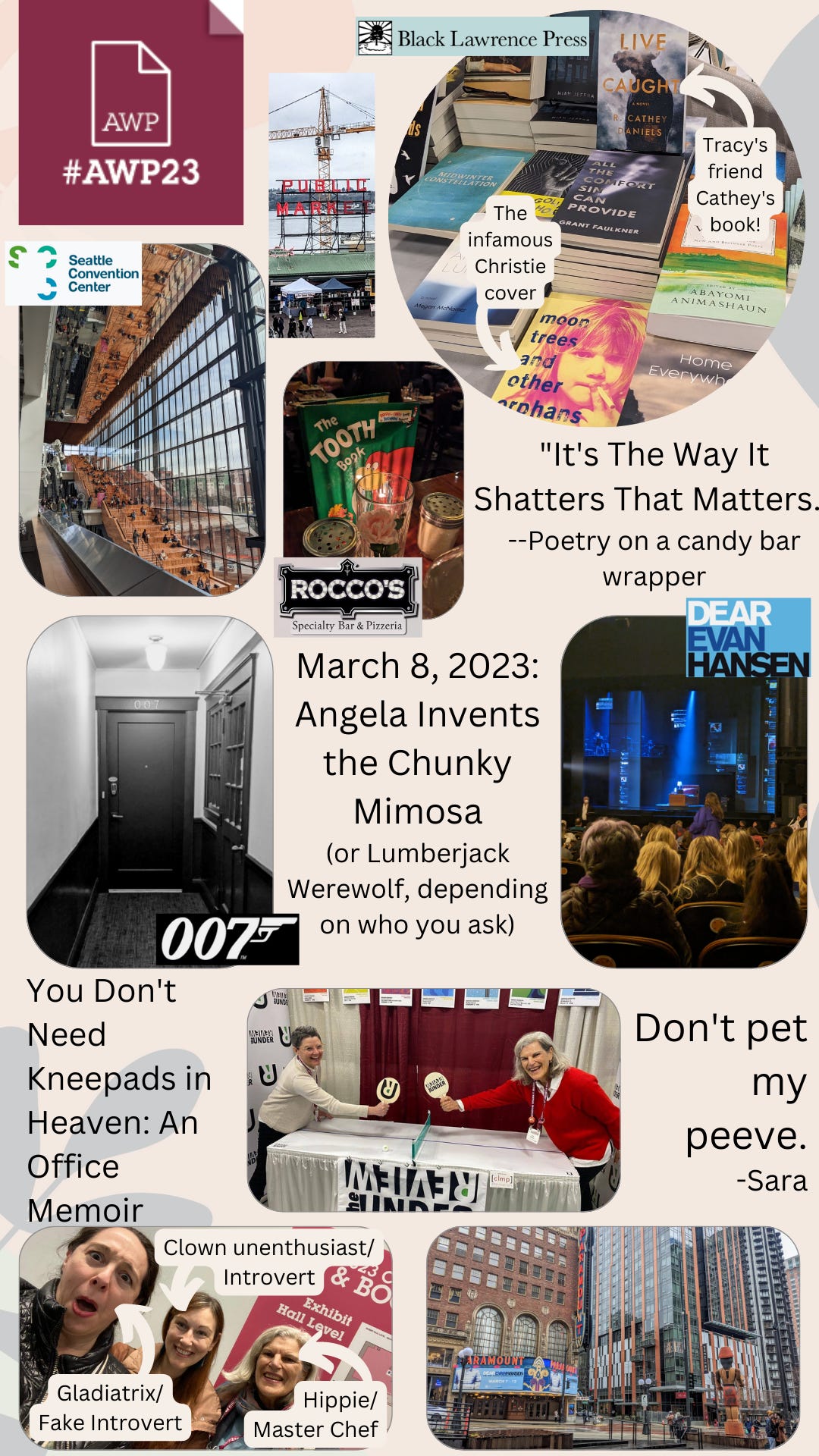
Collage made by Tracy summing up our four days.

Thanks for reading Out My Window! Subscribe for free to receive new posts and support my work.
A bientôt,

Sara

A Thanksgiving Story

You sent a ‘Save the date’ notice to all the guests-mostly Americans and some other cultures-two weeks in advance.

You explained why the celebration has to happen on the weekend not on Thursday since everyone works on Thursday in France.

You went to the special butcher and ordered the turkey, asking again, as you do every year, that all the innards need to be out and, for a little extra money, could they start the roasting for you.

You arranged to pick up the turkey the morning of your Thanksgiving feast, so you’d have at least three hours to finish the cooking.

You sent out e-mails far and wide asking where to find cranberries in Paris.

You wrote a lovely invitation with the history of Thanksgiving, then explained how it is a myth, yet it is most Americans’ favorite holiday.

You requested that each person think of something to share that they feel especially grateful for.

You borrowed chairs from the neighbors feeling a bit guilty that you were having a party and not inviting them.

You then wrote a note reminding the neighbors of the American holiday Thanksgiving and thanked them for contributing to it.

You went to the local Fruits Primeurs and bought up two kilos of green beans and a massive amount of potatoes, wondering again why sweet potatoes had never made it to France.

You pulled out all your Thanksgiving decorations and your pumpkin pie spice that you bring back each year from California.

You put together the ingredients for pumpkin pie and stored in the refrigerator.

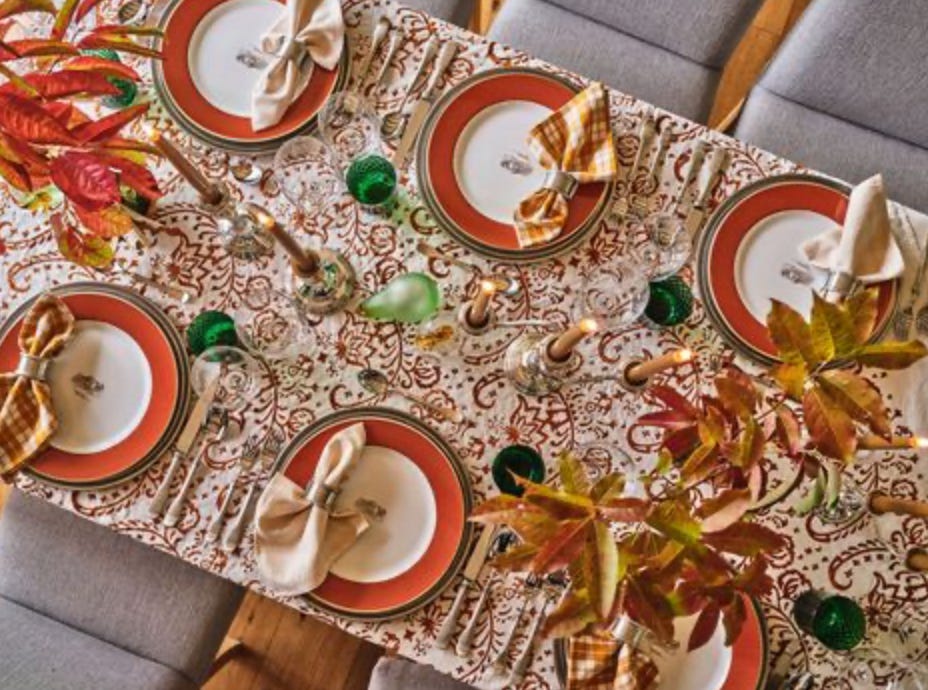
You set your table early as it made you smile every time you walked by it.

You instructed your cat that she is not allowed to jump on the table or play with any of the decorations.

You sighed as your cat stared at you with that look that said “Don’t tell me what to do.”

You wrote e-cards to all your friends far and wide wishing them a Happy Thanksgiving.

You set the delivery time for the e-cards for the morning of Thanksgiving.

You went to sleep knowing everything would be perfect.

Thanks for reading Out My Window! Subscribe for free to receive new posts and support my work.
A bientôt,

Sara

“Reading is an act of resistance”

Last Friday, I had the pleasure of meeting Jennifer Egan, the Pulitzer Prize winning author of A Visit from the Goon Squad. She was in Paris to celebrate the launching of her latest book The Candy House in French, as well as participating in Festival America. I belong to a writing group through AAWE (Association of American Women in Europe). Through a unique partnership of AAWE, Editions Robert Laffont, and AAWE, Jennifer spoke at the beautiful American Center for Art and Culture in the 16ème. My writing group had the honor of being volunteers at the event on Friday.

Lorie Lichtlen, interviewer. Jennifer Egan, author, Margueritee Cappelle, translator

I’m embarrassed to admit that before this summer I had not read any of her books. When I learned she was making a special appearance at ACAC, I read three of her books backwards! First the Candy House (2022), then Manhattan Beach (2016), and finally A Visit from the Goon Squad (2011). My overall impression was that this was one brilliant woman who had an ultra creative mind and was also very complex. I wasn’t sure I understood The Candy House very well and resorted to reading reviews in the NYTimes and New Yorker. I was a bit afraid that I wouldn’t be able to follow her thinking.

Signing both French and English language books

I had absolutely nothing to be afraid of. Jennifer walked into the venue with a backpack slung over her shoulder, a simple black top, a short skirt, and knee high boots. She greeted everyone with a huge smile. The room filled up with a large Franco-American crowd of at least one hundred people. Answering questions posed by the interviewer, she gave generous, thoughtful answers and captured everyones’ hearts. When someone asked her “Do you think young people are still reading?” her response got a rocking spontaneous applause. “Reading is the only way that someone can step into someone else’s head. The world now is full of devices. My sons have told me that apps are built to be addictive, but looking at the phone keeps you on the outside. I say put your device in another room and read for pleasure. Nobody is selling you anything when you read a book. Reading is an act of resistance!”

When asked about her favorite books, she responded, House of Mirth by Edith Warton and The Invisible Man by Ralph Ellison. “To me, they describe America.” When she signed the book I bought, she was as generous with her dedication as she was with her responses. It was clear to me that Jennifer was having fun. She used that word multiple times in describing her writing, how she wrote, what inspired her, how her thought processes went.

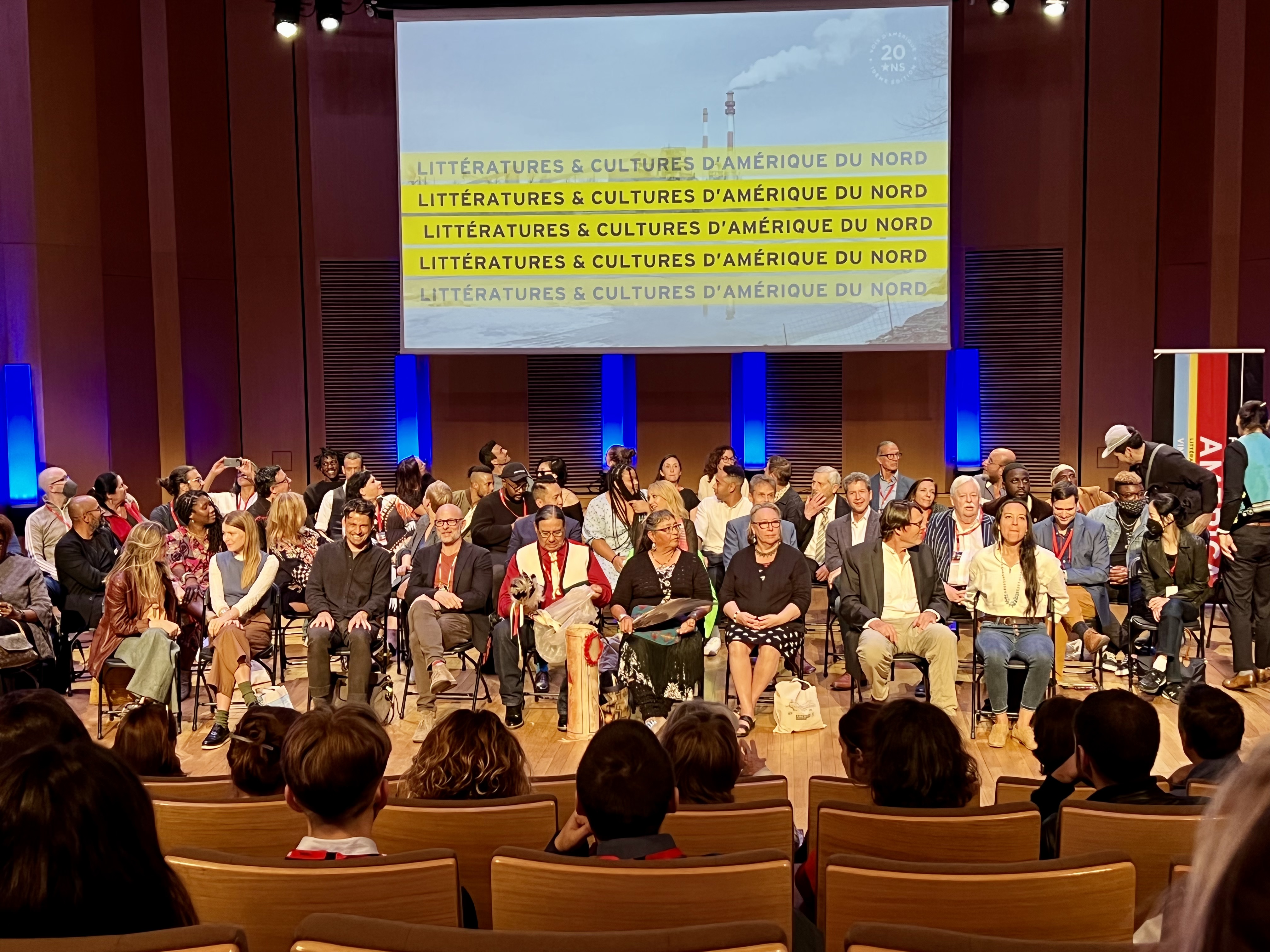
Opening Night Ceremony of Festival America

I mentioned that she was here as a part of Festival America. FA was founded twenty years ago by a Frenchman who wanted to shine a light on American writers who were under-represented by the media. African American authors, indigenous authors, Asian-American authors. It has evolved into an every other year celebration of American authors. “An unparalleled event, the AMERICA festival (invites), every two years in Vincennes (Val-de-Marne, France), around 70 authors from North America (United States, Canada, Quebec, Mexico, Cuba, Haiti). Since 2002, it has set itself the goal of celebrating diversity on the other side of the Atlantic – a cultural mosaic that is Indian, Hispanic, African, Anglo-Saxon, French and Francophone – and giving the public the opportunity to better understand their cultural realities.”-actes-sud.fr

Leila Mottley

I had read recently that a nineteen year old young woman from Oakland, Leila Mottley, was long-listed for the Man Booker prize. Her book, Nightcrawling, has been applauded everywhere, translated into French, and won the Festival America prize at the end of the festival. I was so surprised to see her on the stage with the other authors. Afterwards, I saw her and told her that I was probably the only other person in the building from Oakland. She didn’t seem particularly impressed!

“A news item inspired Leila Mottley to write her novel, the first manuscript that she dared to intend for publication” writes Le Point, a french magazine, “In 2016, the media talked a lot about the rape of a young girl by the police and I was struck to see that we knew nothing about it. (Yet) they kept showing how the police lived the case. Women of color are particularly the target of violence because the law does not protect them in the same way. By imagining Kiara, I wanted to give the visibility she didn’t have at the time to this young black woman, to her world. And, to follow her into the night of prostitution, she had herself reread by a sex worker.”

I haven’t read the book yet but am so proud of her, a follow Oakland resident. A friend told me that the Bay Area Book Festival, in conjunction with the Oakland Museum, is planning an event for her in April, on the launch date of the paperback. Leila was asked to say something at the Opening Ceremony and she giggled like the teenager she is and spoke eloquently about what matters to her. She is something.

To finish this blog, I’m including a video of the Native Americans who performed a drumming concert for us.

A bientôt,

Sara

La Rentrée

Most of us know there are four seasons in the year. In France, there is a minimum of five seasons. The one we are in presently is known as La Rentrée. Literally the word mean ‘The Return’. It’s the time when all Parisians come home from wherever they spent August, and in some cases, July and August. Children prepare for school, and, even though the weather may still feel like summer, it’s the beginning of Autumn.

To understand “La Rentrée”, one has to understand the month of August. During August, almost everything stops. More than half of stores shut down. Restaurants, that are not in the tourist center, close for the month. The trains all do whatever repair work needs to be done. Many of the lines do not run. In August, the government is not to be found. As friends part for the summer, you can hear them say “A la rentrée” which loosely translates to “See you in September.” In other words, every single person in France knows that if you include ‘la rentrée’ in a sentence, you are referring to that season beginning September 1 when everything starts anew. Clothing stores have fresh stock. Children are back in school. The government gets back to work. And every supermarket has huge sections of space dedicated to schoolwork, creative work, and office work. If you have a favorite pen and haven’t been able to find another just like it, chances are very good, you will find it at the Carrefour or Monoprix during La Rentrée. It is a time of celebration and many parents will hang around their children’s school catching up with a drink or two in their hands.
I love it when every store stocks up on notebooks, paper products, pens of all different sizes, tips, and comfort. I will stand far too long in front of these aisles telling myself I don’t need anything (I have enough journaling notebooks to last me well into the next decade), and still end up at the cash register with a new pen and perhaps a folder. I love to write on paper. The computer is fine but pen to paper…there is nothing like it.

And … Writing. I did not make it into the Stanford Certificate Program. When I received the e-mail, my first feeling was of disappointment. My second was relief. I had started a summer course at Stanford Continuing Education in Short Story writing. I was beginning to get an idea of how much time just one course requires. I had no trouble finding the time. I was like a human vacuum cleaner sucking up all the knowledge that was available. So, along with reading published short stories and commenting on them, we each wrote a short story, had a workshop and every student commented on every other students writing. It was terrifying and glorious. When I magnified the work out two years, I wasn’t at all sure. Did I have it in me to write this novel I want to write. Or perhaps I should be sticking to what I do well, non-fiction writing. Since it was August and no one thinks in August, I put off any contemplation until September. I’ve signed up for another Stanford course and cannot wait for it to begin. And, by the way, I got an A+ in my class. I believe it is the first A+ I’ve ever gotten in my life!!!

Female and male peacock after mating season has ended. The male has shed his tail.

Lastly, and I’m taking huge license with this one, even Parc de Bagatelle and some of its creatures are starting anew. The male peacocks are molting which means they are shedding their gorgeous tail feathers!! I had no idea. After mating season ends, since tail feathers are not regenerating, they slowly fall out. When I was there this past Sunday, there were only a few colorful feathers on the backs of the males I saw. Here is some fascinating information from a website called: peacocksuk.com

Male peacock last week in August

“The peacock has around 150 to 175 long tail feathers or long covers which sit over shorter strong tail feathers. These shorter feathers  support the weight of the long tail covers which grow to three to four feet long. As the peacock matures to five or six years old, the peacocks tail feathers grow in size and the number. As the peafowl reaches maturity the eyes on the tail feathers become larger. At maturity the peacocks tail will be constant each year as long as the peacock is in good health. If several males are kept together we have found that the subservient males will not grow or develop a tail as striking or large as the dominant peacock.  If these birds are removed from the pen with the dominant male the upper tail feathers then develop! After the peacocks long tail covers have moulted the new tail begins to grow in the autumn, reaching maturity in time for the next mating season in the spring.”
A bientôt,

Sara